Cleanroom Automatic Sliding Doors: How They Work and Spec
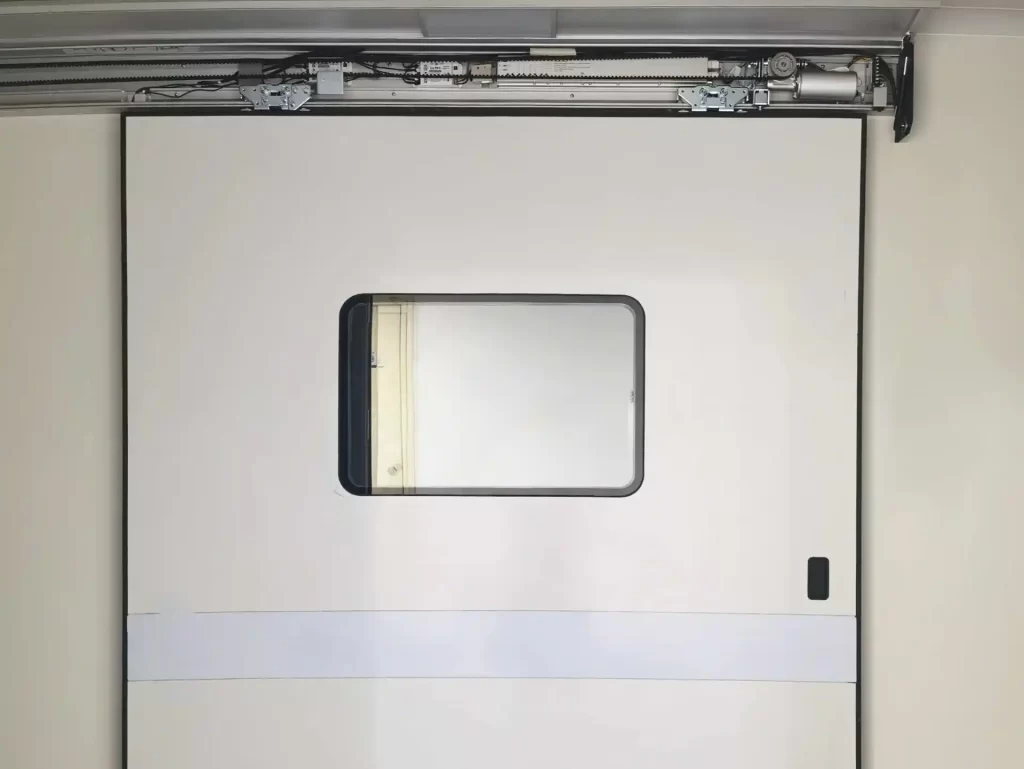
A cleanroom is only as tight as its weakest moving part. Walls, ceilings, and HEPA filters get most of the attention during design, but the door is where people and carts actually pass through the envelope every hour. A cleanroom automatic sliding door does two jobs at once: it opens fast enough to keep traffic moving, and it closes into a sealed plane that holds the room's pressure and particle count. Get either job wrong and the whole classification slips.
The mechanical layer, the sealing layer, and the control layer each earn their own attention, because a door that fails in any one of them stops protecting the room.
Start with the envelope, not the door
Before looking at the hardware, picture the room itself. A cleanroom holds a pressure differential against the dirtier space around it, usually 10 to 50 pascals higher inside for positive pressure spaces, or lower for negative pressure isolation rooms. That small pressure is what stops unfiltered air from leaking in through every crack. The door is a deliberate hole in that sealed shell, and an automatic sliding door is the mechanism that opens and re-seals that hole on its own.
E-ZONG has built cleanroom door systems since 1996, with more than 26 years in the field and ISO 9001 certification across its Foshan, Dongguan, Zhongshan, and Taishan production bases. A sliding door is not a single product, and those years show in the details: it is a leaf, a rail, a drive, a seal, and a controller that have to behave as one assembly through years of daily cycles.
How the mechanical layer moves the leaf
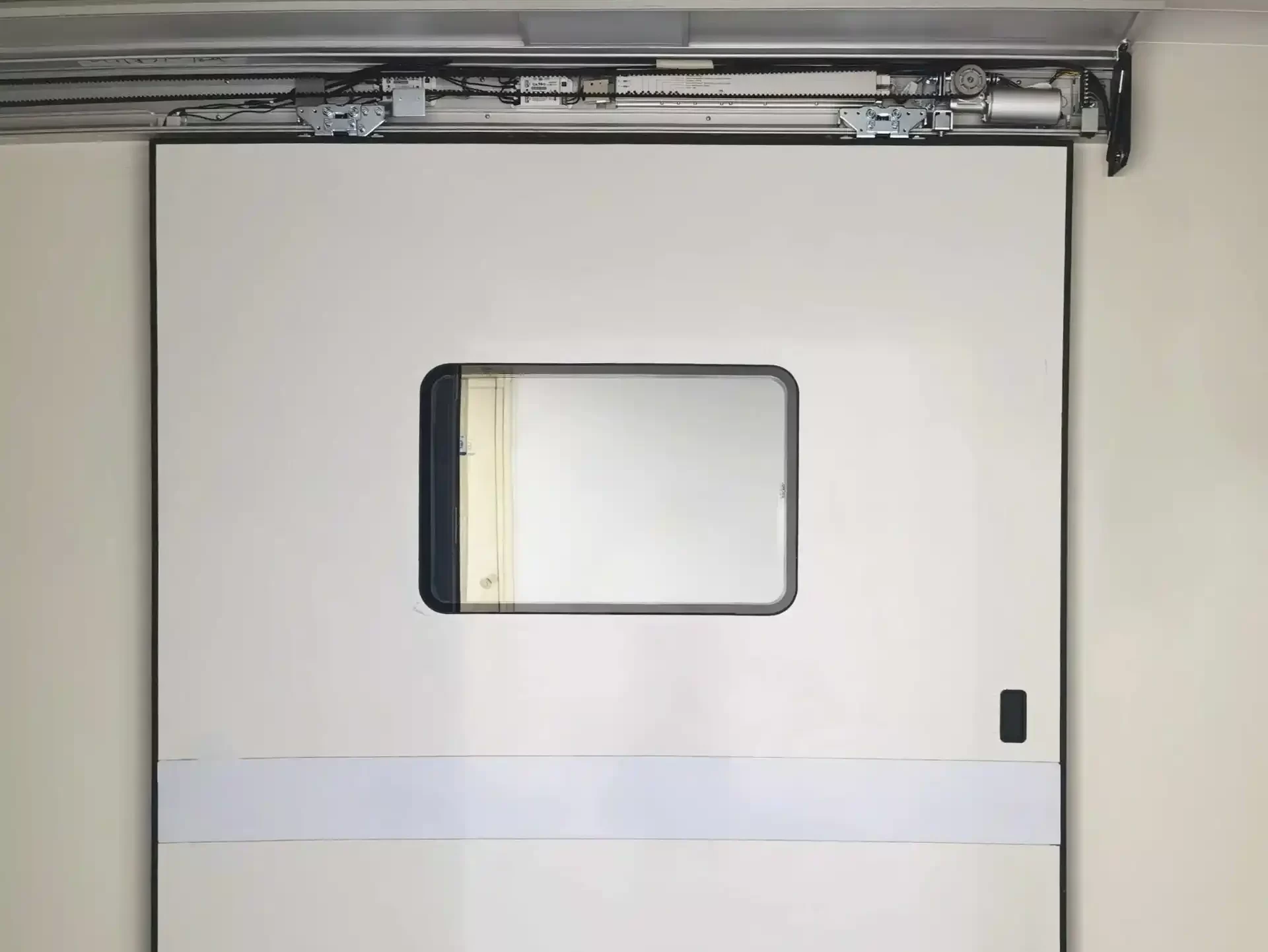
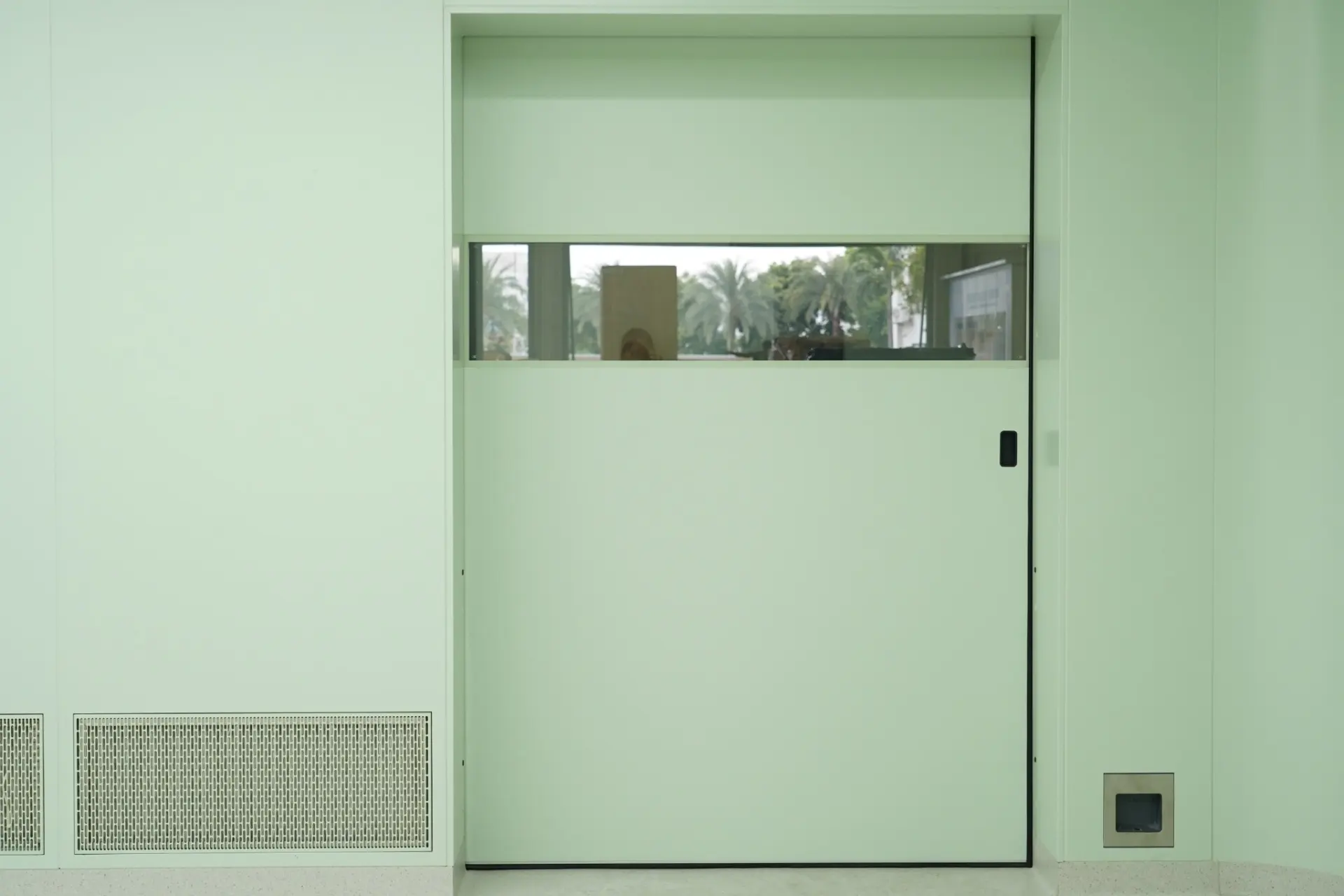
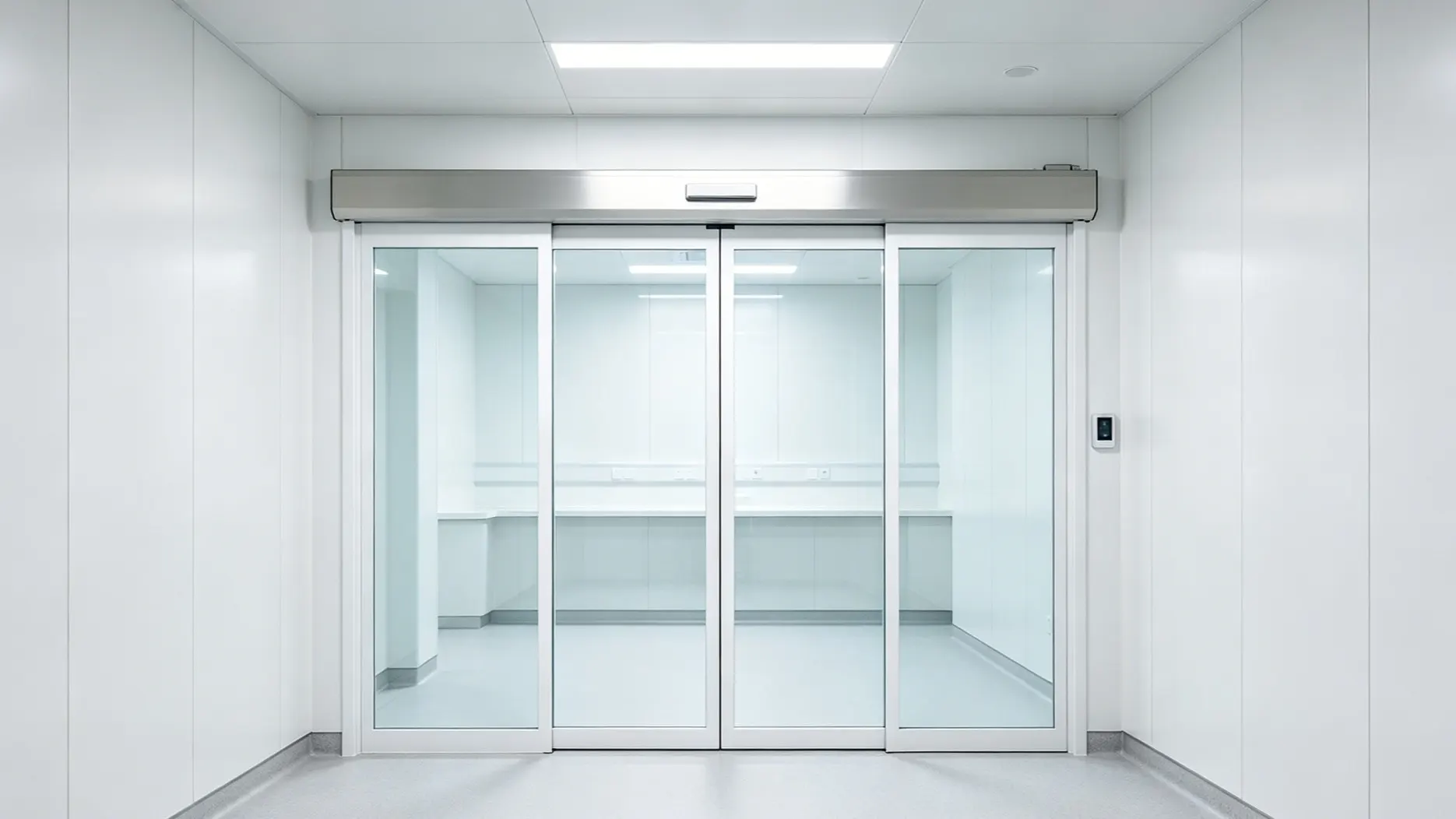
A sliding door leaves the hinge behind. The leaf rides on a top-hung rail and a carrier that holds its weight instead of swinging on a pivot. A drive unit pulls the carrier along the rail, and the leaf travels horizontally into a pocket or against a wall. Because nothing swings into the room, the door needs less clear floor space and never sweeps a cart or a gurney into a wall.
The drive itself is usually a low-voltage motor. E-ZONG's automatic doors use a permanent magnet synchronous motor for the glass airtight models and a DC brushless motor on the heavier steel leaves. Both run quietly and hold a steady close speed. The motor turns electrical energy into a smooth lateral pull, and a belt or rack transfers that pull to the carrier. The control board reads the sensor, decides to open, sets the speed, and times the close.
Why top-hung rather than a floor track? A floor track collects dust and cleaning fluid, which is exactly what a cleanroom wants to avoid. A suspended leaf leaves the floor flush and easy to mop, and it removes a contamination trench from the threshold. For pharma and electronics grades that small detail decides whether the threshold passes a swab test.
How the sealing layer closes the gap
Opening is easy. Sealing is the hard part, and it is where cleanroom sliding doors differ from a department store entrance. Two seals act together on close.
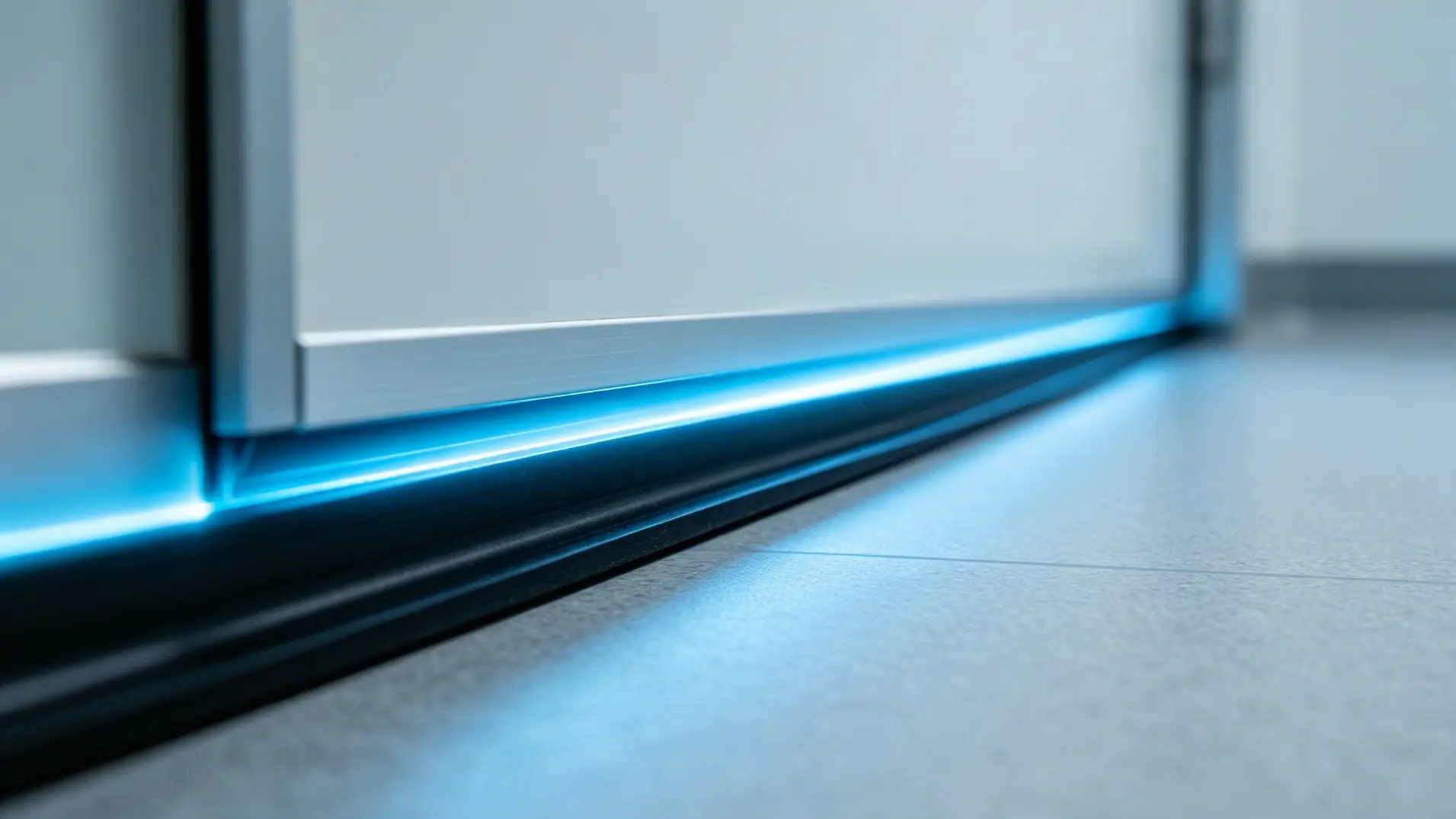
The first is a drop-down bottom seal. As the leaf reaches the frame, a mechanical link lowers a sealed sweep to the floor, closing the threshold gap that a swinging door would leave open. On E-ZONG airtight leaves the door panel drops about 5 to 10 mm as it closes, pressing the bottom seal flat against the sill. The second is a perimeter compression seal: a gasket runs the full frame, and the closing motion compresses it so air cannot slip around the edges. Materials are typically EPDM or silicone rubber, chosen because both resist the disinfectants and temperature swings a cleanroom dishes out.
The glass airtight automatic door from E-ZONG uses 8 mm tempered glass for the leaf with rubber gaskets at the edges. Tempered glass takes impact and thermal shock without shattering easily, and the gaskets form the tight seal against the frame. Together the leaf, the drop seal, and the perimeter gasket close into one continuous plane.
This is the point where airtight sliding doors meet the pressure story from the opening. A sealed sliding leaf holds the room differential the same way a fixed wall would, which is why these doors are rated to EN 12207 Class 4 for air permeability. Class 4 is the tightest band in that standard, and it is the number specifiers should look for when the room has to hold a cascade.
How the control layer decides when to open
A sliding door is automatic because a sensor triggers it, not a hand on the leaf. The control layer is the link between the room and the motor.
Common triggers are infrared presence sensors that open the leaf as a person enters range, hand sensors near the frame, foot switches that free both hands for a loaded cart, and in some facilities face recognition that logs access. The controller keeps the door open while someone is in range, then closes it after a short delay once the path clears. In a cleanroom the leaf should stay shut except for the seconds a pass needs, so the room loses little conditioned air.
Interlock is the other control job. Where two doors sit back to back, an interlock stops both from opening at once, so the airlock between them always has one sealed face. That sequencing is what lets an airlock hold the pressure step between a grade B buffer and a grade A core, or between a corridor and an isolation room. E-ZONG's door interlock system guide shows how rated leaves tie into wider access, alarm, and pressure networks instead of sitting as isolated openings, which is what active facilities need when one door has to release on fire alarm yet still let the HVAC hold its cascade.
What the materials tell you about cleanability
The leaf skin decides how fast the surface can be turned around between batches. Stainless steel wipes down against strong disinfectants and resists corrosion, which is why it dominates pharma and food grades. Galvanized steel with a color-coated or HPL face gives a smooth, non-shedding surface at lower cost for less aggressive rooms. The glass leaf trades some chemical resistance for visibility, which helps staff see traffic on the other side and suits labs and visitor corridors more than solvent rooms.
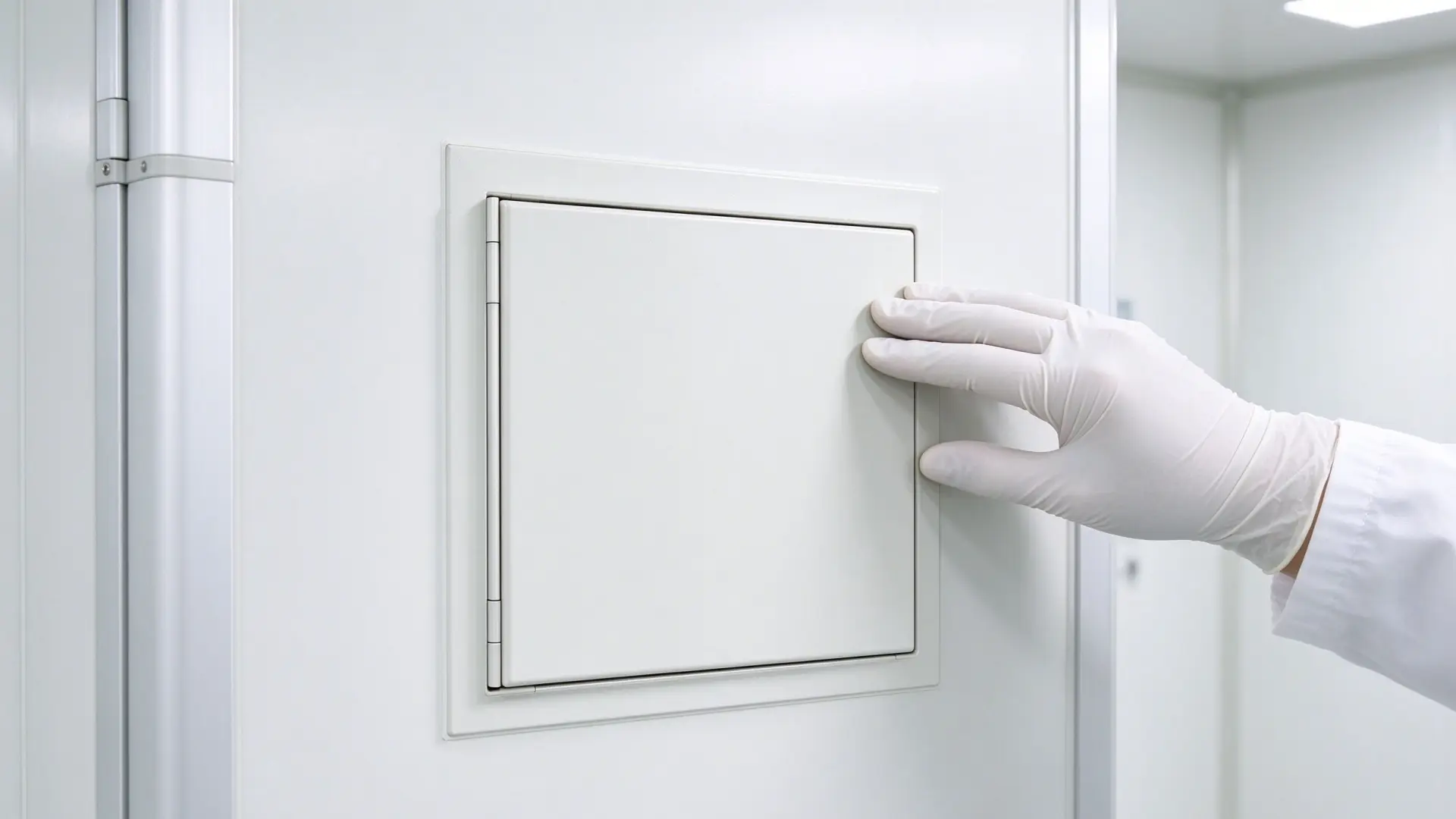
A flat face, concealed hardware, and one cleaning plane give microbes a single surface to sit on and a single pass to remove. That is the same reasoning behind a flush inspection panel in a GMP wall: every proud fitting is a place dust collects and a swab misses. E-ZONG builds doors, wall panels, and aluminum profiles as one coordinated system, so the leaf meets the wall on a single sealed plane rather than as two products argued into a joint on site.
When to specify a sliding door over a swing door
Four conditions decide it. Traffic is the first: a busy pharma corridor or a hospital OR suite moves carts, gurneys, and full hands all day, and a sliding leaf opens wide without a swing arc so a loaded cart does not fight the door. Floor space is the second, because tight cleanroom layouts cannot spare the arc a swing door sweeps, and a pocket slide recovers that floor for process. Hands-free need is the third, where staff carry samples or push beds and a sensor-open door removes the touch point a manual latch would add. Sealing grade is the fourth, because if the room must hold a documented pressure differential, the sliding door has to carry a drop-down and perimeter seal rated to the same class as the wall.
A swing door still wins in small staff offices and rooms with low cycle counts, where the simpler hinge costs less and the traffic does not justify a drive. The real question is whether the room's pressure and particle budget can absorb a swinging leaf that leaves the threshold open during every pass.
Match the door to the room class
The room's ISO class sets the bar. An ISO 8 support space can run a lighter automatic slide with standard gaskets, while an ISO 5 or cleaner core needs the full airtight build with drop-down and perimeter compression verified to Class 4. Pharma grades under GMP add the disinfection-resistance test: the leaf surface and seals have to survive the plant's actual cleaning chemistry for years, not just pass on day one.
Standards give specifiers a common language. ISO 14644 sets the classification and test methods, and the door is part of the envelope that those tests measure. A supplier that quotes a leaf without referencing the room's tested class is asking you to trust a number no one has verified, and that gap shows up at the first audit. In China, GB/T 47162-2026, the general technical requirement for cleanroom doors that took effect on 2026-09-01, lays out how a cleanroom door should be built and verified, which makes it a useful reference when comparing supplier claims. The pressure cascade guide from E-ZONG covers that cascade effect in plainer terms, and it is the same reason a sliding exit in a controlled space is specified as one assembly rather than a leaf wearing a seal someone else supplied.
Sizing the opening without guessing
Opening width follows the widest thing that passes through. A personnel door can sit around 900 to 1100 mm, while a cart or material airlock needs 1200 mm or more so a loaded trolley clears without scraping the gasket. The leaf height tracks the wall system, and the pocket depth has to fit the suspended rail and carrier behind the finished face.
A frequent mistake is sizing the door to the catalog instead of the load. When the opening forces a smaller cart or a slower handoff, the door becomes the bottleneck the whole line waits on. Give the supplier the real cart width, the real traffic count, and the real pressure target, and the leaf comes back sized to the work instead of to a price sheet.
Keeping the seal alive after install
A sliding door earns its rating on day one and loses it slowly through wear. The maintenance load is small but specific. Inspect the rubber gaskets on a set schedule, because a cracked or flattened gasket is the most common leak path, and replace it before it lets the differential drift. Calibrate the sensors so the leaf opens for real traffic and closes on time instead of hanging open and bleeding conditioned air. Wipe the glass and the leaf skin on the plant's normal cleaning cycle so residue never builds into a draft path.
E-ZONG's sliding door selection guide lays out these leaf types side by side, from glass airtight slides to steel automatic leaves, so a facility can match each opening to its own class and traffic without mixing vendors. When the door, the panel, and the profile come from one source, the sealed joint is engineered once and the wall contractor is not left to argue fit on site.
A short spec checklist
When the time comes to write the order, pin down four numbers. The room class and required pressure differential tell you the seal grade. The widest cart tells you the opening width. The cleaning chemistry tells you the leaf material. The cycle count tells you the drive type. Hand those to a supplier who documents the build, and the door will hold the envelope instead of quietly leaking it.
Cleanroom automatic sliding doors look simple from the corridor. Under the skin they are a rail, a drive, a drop seal, a perimeter gasket, and a controller working as one. Learn how those layers fit and the choice gets easier: pick the leaf that holds the pressure, opens for the traffic, and wipes down for the chemistry, then let the system do what it was built to do.
-
 Cleanroom Glass Windows Are The Key to Maintaining a Clean Environment
 -
 Top Aluminium Profile Manufacturers in China: Leading the Global Market
 -
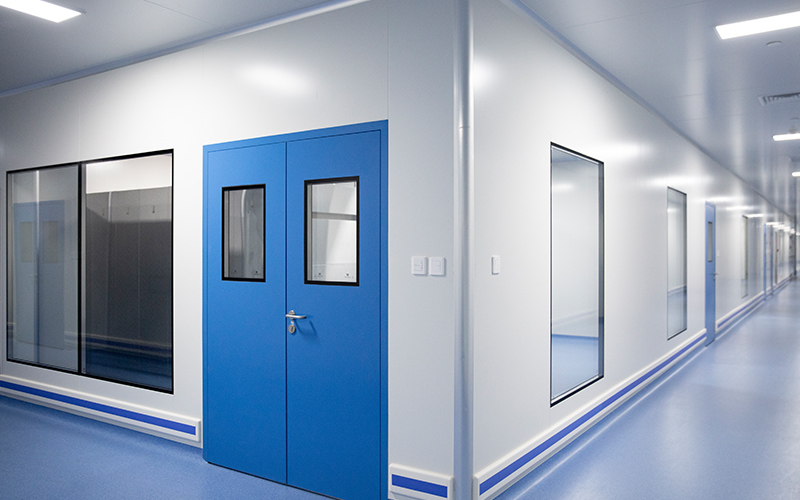 The Evolution of Air Tight Sliding Doors
 -
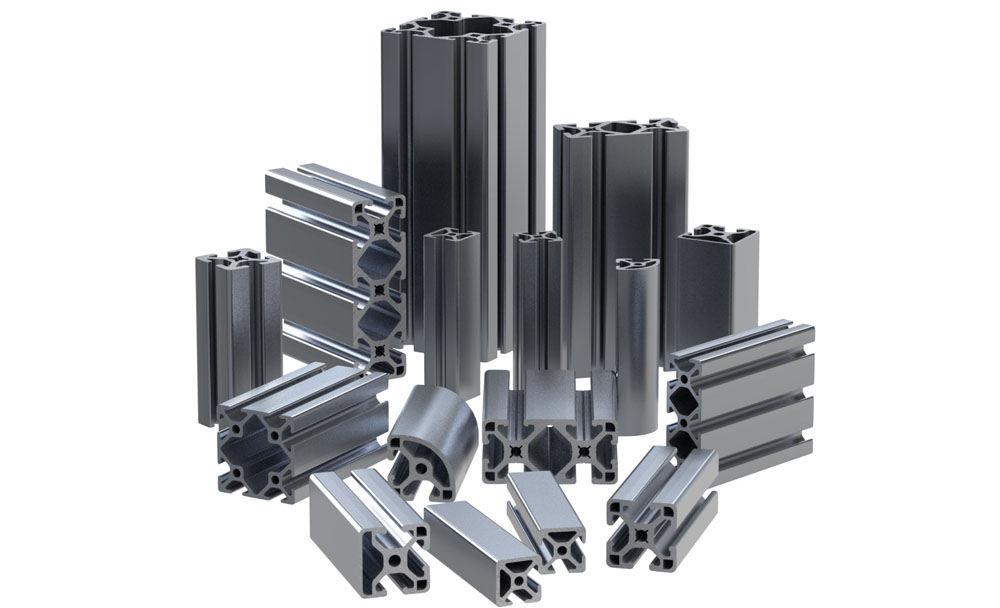 AHU Aluminium Profile: A Comprehensive Guide
 -
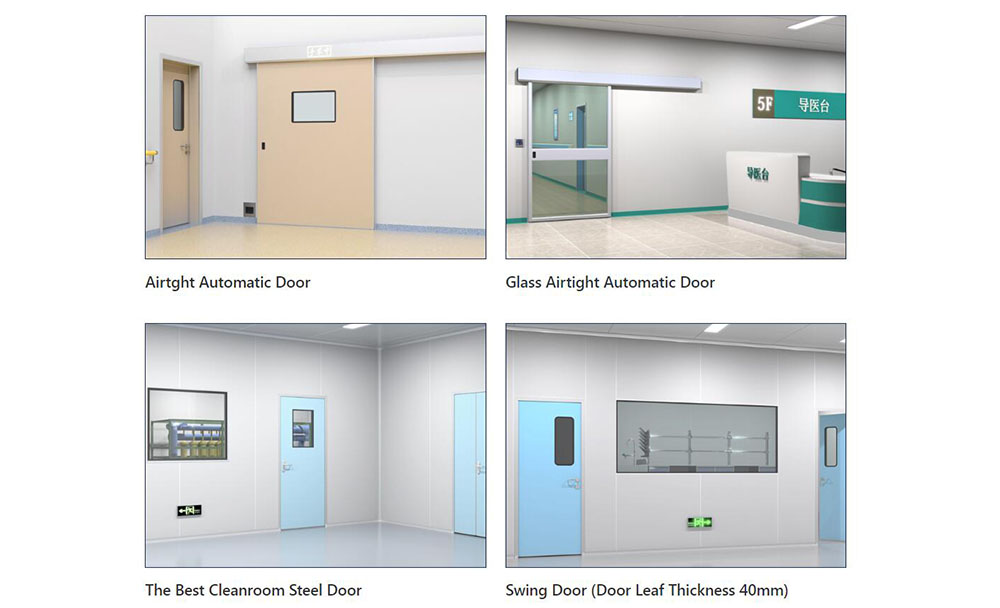 The Importance of Choosing the Right Cleanroom Door in Vietnam
 -
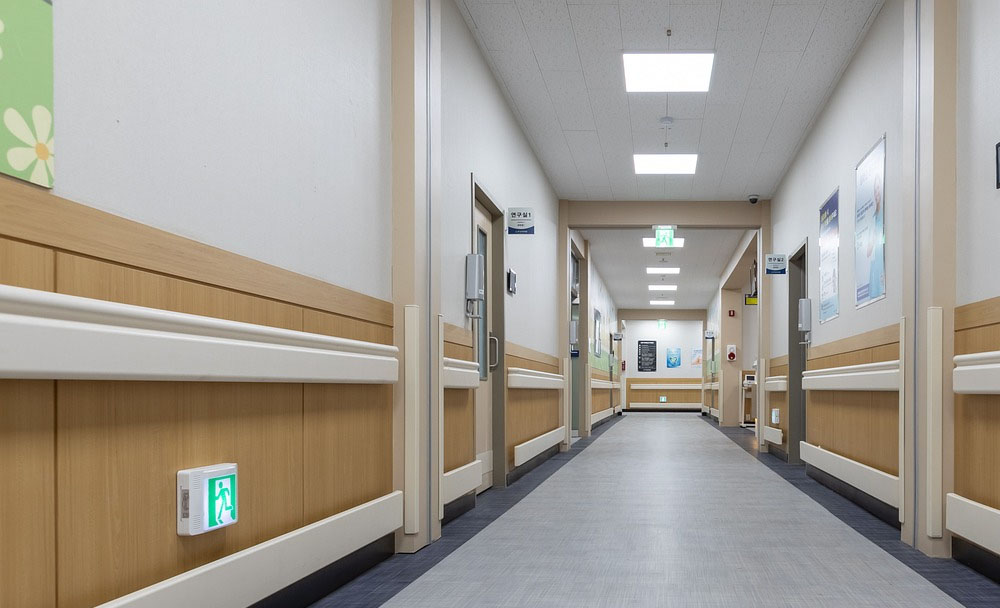 The Benefits of Hospital Automatic Doors: Enhancing Efficiency and Safety
 -
.jpg) The Best Bathroom Door Manufacturers - Unlocking Endless Possibilities!
The Best Bathroom Door Manufacturers - Unlocking Endless Possibilities! -
 Unlock the Possibilities with AJ Manufacturing Doors
 -
 Make a Statement with Manufactured Home Interior Doors!
 -
 what is aluminum profile? Aluminum Profiles for Your Home is the best option
-
 Clean Room Airlock Design: Pressure Cascade, Size, Doors
 -
 Cleanroom Automatic Sliding Doors: How They Work and Spec
 -
 How a Fire Exit Door Serves Fire and Cleanroom Code
 -
 Hospital Room Pressure and Doors 101 | Sealing Envelope
 -
 Why a Flush Inspection Door Matters in GMP Facilities
 -
 Automatic vs Manual Door Seal: Which Holds Pressure Better
 -
 Steel Double Doors: Fire Rating Under GB/T 47162-2026
 -
 5 Hermetic Door Mistakes That Break the Seal
 -
 Hospital Room Door Size by Room Type: Width and Clearance
 -
 Retrofit Manual Doors with Electronic Glass Operators


-

Home
-

Tel
-

Email
-

Contact


Guangzhou Yizhong Aluminum Industry Co., Ltd.
We are always providing our customers with reliable products and considerate services.
We are always providing our customers with reliable products and considerate services.
Speak Your Mind