
Automatic vs Manual Door Seal: Which Holds Pressure Better
In a pharmaceutical suite, a hospital operating theater, or any ISO classified cleanroom, the pressure cascade is the first line of defense against contamination. Clean air moves from the cleaner zone to the less clean one, and that gradient depends on one thing above all: the envelope stays sealed. The door is the part of that envelope that cycles open and closed hundreds of times a day, which makes the door seal the part of the system that takes the most punishment.
When a project team picks between an automatic and a manual door, the opening method is seldom what matters. The seal is. More precisely, how the leaf seals after it closes. That choice decides whether your pressure differential still holds at 3 a.m. after 200 cycles, or whether it quietly leaks every time someone props the door with a cart. The two approaches differ most in mechanism, pressure retention, where each one fits, and what they cost you over time.
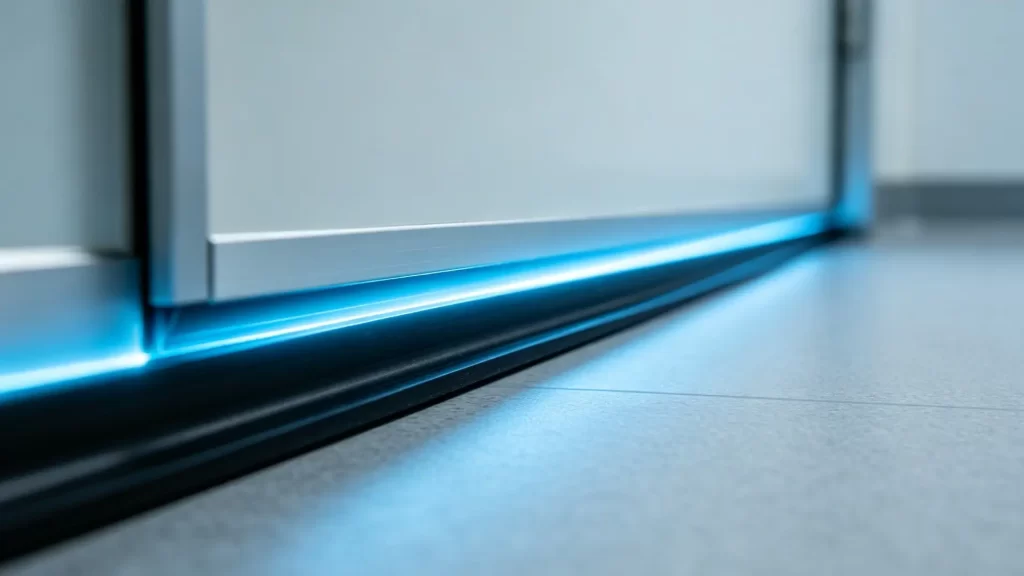
What an automatic door seal actually does
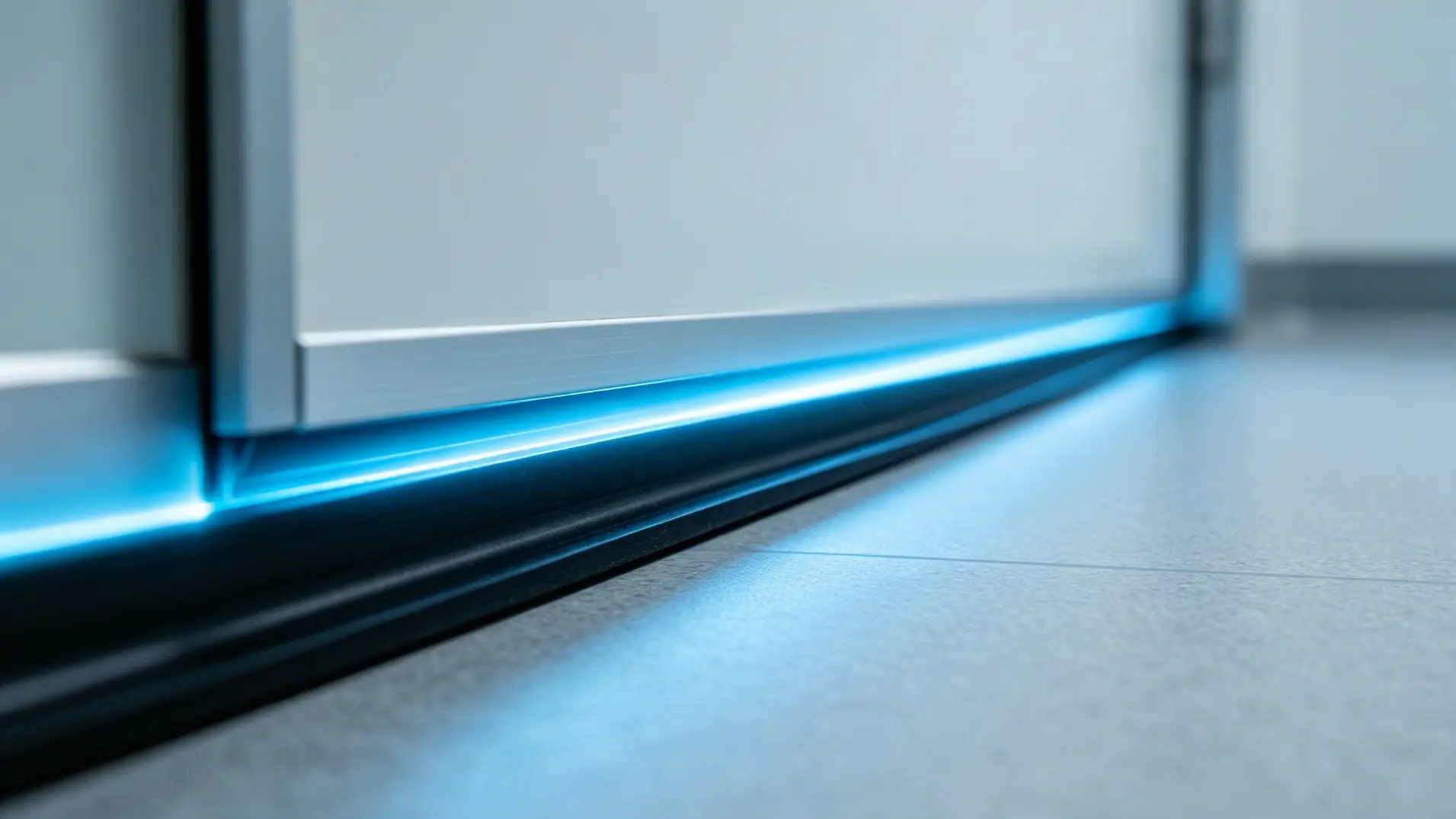
An automatic door seal is less about the door opening on its own and more about what happens at the closed position: a positive seal forms the moment the leaf reaches the frame. Modern airtight automatic doors use a coordinated system of a drop-down bottom seal and perimeter compression seals. As the leaf arrives, a precision mechanical or pneumatic actuator drives the whole leaf to drop slightly, typically 5 to 10 mm. That motion presses the bottom seal against the floor. At the same time, the EPDM or silicone compression seals on the sides and head deform under frame pressure and fill every gap, even the microscopic ones.
The result is a seal you can repeat without worrying about who closed the door. Under a pressure differential of 10 Pa to 50 Pa, or higher, a well built automatic door seal keeps the air leakage rate low and can reach EN 12207 Class 4 or better. Because the compression happens on every close, the seal performs the same under heavy traffic. A busy operating corridor and a quiet buffer room get the same seal quality.
For facilities teams, the bigger advantage is integration. An automatic door seal can report door status to the building management system through a dry contact, RS485, or IP signal. That lets HVAC and pressure monitoring see whether the barrier is intact. When validation engineers review the room, the door either holds pressure or it does not, and the system shows that in real time. E-ZONG builds this coordinated sealing into its Airtight Automatic Doors for Hospitals and Cleanrooms, where the drop-down and perimeter seals work together as the dynamic defense line for sterility.
How a manual door seal works
A manual door seal depends on a chain: someone closes the leaf, a door closer pulls it back into the frame, and a bottom seal plus gasket do the rest. In a wall mounted air tight swing door, the leaf is pushed shut, the closer rotates it into the jamb, and an automatic drop bottom seal falls under spring or gravity load to meet the floor. The side and head gaskets compress as the latch engages.
The mechanism is simpler and cheaper, and for low traffic rooms it works well. The weakness is that seal quality rides on the closer and on human behavior. If the closer torque is set too low, the leaf does not pull fully into the gasket. If a hinge sags after years of use, the leaf tilts and a gap opens at the head. If someone leaves the door ajar during a material transfer, the pressure cascade across that room simply stops. None of those failures show from the corridor, and all of them let clean zones talk to dirty zones.
A manual door seal can meet tight specifications when specified and installed correctly, but its performance tracks closer calibration, install precision, and daily use more closely than an automatic seal does. For a procurement manager, that sensitivity is the risk to price into the project.
Pressure retention is what separates them
Cleanrooms keep contamination out by moving cleaner air toward less clean air, and that only works if the envelope resists leakage. The hard metric is air leakage rate, measured under a defined pressure differential. In China, GB/T 37456-2019 for medical air tight doors sets a first grade requirement of air leakage not more than 0.5 m3 per square meter per hour, while the group standard T/ZZB 0669-2018 for medical air tight sliding automatic doors requires leakage not more than 0.05 m3 per meter per hour. Test methods reference EN 1026 or ASTM E283, which means the number is comparable across suppliers who test the same way.
An automatic door seal wins on consistency. Every close re compresses the gaskets, so the 500th cycle looks like the first. A manual door seal can match the number on a fresh commissioning test, but it drifts as the closer fatigues, the gasket hardens, or staff stop pulling the door fully shut. In a GMP facility where auditors check pressure trend logs, that drift is exactly what gets flagged.
If the room protects a critical process and sees frequent traffic, the seal cannot depend on whether someone closed the door properly. If it is a low traffic buffer that stays shut most of the day, a well specified manual seal is a reasonable choice.
Automatic vs manual door seal at a glance
| Dimension | Automatic Door Seal | Manual Door Seal |
|---|---|---|
| How the seal forms | Active compression on every close | Depends on closer and user |
| Typical airtightness | EN 12207 Class 4 or better | Class 2 to 3 in typical use |
| High traffic stability | Consistent across cycles | Sensitive to closer fatigue |
| Power loss behavior | Fail manual, push open by hand | Already manual, no change |
| Main maintenance item | Drop seal actuator, gaskets | Closer calibration, gaskets |
| First cost | Higher | Lower |
| Best fit | OR, ICU, negative pressure, logistics airlock | Buffer, standard ward, low traffic |
This table is a starting point, not a verdict. The right call depends on the room class, the traffic, and what a pressure failure would cost you.
Where automatic sealing wins
Automatic sealing earns its cost in places where the pressure barrier protects a critical process and the door moves constantly. Operating rooms and ICUs need a reliable pressure cascade to keep airborne contaminants away from open surgical sites. Negative pressure isolation rooms need the seal to hold so contaminated air cannot escape during staff entry and exit. Busy logistics airlocks in pharmaceutical plants open dozens of times per shift, and a manual seal in that duty cycle drifts fastest.
Non contact activation is a second win. Infrared, radar, or foot mat activation lets staff pass without touching the leaf, which reduces cross contamination at the exact point where hands are full. For these rooms, E-ZONG positions its airtight automatic doors as the dynamic barrier, and the Clean Room Sliding Doors: Airtight Glass Automatic Entrance option shows how the same sealing logic applies to glass automatic entrances in lab and pharmaceutical corridors.
Where a manual seal is enough
A manual seal is a sound choice when the door is not the weak link. Low traffic buffer rooms, standard wards, and change rooms that stay closed most of the day do not punish a manual seal the way a logistics airlock does. In a people material separated layout, a manual air tight swing door on the low traffic side keeps cost down without raising pressure risk.
The key is honesty about traffic. A ward door that opens a few times an hour and is closed by a closer with correct torque will hold pressure well. The same door at a staff entrance that cycles every minute will not. E-ZONG details this trade in its Patient Room Wall-Mounted Air-Tight Swing Door, where the wall mounted air tight swing leaf maintains room pressure for infection control without the cost of an automatic operator.
Match the seal to your cleanroom class
The cleaner the room, the less tolerance there is for seal drift. As a practical guide:
- ISO Class 5, operating theaters and transplant suites, need top grade airtightness. Automatic drop seals with dual gaskets and a documented leakage rate are the safe default.
- ISO Class 7, laboratories and aseptic filling, can use automatic sealing or a high-quality manual air tight door, provided the closer is commissioned and verified.
- ISO Class 8, corridors and buffer zones, are often fine with a mechanical bottom seal manual door, because the pressure stakes are lower and traffic is steadier.
Specifiers should map the seal grade to the room class before comparing prices. Buying a Class 2 manual seal for an ISO 5 room saves money once and costs it back at every audit.
Maintenance and service life
Gasket aging is the number one cause of lost airtightness. EPDM and silicone compression seals harden with UV, cleaning chemicals, and cycle count, and once they lose spring they stop filling the gap. On an automatic door, the drop seal actuator and the DC brushless motor are the items to watch. A brushless operator has a high mean time between failures, but the drop mechanism still needs the gasket inspected. On a manual door, the closer is the item that drifts first. A closer that was perfect at commissioning can lose torque in two years and leave the leaf short of the gasket.
A basic inspection program catches most of these failures before they reach an audit. Inspect seals every six months, replace any that are hard, cracked, or deformed, and re verify closer torque on manual doors during the same visit. Treat the door as a validated component, not furniture. E-ZONG explains this mindset in Why Clean Room Door Matters, where the door is described as the silent guardian of the clean envelope and should be included in preventive maintenance, not left until it alarms.
Procurement checklist for specifiers
When you write the specification, ask for evidence, not adjectives. A useful checklist:
- Request a third-party air leakage test report using EN 1026 or ASTM E283 at the rated differential, not a supplier claim.
- Ask for documented cycle life, commonly 500,000 cycles for automatic and 300,000 for manual, with leakage retained at the end.
- Confirm disinfection tolerance: the gasket and surface should survive alcohol, chlorine, and hydrogen peroxide fogging used in the facility.
- Require fail manual operation, so the door opens by hand during power loss without breaking the seal on reset.
- Ask for door status output for BAS integration, so pressure monitoring sees the barrier state.
- Align the spec with GB/T 47162-2026, the cleanroom door general technical requirement in force since September 1, 2026, so the purchase matches current compliance expectations.
FAQs
Does an automatic door seal fail open during a power cut?
A compliant medical automatic air tight door is fail manual. It stays closed during power loss and can be pushed open by hand, then re seals when returned to the frame. It should not fail wide open, because that would break the pressure cascade.
Can a manual seal reach ISO Class 5?
A well specified manual air tight swing door can meet tight leakage numbers on test. Under high traffic, though, its consistency depends on the closer and on users closing it fully, so critical ISO 5 rooms usually favor automatic sealing for repeatability.
How much more does automatic sealing cost?
The automatic leaf adds a motor, sensors, and controls, so first cost is higher. Against that, it lowers the risk of pressure failure, audit findings, and downtime, which often makes the total cost of ownership lower over the project life.
Conclusion
E-ZONG has focused on cleanroom and medical doors since 1996, with production facilities across Foshan, Dongguan, Zhongshan, and Taishan and in-house R&D on sealing and aluminum systems. Automatic and manual seals are not rivals on a spec sheet. One holds pressure under heavy traffic and strict audits; the other saves cost where the door stays shut. Pick by the room, not by the brochure.
Share your project specification, cleanroom classification, door dimensions, and material preference, and the E-ZONG technical team will map the seal type to your room and give you a sizing and compliance review before you buy.
-
 Cleanroom Glass Windows Are The Key to Maintaining a Clean Environment
 -
 Top Aluminium Profile Manufacturers in China: Leading the Global Market
 -
 The Evolution of Air Tight Sliding Doors
 -
 AHU Aluminium Profile: A Comprehensive Guide
 -
 The Importance of Choosing the Right Cleanroom Door in Vietnam
 -
 The Benefits of Hospital Automatic Doors: Enhancing Efficiency and Safety
 -
.jpg) The Best Bathroom Door Manufacturers - Unlocking Endless Possibilities!
The Best Bathroom Door Manufacturers - Unlocking Endless Possibilities! -
 Unlock the Possibilities with AJ Manufacturing Doors
 -
 Make a Statement with Manufactured Home Interior Doors!
 -
 what is aluminum profile? Aluminum Profiles for Your Home is the best option
-
 Why a Flush Inspection Door Matters in GMP Facilities
 -
 Automatic vs Manual Door Seal: Which Holds Pressure Better
 -
 Steel Double Doors: Fire Rating Under GB/T 47162-2026
 -
 5 Hermetic Door Mistakes That Break the Seal
 -
 Hospital Room Door Size by Room Type: Width and Clearance
 -
 Retrofit Manual Doors with Electronic Glass Operators
 -
 Hospital Emergency Exit Doors: 90 Minute Fire Rating Meets Infection Control
 -
 ICU and Isolation Door Requirements Hospitals Often Overlook
 -
 Laboratory Door Requirements for BSL-2 and BSL-3 Containment
 -
 Retrofitting Hospital Sliding Doors: Upgrade Wards Without a Rebuild




-

Home
-

Tel
-

Email
-

Contact


Guangzhou Yizhong Aluminum Industry Co., Ltd.
We are always providing our customers with reliable products and considerate services.
We are always providing our customers with reliable products and considerate services.
Speak Your Mind