
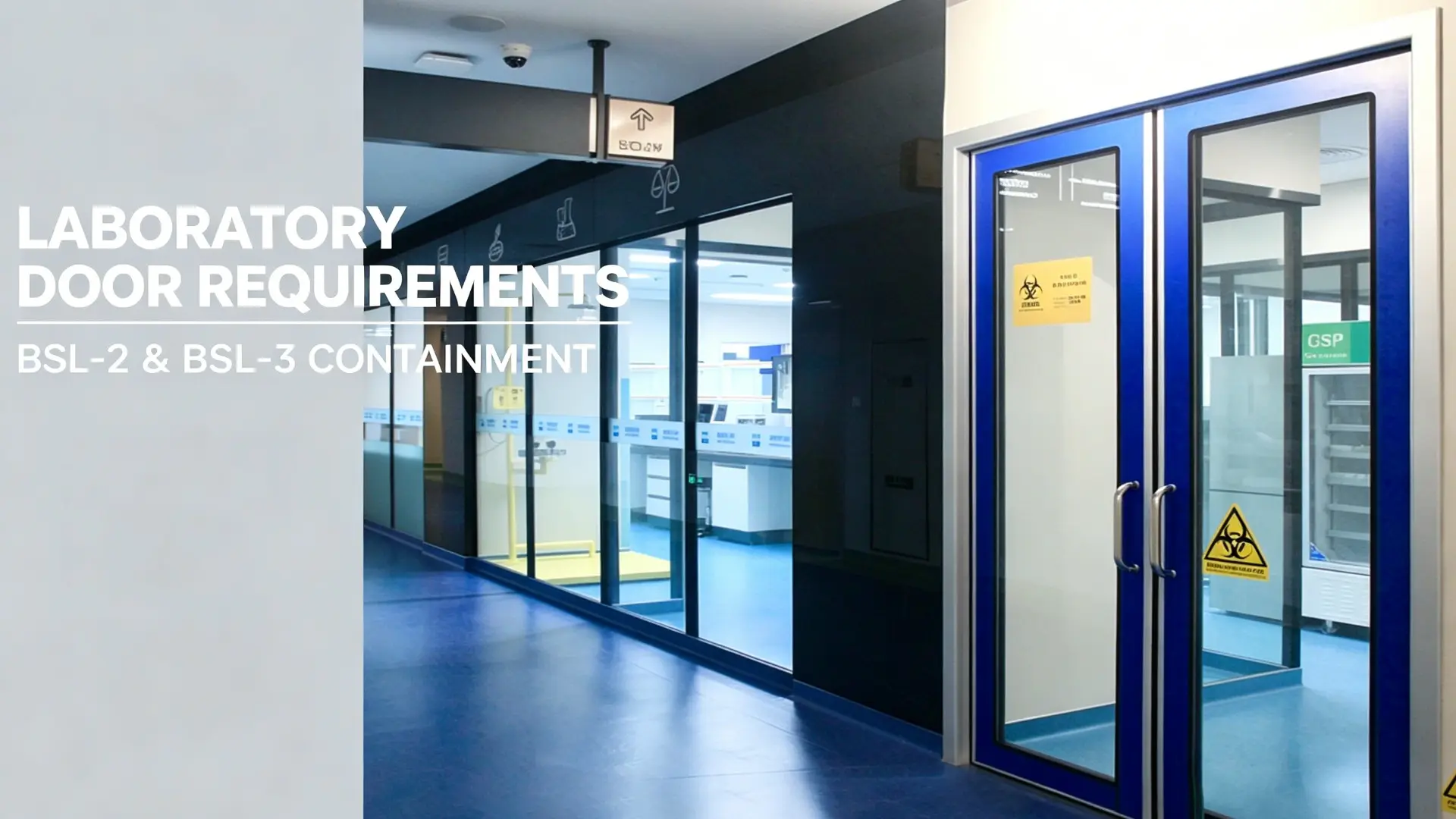
Laboratory Door Requirements for BSL-2 and BSL-3 Containment
BSL-2 and BSL-3 laboratories work with agents that can spread through contact, droplets, or inhaled air. The room envelope does the containment, and the door is the moving part of that envelope. A standard door with a gap under the leaf breaks the barrier every time it closes, letting particles and aerosols drift between zones. For a lab that handles infectious or airborne material, that drift is the failure mode auditors look for first. Most teams confront these requirements during a new lab build, a containment upgrade, or a biosafety review that had been deferred for too long. A laboratory door specified for the right biosafety level holds the pressure cascade, seals the threshold, and interlocks with the airlock so the barrier stays intact. Get the spec right and the rest of the containment design has something solid to build on.
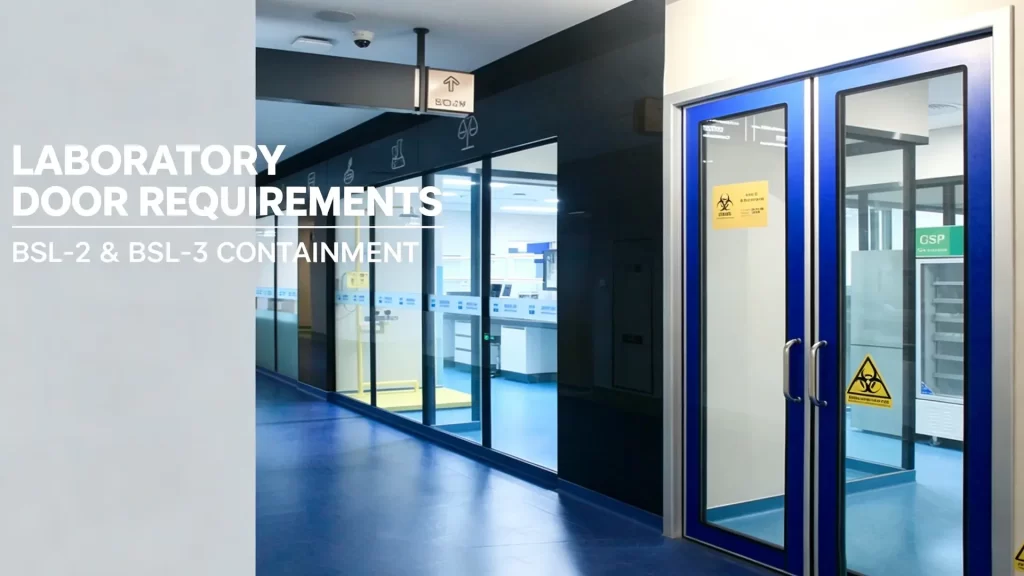
What BSL-2 and BSL-3 ask of the door
Biosafety levels describe how much protection the workspace needs between the agent and the people outside it. BSL-2 covers moderate risk agents handled through contact and droplets, such as certain bloodborne pathogens and common clinical bacteria. At this level the door needs to close reliably, present a cleanable surface, and control who passes through. BSL-3 covers agents that can infect people if inhaled as an aerosol, such as tuberculosis or certain emerging respiratory threats. Here the lab runs under negative pressure with directional airflow, and the door must be airtight, interlocked, and sealed at the floor so contaminated air cannot escape the room.
The difference between the two is not cosmetic. It is the containment strategy. A BSL-2 door keeps the workspace tidy and controlled. A BSL-3 door is part of an engineered barrier that actively holds air where it belongs. Specifying one as if it were the other is how biosafety reviews fail.
The containment job a laboratory door performs
A containment door does five jobs a standard door never does:
- Hold the pressure cascade. The room must stay at the pressure the design calls for, negative for BSL-3 and directional for BSL-2 buffer spaces. The door is where that pressure most often leaks.
- Seal the perimeter and threshold. Contaminants move through the smallest gap. A sealed frame to wall joint and a sealed floor edge keep the envelope continuous.
- Interlock inside the airlock. In a BSL-3 facility the passage into the lab runs through an airlock with two doors. The controller lets only one open at a time, so the dirty and clean sides never connect directly.
- Resist the chemicals used for decontamination. Labs wipe, fog, and swab with harsh agents. The door face and frame must survive that contact without degrading.
- Allow visibility and controlled access. A viewing panel and access control let staff see and manage who moves through the barrier without breaking it.
BSL-2 door requirements
At BSL-2 the door is a controlled, cleanable barrier rather than a fully airtight one. Self closing is the baseline: the leaf must latch every time, with no gap left by a propped open habit. The fit between leaf and frame should be tight enough to limit routine air movement, and the face should be smooth and nonporous so disinfectant does not pool in texture.
An observation window helps staff see the corridor before opening, and access control keeps untrained visitors out. BSL-2 rooms are often placed next to a buffer or a BSL-3 ante room, so the door should not become an unconscious path from dirty to clean traffic. The material choice follows the work: stainless steel where the space is wet or sterile, HPL where it is dry and needs a calm, wipeable surface.
BSL-3 door requirements
BSL-3 raises the bar from controlled to airtight. The leaf must seal against the frame with a published leakage rate, tested at the pressures the room actually runs, not a number picked for convenience. The passage into the lab goes through an interlocked airlock, so the door is really two doors sequenced by a controller that blocks simultaneous opening.
Negative pressure is maintained continuously, and the exhaust passes through HEPA filtration on its way out. There is no undercut gap at the threshold. An automatic drop seal engages the moment the leaf closes and lifts as it opens, so the floor edge stays sealed without blocking carts. The surface must resist frequent, aggressive disinfection, including hypochlorite, quaternary ammonium, and in some facilities hydrogen peroxide vapor. The frame bonds flush to the wall panel so there is no crevice where residue collects. In practice this means the installer checks that joint before the wall closes up, because a sealed leaf on a leaky frame still leaks. E-ZONG builds cleanroom door systems across sliding, swing, hermetic, and airtight types, so a BSL-3 spec can be met with one supplier rather than a mix of vendors.
BSL-2 vs BSL-3: a requirement comparison
| Requirement | BSL-2 | BSL-3 |
|---|---|---|
| Pressure regime | Often neutral or buffer adjacent | Negative, directional airflow |
| Seal class | Tight fit, self closing | Airtight, tested leakage rate |
| Interlock | Usually single door | Interlocked airlock, two doors |
| Threshold | Minimal gap | Automatic drop seal, no undercut |
| Material | Cleanable HPL or stainless | Disinfectant resistant, sealed edges |
| Access | Controlled entry | Controlled, logged, through airlock |
The table is a planning aid, not a substitute for the local biosafety code. Confirm each line against the standard your facility is assessed under before the order is placed.
Materials and surfaces that survive the lab
The right material follows the agents your team uses for cleaning, not the showroom sample. Stainless steel suits wet and sterile zones because it resists corrosion and wipes down fast. HPL panels give a smooth, nonporous face for drier labs where a calm appearance matters. Coated or anodized aluminum frames shrug off quats and hypochlorite better than bare painted metal. Color steel plate leaves are another common choice in pharmaceutical and chemical labs, where a rigid, wipeable panel suits the daily workflow.
Avoid porous, painted, or heavily jointed surfaces. They trap residue, and residue is what audit swabs find. Sealed edges matter as much as the panel face, because moisture travels into a poorly finished joint and undermines the whole leaf. If you are unsure which finish your disinfectants allow, send the agent list to the supplier and let the material choice follow the chemistry.
Interlock and airlock configuration
An interlock controller sequences two doors so only one can be open at any moment. That single rule is what stops the airlock from becoming a direct opening between the lab and the corridor. The controller can run on a simple magnetic latch or a programmed logic unit, but the principle is the same: the second leaf will not release until the first is closed and sealed. Power loss matters here too, because a good controller fails closed and holds the barrier instead of popping both leaves open.
Placement matters. The airlock sits between the change room and the lab, often next to a passbox or a decontamination hatch, so materials move in and out without a person crossing the barrier. For an existing building, the door hardware must fit the header space already there. Where the ceiling void is shallow, a low profile track or a swing automatic operator may be the practical pick. The same logic drives the design behind automatic clean room sliding doors, where the seal and the motion work as one system rather than two parts bolted together.
Validation and what auditors check
A containment door answers to auditors long after install. ISO 14644 sets the particle class the room is designed for, and the door with its seal must hold it. Biosafety and GMP programs demand validation documents: installation qualification, operational qualification, and performance data. Ask for these before the order, because chasing signatures after the wall is closed is slow and stressful.
Auditors look at the frame to wall joint, the drop seal engagement, and the interlock function when two leaves share an airlock. They want a leakage rate measured at the pressures the room runs, not a generic claim of airtight. Re-test after install, keep site photos, and treat a clean install with evidence as better than a perfect spec sheet with a gap on site. Some programs also require periodic re qualification on a fixed schedule, so build the test points into the door rather than bolting them on after the fact. E-ZONG supplies shop drawings, material certificates, and test support so the file survives an ISO or biosafety audit. Leave the documentation until after install, and an inspection you thought was covered becomes the one that fails.
Common specification mistakes
Most failures trace back to a handful of choices. Sizing the door to a catalogue rather than the real opening leaves a poor seal or a widened wall. Skipping the interlock turns the airlock into a shortcut. A weak frame to wall joint leaks no matter how good the leaf is. The wrong material for the disinfectants in use cracks or stains within months. No validation file means the audit stalls even when the door performs. The worst mistake is treating the door as furniture instead of as a rated part of the containment barrier.
Real example: a BSL-2 mobile PCR lab
This is not abstract. E-ZONG's project record includes the Mingde Bio mobile shelter PCR lab, a biosafety level 2 unit built inside a mobile shelter. The doors were specified for containment under tight space and weight limits, with sliding and airtight systems supporting a working BSL-2 laboratory that could be moved to where testing was needed. The project shows what a level-based spec looks like when the envelope has to perform in a transportable shell rather than a fixed building. A finished, operating lab is the clearest evidence the spec worked.
The same containment thinking applies to fixed facilities. E-ZONG's pharmaceutical cleanroom workshop work and its biotechnology clean room solutions cover GMP and research labs where pressure cascade and cleanable surfaces are the daily requirement, not the exception.
FAQs
Can a BSL-2 door serve a BSL-3 lab?
No. BSL-3 needs an airtight, tested seal and an interlocked airlock, where BSL-2 needs a controlled, cleanable barrier. Using the lower spec at the higher level breaks the containment strategy and fails review.
Does the laboratory door need HEPA filtration?
The door itself does not carry HEPA. The room exhaust path does, on its way out of a BSL-3 space. The door's job is to hold the negative pressure and seal the envelope so the filtered air is the only air leaving.
How is airtightness verified?
A supplier measures the leakage rate at the pressures the room runs and reports it as part of validation. Auditors check that number against the room class, then confirm the seal on site after install.
Sliding or swing for a BSL-3 airlock?
Either works if it is sealed and interlocked. Swing leaves are common in small airlocks because they seal well at the jamb. Sliding leaves suit high traffic clean corridors where a swing arc would block a cart. Match the type to the traffic and the space.
Which material resists lab disinfectants?
Stainless steel and HPL with sealed edges resist most lab agents, including hypochlorite and quaternary ammonium. Avoid bare wood, particle board, or porous painted surfaces that absorb residue. Confirm the finish against the specific chemicals your protocol uses.
Conclusion
A BSL-2 or BSL-3 laboratory door is specified by the containment level, not the catalogue. Match the seal, the interlock, and the material to the agent and to the chemicals used for cleaning, document the result, and test it after install. Done well, the door holds the barrier that the rest of the lab depends on, and it keeps the audit quiet.
If you are specifying doors for a new or upgraded lab, send E-ZONG's technical team your biosafety level, room classification, opening size, and disinfectant list for a free sizing and material review. The right spec starts with the right drawing.
-
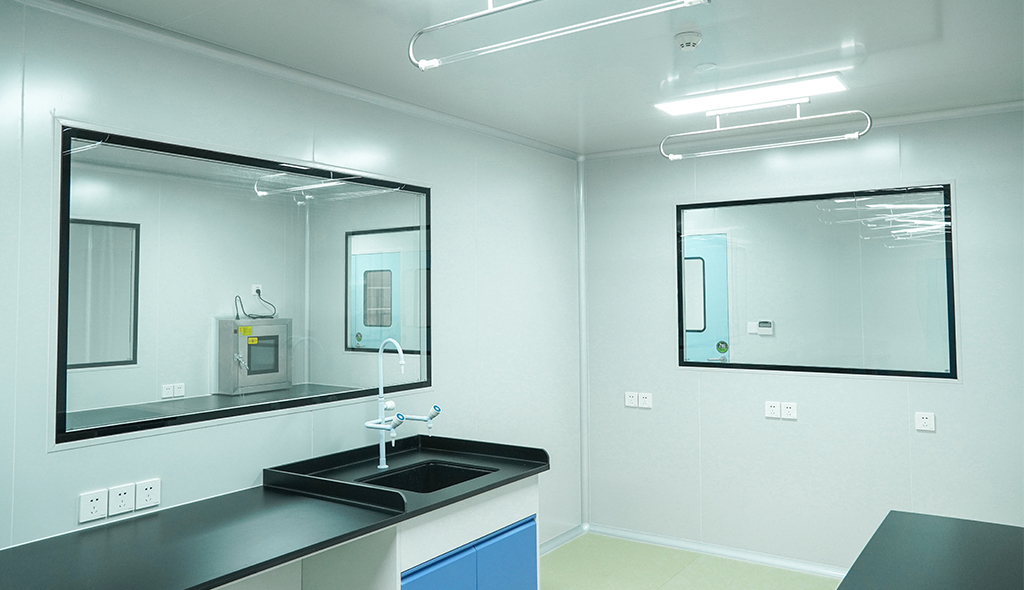 Cleanroom Glass Windows Are The Key to Maintaining a Clean Environment
 -
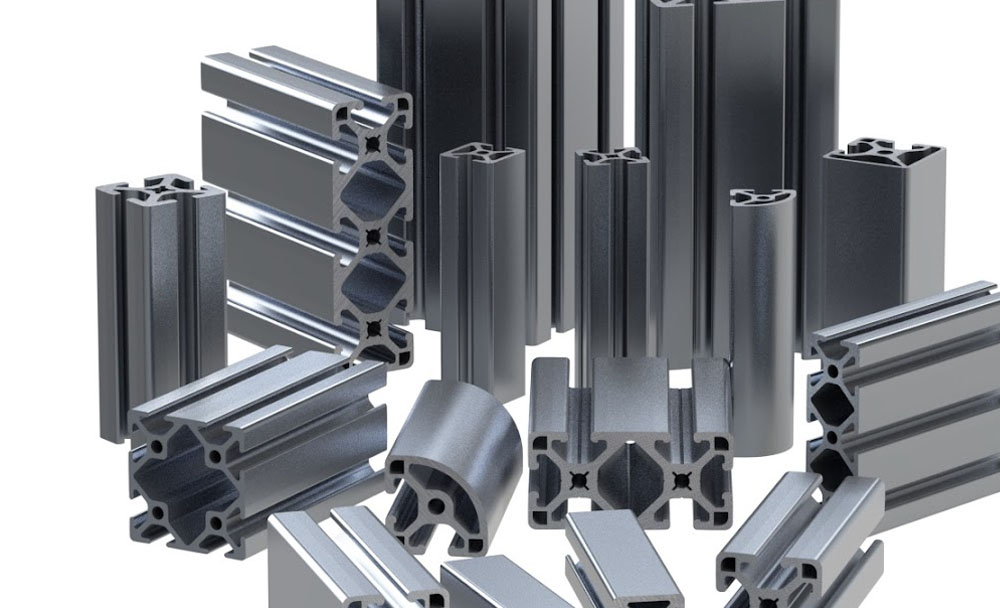 Top Aluminium Profile Manufacturers in China: Leading the Global Market
 -
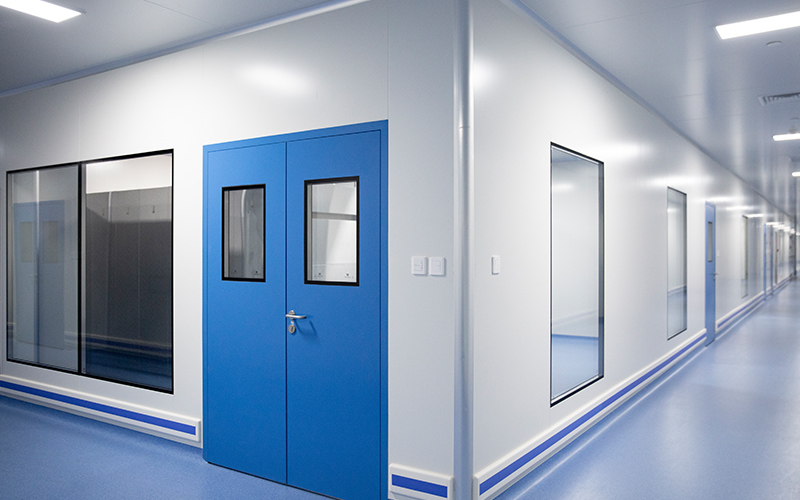 The Evolution of Air Tight Sliding Doors
 -
 AHU Aluminium Profile: A Comprehensive Guide
 -
 The Importance of Choosing the Right Cleanroom Door in Vietnam
 -
 The Benefits of Hospital Automatic Doors: Enhancing Efficiency and Safety
 -
.jpg) The Best Bathroom Door Manufacturers - Unlocking Endless Possibilities!
The Best Bathroom Door Manufacturers - Unlocking Endless Possibilities! -
 Unlock the Possibilities with AJ Manufacturing Doors
 -
 Make a Statement with Manufactured Home Interior Doors!
 -
 what is aluminum profile? Aluminum Profiles for Your Home is the best option
-
 Laboratory Door Requirements for BSL-2 and BSL-3 Containment
 -
 Retrofitting Hospital Sliding Doors: Upgrade Wards Without a Rebuild
 -
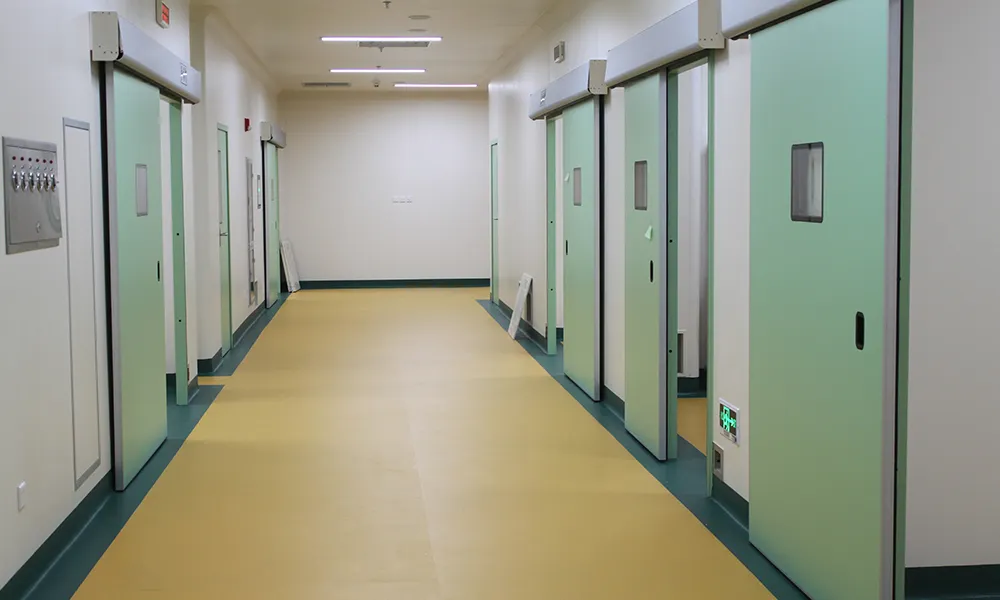 Why Airtight Hospital Sliding Doors Are Critical for Infection Control
 -
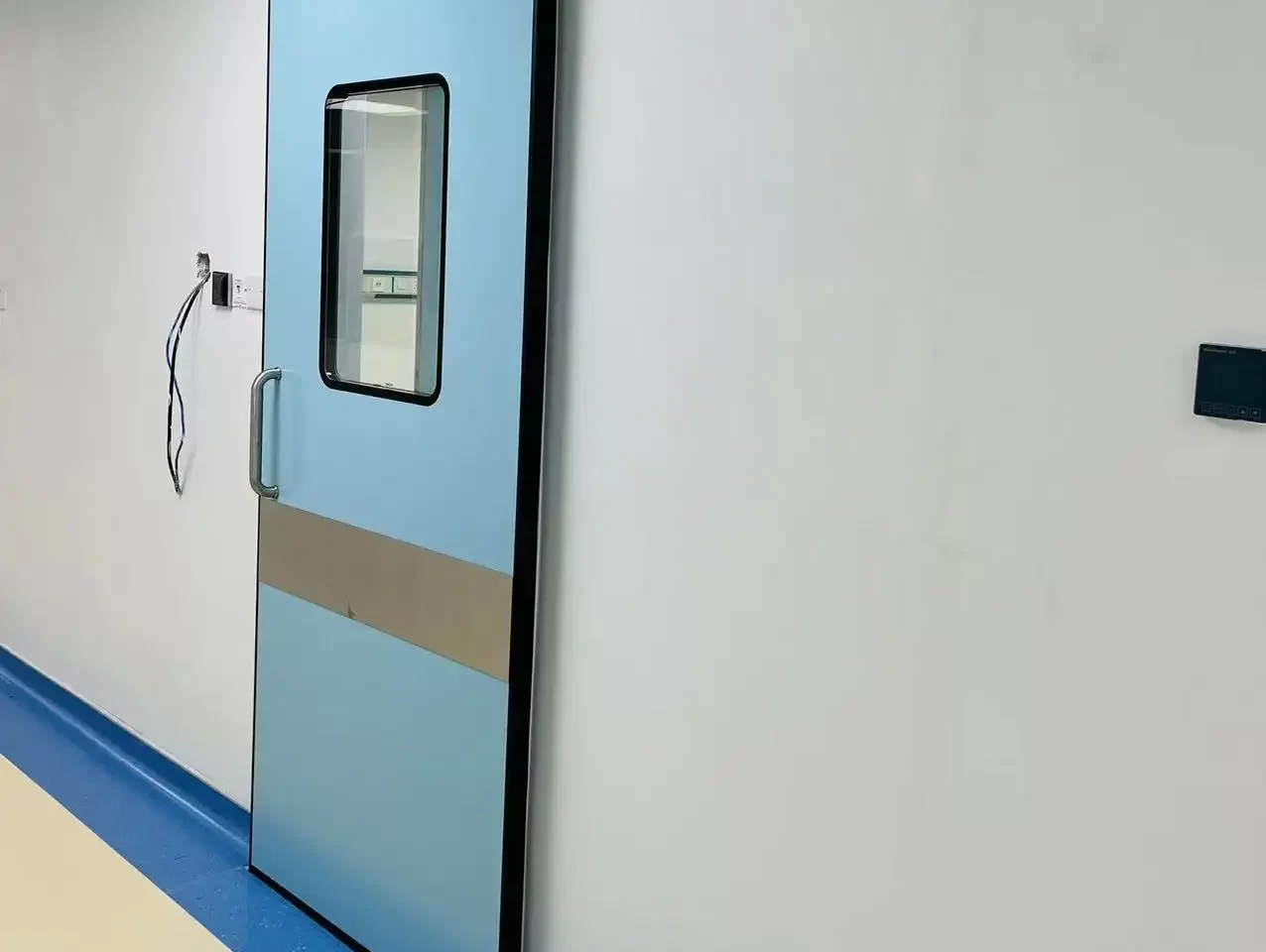 Automatic cleanroom door systems: sensor, actuator and access control integration
 -
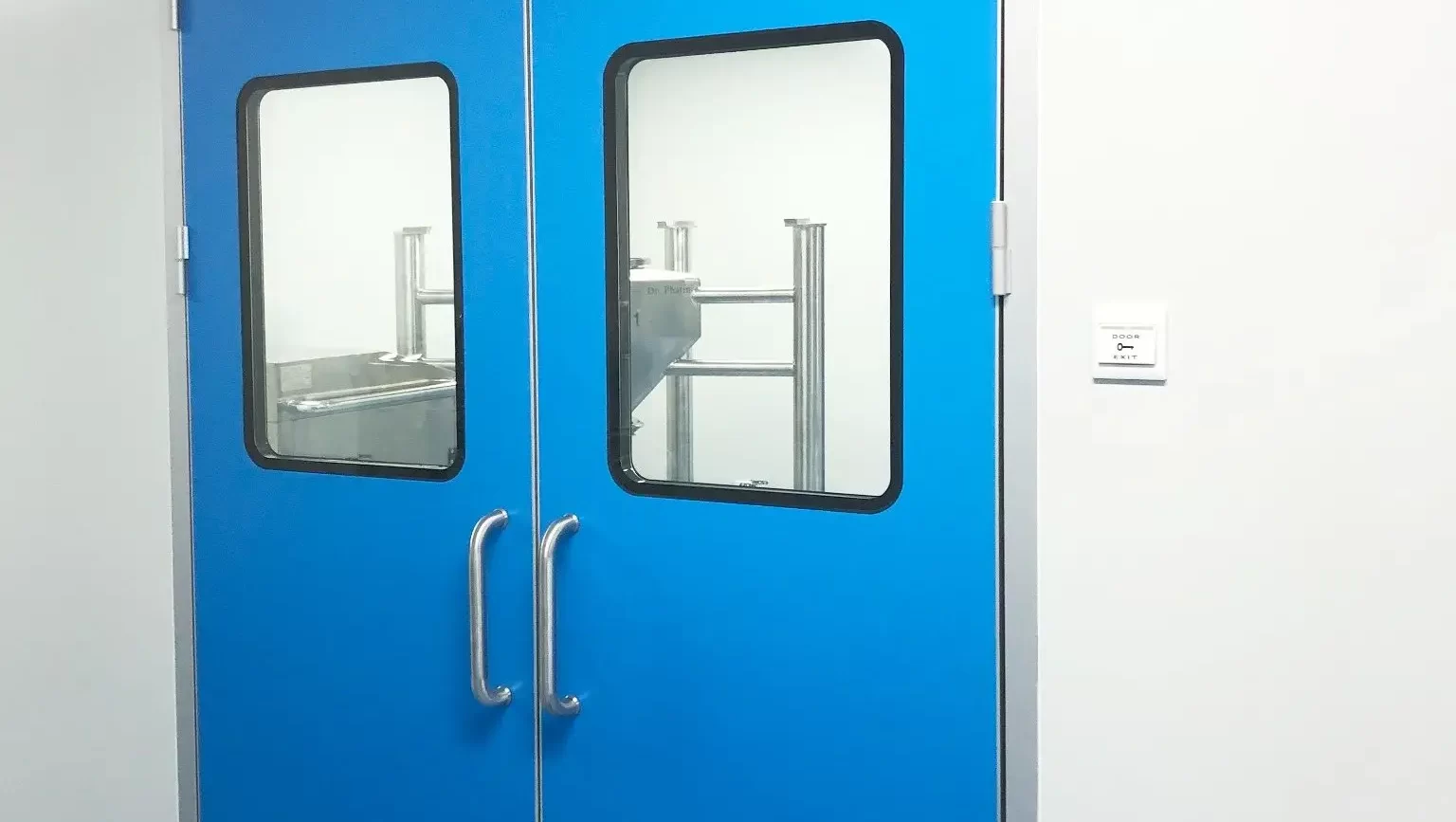 Cleanroom Door Materials: Stainless Steel vs HPL vs FRP vs Aluminum Comparison
 -
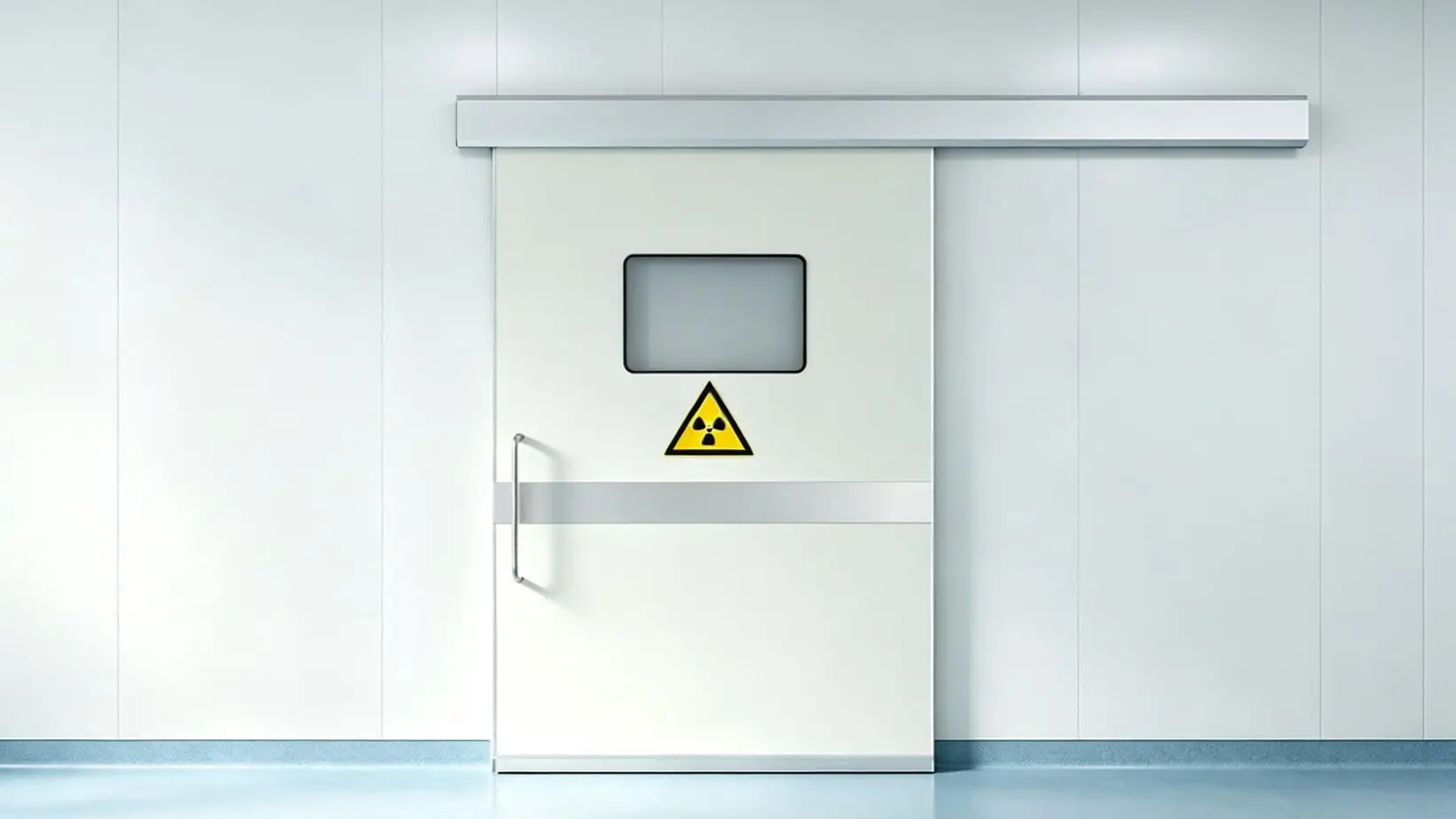 X-Ray Room Door Buying Guide: Lead Thickness & Compliance
 -
 Operating Room Doors: Hermetic & Infection-Control Guide
 -
 Hospital ICU Door Selection: Sealing, Sterility & Workflow
 -
 Cleanroom Door Maintenance Schedule: Daily, Weekly & Monthly GMP Checklist
 -
 Cleanroom Door Viewing Windows: Glass vs Polycarbonate Panel Selection


-

Home
-

Tel
-

Email
-

Contact


Guangzhou Yizhong Aluminum Industry Co., Ltd.
We are always providing our customers with reliable products and considerate services.
We are always providing our customers with reliable products and considerate services.
Speak Your Mind