
Airtight Automatic Doors for Hospitals and Cleanrooms
In hospitals and pharmaceutical facilities, you are likely accustomed to dedicating significant resources to maintaining HVAC systems or HEPA filters. However, it is easy to overlook one critical detail that cycles open and closed hundreds of times a day: the door.
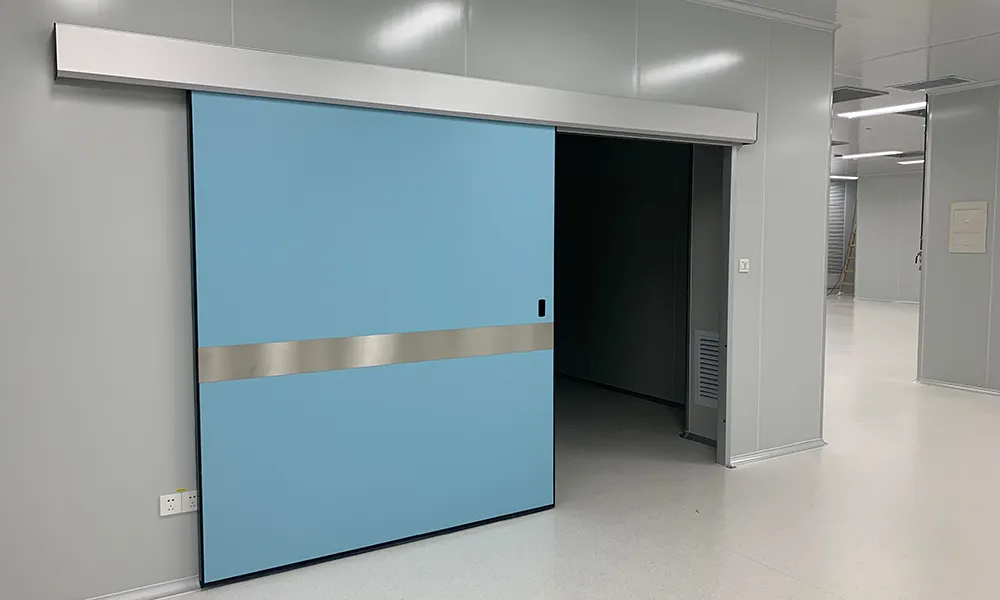
In a controlled environment, a standard door that fails to seal properly causes far more than just a pressure differential alarm in the hallway. It invites particulate intrusion, risks cross-contamination, and can easily become a critical "red flag" during a compliance audit. This is precisely why selecting a truly reliable Airtight Automatic Door is so critical in modern controlled environments. It has long evolved beyond a simple physical barrier; it is the core dynamic defense line for maintaining sterility and blocking contamination. On engineering sites, it is also frequently referred to as a Hermetic Sliding Door or a Cleanroom Automatic Door.
Today, let’s discuss the most practical issues: under the increasingly stringent standards of 2026, how to avoid common selection pitfalls and find the exact Airtight Automatic Door that perfectly aligns with your project's specific pain points, whether for operating theaters, GMP facilities, or biosafety laboratories.
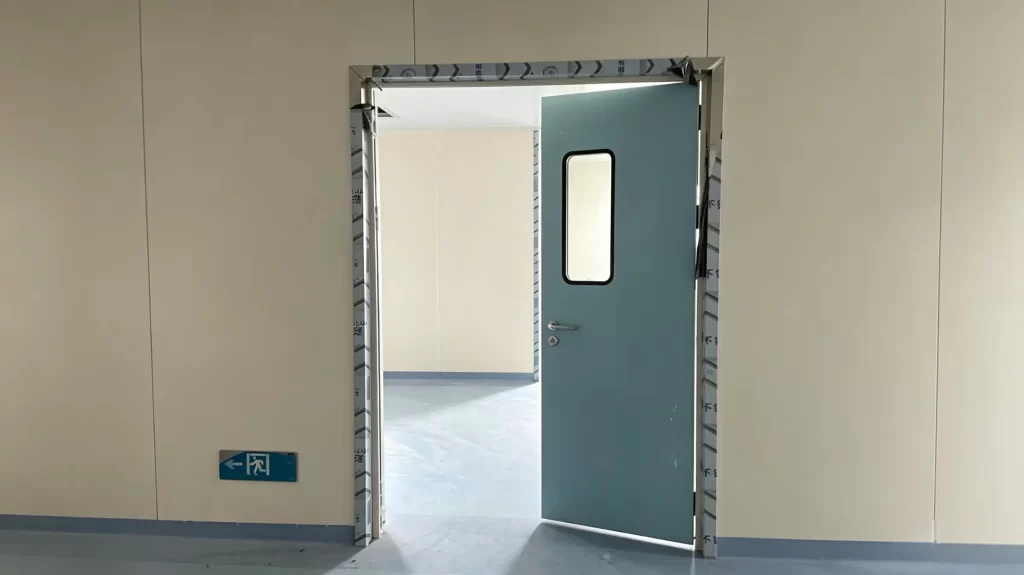
I. Core Performance Dimensions of an Airtight Automatic Door: Building a Dynamic Cleanroom Defense
The core value of an Airtight Automatic Door that meets modern cleanroom standards lies in its ultimate control over four key dimensions: sealing, sensing, traffic flow, and hygiene.
1. Advanced Dynamic Sealing Mechanisms and Pressure Differential Control
The essence of airtightness lies in whether the door leaf can form an absolute physical block the moment it closes. Modern high-end airtight automatic doors have abandoned traditional, simple rubber strip contact, opting instead for a synergistic mechanism combining drop-down seals and perimeter compression seals.
As the door leaf reaches the closed position, precision mechanical or pneumatic actuators drive the entire leaf to drop slightly (typically 5-10mm). This presses the bottom seal tightly against the floor, while the EPDM or silicone compression seals on the sides and top deform under the pressure of the door frame, filling every microscopic gap. This design ensures that even with a pressure differential of 10 Pa to 50 Pa (or higher) across the door, the air leakage rate remains strictly controlled at an exceptionally low level. A superior system design can effortlessly meet the stringent requirements of an ISO 14644 compliant door, and even achieve EN 12207 Class 4 or higher airtightness ratings, effectively preventing air convection and contaminant infiltration between clean and non-clean zones.
2. Intelligent Sensing Matrix and Traffic Flow Optimization
In busy medical or production environments, traffic efficiency and safety must go hand in hand. Traditional single microwave sensors can no longer meet the demands of complex scenarios. The mainstream Airtight Automatic Door in 2026 widely adopts a multi-sensor fusion matrix to deliver an exceptional touchless automatic door sensor for infection control experience:
- Millimeter-wave radar and 3D ToF sensors: Provide high-precision presence detection and motion trajectory tracking. They can accurately distinguish between personnel, hospital beds, material carts, and even small animals (in hospital settings), effectively avoiding false triggers while minimizing blind spots.
- Active infrared safety light curtains: Form a dense infrared protection grid in the door closing area. Once an obstacle is detected, the door reverses and opens within milliseconds, eliminating the risk of pinching and fully complying with the EN 16005 safety standard for power-operated doors.
Regarding traffic efficiency, for stretchers or large equipment, the system supports a high-speed operation mode with opening speeds reaching 1.0 to 1.5 meters per second. It also allows customization of the hold-open time via foot switches, wireless remotes, or access control system linkage. This not only maximizes logistics turnover efficiency but also uses algorithmic optimization to reduce the instantaneous impact of frequent door cycling on indoor pressure differentials.
3. Ultimate Hygienic Design and Particulate Control
The enemy of a cleanroom is not just macroscopic contaminants, but also microscopic particles. The structural design of an airtight automatic door must adhere to the principles of "no dead corners, easy to clean, and low particle release," which is the key criterion for evaluating whether a GMP cleanroom door is qualified.
- Seamless and antimicrobial surfaces: Door leaves are typically made of 304 or 316L medical-grade stainless steel, featuring fine brushed or electrostatic powder-coated finishes, with optional antimicrobial coatings (e.g., silver ions). The door edges utilize seamless full-welding craftsmanship to eliminate breeding grounds for bacteria and mold.
- Concealed tracks and low particle release: The operating track is completely enclosed within the door frame to prevent dust accumulation. The motor drive system utilizes a DC brushless motor paired with precision silent guide rails, ensuring smooth, vibration-free operation. This low-vibration design is crucial, as it effectively prevents particle shedding from the cleanroom ceiling or HEPA/ULPA filters caused by door tremors, safeguarding the cleanliness class stipulated by ISO 14644-1.
II. Typical Application Scenarios and Precise Selection Guide
Different cleanroom environments have significantly distinct demands for an Airtight Automatic Door. Selection must be customized based on specific scenario pain points and compliance standards; a "one-size-fits-all" approach must be avoided.
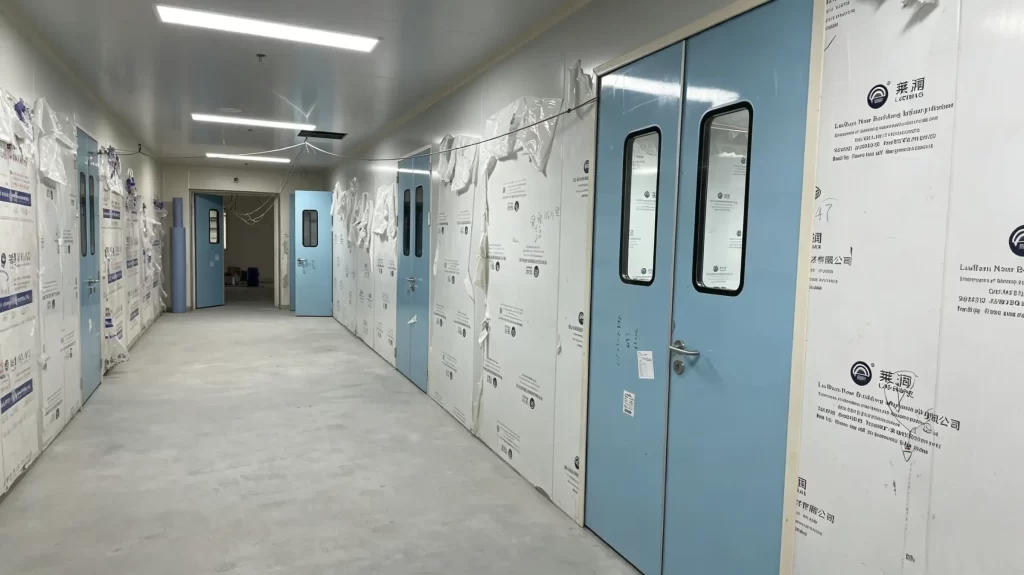
1. Hospitals & Operating Theaters
- Core Pain Points: Strict hospital infection prevention and control (IPC), frequent passage of large medical equipment/hospital beds, radiation shielding requirements in specific areas (e.g., radiology departments, hybrid operating rooms), and exceptionally high demands for operational noise levels.
- Selection Strategy:
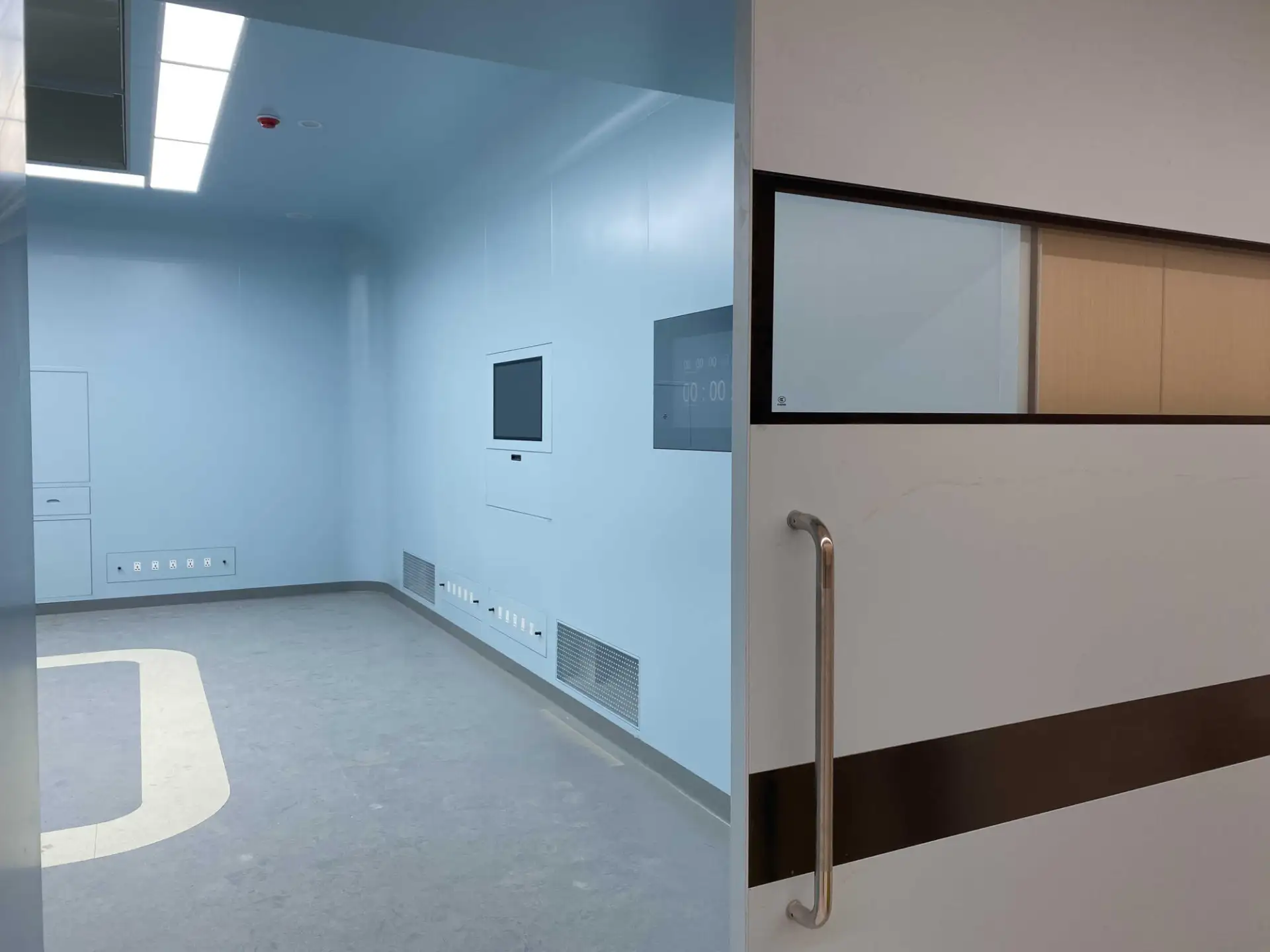
- Wide-clearance and barrier-free design: For operating theaters, priority should be given to an airtight automatic sliding door for operating theater. Its clear opening width should be ≥ 1400mm to ensure smooth passage for hospital beds with complex monitors or large C-arm machines, while ensuring the door leaf does not encroach upon valuable sterile space inside the room when open.
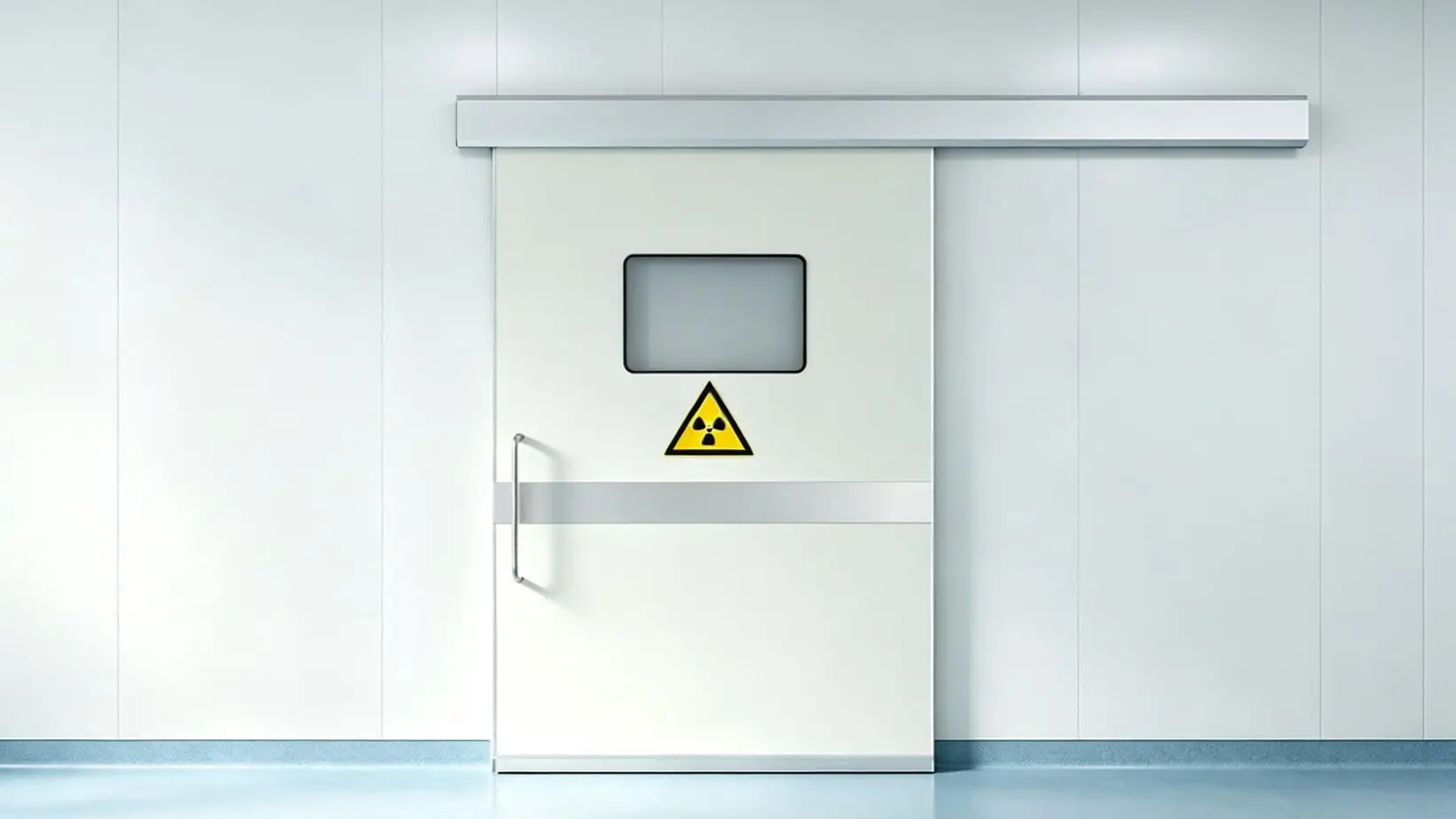
- Radiation shielding configuration: If applied in radiology or hybrid operating rooms, a lead-lined airtight automatic door for radiology is mandatory. Pure lead plates must be embedded inside the door leaf according to lead equivalence requirements (e.g., 2.0 mmPb or 3.0 mmPb), and a radiation-shielding labyrinth structure must be designed at the overlap between the door frame and leaf to ensure zero leakage of X-rays or gamma rays.
- Silent and smooth operation: Operational noise must be strictly controlled below 45 dB(A) to avoid acoustic and visual interference for post-operative patients or during precision surgical procedures. Additionally, a highly sensitive anti-pinch safety light curtain is mandatory to guarantee absolute patient safety.
2. Pharmaceutical Manufacturing & GMP Facilities
- Core Pain Points: Strict zonal pressure differential gradient control (e.g., between Grade A/B and Grade C/D cleanrooms), safe transfer of sterile materials, and the equipment's necessity to withstand frequent CIP/SIP (Clean-in-Place / Steam-in-Place) cycles.
- Selection Strategy:
- High-level protection and materials: Models with an overall ingress protection rating of IP65 or higher must be selected. The door body and hardware should be made of 316L medical-grade stainless steel. The sealing strips require special formula treatments to withstand Vaporized Hydrogen Peroxide (VHP) fumigation or autoclaving without hardening, deforming, or releasing Volatile Organic Compounds (VOCs).
- Deep BMS integration: Modern pharmaceutical plants emphasize BMS integration for cleanroom doors. The door control system should support standard industrial protocols (e.g., BACnet, Modbus TCP) for seamless interfacing with the facility's Building Management System (BMS) or Environmental Monitoring System (EMS). When the door opens, the BMS can automatically link with the HVAC system to increase air supply volume, compensating for instantaneous pressure loss and ensuring environmental parameters remain within validated ranges.
- Interlock and access management: In critical airlocks or material pass-throughs, an automatic hermetic door with interlock system must be configured. This ensures that both doors cannot be opened simultaneously, maintaining the physical isolation function of the airlock and preventing cross-contamination.
3. Research Laboratories & Biosafety Labs
- Core Pain Points: Airtight integrity validation for BSL-2/BSL-3 levels, prevention of hazardous aerosol leakage, strict personnel access control, and safe emergency evacuation.
- Selection Strategy:
- Airtight integrity validation support: During selection, confirm that the supplier can provide airtightness test reports compliant with biosafety laboratory construction standards (e.g., GB 50346 or NIH Guidelines). The door structure must withstand the structural stress during negative pressure operation without deformation.
- Multi-factor access and biometrics: Integration of card readers, fingerprint, or facial recognition systems to enforce strict access management and maintain an audit trail. This ensures only authorized personnel can enter high-risk zones, logging every passage event.
- Fail-safe / Fail-secure mechanisms: This is the baseline requirement for biosafety labs. The system must be configurable so that during a power outage or fire alarm, the airtight door automatically unlocks and opens (fail-safe) to ensure emergency evacuation, or remains locked (fail-secure) in specific high-risk zones to prevent pathogen leakage. The final configuration must be determined based on the specific biosafety risk assessment report.
III. Maintenance Value and Lifecycle Management: From Reactive Repairs to Predictive Operations
In a cleanroom environment, unplanned downtime of an airtight door means more than just a halt in production or medical activities; it can lead to environmental loss of control and severe compliance risks. Therefore, the maintenance value of a modern Airtight Automatic Door has shifted from "fix it when it breaks" to "predictive operations and compliance support."
1. IoT Predictive Maintenance and Condition Monitoring
Smart airtight door controllers in 2026 feature advanced IoT diagnostic modules. The system can monitor motor current waveforms, open/close cycle counts, seal compression resistance, and sensor status in real time. Through edge computing algorithms, the system can identify performance degradation trends before components (such as drive belts, bearings, or sealing strips) suffer substantive failure, sending early warnings to the facility management team. This predictive maintenance can reduce unplanned downtime by over 70%, ensuring cleanroom operational continuity and preventing batch scrapping or surgical delays caused by sudden breakdowns.
2. Modular Design and Compliance Audit Support
To accommodate the stringent maintenance environment of cleanrooms, excellent product designs adopt highly modular structures. For instance, replacing the bottom drop-down seal or side compression seals does not require dismantling the entire door leaf. Maintenance personnel can complete the replacement within 15 minutes, significantly reducing cleanroom exposure time and lowering contamination risks.
More importantly, in the pharmaceutical and medical sectors, compliance is life. Modern airtight door systems can automatically generate and store detailed operation logs, maintenance records, and calibration certificates. Suppliers should be able to provide complete validation documentation (including URS, DQ, IQ, OQ, and PQ support files). These comprehensive documents empower facility managers to easily navigate strict compliance audits by regulatory bodies such as the FDA, NMPA, EMA, or The Joint Commission, proving that your environmental control facilities remain in a constant state of control.
Conclusion
Selecting the right Airtight Automatic Door is far more than a simple building material purchase; it is an investment in a dynamic "clean defense line" for hospitals, pharmaceutical plants, and laboratories. Through superior sealing mechanisms, intelligent sensing systems, and deep scenario adaptation, it directly empowers the long-term safety and operational excellence of your project by ensuring pressure stability, enhancing traffic efficiency, and simplifying compliance maintenance.
-
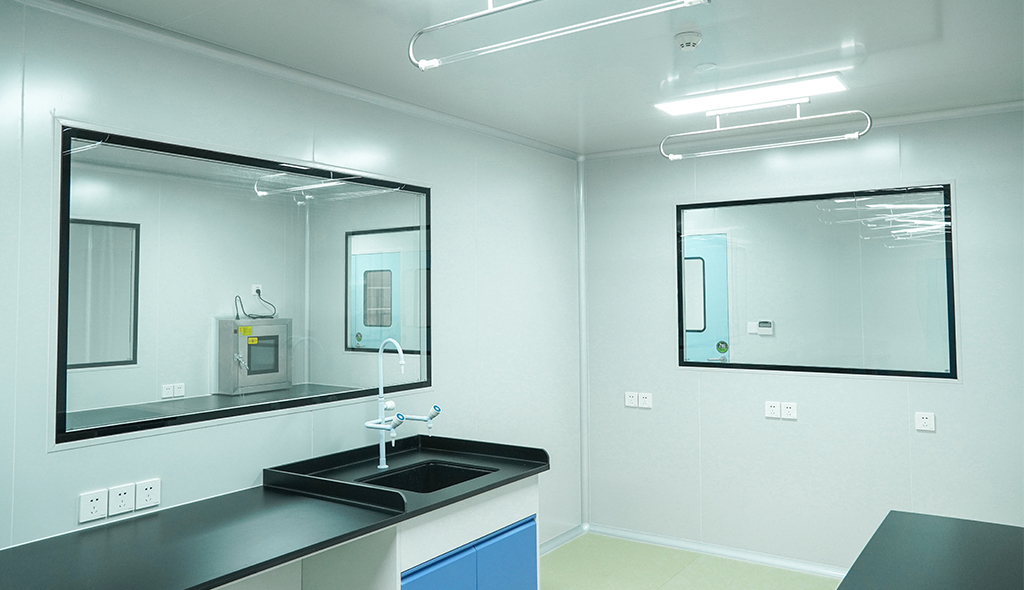 Cleanroom Glass Windows Are The Key to Maintaining a Clean Environment
 -
 Top Aluminium Profile Manufacturers in China: Leading the Global Market
 -
 The Evolution of Air Tight Sliding Doors
 -
 AHU Aluminium Profile: A Comprehensive Guide
 -
 The Importance of Choosing the Right Cleanroom Door in Vietnam
 -
 The Benefits of Hospital Automatic Doors: Enhancing Efficiency and Safety
 -
.jpg) The Best Bathroom Door Manufacturers - Unlocking Endless Possibilities!
The Best Bathroom Door Manufacturers - Unlocking Endless Possibilities! -
 Unlock the Possibilities with AJ Manufacturing Doors
 -
 Make a Statement with Manufactured Home Interior Doors!
 -
 what is aluminum profile? Aluminum Profiles for Your Home is the best option
-
 Hospital Emergency Exit Doors: 90 Minute Fire Rating Meets Infection Control
 -
 ICU and Isolation Door Requirements Hospitals Often Overlook
 -
 Laboratory Door Requirements for BSL-2 and BSL-3 Containment
 -
 Retrofitting Hospital Sliding Doors: Upgrade Wards Without a Rebuild
 -
 Why Airtight Hospital Sliding Doors Are Critical for Infection Control
 -
 Automatic cleanroom door systems: sensor, actuator and access control integration
 -
 Cleanroom Door Materials: Stainless Steel vs HPL vs FRP vs Aluminum Comparison
 -
 X-Ray Room Door Buying Guide: Lead Thickness & Compliance
 -
 Operating Room Doors: Hermetic & Infection-Control Guide
 -
 Hospital ICU Door Selection: Sealing, Sterility & Workflow




-

Home
-

Tel
-

Email
-

Contact


Guangzhou Yizhong Aluminum Industry Co., Ltd.
We are always providing our customers with reliable products and considerate services.
We are always providing our customers with reliable products and considerate services.
Speak Your Mind