Hygienic Doors Selection Guide: Food, Pharma, Healthcare
In food, pharmaceutical, and healthcare facilities, managers frequently face frustrating operational issues: cleanroom pressure differentials failing to meet targets, door bottoms leaking and molding, or operating room doors sagging prematurely. The root cause often points to an overlooked critical juncture: the door.
As the primary dynamic defense line against contamination, selecting the wrong hygienic doors or hospital doors leads to endless compliance, cleaning, and energy headaches. Because these doors face drastically different challenges across industries—high-pressure washdowns in food plants, VHP sterilization in pharma, and heavy physical impacts in hospitals—a one-size-fits-all approach fails. This guide deconstructs the engineering logic behind cleanroom doors to help you make precise, cross-industry selection decisions and avoid costly procurement pitfalls.
The Four Core Pillars of Hygienic Doors Design
A qualified hygienic door is a precision system integrating materials science, aerodynamics, and mechanical engineering. Its design must be built upon four core pillars:
1. Seamless and Easy-to-Clean Surface Design
- Ultra-Low Roughness: Surface roughness (Ra value) strictly controlled below 0.4 micrometers to deprive microorganisms of physical anchoring points, defining true easy-to-clean hygienic doors.
- Flush Design: All components (vision panels, louvers, kick plates, handles) must be completely flush with the main surface or feature large radius transitions (R ≥ 10mm), eliminating 90-degree cleaning dead zones.
- Functional Surface Treatment: Anti-static powder coatings (10^6–10^9 ohms resistivity) prevent particle attraction, while low surface energy creates a "lotus effect" (hydrophobic and oleophobic) for effortless wiping.
2. Chemical and Corrosion Resistance
- CIP/SIP Tolerance: Must withstand 121℃–135℃ steam and harsh chemicals (e.g., sodium hypochlorite, strong alkalis) in food plants.
- VHP Sterilization Tolerance: Sourcing VHP resistant cleanroom doors is critical. Premium polyurethane coatings easily pass 500+ VHP cycles without chalking, unlike inferior coatings that degrade within 50–100 cycles.
- Substrate Upgrades: High-chloride environments mandate SUS316L stainless steel (with molybdenum) or electropolished (EP) finishes to resist pitting and crevice corrosion.
3. High-Performance Sealing Systems
- Static Multi-Layer Sealing: Multi-step lapping design embedded with medical-grade platinum-cured silicone gaskets (Shore A 40–50), ensuring a compression set of < 5%.
- Dynamic Bottom Sealing: Automatic sliding doors use inflatable bottom seals or flexible brush combinations; cleanroom swing doors utilize concealed drop-down seals.
- Craftsmanship Details: Gaskets require 45-degree mitered hot-melt welding (no right-angle splicing) to meet EN 12207 Class 4 airtightness standards or higher.
4. Anti-Microbial and Moisture-Proof Properties
- Ultra-Low Water Absorption Core: Aluminum honeycomb cores or specialized waterproof magnesium oxide boards (absorption rate < 0.1%) replace traditional paper honeycomb, reducing door weight by >40% while preventing mold.
- PUR Hot-Melt Adhesive Edge Banding: Forms an irreversible chemical cross-linked structure upon curing, completely blocking moisture ingress into the substrate.
Cross-Industry Selection Guide: Precision Matching
Scenario A: Food & Beverage Plants (Combating Moisture, Grease, and Washdowns)
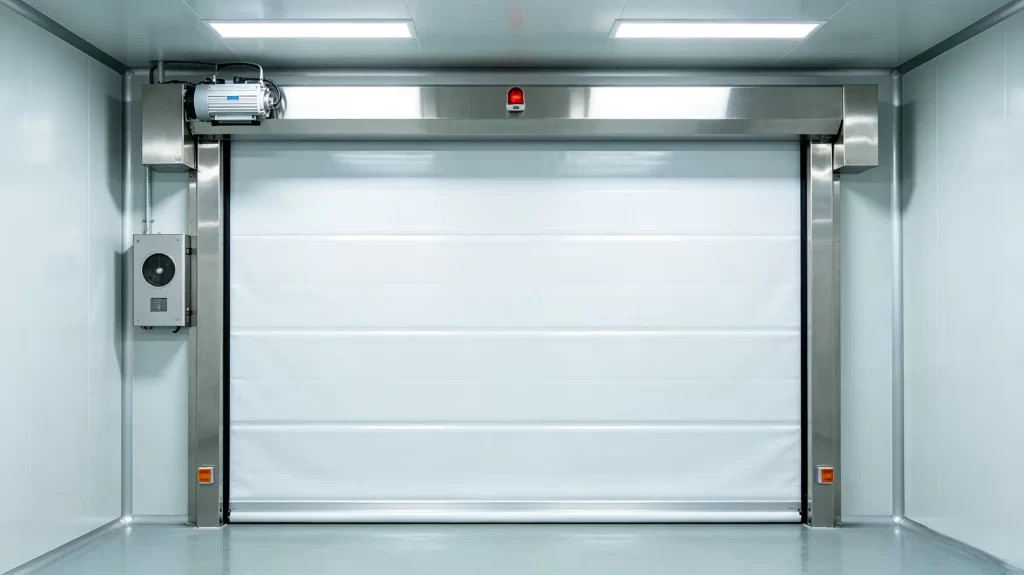
Core Pain Points: Extreme humidity, direct liquid water contact, highly corrosive cleaning chemicals, and strict pest isolation.
Recommended Selection:
- Material: Stainless steel hygienic doors for food plants (SUS304/316L, fully welded and ground) for direct washdown zones. Food-grade waterproof HPL for non-direct washdown areas.
- Door Type: Hygienic high-speed doors (1.5–2.0 m/s) for logistics corridors; stainless steel automatic sliding doors with bottom inflatable seals for clean zone isolation.
Scenario B: Pharmaceutical & Biotech Facilities (Extreme Pressure, VHP, and GMP Compliance)
Core Pain Points: Stringent pressure differential gradients (10–15Pa), frequent VHP sterilization (Grade A/B), and strict BMS integration.
Recommended Selection:
- Material: Electropolished stainless steel or specialized VHP-resistant powder-coated steel. Double-glazed tempered vision panels with edges fully encapsulated in injection-molded silicone.
- Door Type: Cleanroom doors with interlock system and fully automatic hermetic sliding doors featuring a "compression movement" (10–20mm press against the frame) for ultimate airtightness.
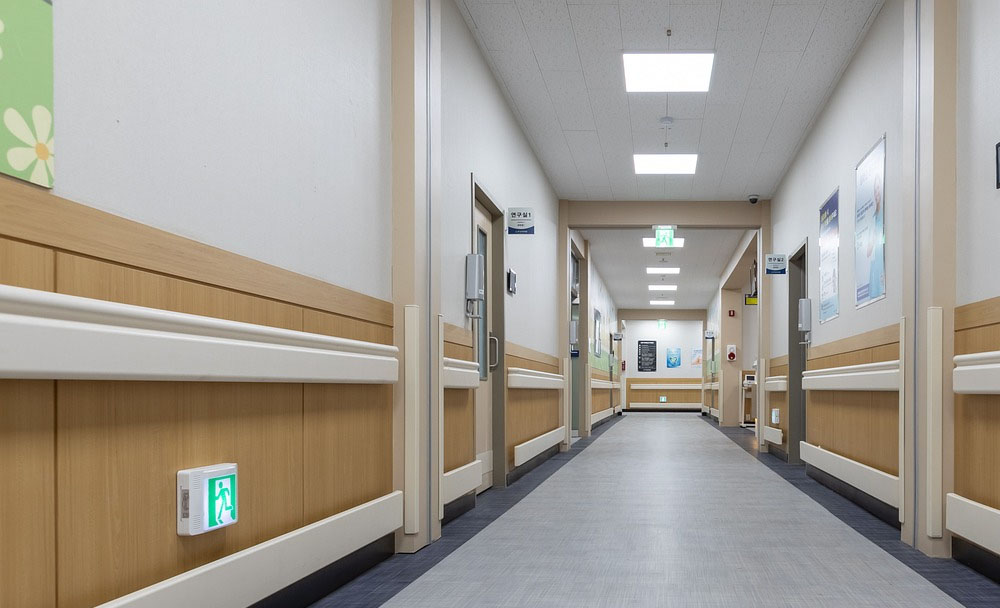
Scenario C: Healthcare & Medical Facilities (High Traffic, Impact, and Infection Control)
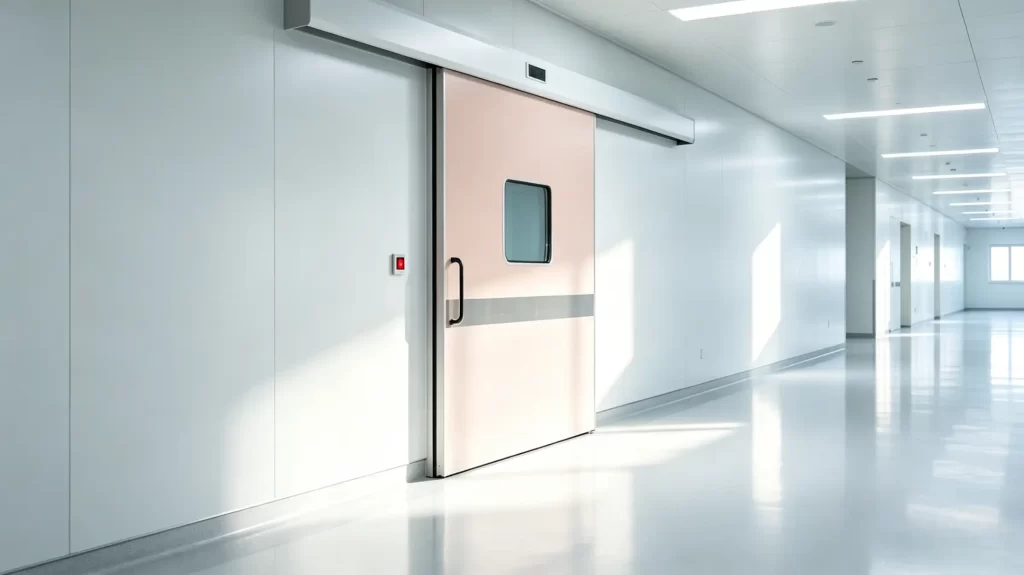
Core Pain Points: High-frequency gurney impacts, rapid traffic flow, and strict infection control with silent operation (< 50dB).
Recommended Selection:
- Material: High-density anti-bacterial doors panels (anti-bacterial resin or impact-resistant HPL-clad steel) achieving >99.9% antibacterial rates per ISO 22196.
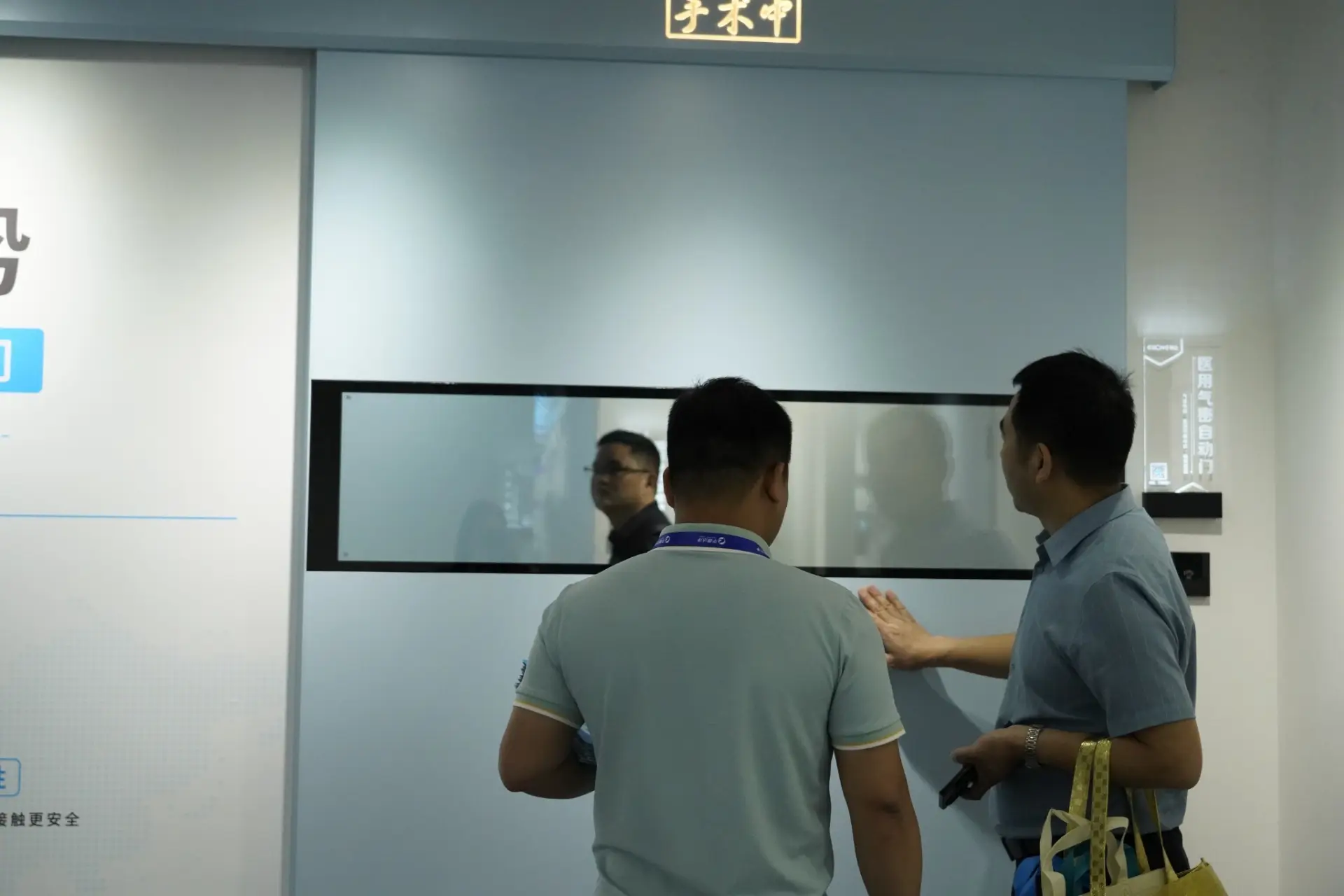
- Design & Drive: Integrated high-toughness kick plates at 800–1200mm height. Hermetic sliding doors for hospitals utilizing heavy-duty, silent DC brushless motors and multi-beam safety light curtains.
Long-Term Maintenance and Total Cost of Ownership (TCO) Deep Dive
During the initial CAPEX phase, hygienic doors account for a tiny budget fraction. However, from a Life Cycle Cost (LCC) perspective, a poorly selected door generates hidden costs that multiply its initial price severalfold.
Anatomy of Hidden Costs
- Air Leakage & Energy Waste: A 1mm gap on an ISO 7 cleanroom door at 15Pa pressure leaks ~60m³/hour. Annually, this single door can cause thousands of dollars in extra HVAC energy costs.
- Downtime Losses: A door failure causing pressure collapse beside an aseptic filling line can halt production, risking batch scrapping worth far more than the door itself.
- Premature Replacement: High-absorption cores mold and delaminate within 2–3 years, incurring heavy demolition, wall resealing, and downtime labor costs.
Engineering Strategies to Reduce Life Cycle Costs
- Modular Design: Modern stainless steel cleanroom doors feature modular frames. Localized damage can be swapped out in minutes, slashing spare part and labor costs.
- Heavy-Duty Hardware: Operators certified for 1M+ fault-free cycles; swing doors must use 3D-adjustable stainless steel hinges to maintain perfect alignment over time.
- Preventive Maintenance (PM): Quarterly airtightness tests; annual bottom seal replacements; strict SOPs mandating neutral cleaners and lint-free wipes (no abrasive pads).
Frequently Asked Questions (FAQ)
Q1: What is the main difference between a standard interior door and a hygienic door?
A: The core difference is the flush design and high airtightness. Standard doors have grooves and seams that trap bacteria. Professional hygienic doors feature seamless surfaces, multi-step silicone sealing, and specialized bottom seals to strictly control particle shedding and maintain room pressure.
Q2: How do I choose between stainless steel hygienic doors and anti-bacterial HPL doors?
A: It depends on the environment. For frequent washdowns or high-humidity zones (food plants, pharma wash rooms), stainless steel hygienic doors for food plants are mandatory for absolute waterproofing. For high-traffic, impact-prone areas needing a warmer aesthetic (hospital corridors, general cleanrooms), anti-bacterial doors (HPL/resin-clad) offer superior impact resistance, lighter weight, and active antimicrobial properties.
Q3: How often should cleanroom door seals be replaced, and how does it affect TCO?
A: Degraded seals cause pressure leaks and energy spikes. We recommend quarterly inspections. Bottom seals on high-frequency automatic doors should be replaced every 12–18 months, and static frame gaskets every 2–3 years. Proactive replacement is the most cost-effective TCO reduction strategy.
Q4: Can hygienic doors be integrated with existing Building Management Systems (BMS)?
A: Absolutely. Modern pharmaceutical cleanroom doors GMP compliant feature PLC controllers supporting Modbus or BACnet. They share real-time status (open/closed/interlocked/fault) with the BMS, participate in coordinated pressure differential control, and log actuation cycles for predictive maintenance.
Conclusion
In high-sensitivity environments, hygienic doors are not mere architectural accessories; they are critical process nodes that dictate regulatory compliance, hygiene, and operational costs. Choosing the right materials and mechanisms is the cornerstone of minimizing hidden lifecycle expenses.
If you are unsure which cleanroom doors or hospital doors configuration best fits your specific operational scenario, contact our professional engineering team today. We provide customized, TCO-optimized hygienic door solutions tailored to your industry’s unique pain points.
-
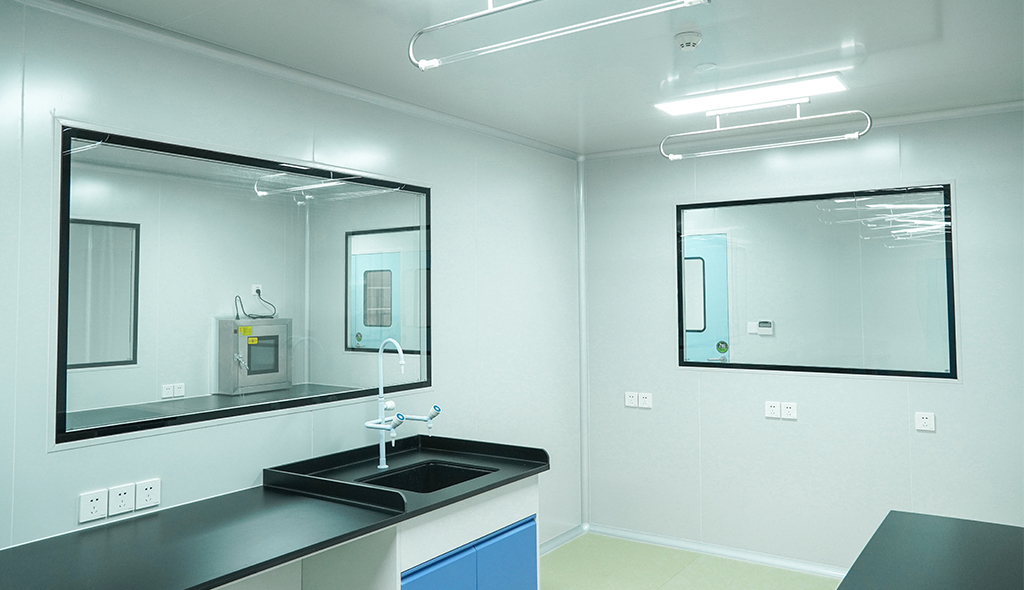 Cleanroom Glass Windows Are The Key to Maintaining a Clean Environment
 -
 Top Aluminium Profile Manufacturers in China: Leading the Global Market
 -
 The Evolution of Air Tight Sliding Doors
 -
 AHU Aluminium Profile: A Comprehensive Guide
 -
 The Importance of Choosing the Right Cleanroom Door in Vietnam
 -
 The Benefits of Hospital Automatic Doors: Enhancing Efficiency and Safety
 -
.jpg) The Best Bathroom Door Manufacturers - Unlocking Endless Possibilities!
The Best Bathroom Door Manufacturers - Unlocking Endless Possibilities! -
 Unlock the Possibilities with AJ Manufacturing Doors
 -
 Make a Statement with Manufactured Home Interior Doors!
 -
 what is aluminum profile? Aluminum Profiles for Your Home is the best option
-
 Hospital Emergency Exit Doors: 90 Minute Fire Rating Meets Infection Control
 -
 ICU and Isolation Door Requirements Hospitals Often Overlook
 -
 Laboratory Door Requirements for BSL-2 and BSL-3 Containment
 -
 Retrofitting Hospital Sliding Doors: Upgrade Wards Without a Rebuild
 -
 Why Airtight Hospital Sliding Doors Are Critical for Infection Control
 -
 Automatic cleanroom door systems: sensor, actuator and access control integration
 -
 Cleanroom Door Materials: Stainless Steel vs HPL vs FRP vs Aluminum Comparison
 -
 X-Ray Room Door Buying Guide: Lead Thickness & Compliance
 -
 Operating Room Doors: Hermetic & Infection-Control Guide
 -
 Hospital ICU Door Selection: Sealing, Sterility & Workflow
-

Home
-

Tel
-

Email
-

Contact


Guangzhou Yizhong Aluminum Industry Co., Ltd.
We are always providing our customers with reliable products and considerate services.
We are always providing our customers with reliable products and considerate services.
Speak Your Mind