
Why Industries Choose Stainless Steel Doors over Aluminum
In pharmaceutical manufacturing, food processing, healthcare, and electronics production—industries where environmental control, hygiene, and structural reliability are non-negotiable—doors are far more than simple passageways. They serve as critical barriers that protect product integrity, ensure personnel safety, and maintain regulatory compliance.
When it comes to material selection, two options dominate industrial door design: stainless steel and aluminum. While both offer distinct advantages, a growing number of engineering and procurement teams are choosing stainless steel doors over aluminum alternatives. This shift isn’t driven by cost alone, but by decades of real-world performance, evolving regulatory standards, and rigorous technical validation.
Below, we break down the five most compelling reasons why stainless steel cleanroom doors, hospital cleanroom steel door, and stainless steel laboratory doors consistently outperform aluminum in high-stakes environments.
1. Superior Corrosion Resistance in Harsh Environments
Material Science Matters
Stainless steel—particularly grades 304 and 316—contains high levels of chromium (≥18%) and nickel (≥8%), forming a passive chromium oxide layer that resists oxidation, moisture, and chemical attack. Grade 316 adds 2–3% molybdenum, dramatically enhancing resistance to chlorides found in disinfectants, salt air, and cleaning agents.
In contrast, aluminum relies on a thin, naturally formed oxide layer (Al₂O₃) that is porous and vulnerable. In acidic, alkaline, or high-humidity settings—common in food plants, labs, and coastal facilities—aluminum is prone to pitting, crevice corrosion, and even stress corrosion cracking.
Real-World Validation
- In food and beverage facilities, CIP (Clean-in-Place) systems routinely use high-temperature caustic or acidic solutions (pH 2–12). Over time, aluminum door frames degrade, leading to surface flaking and microbial harborage. Stainless steel withstands thousands of cleaning cycles with minimal degradation.
- In pharmaceutical cleanrooms, vaporized hydrogen peroxide (VHP) sterilization is standard. ASTM G31 immersion tests show 316L stainless steel corrodes at <0.01 mm/year in 30% H₂O₂, while 6063-T5 aluminum exceeds 0.1 mm/year—ten times faster.
- In high-humidity or coastal zones (ISO 9223 C4–C5 corrosion class), standards explicitly recommend molybdenum-containing stainless steel. Aluminum, even when anodized, struggles to meet long-term durability requirements.
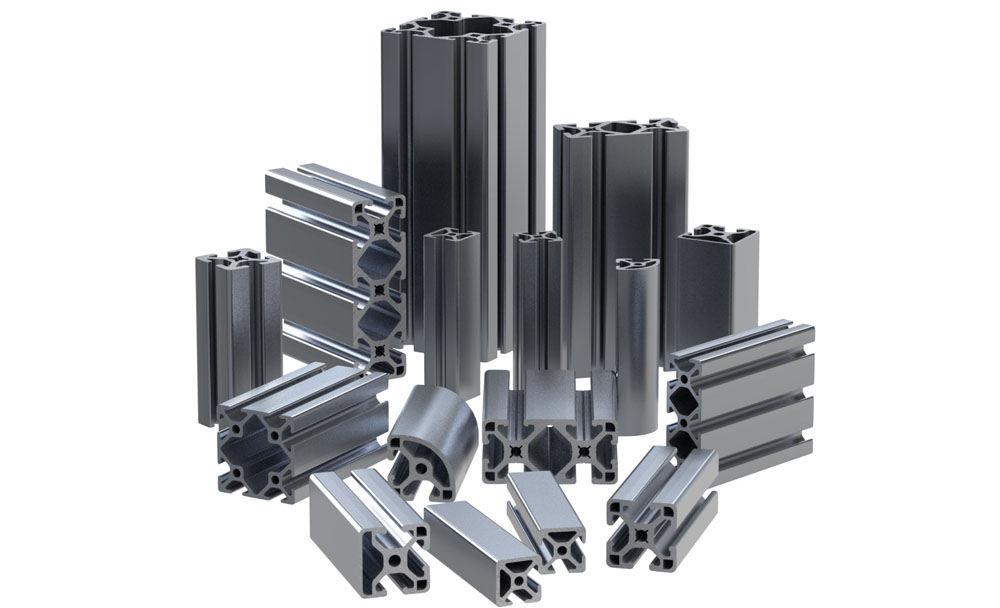
Notably, while aluminum profile for cleanroom walls and ceilings remains popular for its light weight, its use in door structures—where mechanical stress and chemical exposure are highest—is increasingly discouraged.
2. Unmatched Hygiene and Cleanability
Surface Finish = Microbial Control
Regulatory bodies like the FDA and EU GMP Annex 1 (2022) mandate that surfaces in controlled environments be “smooth, non-porous, non-shedding, and easily cleanable.” Research confirms that surface roughness (Ra) directly impacts microbial adhesion: when Ra ≤ 0.8 μm, bacterial attachment drops significantly.
Electropolished 304/316 stainless steel consistently achieves Ra values of 0.4–0.6 μm with a uniform, pore-free finish. Aluminum—even when anodized—retains micro-pores (5–10 μm), which trap organic residues and become breeding grounds over time.
Validation and Traceability
Pharmaceutical facilities require cleaning validation to prove residue levels stay below thresholds (typically ≤10 ppm). Pharmaceutical clean room doors must endure repeated sterilization via:
- Steam (121°C, 30 min)
- VHP or hydrogen peroxide plasma
- Ozone fumigation
Aluminum doors often develop “white rust” (basic aluminum carbonate) under these conditions, compromising both aesthetics and safety. Stainless steel remains stable.
Moreover, stainless steel suppliers provide full Mill Test Certificates (MTCs) detailing chemical composition, mechanical properties, and surface treatment—critical for audit readiness. Aluminum vendors rarely offer equivalent documentation.
3. Structural Integrity and Long-Term Durability
Strength You Can Rely On
| MATERIAL | TENSILE STRENGTH (MPA) | YIELD STRENGTH (MPA) | ELASTIC MODULUS (GPA) |
|---|---|---|---|
| 304 Stainless Steel | 515–690 | 205–310 | 193 |
| 6063-T5 Aluminum | 160–200 | 110–145 | 69 |
Stainless steel is roughly 3x stronger and 3x stiffer than aluminum. For large laboratory doors or high-traffic hospital sliding doors, this means minimal sagging, warping, or misalignment over time—even under heavy use.
Sealing Performance That Lasts
Cleanroom doors must maintain airtight integrity. EN 13241-1 requires air leakage ≤0.1 m³/(m²·h) at 50 Pa. Aluminum’s lower rigidity causes subtle frame deformation during thermal cycling or frequent operation, breaking the seal between door and gasket. Stainless steel’s dimensional stability ensures consistent contact with magnetic or compression seals—critical for maintaining pressure differentials (e.g., +15 Pa in ISO Class 7 zones).
Total Cost of Ownership
While stainless steel doors carry a 20–30% higher upfront cost, their service life (15–20 years) far exceeds aluminum (8–12 years). With minimal maintenance and no need for repainting or part replacement, stainless steel delivers superior lifecycle value—especially for mission-critical applications like hospital cleanroom steel door installations, where failure is not an option.
4. Compliance with Global Standards
Designed for Integration
Modern cleanroom doors integrate interlocks, ESD-safe windows, automatic closers, and status monitoring. Stainless steel’s weldability (via TIG) allows seamless, crevice-free joints between door frames and wall panels—fully compliant with ISO 14644-5’s requirement to “minimize surface discontinuities.”
Aluminum, by contrast, is rarely welded in door assemblies; mechanical fasteners or adhesives create hygiene traps that fail audit scrutiny.
Regulatory Alignment
- Pharma: EU GMP Annex 1 §4.22 states: “Equipment surfaces shall be made of stainless steel or other validated inert materials.”
- Food: FDA 21 CFR 110.40 requires surfaces to be “non-absorbent, corrosion-resistant, and cleanable.”
- Electronics: SEMI F73 limits particle shedding; stainless steel emits <10⁴ particles/m²·h (≥0.3 μm), outperforming aluminum significantly.
Features like cleanroom door with window are only truly reliable when the glass is bonded into a monolithic stainless frame—eliminating leakage paths and simplifying validation.
5. Enhanced Fire and Safety Performance
Fire Resistance You Can Trust
Stainless steel melts at ~1,450°C, compared to aluminum’s 660°C. In fire scenarios, aluminum doors lose structural integrity within 10–15 minutes. Stainless steel doors easily achieve fire rated doors certification (e.g., EN 1634-1 E90: 90-minute integrity), making them mandatory in cleanroom corridors, chemical storage, and electrical rooms per NFPA 80.
Multi-Functional Safety Integration
High-risk facilities demand more than just fire resistance:
- Hospital cleanroom steel door in radiology suites embed lead sheets (1–3 mm Pb) for radiation shielding—only possible with stainless steel’s load-bearing capacity.
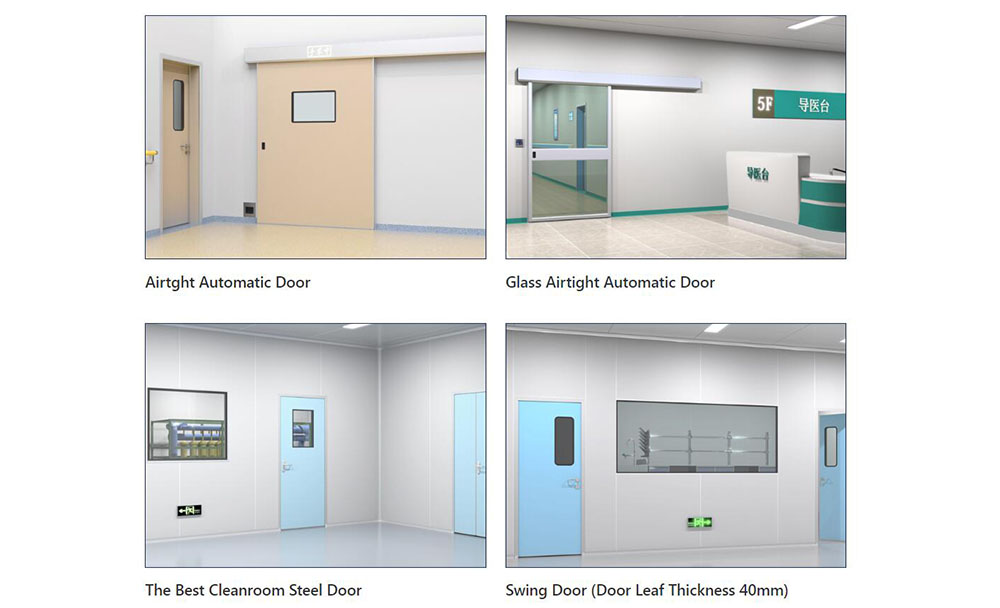
- Laboratory airtight interlock doors and operating room airtight doors rely on rigid frames to maintain seal integrity during emergency pressurization.
- In semiconductor fabs, stainless steel laboratory doors can be engineered with ESD-compliant finishes (surface resistance 10⁴–10⁶ Ω), whereas aluminum’s insulating oxide layer often fails.
Even ancillary systems benefit: air handling unit components and HVAC diffusers are often housed in rooms requiring corrosion-resistant access—making stainless steel doors the logical choice. Similarly, precision airflow control via linear diffuser or HVAC linear slot diffuser depends on stable room pressure, which hinges on door airtightness.
Conclusion: Material Choice = Risk Management Strategy
From corrosion resistance to regulatory compliance, from daily sanitation to emergency safety, stainless steel doors offer a comprehensive performance advantage in critical environments. Choosing a stainless steel door isn’t just a specification—it’s a strategic decision to mitigate contamination risk, ensure audit readiness, and protect long-term operational continuity.
Whether you’re specifying a pharmaceutical clean room door, a laboratory clean room door, or hospital sliding glass doors, stainless steel delivers the durability, hygiene, and compliance your facility demands.
For new builds or retrofits, conduct a Material Compatibility Assessment early in the design phase. In zero-tolerance zones—sterile fill lines, BSL-2+ labs, aseptic processing suites—there’s simply no substitute for the proven reliability of stainless steel.
-
 Cleanroom Glass Windows Are The Key to Maintaining a Clean Environment
 -
 Top Aluminium Profile Manufacturers in China: Leading the Global Market
 -
 The Evolution of Air Tight Sliding Doors
 -
 AHU Aluminium Profile: A Comprehensive Guide
 -
 The Importance of Choosing the Right Cleanroom Door in Vietnam
 -
 The Benefits of Hospital Automatic Doors: Enhancing Efficiency and Safety
 -
.jpg) The Best Bathroom Door Manufacturers - Unlocking Endless Possibilities!
The Best Bathroom Door Manufacturers - Unlocking Endless Possibilities! -
 Unlock the Possibilities with AJ Manufacturing Doors
 -
 Make a Statement with Manufactured Home Interior Doors!
 -
 what is aluminum profile? Aluminum Profiles for Your Home is the best option
-
 Retrofit Manual Doors with Electronic Glass Operators
 -
 Hospital Emergency Exit Doors: 90 Minute Fire Rating Meets Infection Control
 -
 ICU and Isolation Door Requirements Hospitals Often Overlook
 -
 Laboratory Door Requirements for BSL-2 and BSL-3 Containment
 -
 Retrofitting Hospital Sliding Doors: Upgrade Wards Without a Rebuild
 -
 Why Airtight Hospital Sliding Doors Are Critical for Infection Control
 -
 Automatic cleanroom door systems: sensor, actuator and access control integration
 -
 Cleanroom Door Materials: Stainless Steel vs HPL vs FRP vs Aluminum Comparison
 -
 X-Ray Room Door Buying Guide: Lead Thickness & Compliance
 -
 Operating Room Doors: Hermetic & Infection-Control Guide

-

Home
-

Tel
-

Email
-

Contact


Guangzhou Yizhong Aluminum Industry Co., Ltd.
We are always providing our customers with reliable products and considerate services.
We are always providing our customers with reliable products and considerate services.
Speak Your Mind