
E-ZONG Aluminum Diffusers: ASHRAE 170 Ready
I. Compliance Foundations for Medical Building Ventilation Systems
The core mission of modern medical architecture has evolved significantly. Facilities now prioritize infection prevention over simple disease treatment. Consequently, Indoor Air Quality (IAQ) serves as a critical frontline for hospital infection control. Furthermore, IAQ directly impacts surgical site infection rates. It also reduces respiratory cross-infections and lowers occupational exposure risks for staff. Therefore, ASHRAE Standard 170 has become the global benchmark for healthcare HVAC design.
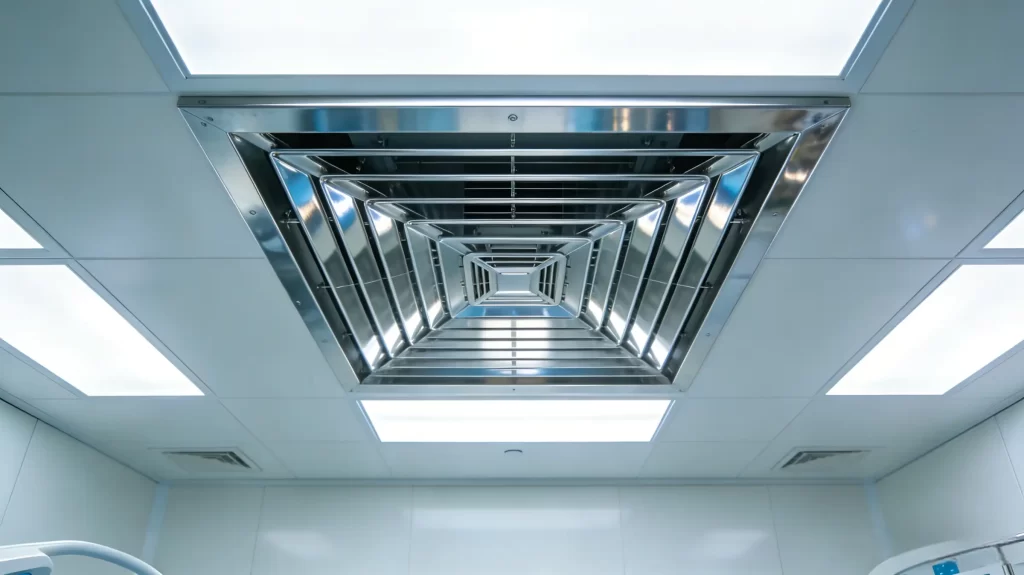
Within these systems, Aluminum Diffusers act as the terminal units of the air diffuser family. Specifically, their performance dictates precise fresh air delivery. Additionally, they ensure stable pressure gradients. Moreover, they keep operational noise within acceptable limits. Professional-grade Aluminum Diffusers must fulfill basic air distribution needs. However, they must also achieve system-level synergy. Specifically, they must optimize airflow organization, acoustic control, and infection prevention. This article explores how aluminum materials meet strict hvac diffuser specifications. To do so, we integrate fluid dynamics principles and commissioning logic. Furthermore, we address lifecycle management. Ultimately, this guide provides actionable selection steps for designers and contractors.
II. Core Requirements of ASHRAE 170
ASHRAE 170 covers all functional healthcare spaces. For example, it applies to operating rooms and isolation wards. It also includes PIV centers and outpatient areas. Consequently, its core parameters strongly influence hvac vents selection:
- Air Changes per Hour (ACH): The standard defines clear ACH thresholds for each space type. ORs require ≥20 ACH, while isolation rooms need ≥12 ACH. ACH directly determines the design airflow for Aluminum Diffusers. Therefore, selection must ensure uniform diffusion. This prevents localized high velocities and eliminates stagnant zones.
- Pressure Differential Control: Healthcare spaces require micro-pressure gradients between ±2.5 Pa and 12.5 Pa. Joint leakage must stay below 5% of system airflow. Otherwise, pressure equilibrium will fail. Therefore, medical-grade Aluminum Diffusers require airtight construction. This includes EPDM gaskets and bolt-clamped frames near the return air vent.
- Noise Limits (NC Curves): ASHRAE 170 specifies NC≤30 for patient rooms and NC≤35 for critical care units. The ceiling diffuser often generates significant airflow noise. Consequently, blade geometry requires acoustic optimization. Engineers must also carefully manage neck velocity. This ensures compliance across wide operating ranges.
- System-Level Synergy: The standard emphasizes holistic system compliance. Aluminum Diffusers must undergo joint commissioning. Specifically, they integrate with the terminal air conditioning unit and pressure-independent VAV boxes. Furthermore, they connect directly to the BMS. Notably, no single component can replace proper system balancing.
III. Engineering Characteristics of Aluminum Diffusers in Medical Ventilation
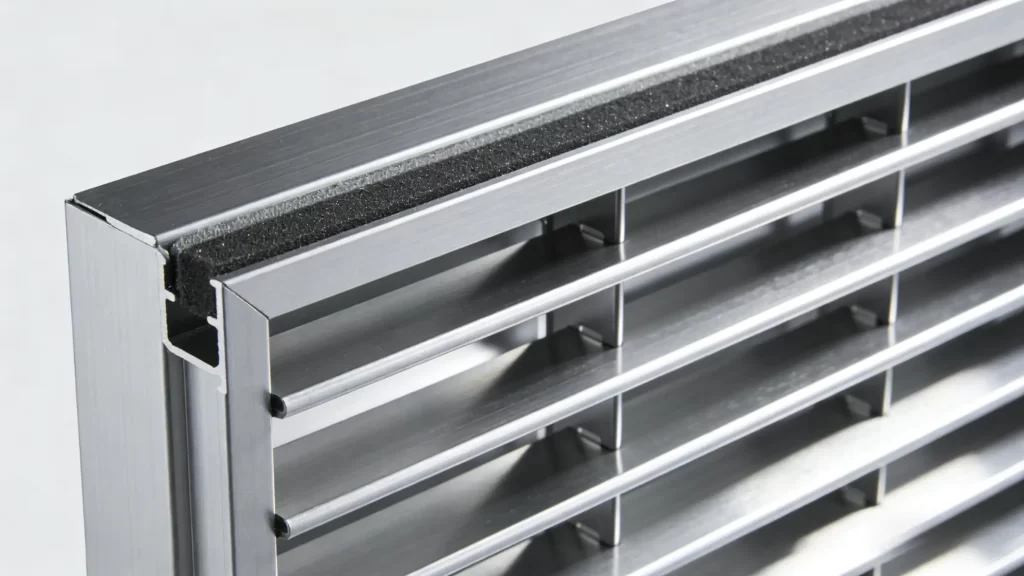
Traditional materials often fall short in demanding environments. In contrast, 6063-T5 aerospace-grade aluminum offers distinct physical and chemical advantages. Consequently, it aligns perfectly with healthcare needs. As a professional ceiling diffuser manufacturer, E-ZONG prioritizes several key dimensions:
- Lightweight & Structural Integrity: Aluminum density reaches only ~2.7 g/cm³. Therefore, it reduces ceiling grid loads by 30%–40% compared to steel. Extrusion processes guarantee tight ±0.02mm tolerances. Consequently, this ensures excellent planarity. Furthermore, it guarantees uniform airflow across large installations.
- Corrosion Resistance & Infection Control Compatibility: Medical environments constantly face harsh disinfectants and high humidity. The powder coated linear diffuser features epoxy-polyester electrostatic spraying. Coating thickness reaches ≥60μm. As a result, it delivers over 1000 hours of salt spray protection. Additionally, a TiO₂ antimicrobial topcoat can be applied. This pushes surface bacterial inhibition rates above 99.9%.
- Acoustic Optimization & Tool-Free Maintenance: Aluminum’s natural damping properties improve sound control. Combined with micro-perforated acoustic backing, Aluminum Diffusers maintain NC 25–30 at standard velocities. Maintenance remains straightforward. The vent air cover features a tool-free quick-release design. Consequently, staff can perform frequent cleaning efficiently. They can also replace internal cores without system downtime.
IV. Aerodynamic Design & Airflow Organization Optimization
Medical airflow organization requires more than basic code compliance. Specifically, it demands a dynamic balance. Engineers must prioritize thermal comfort and contaminant dilution. Furthermore, infection control remains a primary objective.
- ADPI & Induction Ratio Regulation: Healthcare environments typically recommend an ADPI above 80%. To achieve this, the adjustable blade diffuser optimizes blade pitch and diffusion angles. Consequently, the jet attachment coefficient exceeds 0.85. Additionally, specialized internal structures guide the airflow. This boosts mixing efficiency by over 20% at standard rates.
- CFD Simulation & Flow Pattern Matching: Engineers often use CFD validation to map velocity fields. They also track aerosol dispersion trajectories. Consequently, they can proactively optimize Aluminum Diffusers layouts. The linear diffuser and linear slot diffuser exhibit distinctly different behaviors. For localized displacement ventilation, the round ceiling diffuser is ideal. Its radial diffusion effectively minimizes occupant draft discomfort.
- Acoustic Control: Silence remains critical in clinical settings. Therefore, the low noise ceiling diffuser employs a tapered neck design. It also features micro-perforated acoustic lining. As a result, NC values stay below 30 across broad operating ranges. Furthermore, airfoil-optimized blades improve aerodynamic efficiency. This maintains optimal neck velocities between 2.5 and 3.5 m/s.
V. On-Site Commissioning & Acceptance Testing for Medical Ventilation Systems
Performance validation ultimately relies on strict commissioning protocols. Specifically, teams should follow ASHRAE 111 and NEBB guidelines. Critical milestones include:
- Pre-Commissioning Preparation: Technicians must first verify proper installation levelness. The deviation should not exceed 2mm per meter. Additionally, they must check sealing integrity for the air diffuser with damper. Subsequently, branch dampers are pre-set to 30%–50% opening. Finally, initial duct static pressure is recorded.
- Key Testing Procedures: Teams use calibrated hoods to verify supply rates. The tolerance for the commercial linear air diffuser remains ±10%. Next, technicians measure pressure gradients. A micro-manometer with 0.1 Pa resolution ensures accuracy. Meanwhile, sound meters are positioned 1.5m away at a 1.2m height. This evaluates compliance against NC curves. Furthermore, smoke testing or SF₆ tracer methods verify proper airflow. These tests confirm the absence of short-circuiting or stagnant zones.
- Supply Chain Collaboration: A reliable slot diffuser supplier provides complete technical documentation. This includes factory performance curves and CNAS/CMA reports. If issues arise on-site, systematic troubleshooting is essential. First, check blade positioning and duct leakage. Next, review BMS PID settings. Consequently, teams can resolve problems efficiently without assuming component failure.
VI. Airflow Strategy References for Typical Medical Scenarios
- Positive Pressure Clean Spaces: Vertical or horizontal unidirectional flow works best here. The hospital air diffuser must deliver exceptional uniformity. Specifically, outlet velocity variation should stay ≤15%. Additionally, quick-change rails must support H13/H14 HEPA filters. When paired with PAO testing, Aluminum Diffusers demonstrate ≤0.01% leakage. This guarantees strict cleanliness compliance.
- Negative Pressure Isolation Spaces: Top-supply and bottom-exhaust layouts prove most effective. Exhaust grilles must integrate backdraft dampers. They also require easily disinfectable flow cores. Consequently, aerosol capture remains highly efficient. Meanwhile, the sealed frame of Aluminum Diffusers prevents airflow short-circuiting. This effectively blocks cross-contamination pathways.
- High-Turnover Public Areas: Facilities should deploy linear slot diffuser air conditioning systems. These setups balance rapid contaminant dilution with thermal comfort. Furthermore, Aluminum Diffusers must maintain acoustic stability. They should perform reliably across 40%–100% load ranges. Ultimately, this ensures consistent omnidirectional coverage.
- Specialized Functional Zones: Slight positive pressure must pair with localized exhaust. For chemical environments, engineers should specify a custom linear air diffuser. This unit features chemical-resistant coatings. It also includes anti-condensation drainage channels. Notably, Aluminum Diffusers offer superior dimensional stability. Therefore, they outperform plastics in high-frequency disinfection zones.
VII. Full Lifecycle Engineering Considerations
Diffuser selection requires a shift from initial cost to total lifecycle value.
- Design & Construction: Early design integration streamlines the entire construction process. Therefore, teams should utilize Revit/BIM parametric families. These files provide clear installation details and load data. Additionally, a linear diffuser manufacturer must supply standardized interfaces. This minimizes on-site cutting and reduces MEP installation time by 15%–20%. Furthermore, the lightweight nature of Aluminum Diffusers lowers structural embodied carbon.
- Operations & Maintenance: Maintenance efficiency directly impacts operational budgets. Specifically, the removable core linear diffuser enables repairs without system shutdown. Modular designs also reduce spare parts inventory. Meanwhile, aluminum’s scratch and chemical resistance extends cleaning cycles. Facilities can now wait 6–12 months between cleanings. Consequently, lifecycle O&M costs drop by 18%–25%.
- Sustainability: Material sustainability remains a key project goal. Aluminum is fully recyclable. Moreover, recycled production consumes only 5% of primary smelting energy. Therefore, specifying Aluminum Diffusers supports green building initiatives. When backed by EPD and LCA data, these units directly contribute to LEED v4.1 or WELL certification points.
VIII. Selection Decision Framework & Common Misconceptions Clarified
Decision Logic Chain: Define space function → Reference ASHRAE 170 parameters → Establish ACH/pressure/NC thresholds → Filter material & airflow type → Verify supplier technical documentation → Finalize Aluminum Diffusers customization plan.
Comparative Analysis:
- aluminum linear diffuser vs. Galvanized Steel: Aluminum provides superior corrosion resistance and lower weight. Consequently, it reduces 10-year LCC by approximately 30%. Conversely, galvanized steel carries a lower upfront cost. However, it remains prone to rust and requires frequent seal replacements.
- commercial hvac diffuser vs. Engineering Plastics: Aluminum delivers higher structural rigidity and an A2-s1,d0 fire rating. Furthermore, its deformation threshold exceeds 200°C. Plastic alternatives, however, suffer from thermal creep. Consequently, long-term cycling causes progressive airflow degradation.
Misconception Clarifications:
- First, the claim that aluminum is inherently antimicrobial is false. The base metal lacks biocidal properties. Instead, antimicrobial performance relies on specialized surface coatings. Therefore, teams must verify independent CNAS test reports.
- Second, low noise does not require airflow sacrifice. Airfoil blade profiling improves aerodynamic efficiency. Additionally, gradual neck expansion maintains optimal velocities. As a result, units easily achieve NC-30 ratings at 2.5–3.5 m/s. Acoustics and aerodynamics clearly coexist.
- Third, assuming universal interchangeability creates serious risks. Healthcare applications demand customized validation. Engineers must evaluate pressure classes and ISO cleanliness levels. Furthermore, parallel Aluminum Diffusers arrangements require strict hydraulic balancing. Forcing standard units into complex layouts will ultimately cause system failure.
IX. Conclusion: Driving Technical Selection Through Standards
ASHRAE 170 extends beyond a simple component checklist. Instead, it mandates holistic ventilation system performance. Through precision extrusion and aerodynamic optimization, Aluminum Diffusers meet these rigorous standards. They ensure ventilation efficiency, pressure stability, noise control, and infection prevention. However, product specifications alone do not guarantee compliance. True validation requires systematic commissioning and empirical data. Therefore, we strongly recommend relying on third-party test reports and CFD documentation. Project teams should also review proven installations in major medical centers. Ultimately, translating standards into measurable engineering practices builds safer environments. Consequently, partnering with a specialized Aluminum Diffusers supplier ensures compliance from the very first design phase.
-
 Cleanroom Glass Windows Are The Key to Maintaining a Clean Environment
 -
 Top Aluminium Profile Manufacturers in China: Leading the Global Market
 -
 The Evolution of Air Tight Sliding Doors
 -
 AHU Aluminium Profile: A Comprehensive Guide
 -
 The Importance of Choosing the Right Cleanroom Door in Vietnam
 -
 The Benefits of Hospital Automatic Doors: Enhancing Efficiency and Safety
 -
.jpg) The Best Bathroom Door Manufacturers - Unlocking Endless Possibilities!
The Best Bathroom Door Manufacturers - Unlocking Endless Possibilities! -
 Unlock the Possibilities with AJ Manufacturing Doors
 -
 Make a Statement with Manufactured Home Interior Doors!
 -
 what is aluminum profile? Aluminum Profiles for Your Home is the best option
-
 5 Hermetic Door Mistakes That Break the Seal
 -
 Hospital Room Door Size by Room Type: Width and Clearance
 -
 Retrofit Manual Doors with Electronic Glass Operators
 -
 Hospital Emergency Exit Doors: 90 Minute Fire Rating Meets Infection Control
 -
 ICU and Isolation Door Requirements Hospitals Often Overlook
 -
 Laboratory Door Requirements for BSL-2 and BSL-3 Containment
 -
 Retrofitting Hospital Sliding Doors: Upgrade Wards Without a Rebuild
 -
 Why Airtight Hospital Sliding Doors Are Critical for Infection Control
 -
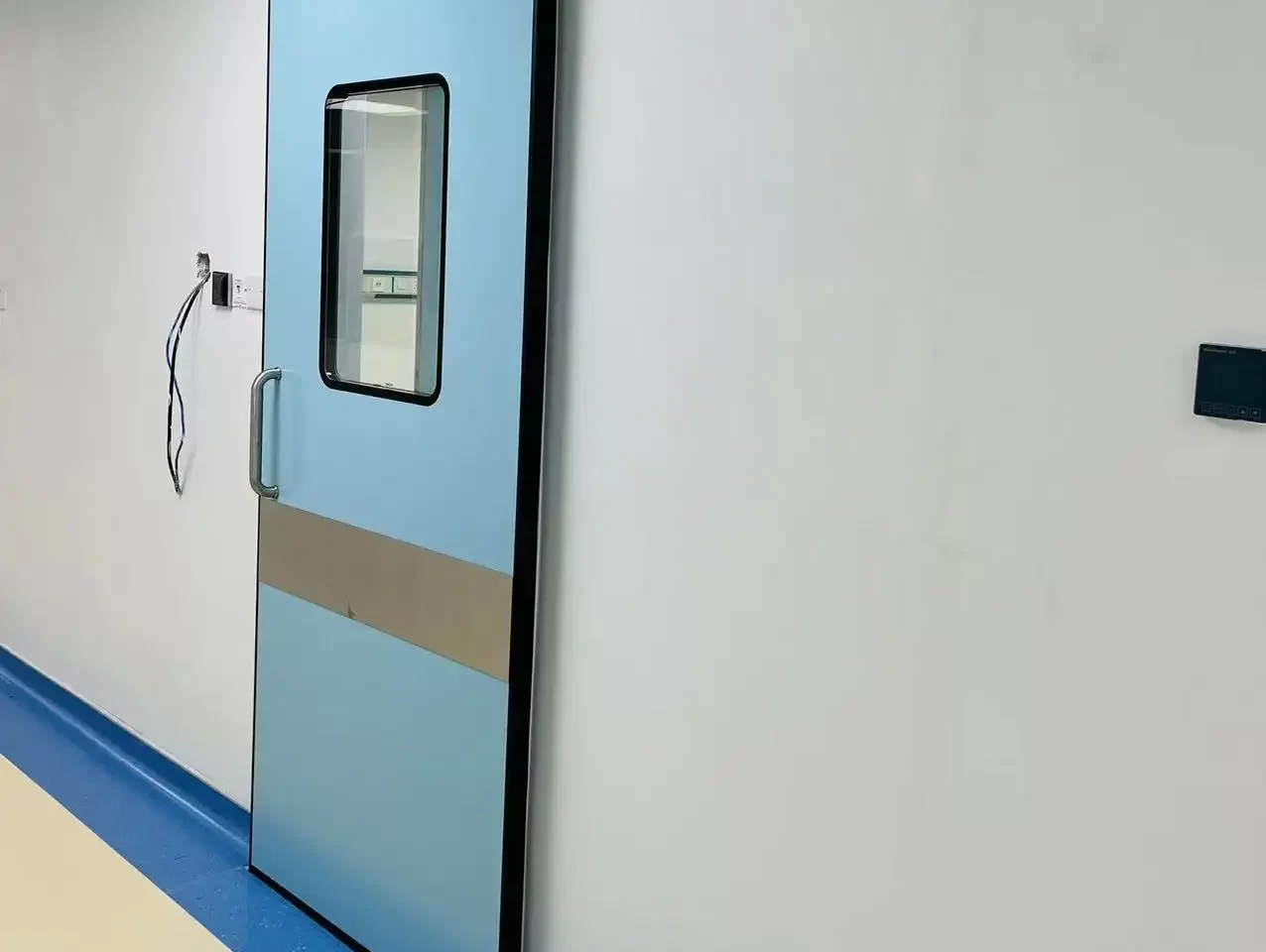 Automatic cleanroom door systems: sensor, actuator and access control integration
 -
 Cleanroom Door Materials: Stainless Steel vs HPL vs FRP vs Aluminum Comparison



-

Home
-

Tel
-

Email
-

Contact


Guangzhou Yizhong Aluminum Industry Co., Ltd.
We are always providing our customers with reliable products and considerate services.
We are always providing our customers with reliable products and considerate services.
Speak Your Mind