
Steel Double Doors: Fire Rating Under GB/T 47162-2026
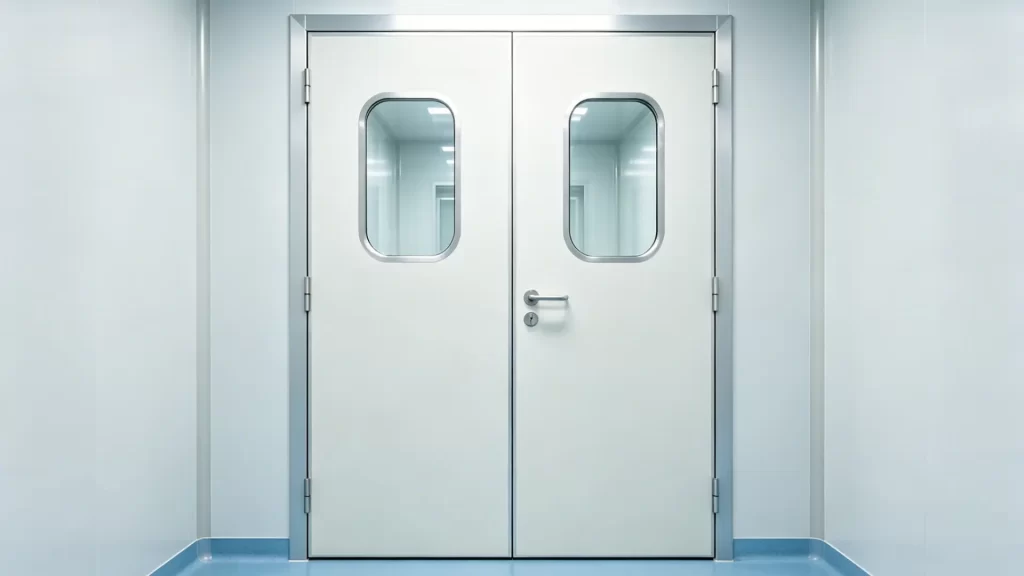
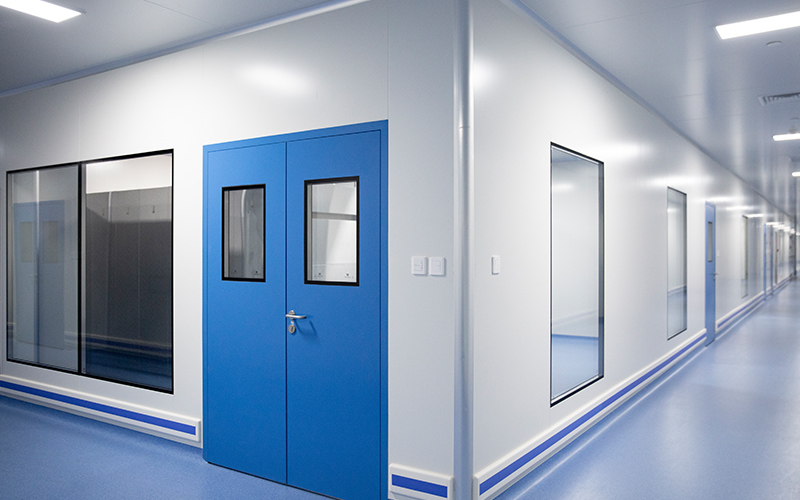
A steel double door looks simple until it has to do two jobs at once. In a cleanroom or hospital corridor it must hold back fire for a rated period, and it must keep the pressure cascade intact so contamination does not cross the opening. Those two demands pull in opposite directions: fire construction adds mass and hardware, while cleanroom construction wants flush, crevice-free surfaces. China's new national standard GB/T 47162-2026, in force since 1 September 2026, is the first document that pins both sets of requirements to the same door. For anyone specifying steel double doors on a pharmaceutical, hospital, or lab project, the standard changes what a compliant leaf must actually contain. The parts that matter most are how it classifies a double leaf, what fire integrity it requires, which materials and seals survive both fire and disinfection, and the documents a buyer should request before signing.
Key takeaways
- GB/T 47162-2026 classifies double swing doors as code 2P and names panel materials by code: color-coated steel (C), stainless (B), galvanized (G).
- Aseptic pharmaceutical cleanrooms require fire integrity of at least 1.0 hour, and the seal structure must not fail during the fire test.
- Door core combustion performance must be B1 or better, with smoke toxicity no lower than ZA1 and no pollutants released that would harm the clean environment.
- Antibacterial rate must reach 99 percent or higher, hinges must be three or more with surface roughness Ra at or below 0.8 micrometer, and seals must tolerate the facility disinfectant without swelling or cracking.
- Fire rating and cleanroom rating measure different things; a 60 minute fire door can still leak enough air to fail classification, so both must be specified and verified.
How GB/T 47162-2026 classifies steel double doors
The standard sorts cleanroom doors along three axes, and a steel double door sits at the intersection of all three. By panel material it falls under color-coated steel plate (code C), stainless steel plate (code B), or galvanized steel plate (code G). By drive method it is manual (S), semi-automatic (F), or automatic (D). By structure and opening direction the double swing opposing leaf is code 2P, distinct from single swing left (ZP) and single swing right (YP).
That 2P classification matters because a double-leaf door behaves differently from a single leaf under both fire and pressure. The meeting stile, where the two leaves meet, is the weakest point for air leakage and the hardest point to keep sealed through a fire test. The standard treats the door as one assembly rather than two leaves, which means the frame, the central astragal, and the drop seal all carry the rating together.
E-ZONG builds steel double doors to this structure, offering color-coated and stainless panel options sized to the opening rather than forcing the opening to a catalog size. For projects that also need airtight swing leaves in patient areas, the same engineering discipline shows up in E-ZONG's air tight patient room doors designed for pressure control.
Fire rating requirements for double-leaf steel doors
For aseptic pharmaceutical cleanrooms the standard sets fire integrity at no less than 1.0 hour. Integrity here means the door keeps its barrier function during the rated fire exposure, and explicitly the sealing structure must not lose function while the test runs. A door that burns through its gasket at minute 40 has failed even if the leaf itself stays standing.
The core material backs this up. Combustion performance of the door core must be B1 grade or better, smoke toxicity must reach ZA1 grade or better, and nothing released during combustion may pollute the clean environment. In practice that rules out ordinary expanded foam and pushes specifiers toward mineral or rock-wool cores wrapped in steel skins.
Outside China the same thinking appears as UL 10C positive pressure fire tests in North America and EN 1634-1 in Europe, with typical ratings of 30 to 60 minutes. A Chinese aseptic project asking for 1.0 hour (60 minutes) sits at the top of that common range, so a steel double door rated to GB/T 47162-2026 lines up with international expectations rather than conflicting with them. E-ZONG's why clean room door matters piece covers how a single weak door can pull an entire classification down, which is the same logic that makes the fire and seal ratings non-negotiable.
Material choices: galvanized, color-coated, and stainless
The panel build decides how the steel double door survives both the fire and the cleaning cycle. Galvanized steel plate is the cost-effective base: corrosion resistant enough for dry clean zones, but it shows its limit in high humidity or aggressive disinfection. Color-coated steel plate adds a factory finish that resists wiping, and the standard expects aluminum trim where color-coated plate meets an edge, so the cut face does not become a dust trap. Stainless steel plate, grade 304 or 316L, is the choice for pharmaceutical and biosafety zones where chlorinated disinfectants and vaporized hydrogen peroxide are routine.
The frame follows the same rule. Frame material should be stainless, galvanized steel, or aluminum, with a nominal thickness of at least 1.2 millimeters. Below that, a wide double leaf on a thin frame racks under traffic and the meeting stile drifts out of line, which is exactly where leakage starts.
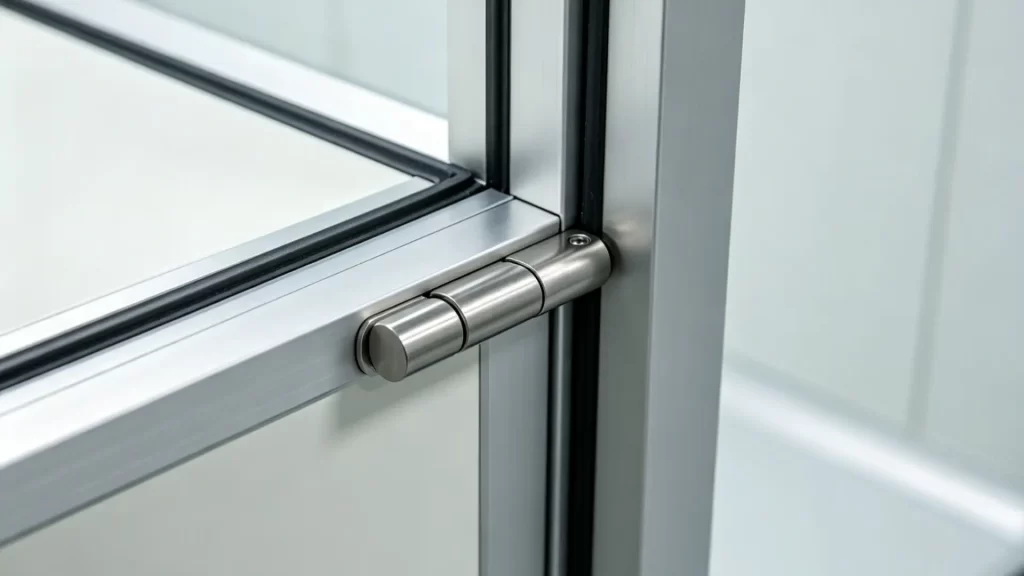
Surface roughness matters more than buyers expect. Hardware that touches the leaf, including hinges, must hold Ra at or below 0.8 micrometer so particles have nowhere to lodge and wipe-down actually reaches the metal. E-ZONG applies this finish across its steel double door hardware, the same discipline used on stainless hospital and lab leaves.
Airtightness versus fire: the meeting stile problem
A single leaf seals along one perimeter. A steel double door seals along three sides plus a center line where two leaves meet, and that center line is where fire and airtightness fight. Under normal use the meeting stile needs a continuous compression gasket so the pressure cascade holds when the door is shut. Under fire the same joint needs an intumescent element that expands and closes the gap as heat rises.
The two ratings can be met by one assembly. Traditional fire doors achieve their rating with exposed hardware, recessed latches, and vision panel frames that leave ledges where particles settle. Cleanroom rules want the opposite: smooth, flush, crevice-free surfaces. The resolution used by specialized makers is an insulated double steel wall or a composite core that carries the fire rating while the outer skins stay flat, plus a compression seal at the meeting stile that also engages an intumescent strip. Done right, the steel double door passes both tests from one listing rather than two separate, conflicting assemblies.
This is where the standard's demand that the seal structure survive the fire test earns its place. A gasket that relaxes under heat defeats the airtight rating the rest of the door was built to hold.
Antibacterial and corrosion requirements
GB/T 47162-2026 pushes terminal control down to the material level. Where antibacterial performance is required, the door and frame material must show an antibacterial rate of no less than 99 percent, tested to GB/T 21866, and an antiviral rate of no less than 90 percent where antiviral is specified. For biopharma and hospital isolation that shift is significant: the door surface itself becomes part of the contamination barrier, not just the room air.
Corrosion resistance backs this up. Metal parts in normal humidity pass a neutral salt spray test of 48 hours; in high humidity environments the test extends to 72 hours with no rust or pitting. Coatings must withstand more than 500 wipes with chlorine-containing disinfectant without degrading. That last number is the one procurement teams forget: a door that looks fine on delivery but sheds its finish after a few months of hypochlorite wiping becomes a particle source, not a barrier.
Seals carry the same burden. The standard calls for neutral sealing material, with surface-applied seals carrying an antibacterial agent and staying compatible with the room disinfectant so they do not swell or crack. Mold grade must be level 0, meaning no mold growth. A steel double door with the right leaf but the wrong gasket still fails the cleanroom half of its job.
Hardware that survives the rating
Hardware is where many steel double doors lose their listing. The standard is specific: hinges should be stainless or aluminum, three or more per leaf, lubricated with food-grade or clean-specific grease, with Ra at or below 0.8 micrometer. Three hinges on a wide double leaf are not a luxury; they keep the leaf square so the meeting stile stays in plane.
Closers must use a sealed structure with a stainless or corrosion-resistant aluminum shell and low-volatility, non-polluting hydraulic oil, with smooth adjustable speed. Handles should be stainless or antibacterial aluminum, smooth and rounded so they clean without snagging. None of this hardware may break the flush surface the cleanroom side needs, which is why recessed latches and exposed screws are the first things a good spec removes.
For active facilities, the modular hospital door solutions from E-ZONG show how the same rated leaves tie into wider access, alarm, and pressure networks instead of being treated as isolated openings.
Validation and documents buyers should request
A claim of compliance means nothing without the paper. Before ordering a steel double door, request the documents that prove the assembly was tested as built:
- Material certifications for the steel grade, including mill test reports confirming 304 or 316L where stainless is specified, and surface finish records showing Ra at or below 0.8 micrometer.
- Fire test certificate for the exact door, frame, and hardware combination, stating the rating and confirming the seal structure held through the test.
- Air leakage test results at the required pressure differential, with the test conditions stated, not just a best-case average.
- Antibacterial and antiviral test reports where those properties are claimed.
- Installation and operation instructions, quality certificate, and warranty statement.
Third-party testing from an accredited body is what turns a brochure phrase like "cleanroom suitable" into a verifiable claim. The large chemical and pharmaceutical clean space case shows double-leaf color-coated steel doors working in a real aseptic build, where the documented rating is what let the project pass its review.
Common mistakes when specifying steel double doors
Five errors account for most compliance failures, and each is avoidable on paper.
Marketing language is not a standard. "Fire rated" and "cleanroom suitable" carry no regulatory weight until backed by the test certificates above. Always tie the claim to the exact assembly and the exact test.
Fire rating and cleanroom rating measure different things. A 60 minute fire door can still have exposed hardware, recessed latches, and leakage far above the cleanroom limit. Fire integrity says nothing about air leakage or surface cleanability, so both must be specified.
Nominal specs are not guaranteed minimums. A listed leakage figure may reflect ideal lab conditions. The specification should state the maximum at stated pressure, temperature, and gasket condition, not a hopeful average.
The meeting stile gets specified last. Teams pick the leaf and frame, then notice the center joint has no intumescent and no compression gasket. On a steel double door that joint is the rating, so it should be the first thing drawn.
Disinfectant compatibility is assumed. A gasket that swells or cracks under weekly hypochlorite or VHP turns the seal into a leak within a year. Name the cleaning chemistry in the specification and require the compatibility test.
FAQs
Does GB/T 47162-2026 apply to sliding steel doors?
The standard covers cleanroom doors by structure, including sliding types, but it explicitly notes sliding doors see limited use in pharmaceutical industry applications and is less prescriptive there. For double swing steel doors the 2P classification and the fire, material, and seal rules all apply directly.
What fire rating do steel double doors need in a hospital?
Hospital corridors often use a defend-in-place strategy, which pushes exit and fire doors toward 90 minutes in many codes, while aseptic pharmaceutical cleanrooms under this standard need at least 1.0 hour. The rating follows the wall assembly and occupancy, so confirm it with the fire protection engineer and the local authority having jurisdiction before specifying.
Can a steel double door be both airtight and fire rated?
Yes, when the fire rating and the airtight rating are listed together on one assembly, with a double steel wall or composite core for fire and a compression plus intumescent seal at the meeting stile for pressure. The key is that the seal structure must survive the fire test, which the standard now requires explicitly.
How many hinges does a double-leaf steel door need?
The standard calls for three or more hinges per leaf, made of stainless or aluminum with clean-specific lubrication and Ra at or below 0.8 micrometer. On a wide double leaf, three hinges keep the meeting stile aligned so the center seal stays in plane.
What documents prove a steel double door meets the standard?
Material certifications, a fire test certificate for the exact assembly, air leakage test results at stated conditions, antibacterial or antiviral test reports where claimed, and installation plus quality documents. Without third-party test records, a compliance claim is unverified.
Conclusion
A steel double door under GB/T 47162-2026 is no longer a generic fire door with a cleanroom label. The standard ties the 2P double-leaf classification, the 1.0 hour fire integrity for aseptic rooms, the B1 core and ZA1 smoke limits, the 99 percent antibacterial surface, and the 72 hour salt spray resistance into one set of requirements, and it expects the seal to hold through the fire test itself. Specify the materials, the meeting-stile seal, and the hardware as one rated assembly, ask for the test certificates that match the exact build, and the door will satisfy both the fire marshal and the cleanroom auditor. E-ZONG supports this with steel double doors engineered to the standard and documented for the audit, so share the room type, opening size, fire rating, and cleaning chemistry to get a configuration that clears both.
-
 Cleanroom Glass Windows Are The Key to Maintaining a Clean Environment
 -
 Top Aluminium Profile Manufacturers in China: Leading the Global Market
 -
 The Evolution of Air Tight Sliding Doors
 -
 AHU Aluminium Profile: A Comprehensive Guide
 -
 The Importance of Choosing the Right Cleanroom Door in Vietnam
 -
 The Benefits of Hospital Automatic Doors: Enhancing Efficiency and Safety
 -
.jpg) The Best Bathroom Door Manufacturers - Unlocking Endless Possibilities!
The Best Bathroom Door Manufacturers - Unlocking Endless Possibilities! -
 Unlock the Possibilities with AJ Manufacturing Doors
 -
 Make a Statement with Manufactured Home Interior Doors!
 -
 what is aluminum profile? Aluminum Profiles for Your Home is the best option
-
 Why a Flush Inspection Door Matters in GMP Facilities
 -
 Automatic vs Manual Door Seal: Which Holds Pressure Better
 -
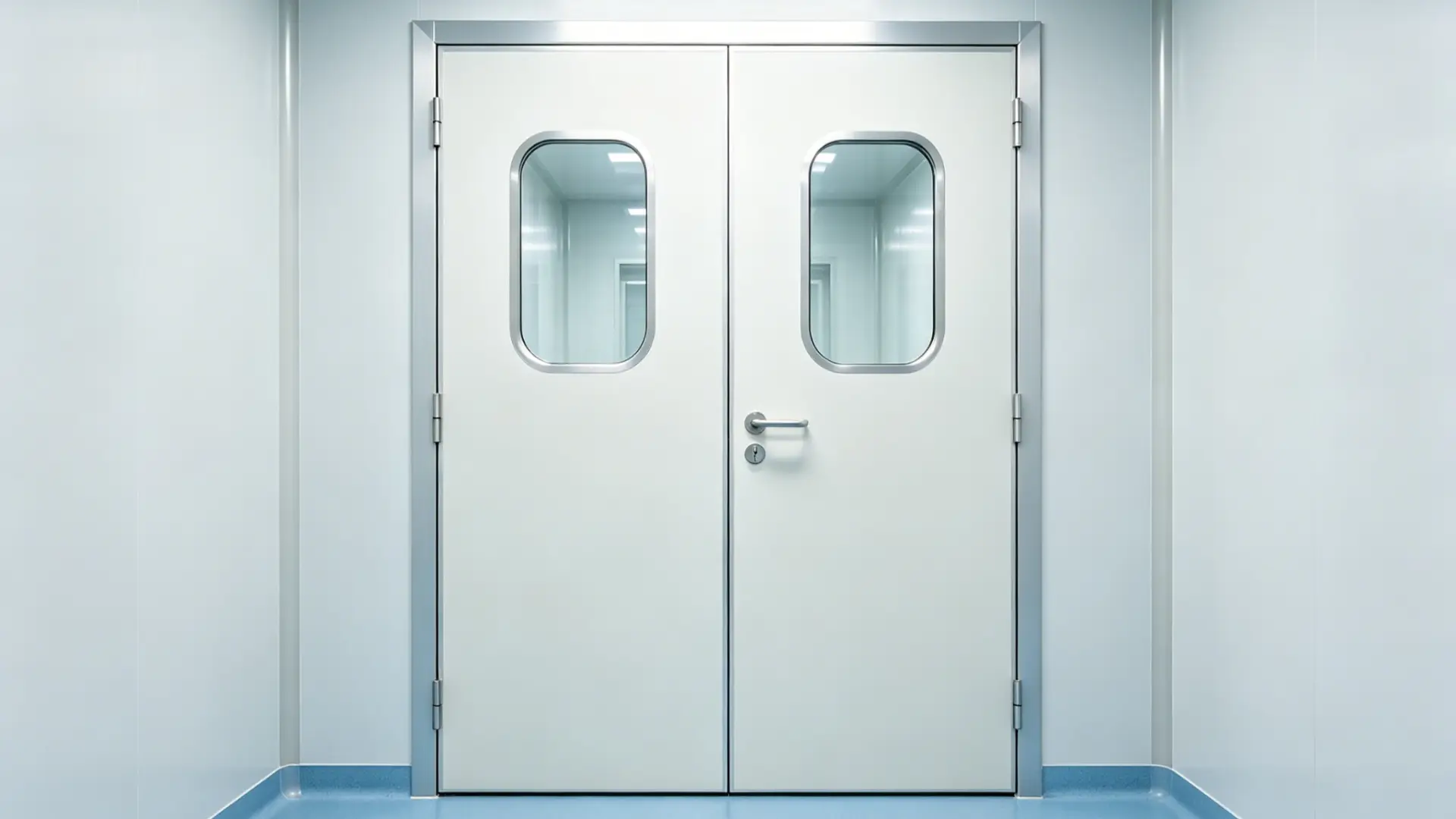 Steel Double Doors: Fire Rating Under GB/T 47162-2026
 -
 5 Hermetic Door Mistakes That Break the Seal
 -
 Hospital Room Door Size by Room Type: Width and Clearance
 -
 Retrofit Manual Doors with Electronic Glass Operators
 -
 Hospital Emergency Exit Doors: 90 Minute Fire Rating Meets Infection Control
 -
 ICU and Isolation Door Requirements Hospitals Often Overlook
 -
 Laboratory Door Requirements for BSL-2 and BSL-3 Containment
 -
 Retrofitting Hospital Sliding Doors: Upgrade Wards Without a Rebuild

-

Home
-

Tel
-

Email
-

Contact


Guangzhou Yizhong Aluminum Industry Co., Ltd.
We are always providing our customers with reliable products and considerate services.
We are always providing our customers with reliable products and considerate services.
Speak Your Mind