
Types of Cleanroom Doors Explained: Sliding vs Swing vs Roll-Up vs Hermetic
Choosing the right entrance is one of the most conseq uential—and most overlooked—decisions in a controlled-environment build. The four main types of cleanroom doors are sliding, swing, roll-up (rapid-action), and hermetic, and each one trades off sealing performance, traffic capacity, footprint, and cost in a different way. E-ZONG manufactures all four families as part of its full range of cleanroom doors, supplying pharmaceutical, hospital, laboratory, food, and electronics projects.
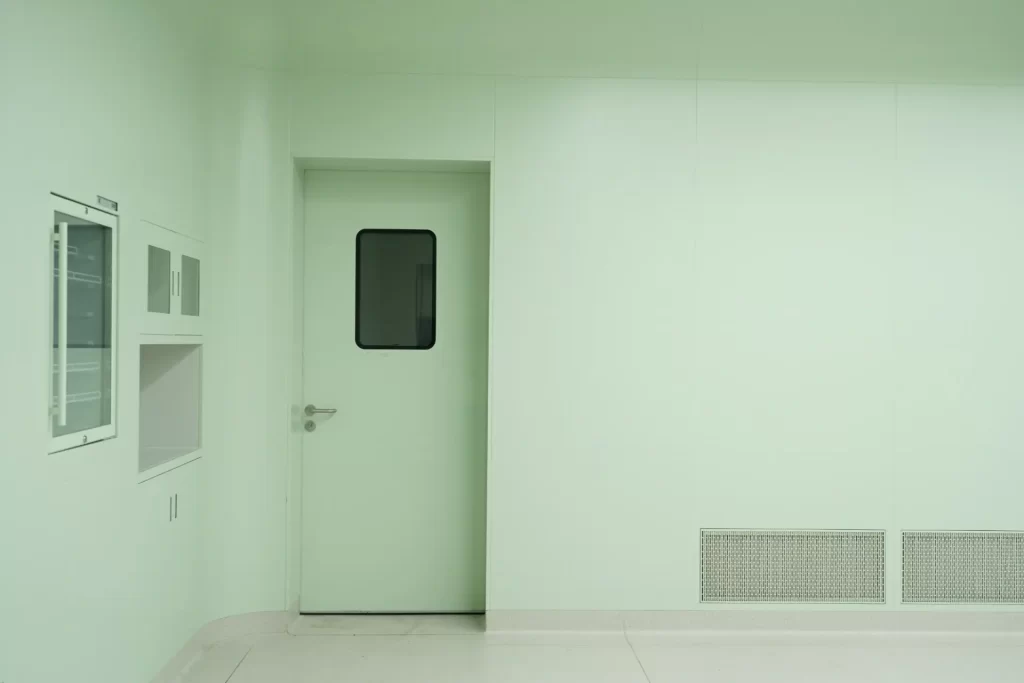
Why Door Type Matters in a Controlled Environment
A cleanroom door is not a partition with a hinge. It is an active part of the contamination-control system. In an ISO 14644-classified space, the door must help maintain the pressure differential that stops unfiltered air from migrating between zones, and it must seal tightly enough to keep particle counts and microbial load within class limits. For GMP facilities, the same door is also evidence: auditors expect documented sealing performance and validation support.
Four factors drive the choice of door type:
- Traffic frequency — how many passages per hour, and whether hands are full or gloves are worn.
- Cleanliness class & pressure cascade — higher classes (ISO 5–6) demand tighter, often automated seals.
- Available footprint — sliding and roll-up doors save swing clearance but need wall or overhead space.
- Workflow & hygiene protocol — contact-free operation reduces touchpoints in aseptic areas.
With those variables in mind, here is how each door type performs.
Cleanroom Sliding Doors
How they work
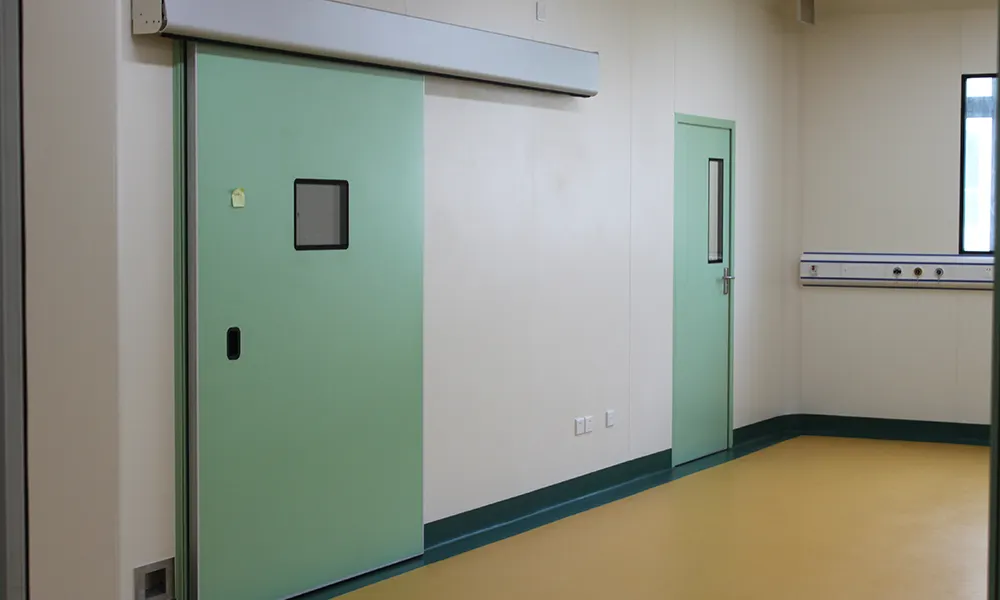
Sliding doors run on a horizontal track and part to the side, either manually or as an automatic, sensor-activated entrance. In cleanrooms they are usually specified as airtight glass or paneled automatic doors so personnel can pass hands-free while the leaf stays sealed against the frame.
Pros and cons
| Advantages | Limitations |
|---|---|
| Hands-free operation suits gowned, high-traffic corridors | Track and automation raise upfront cost and add a maintenance point |
| No swing clearance—ideal for narrow corridors | Requires clear wall space for the open leaf |
| Tight perimeter gaskets support stable pressure differentials | Glass versions need careful impact protection in tough areas |
| Smooth, easy-clean surfaces fit GMP housekeeping | Misaligned tracks can compromise the seal if not serviced |
Best applications
Sliding doors are the default for busy pharmaceutical corridors, laboratory circulation, and any zone where staff move continuously in clean attire. For a deeper look at automated, airtight configurations, see E-ZONG's guide to airtight glass automatic sliding doors.
Cleanroom Swing Doors
How they work
Swing doors rotate on hinges and open into or out of the room. They are the simplest cleanroom door mechanically and are often built as single or double leaves with perimeter seals and, in clinical settings, self-closing mechanisms.
Pros and cons
| Advantages | Limitations |
|---|---|
| Lowest upfront cost and simplest mechanism | Swing arc consumes floor/doorway clearance |
| Easy to install in standard wall openings | Manual operation adds touchpoints in aseptic zones |
| Wide material choice (steel, HPL, stainless) | Less suited to very high-traffic flows |
| Self-closing versions support infection control | Seal depends on hinge and latch adjustment over time |
Best applications
Swing doors fit lower-traffic rooms, offices, and support spaces, and they are the clinical standard for patient rooms and ward areas where an air-tight, self-closing leaf protects pressure and limits germ transfer between rooms. For specifying and maintaining self-closing leaves—covering the applicable requirements, leaf-type selection, and adjustment practices—see E-ZONG's guide to self-closing doors in hospitals and cleanrooms.
Roll-Up (Rapid-Action) Cleanroom Doors
How they work
Roll-up doors use a flexible curtain or rigid slat that retracts vertically into a compact overhead housing, opening and closing in seconds. They are built for speed and repeat cycling rather than maximum sealing tightness.
Pros and cons
| Advantages | Limitations |
|---|---|
| Very fast open/close reduces air-exchange loss at busy openings | Perimeter seal is good, not hermetic-grade |
| Minimizes traffic bottlenecks in logistics lanes | Curtain can wear in abrasive, high-cycle use |
| Limits insect and debris ingress in food/pharma flows | Needs power and a controlled overhead space |
| Pairs well with docking and wash-down areas | Less visual transparency than glass sliding doors |
Best applications
Roll-up doors shine in pharmaceutical and food cleanrooms where material and cart traffic is constant and cycle time matters more than a perfect seal. E-ZONG covers these in detail under fast rolling shutter doors, including customized solutions for process and wash areas. For the operational case—energy savings, hygiene compliance, and smoother material flow—review Fast Action Doors for Pharma and Food Cleanrooms: Key Benefits.
Hermetic Cleanroom Doors
How they work
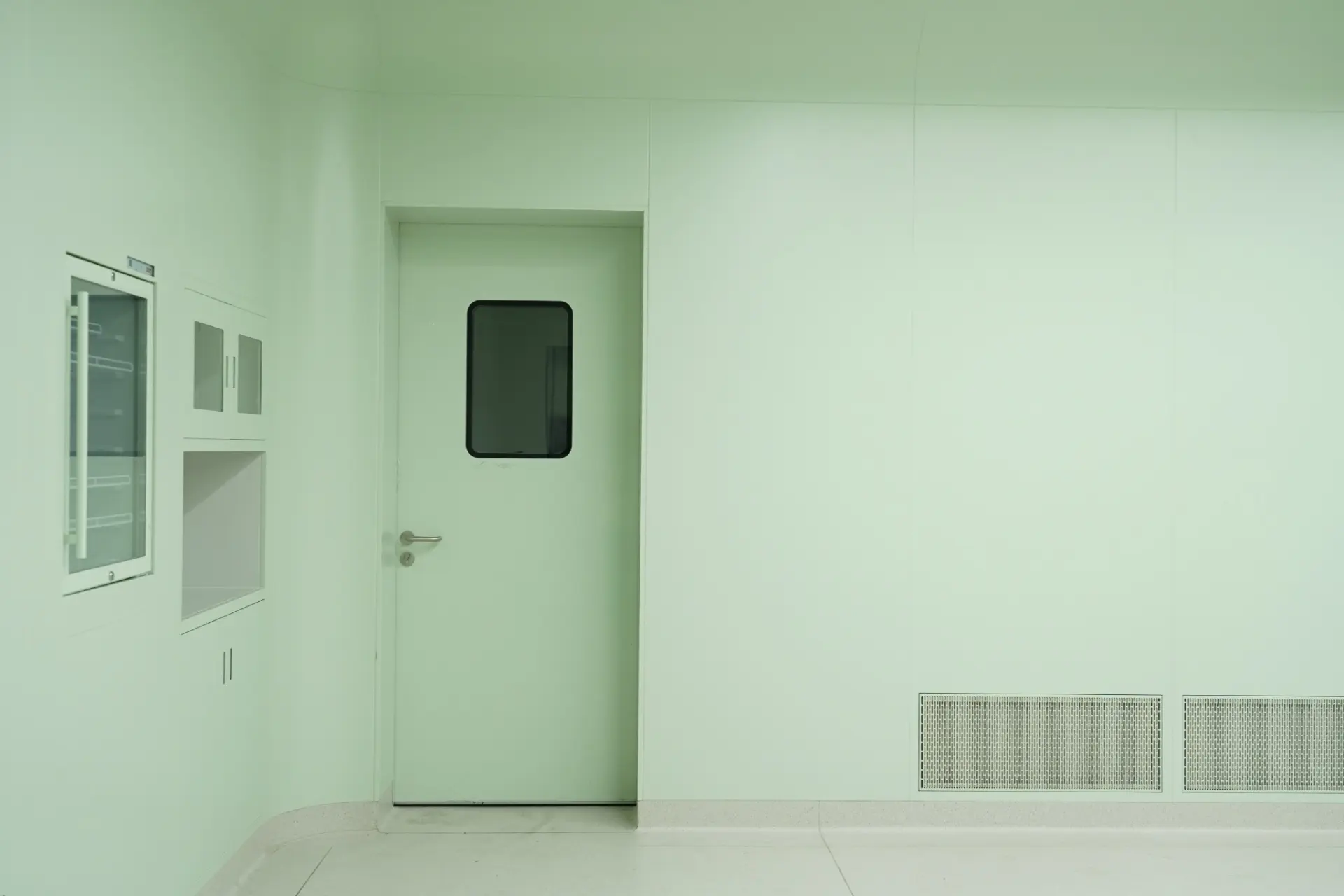
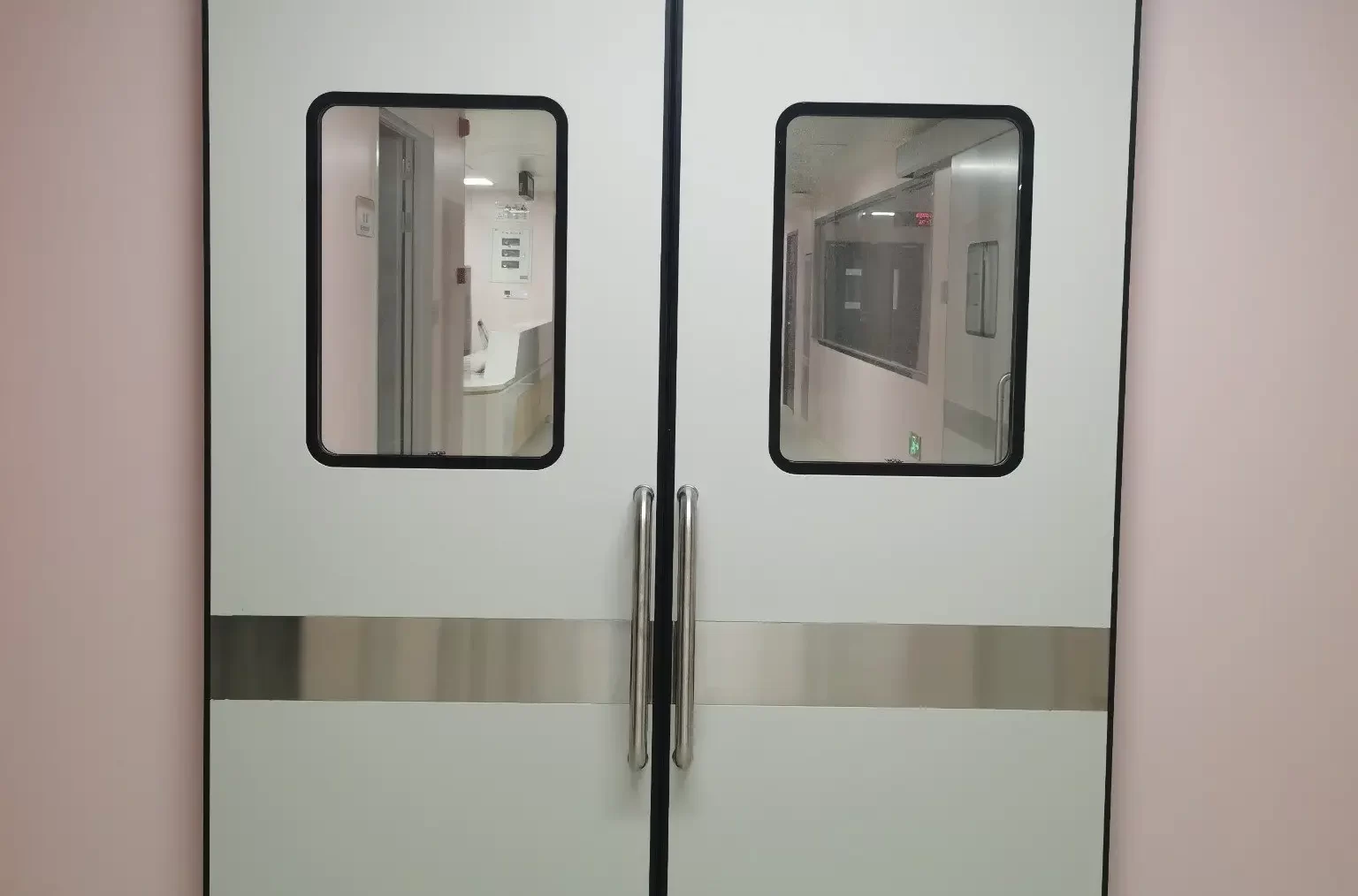
Hermetic doors are engineered for an airtight closure: a compressed perimeter gasket (often activated by a drop-down bottom seal and a clamping latch) closes every edge when the door is shut. They are common in operating theatres, isolation rooms, and aseptic pharmaceutical suites.
Pros and cons
| Advantages | Limitations |
|---|---|
| Highest sealing performance for pressure and contamination control | Higher cost and more precise installation tolerance |
| Supports infection control and isolation requirements | Usually manual or soft-automated, not high-cycle |
| Flat, flush surfaces simplify cleaning and validation | Frame-to-wall integration must be done carefully |
| Proven in hospitals and containment facilities | Over-specified for low-risk support rooms |
Best applications
Use hermetic doors wherever an airtight boundary is mandatory—operating theatres, isolation centers, and aseptic filling suites. For clinical deployments, E-ZONG's wall-mounted air-tight swing doors for patient rooms explain how self-closing, sealed leaves support infection control between rooms.
Side-by-Side Comparison
| Criterion | Sliding | Swing | Roll-Up | Hermetic |
|---|---|---|---|---|
| Opening mechanism | Lateral track | Hinge | Vertical roll | Clamping/compressed gasket |
| Sealing level | High | Medium–High | Medium | Highest |
| Traffic capacity | High | Low–Medium | Very high | Low–Medium |
| Footprint need | Wall space for leaf | Swing clearance | Overhead housing | Standard opening |
| Relative cost | Medium–High | Low | Medium–High | High |
| Typical best fit | Busy corridors | Rooms, wards | Logistics lanes | OR, isolation, aseptic |
How to Choose the Right Cleanroom Door
Match the door to the job using these criteria, then confirm sizing and material with the manufacturer:
- Count the traffic. High-cycle personnel or cart flow → sliding or roll-up. Occasional access → swing or hermetic.
- Set the class and pressure. Tightest aseptic or isolation needs → hermetic. Stable-class corridors → airtight sliding.
- Measure the opening and clearance. Common cleanroom leaves run roughly 800–950 mm for single doors and 1,200–1,350 mm for double doors, with widths often spanning 900–1,500 mm and frame thicknesses from about 50–200 mm depending on wall build-up. E-ZONG supplies both standard and fully customized sizes.
- Pick the panel material. Galvanized steel, color steel plate, HPL, and stainless steel are all used; stainless and HPL dominate aseptic and wash-down zones for cleanability and corrosion resistance.
- Decide on automation. Sensor-activated sliding reduces touchpoints; manual or self-closing swing suits lower-traffic clinical rooms.
- Plan for TCO, not just price. Factor energy loss from open time, seal replacement, and service access—not only the purchase cost.
Industry Applications
- Pharmaceutical & biotech: aseptic suites lean on hermetic and airtight sliding doors; logistics and wash areas use roll-up doors. See E-ZONG's pharmaceutical cleanroom door solutions for typical workshop deployments.
- Hospitals: operating theatres and isolation rooms use hermetic, self-closing leaves; wards use air-tight swing doors.
- Laboratories & electronics: sliding and swing doors balance cost and class across ISO 5–8 environments.
- Food processing: roll-up doors keep lanes moving while limiting ingress.
Real references from E-ZONG's project record include the pediatric surgery department at Sun Yat-sen Memorial Hospital and the National Isolation Center in Brunei—both door packages built around sealed, clinical-grade performance.
Specifying Through an Experienced Manufacturer
Door selection is only as good as its execution. E-ZONG (founded in Guangzhou in 1996, originally "SANHE") has more than 26 years in cleanroom construction components, with production and R&D across Foshan, Dongguan, Zhongshan, and Taishan, and an ISO 9001 quality system. Beyond doors, the portfolio covers cleanroom aluminum profiles, AHU frame profiles, and air-diffusion products—useful when the door must integrate with the wall, ceiling, and HVAC system rather than stand alone.
Because openings, materials, and compliance needs vary by project, the most reliable path is to share your specifications—cleanroom classification, door dimensions, panel material, and layout—and get a tailored sizing and selection review before ordering.
FAQs
What is the difference between a cleanroom door and a normal door?
A cleanroom door is built to support contamination and pressure control: sealed perimeters, smooth cleanable surfaces, and often automation, whereas a standard door is sized for general access and ignores particle and pressure performance.
Which cleanroom door is best for high-traffic areas?
Sliding (automatic) doors for personnel corridors and roll-up doors for cart and material lanes. Both keep openings fast and reduce bottlenecks without sacrificing too much sealing.
Are hermetic doors required for GMP pharmaceutical cleanrooms?
Not every room, but aseptic and containment zones that must hold a tight boundary typically use hermetic or airtight doors to meet GMP pressure and contamination controls and to support validation.
Can cleanroom doors be customized for non-standard openings?
Yes. Manufacturers such as E-ZONG supply both standard and custom sizes, with leaves commonly spanning 900–1,500 mm widths and frames from about 50–200 mm to match the wall system.
Sliding vs swing: which seals better?
A properly gasketed automatic sliding door generally holds a more consistent seal in high-traffic corridors because it avoids the repeated impact and latch wear that can loosen a swing door over time.
How do roll-up doors help in food and pharma facilities?
Their rapid cycle cuts the time an opening is exposed, limiting air exchange and ingress at busy logistics points while keeping material flow moving.
-
 Cleanroom Glass Windows Are The Key to Maintaining a Clean Environment
 -
 Top Aluminium Profile Manufacturers in China: Leading the Global Market
 -
 The Evolution of Air Tight Sliding Doors
 -
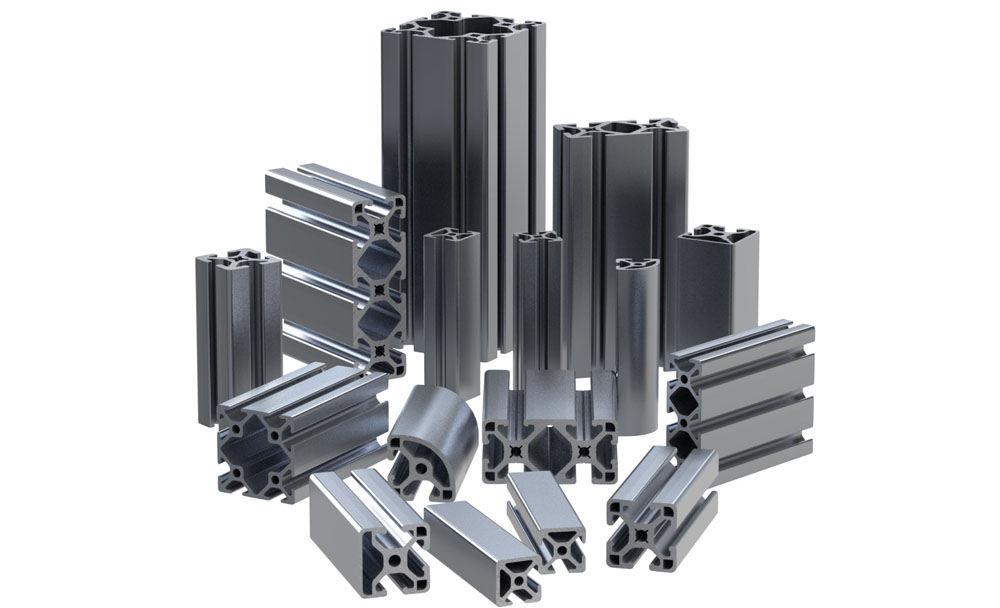 AHU Aluminium Profile: A Comprehensive Guide
 -
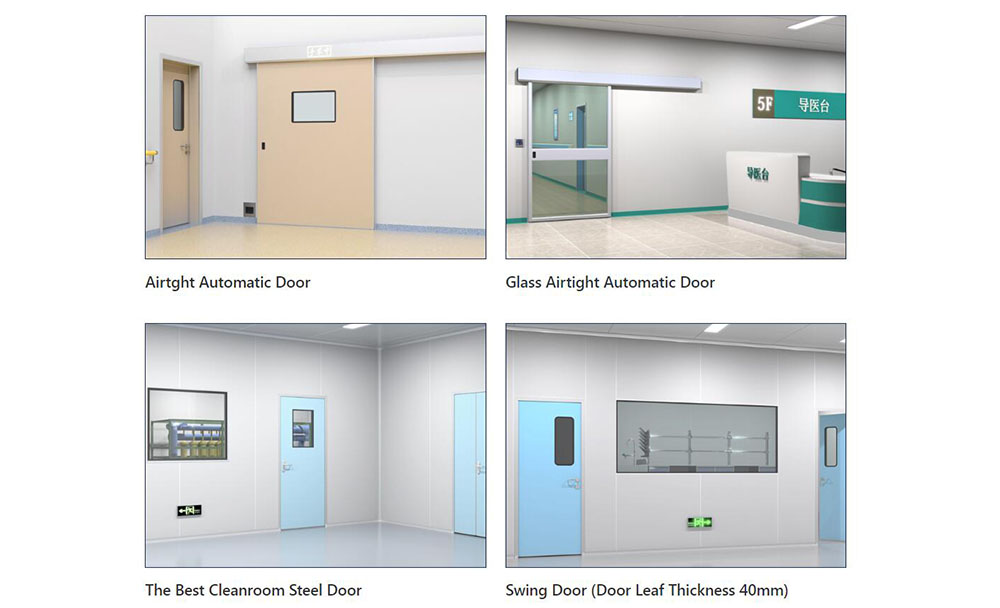 The Importance of Choosing the Right Cleanroom Door in Vietnam
 -
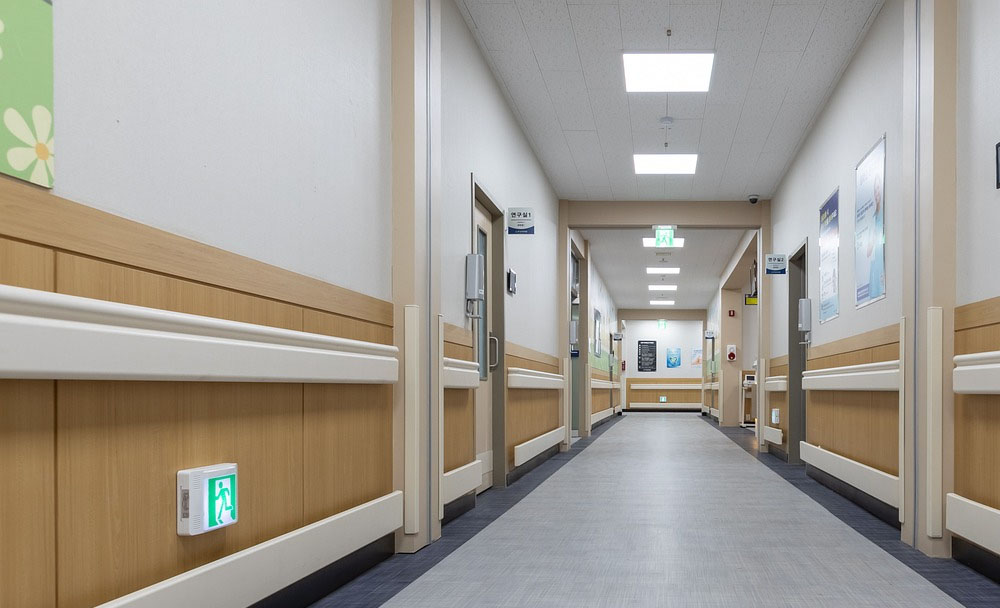 The Benefits of Hospital Automatic Doors: Enhancing Efficiency and Safety
 -
.jpg) The Best Bathroom Door Manufacturers - Unlocking Endless Possibilities!
The Best Bathroom Door Manufacturers - Unlocking Endless Possibilities! -
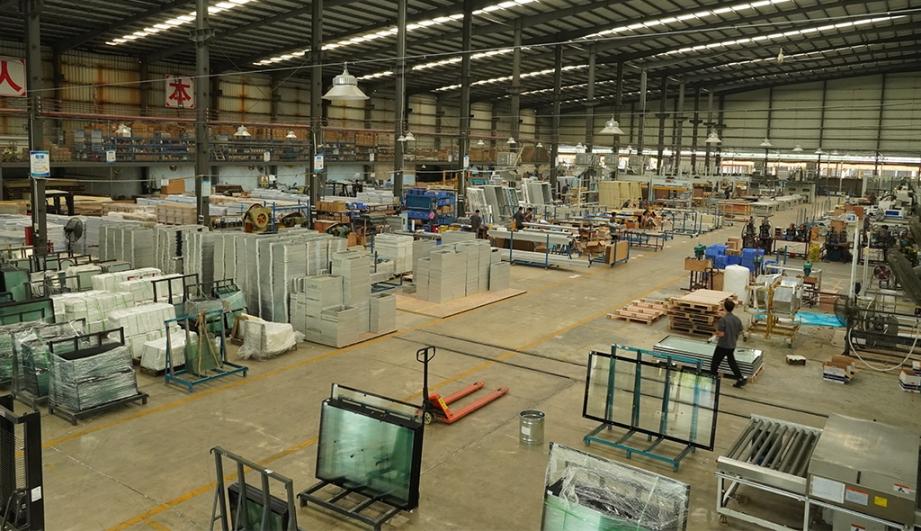 Unlock the Possibilities with AJ Manufacturing Doors
 -
 Make a Statement with Manufactured Home Interior Doors!
 -
 what is aluminum profile? Aluminum Profiles for Your Home is the best option
-
 Cleanroom Door Viewing Windows: Glass vs Polycarbonate Panel Selection
 -
 Types of Cleanroom Doors Explained: Sliding vs Swing vs Roll-Up vs Hermetic
 -
 Cleanroom Airlock Design: Door Sequencing and Pressure Cascade Basics
 -
 BSL Laboratory Door Requirements: Biosafety Level 2 and 3 Containment Guide
 -
 ISO Cleanroom Door Standards by Class: ISO 5 to ISO 8 Requirements Explained
 -
 Cleanroom Door Seal Materials: Silicone vs EPDM vs Neoprene Performance Guide
 -
 Cleanroom Door Pressure Cascade: How Room-to-Room Differential Works
 -
 Laminate Doors for Cleanrooms: HPL vs CPL GMP Guide
 -
 Guide to Self-Closing Doors in Hospitals and Cleanrooms
 -
 Panic Push Bar Doors: Cleanroom Egress Hardware and Ratings

-

Home
-

Tel
-

Email
-

Contact


Guangzhou Yizhong Aluminum Industry Co., Ltd.
We are always providing our customers with reliable products and considerate services.
We are always providing our customers with reliable products and considerate services.
Speak Your Mind