
Cleanroom Door Viewing Windows: Glass vs Polycarbonate Panel Selection
A cleanroom door viewing window—often called a vision panel—looks like a minor detail. In practice it sits at the intersection of contamination control, staff safety, workflow efficiency, and GMP compliance. Specifying the wrong panel material or mounting method can create a cleaning dead spot, undermine the pressure cascade, or raise a finding during an audit. This guide compares the two dominant options—glass (tempered and laminated) and polycarbonate—and explains how flush mounting, sealing, and door-leaf material change the outcome.
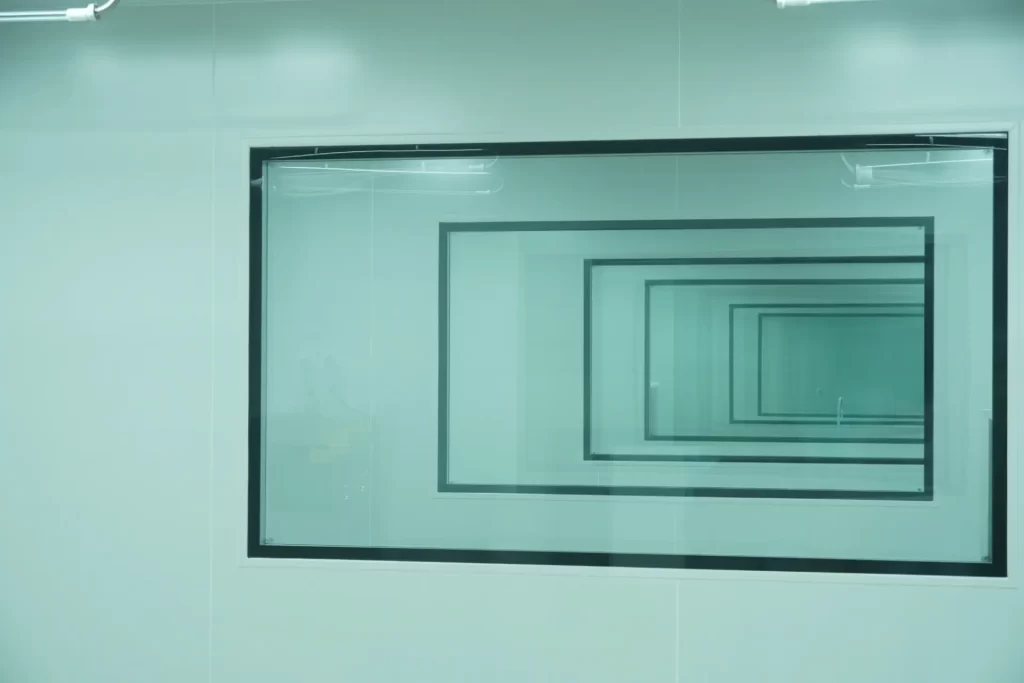
What a Cleanroom Door Viewing Window Actually Does
The purpose is simple: see through the barrier without opening the door. A viewing window lets operators monitor a process, nurses observe a patient, and logistics staff coordinate traffic—all while the leaf stays closed and the air seal stays intact.
That last point matters more than it sounds. Every time a cleanroom door opens, the pressure differential collapses, particles migrate, and the risk of cross-contamination rises. A well-placed window removes the need to open the door "just to check." It also supports safety: personnel can see a hazard, an obstruction, or oncoming traffic before stepping through. For a deeper look at how vision panels balance visibility with hygiene, see our guide on cleanroom vision panel doors: visibility without compromising hygiene.
Glass vs Polycarbonate: The Core Material Decision
Three materials dominate cleanroom door windows: tempered glass, laminated safety glass, and polycarbonate. Each behaves differently on the five criteria that actually matter—visibility, impact resistance, cleanability, thermal performance, and GMP suitability.
Tempered Glass
Tempered glass is the workhorse of cleanroom door windows. In E-ZONG's airtight glass door systems, the glazing is typically 8 mm tempered glass sealed with rubber gaskets around the frame. Its advantages are decisive for controlled environments:
- Non-porous and smooth: the surface wipes clean with standard disinfectants and does not harbor microbes in micro-grooves.
- Chemically stable: resistant to the hydrogen peroxide, alcohol, and quaternary-ammonium agents used in pharma and hospital cleaning.
- Safe fracture mode: when broken, tempered glass crumbles into small blunt fragments rather than sharp shards.
- Optical clarity: no distortion, which matters for visual inspection and monitoring.
The main limitation is brittleness under severe localized impact and higher weight than plastic alternatives.
Laminated Safety Glass
Laminated glass bonds two glass plies around an interlayer (typically PVB or EVA). If a pane is struck hard enough to break, the interlayer holds the fragments in place—nothing falls out. That makes it attractive where fragment containment is a priority, and the construction also improves sound damping and thermal insulation. The trade-off is added weight and cost, so it is usually specified around high-value processes or above-ceiling zones rather than across an entire facility.
Polycarbonate Panel
Polycarbonate is essentially unbreakable in normal use—its impact resistance is roughly two orders of magnitude higher than glass, and it is light. That sounds ideal, but three issues limit its use in regulated cleanrooms:
- Scratch susceptibility: even with a hard-coat, polycarbonate develops fine surface marks over time. Those marks are exactly where contamination hides and where disinfectants pool.
- Static and chemistry: polycarbonate can build static charge, and some formulations show variable compatibility with aggressive cleaners.
- Long-term clarity: yellowing and hazing reduce the very visibility the window exists to provide.
Polycarbonate earns its place in high cart-impact or physical-containment zones—loading bays, some biosafety areas, equipment passages—where breakage risk outweighs cleanability concerns. For routine GMP visual monitoring, glass remains the default.
Side-by-Side Comparison
| Criterion | Tempered Glass | Laminated Glass | Polycarbonate |
|---|---|---|---|
| Impact resistance | Good | Good | Excellent |
| Scratch resistance / cleanability | Excellent | Excellent | Poor–moderate |
| Weight | Moderate–heavy | Heavy | Light |
| Thermal insulation | Moderate (better as insulated unit) | Moderate–good | Good |
| Shatter behavior | Blunt fragments | Held by interlayer | No shatter |
| GMP / ISO 14644 suitability | Excellent (standard) | Excellent | Limited / application-specific |
| Typical cost | Moderate | Higher | Moderate |
Flush-Mounted Design: Why the Window Must Sit Flush
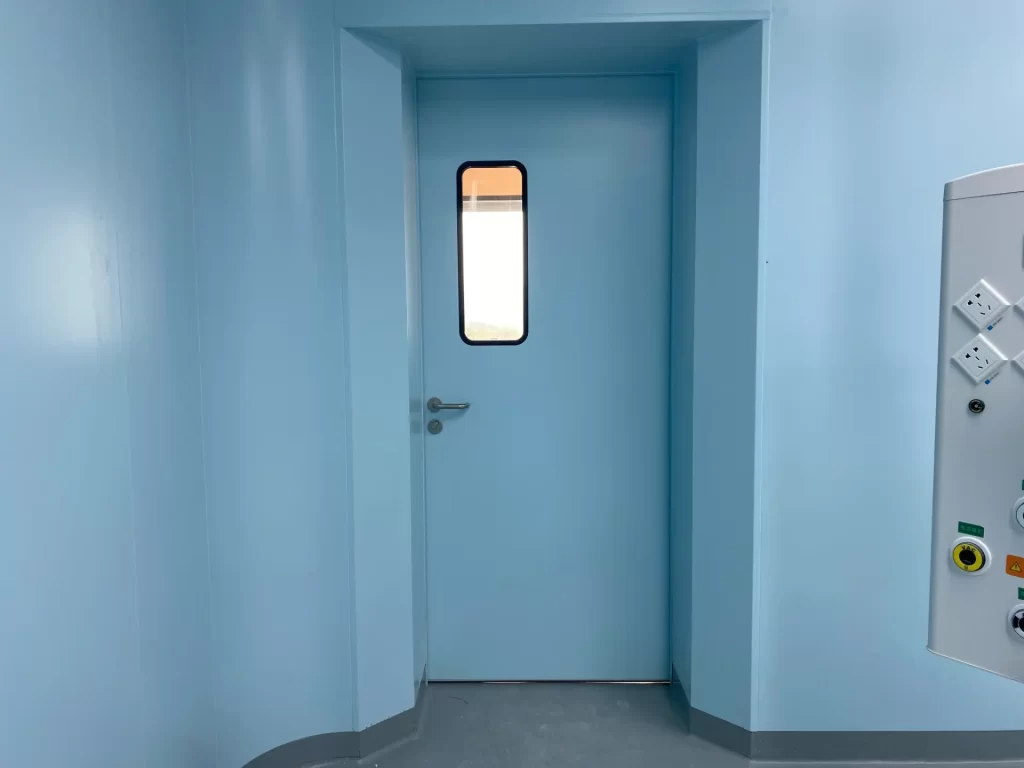
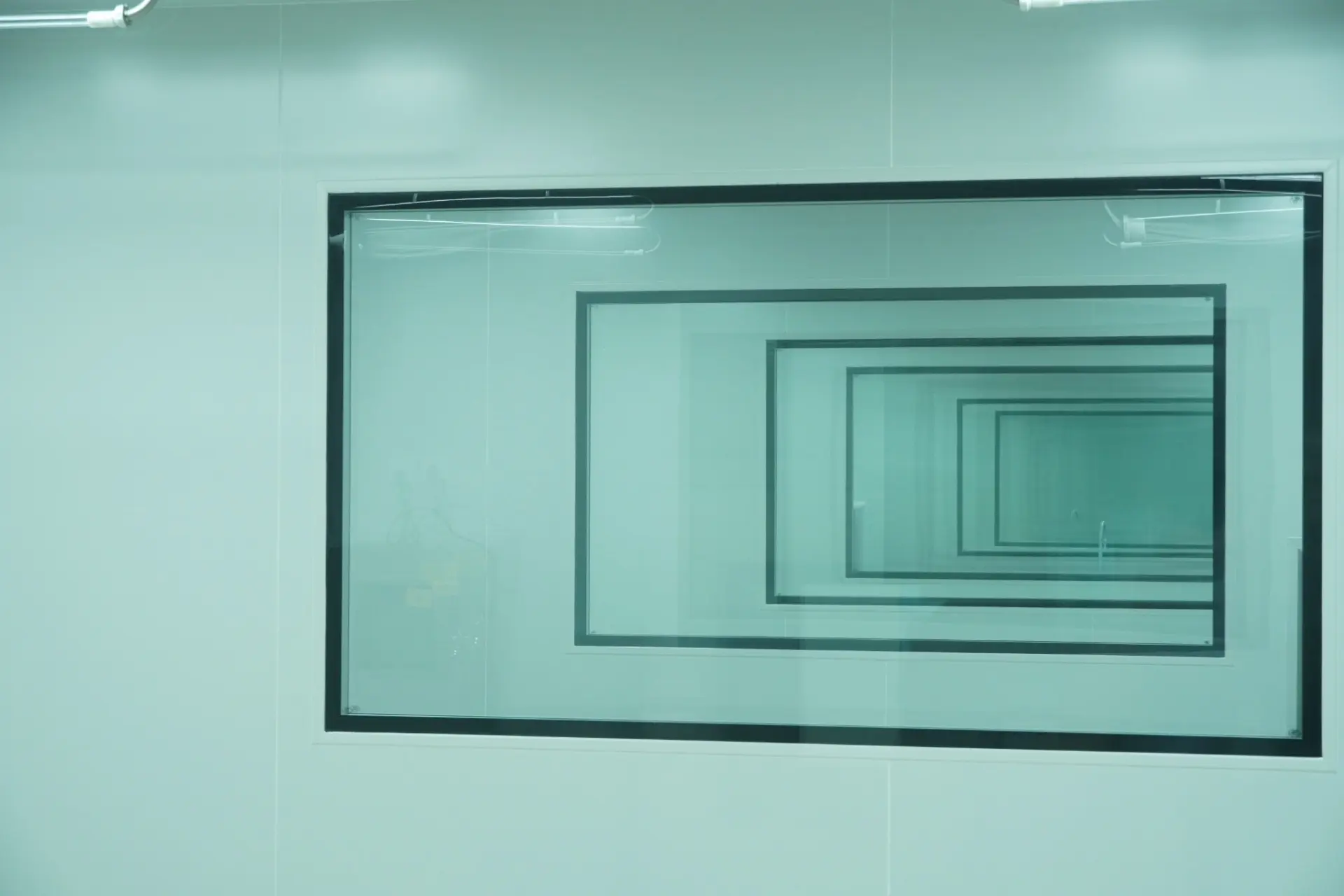
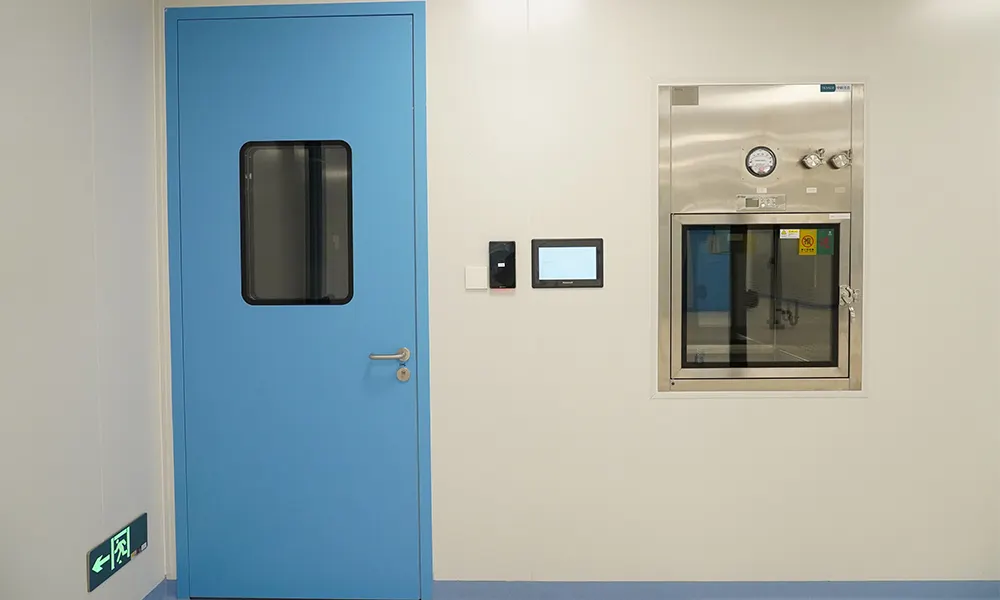
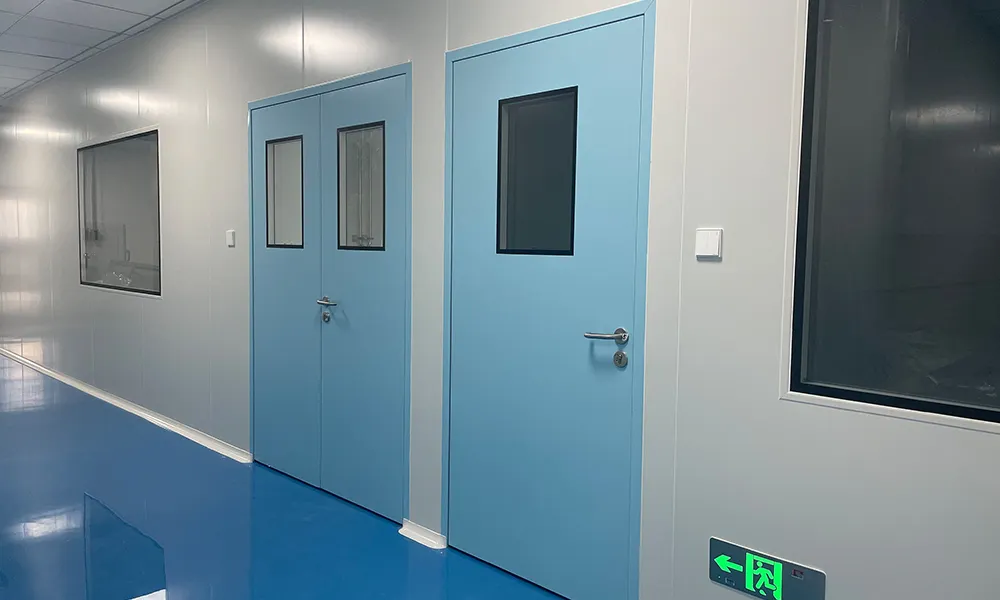
A viewing window is only as hygienic as its edge. A recessed window leaves a ledge—a dust and microbe trap that defeats validated cleaning. A flush-mounted (齐平) window sits level with the door surface, producing a seamless plane that wipes down in one pass with no pocket to miss.
For GMP and ISO 14644 environments, flush mounting is not a cosmetic preference; it is a contamination-control decision. E-ZONG's flush-mounted door designs integrate the glazing directly into the leaf so the viewing panel becomes part of the cleanable surface rather than an addition to it. To understand the broader principle, read what a flush cleanroom door is and why it matters.
Selection Criteria That Actually Matter
When specifying a cleanroom door window, rank the criteria in this order:
- Cleanability (GMP hygiene): smooth, non-porous, sealed, and flush. This is non-negotiable in regulated rooms.
- Visibility: optical clarity with no distortion, so monitoring and inspection are reliable.
- Impact resistance: matched to traffic—manual swing doors in quiet labs need less than roll-door passages with carts.
- Thermal insulation (保温隔热): at pressure boundaries between graded zones, an insulated unit reduces heat transfer and comfort loss.
- Pressure & airtightness: the window must not break the seal. A continuous rubber gasket frame, integrated into the leaf, keeps the pressure differential stable.
- Compliance: the assembly should support ISO 14644 cleanliness class, GMP expectations, and FDA/audit readiness through documented, cleanable design.
For an overview of the glass window options themselves, see our cleanroom glass windows resource.
Matching the Window to the Application
Pharmaceutical Workshops
Pharma rooms demand the highest cleanability. The right answer is usually tempered or laminated glass in a flush, double-layer hollow insulated frame. In E-ZONG's large chemical and pharmaceutical clean-space projects, color-steel clean doors use double-layer hollow anti-fog, anti-bacteria windows—the insulated cavity prevents condensation at the boundary while the sealed, hygienic surface meets cleaning protocols. Clarity supports in-process visual checks without door openings.
Hospitals (Operating Rooms, Isolation, Wards)
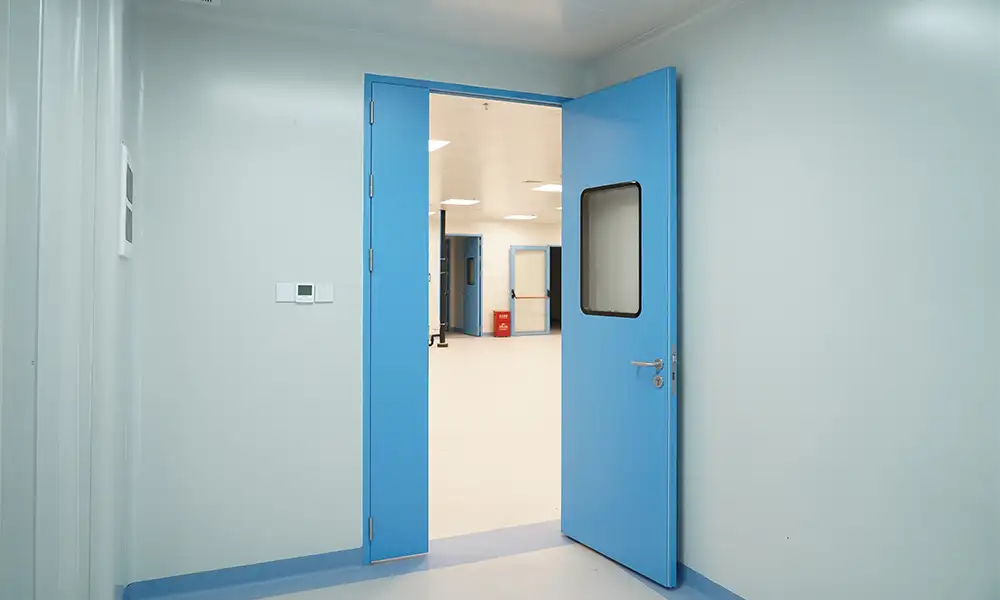
Here the window serves infection control and observation at once. An airtight door with a viewing panel lets staff monitor patients and coordinate care without repeatedly breaking the pressure envelope. E-ZONG's installed base includes the Sun Yat-sen Memorial Hospital Pediatric Surgery Department and the Brunei National Isolation Center, where sterile isolation doors incorporate observation windows. Patient-room wall-mounted air-tight swing doors apply the same logic at ward scale. Where carts and equipment create real impact risk in clinical and lab corridors, our impact-resistant doors for hospitals and labs (crash ratings & hygiene) guide explains how to balance durability with hygiene.
Laboratories and Biosafety Facilities
BSL-2/BSL-3 and testing labs mix visibility needs with physical risk. Glass remains standard for observation, but polycarbonate becomes worth evaluating in containment or high-traffic passages where a broken pane would be unacceptable. The decision should follow the impact-vs-cleanability trade-off above, not a default.
Semiconductor and Electronics
These rooms prioritize particle control and static behavior. Glass is preferred for its stable, non-shedding surface; the framing and any gasket must be selected to avoid outgassing and to maintain the tight particle budget of ISO Class 5–8 environments.
How the Door-Leaf Material Affects the Window
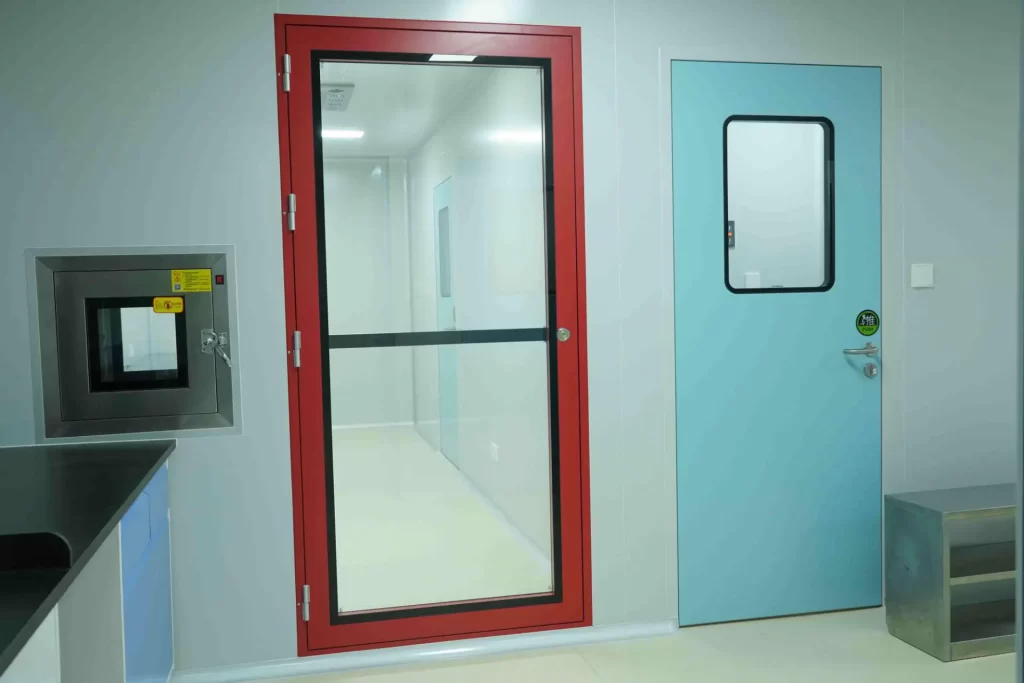
The window does not exist in isolation—it is cut into a door leaf made of steel, stainless steel, HPL, or CPL. The leaf material changes how the window is framed and sealed:
- Steel / stainless steel leaves: rigid, support larger glazed areas, and pair naturally with gasket-sealed windows.
- HPL / CPL laminate leaves: smooth, hygienic surfaces, but the window cut-out must be precisely sealed to the panel so no raw edge is exposed. Flush integration is essential.
Because the leaf and window are one contamination-control assembly, they should be specified together. Our laminate doors for cleanrooms: HPL vs CPL GMP guide covers how panel choice interacts with window design and GMP expectations.
Procurement and Project Planning Tips
Getting the window right starts before the door is ordered:
- Define early: lock the cleanroom classification, window size and position, and door dimensions in the design phase—changes later mean re-cut leaves and longer lead times.
- Standard vs custom: non-standard window sizes increase fabrication time. Where the program allows, standard dimensions protect the schedule.
- Supply as one system: order the window and door together so fit, sealing, and pressure performance are validated as a single assembly rather than retrofitted.
- Documentation: request shop drawings and quality records. E-ZONG works under an ISO 9001 quality management system and provides drawings, customization support, and project follow-up across its Foshan, Dongguan, Zhongshan, and Taishan production bases.
- Total cost of ownership: glass wins on lifecycle. Its cleanability and durability reduce replacement and revalidation cost versus polycarbonate, which may need earlier renewal in abrasive, high-traffic use.
FAQs
Should a GMP pharmaceutical cleanroom use tempered or laminated glass for its door window?
Tempered glass is the standard choice for most GMP pharmaceutical door viewing windows because it is non-porous, easy to clean, chemically stable, and shatters safely. Laminated glass is preferred where fragment containment and extra sound or thermal insulation are required, such as around high-value processes or above-ceiling zones.
Can polycarbonate be used for GMP pharmaceutical cleanroom door windows?
Polycarbonate is rarely the first choice for GMP pharmaceutical viewing windows. Its high impact resistance is valuable, but it scratches more easily, can develop fine surface marks that trap contamination, may build static charge, and shows variable chemical compatibility with disinfectants. Glass remains the default for visual monitoring in regulated pharma environments; polycarbonate is better reserved for high cart-impact or containment zones where breakage risk outweighs cleanability concerns.
Why specify a flush-mounted cleanroom door window?
A flush-mounted window sits level with the door surface, leaving no ledge or recess where dust, microbes, or cleaning residue can accumulate. This eliminates a cleaning dead spot, supports validated cleanability, and helps maintain the air seal and pressure differential across the door.
How do you prevent fogging or condensation on a cleanroom door window?
Use a double-layer hollow (insulated) glazing unit so the inner and outer glass surfaces stay closer to room temperature, reducing condensation risk at pressure boundaries. Selecting an anti-fog, anti-bacteria glazing option and ensuring the window is properly sealed into the door leaf further prevents moisture ingress and fogging.
Does a viewing window compromise the airtightness of a cleanroom door?
Not if the window is engineered as part of the door system. When the glazing is sealed into the leaf with a continuous gasket and the panel is flush or properly framed, the window does not break the air seal. The key is supplying the window and door together so fit, sealing, and pressure performance are validated as one assembly.
Are there standard cleanroom door window sizes?
Many suppliers offer common stock sizes, but cleanroom doors are frequently custom-made to the room layout and traffic needs. Defining the window size early—and keeping it standard where the program allows—protects lead time and cost. E-ZONG evaluates custom sizing as part of the door system during project quotation.
Conclusion
For the large majority of GMP, hospital, and laboratory cleanrooms, tempered (or laminated) glass in a flush, gasket-sealed, insulated frame is the correct cleanroom door window: it is cleanable, clearly visible, pressure-stable, and audit-friendly. Polycarbonate earns a role only where extreme impact resistance justifies its cleanability trade-offs. Specifying the window together with the door leaf—and documenting the assembly—turns a small detail into a reliable part of your contamination-control strategy.
Need a window specification for your project? Share your cleanroom classification, door dimensions, material preferences, and facility layout, and E-ZONG's technical team will return a free consultation with a custom sizing evaluation and material selection guidance. Contact E-ZONG to start the review →
-
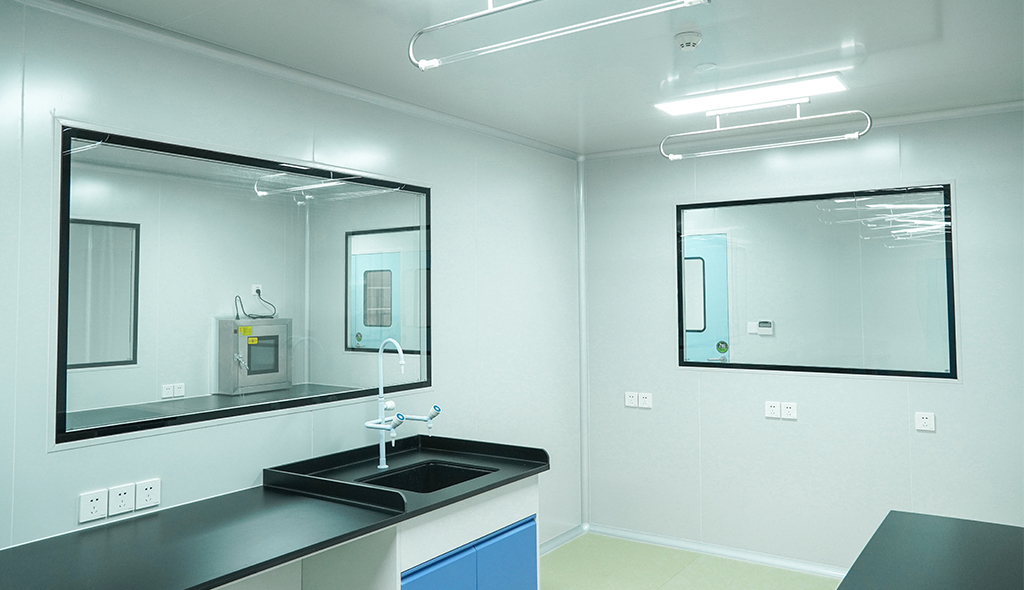 Cleanroom Glass Windows Are The Key to Maintaining a Clean Environment
 -
 Top Aluminium Profile Manufacturers in China: Leading the Global Market
 -
 The Evolution of Air Tight Sliding Doors
 -
 AHU Aluminium Profile: A Comprehensive Guide
 -
 The Importance of Choosing the Right Cleanroom Door in Vietnam
 -
 The Benefits of Hospital Automatic Doors: Enhancing Efficiency and Safety
 -
.jpg) The Best Bathroom Door Manufacturers - Unlocking Endless Possibilities!
The Best Bathroom Door Manufacturers - Unlocking Endless Possibilities! -
 Unlock the Possibilities with AJ Manufacturing Doors
 -
 Make a Statement with Manufactured Home Interior Doors!
 -
 what is aluminum profile? Aluminum Profiles for Your Home is the best option
-
 Cleanroom Door Viewing Windows: Glass vs Polycarbonate Panel Selection
 -
 Types of Cleanroom Doors Explained: Sliding vs Swing vs Roll-Up vs Hermetic
 -
 Cleanroom Airlock Design: Door Sequencing and Pressure Cascade Basics
 -
 BSL Laboratory Door Requirements: Biosafety Level 2 and 3 Containment Guide
 -
 ISO Cleanroom Door Standards by Class: ISO 5 to ISO 8 Requirements Explained
 -
 Cleanroom Door Seal Materials: Silicone vs EPDM vs Neoprene Performance Guide
 -
 Cleanroom Door Pressure Cascade: How Room-to-Room Differential Works
 -
 Laminate Doors for Cleanrooms: HPL vs CPL GMP Guide
 -
 Guide to Self-Closing Doors in Hospitals and Cleanrooms
 -
 Panic Push Bar Doors: Cleanroom Egress Hardware and Ratings




-

Home
-

Tel
-

Email
-

Contact


Guangzhou Yizhong Aluminum Industry Co., Ltd.
We are always providing our customers with reliable products and considerate services.
We are always providing our customers with reliable products and considerate services.
Speak Your Mind