
Cleanroom Door Seal Materials: Silicone vs EPDM vs Neoprene Performance Guide
Selecting the right cleanroom door seal is not a minor specification detail. In pharmaceutical production, hospital operating theaters, and semiconductor fabrication areas, the gasket material between the door leaf and frame directly determines whether your facility maintains ISO 14644 classification, passes GMP audits, or loses pressure differential within months of installation.
At E-ZONG, we have manufactured cleanroom doors, hermetic doors, and airtight hospital doors since 1996. Over decades of project work across pharmaceutical, hospital, laboratory, and electronics facilities, we have observed that seal material selection is one of the most commonly underestimated decisions in cleanroom construction. The wrong cleanroom door gasket can cause air leakage, particle infiltration, chemical degradation, and compliance failure—problems that are expensive to fix after installation.
This guide compares the three most commonly specified cleanroom door seal materials—silicone, EPDM, and neoprene—using actual technical parameters that procurement managers and engineering teams need to evaluate.
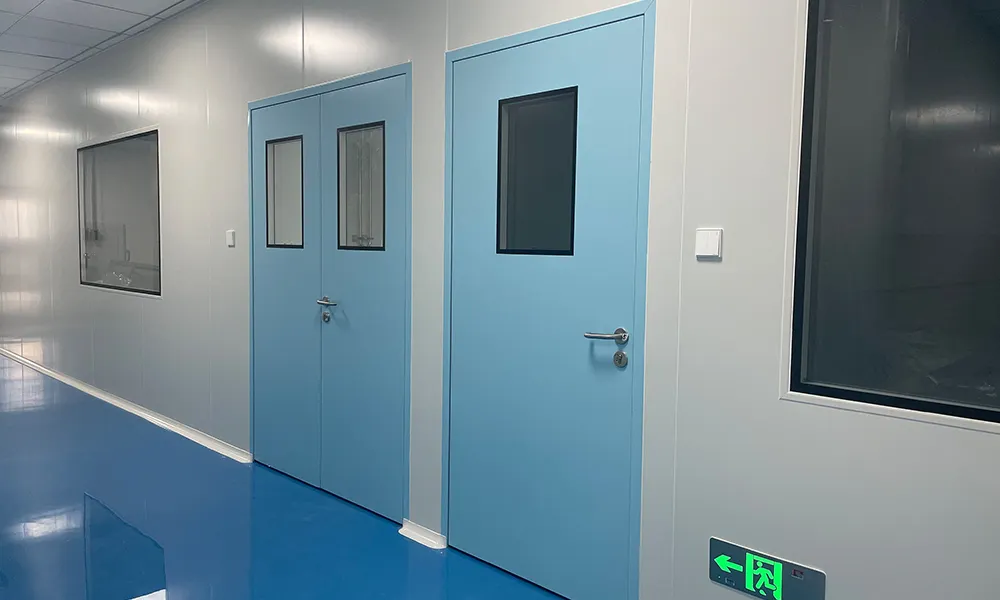
What a Cleanroom Door Seal Actually Does
Before comparing materials, it is worth clarifying what the seal is responsible for. A cleanroom door seal serves four functions simultaneously:
- Air-tightness: Prevents uncontrolled air transfer between rooms of different pressure classifications, maintaining the positive or negative pressure differential required by ISO 14644 and GMP guidelines.
- Particle barrier: Blocks particulate and microbial migration at the door perimeter, protecting the controlled environment from contamination.
- Chemical resistance: Withstands repeated exposure to disinfectants, cleaning agents, and process chemicals used in pharmaceutical and hospital environments without degradation.
- Mechanical durability: Maintains elastic recovery after thousands of door cycles so compression set does not create permanent gaps.
When any of these four functions fails, the consequences range from product contamination to GMP audit findings. Material selection is the first line of defense.
Silicone Cleanroom Door Seals
Silicone rubber is the most widely specified material for high-performance cleanroom door seal applications, particularly in pharmaceutical, biotechnology, and hospital environments where thermal stability and chemical inertness are critical.
Key Technical Properties
| Property | Typical Value | Relevance for Cleanroom Doors |
|---|---|---|
| Temperature range | -60°C to +230°C | Excels in autoclave-adjacent areas and steam-sterilized environments |
| Chemical resistance | Excellent against acids, bases, steam, ozone | Ideal for pharmaceutical cleaning protocols (VHP, peracetic acid, alcohol-based disinfectants) |
| Compression set (70h @ 150°C) | 15–25% | Lower than many alternatives; maintains seal geometry under long-term compression |
| Shore A hardness | 40–70 | Can be formulated soft for low-closing-force doors or firmer for heavy-duty applications |
| Outgassing | Very low | Critical for semiconductor and electronics cleanrooms where volatile compounds contaminate processes |
| Biocompatibility | USP Class VI available | Required for hospital and medical device manufacturing environments |
Advantages
Silicone offers the widest temperature range of the three materials, making it suitable for cleanroom doors adjacent to sterilization equipment, steam tunnels, or freeze-drying areas. Its chemical resistance to hydrogen peroxide vapor (VHP), peracetic acid, and alcohol-based sanitizers makes it the default choice in pharmaceutical facilities running frequent decontamination cycles.
In semiconductor and electronics cleanrooms, low outgassing is a decisive factor. Silicone releases minimal volatile organic compounds (VOCs), preventing molecular contamination that can ruin wafer yields.
Limitations
Silicone is not the most abrasion-resistant material. In high-traffic areas where trolleys, carts, or equipment may contact the door frame, silicone seals can show mechanical wear faster than EPDM. It also has lower tensile strength, meaning it is less forgiving if installers overstretch the gasket during fitting.
Cost is another consideration. Silicone raw material costs are typically 30–50% higher than EPDM on a per-meter basis, a factor that becomes significant on large projects with hundreds of doors.
Best Applications
- Pharmaceutical filling lines and sterile processing suites (VHP exposure)
- Hospital operating theaters and isolation rooms (frequent chemical disinfection)
- Biotechnology cleanrooms with autoclave-adjacent doors
- Semiconductor fabrication facilities (ISO Class 5–6, low outgassing requirement)
- High-temperature process areas (>100°C ambient or steam exposure)
EPDM Cleanroom Door Seals
Ethylene propylene diene monomer (EPDM) is the most cost-effective general-purpose cleanroom door gasket material. It dominates in standard pharmaceutical cleanrooms, hospital wards, and laboratory projects where moderate chemical exposure and ambient temperature ranges apply.
Key Technical Properties
| Property | Typical Value | Relevance for Cleanroom Doors |
|---|---|---|
| Temperature range | -50°C to +120°C | Suitable for standard HVAC-controlled cleanrooms; not for steam or autoclave areas |
| Chemical resistance | Good against water, steam, alcohol, mild alkalis | Compatible with standard hospital and laboratory cleaning protocols |
| Compression set (70h @ 100°C) | 25–35% | Acceptable for most cleanroom doors; check after 5+ years for hardening |
| Shore A hardness | 50–80 | Typically firmer than silicone; good for heavy-duty perimeter seals |
| UV and ozone resistance | Excellent | Long service life in environments with ozone-generating equipment or UV sterilization |
| Cost per meter | Lower than silicone and neoprene | Significant savings on multi-door projects |
Advantages
EPDM’s primary advantage is value. For standard cleanroom doors operating in HVAC-controlled environments (+18°C to +25°C typical), EPDM performs reliably at roughly 60–70% of the silicone cost per meter. Its ozone and UV resistance make it a strong candidate for cleanrooms using UV sterilization or ozone-based decontamination systems.
EPDM also offers better mechanical toughness than silicone. It withstands incidental contact with carts, cleaning equipment, and foot traffic without tearing or surface damage. For facility managers concerned with long-term durability in busy corridors, this matters.
Limitations
EPDM is not compatible with hydrocarbon-based contaminants. In facilities using petroleum-derived lubricants, certain solvents, or mineral oils near the door frame, EPDM swells and degrades. It is also unsuitable for high-temperature areas above 120°C—steam sterilization passages, autoclave vestibules, and oven-adjacent doors will require silicone instead.
Compression set performance is acceptable but not exceptional. In doors with constant compression (fixed-frame seals on rarely opened doors), EPDM may take a permanent set over 5–7 years, gradually reducing air-tightness. Planned replacement intervals should be shorter than silicone in these applications.
Best Applications
- Standard pharmaceutical cleanrooms (ISO Class 7–8, ambient temperature)
- Hospital ward doors and general medical facility doors
- Electronics assembly cleanrooms with standard cleaning protocols
- Laboratory animal facilities and research labs
- Multi-door projects where cost efficiency is a primary specification criterion
Neoprene Cleanroom Door Seals
Neoprene (polychloroprene) is the least commonly specified of the three materials for modern cleanroom construction, but it retains specific niche applications where flame resistance and oil compatibility are required.
Key Technical Properties
| Property | Typical Value | Relevance for Cleanroom Doors |
|---|---|---|
| Temperature range | -40°C to +120°C | Comparable to EPDM; not for high-temperature processes |
| Chemical resistance | Good against oils, greases, fats, some acids | Useful in industrial cleanrooms with machinery lubricant exposure |
| Compression set (70h @ 100°C) | 30–40% | Highest of the three; requires more frequent inspection |
| Shore A hardness | 50–80 | Similar to EPDM; firmer feel than silicone |
| Flame resistance | Self-extinguishing | Meets certain fire-rated door requirements where applicable |
| Cost per meter | Mid-range between EPDM and silicone | Moderate cost with specific performance trade-offs |
Advantages
Neoprene’s standout feature is flame resistance. In cleanroom projects where fire-rated door assemblies are required—such as chemical storage areas, flammable pharmaceutical processes, or certain industrial zones—neoprene seals may be specified to meet building code requirements without additional fire-rated coatings.
It also tolerates oil and grease exposure better than EPDM. In industrial cleanrooms adjacent to machinery, compressor rooms, or lubricated equipment, neoprene resists swelling from incidental petroleum contact.
Limitations
Neoprene is the poorest performer for standard cleanroom requirements. Its compression set is the highest of the three materials, meaning it loses elasticity faster under continuous compression. For airtight cleanroom doors requiring long-term pressure differential maintenance, this is a significant drawback.
Neoprene also has higher outgassing than silicone, making it unsuitable for semiconductor or precision electronics cleanrooms. Its chemical resistance to oxidizing disinfectants (peracetic acid, VHP, strong chlorine-based cleaners) is inferior to silicone, limiting its use in pharmaceutical sterile processing areas.
From a procurement perspective, neoprene occupies an awkward middle ground: more expensive than EPDM without the temperature range of silicone, and without the cleanroom-specific performance advantages that justify the premium.
Best Applications
- Industrial cleanrooms with oil/grease exposure (food processing machinery, equipment bays)
- Fire-rated cleanroom door assemblies where local codes require self-extinguishing seals
- Chemical storage vestibules with moderate temperature requirements
- Retrofit projects where existing neoprene seals are being replaced like-for-like
Side-by-Side Comparison: Cleanroom Door Seal Materials
| Evaluation Criteria | Silicone | EPDM | Neoprene |
|---|---|---|---|
| Temperature range | -60°C to +230°C | -50°C to +120°C | -40°C to +120°C |
| Chemical resistance (disinfectants) | Excellent | Good | Moderate |
| Oil/grease resistance | Poor | Poor | Good |
| Compression set resistance | Excellent (15–25%) | Good (25–35%) | Moderate (30–40%) |
| Outgassing (VOC) | Very low | Moderate | Higher |
| UV/ozone resistance | Excellent | Excellent | Good |
| Abrasion resistance | Moderate | Good | Good |
| Flame resistance | Poor | Poor | Self-extinguishing |
| Biocompatibility (USP Class VI) | Available | Limited | Limited |
| Relative cost per meter | High | Low | Medium |
| Best fit industries | Pharma, biotech, hospital OT, semiconductor | General pharma, hospital, lab, electronics | Industrial, food, fire-rated zones |
How to Select the Right Seal Material for Your Cleanroom Project
The material selection decision should follow a short evaluation sequence rather than defaulting to the lowest-cost option.
Step 1: Define the Operating Environment
Document the temperature extremes the seal will encounter. If any door is adjacent to autoclaves, steam passages, or high-temperature processes, eliminate EPDM and neoprene immediately. If the facility runs VHP or peracetic acid decontamination cycles, silicone is the only safe choice.
Step 2: Map Chemical Exposure
List all cleaning agents, disinfectants, and process chemicals that will contact the door seal. Cross-reference with the material compatibility table above. Do not assume that a hospital-grade disinfectant is safe for EPDM—quaternary ammonium compounds and some alcohol blends can accelerate aging in lower-grade EPDM formulations.
Step 3: Evaluate Pressure Differential Requirements
Doors separating ISO Class 5 from Class 7 areas, or maintaining 15–25 Pa pressure differentials, require the lowest compression set available. Silicone is preferred. Doors between similarly classified areas with minimal pressure differential can tolerate EPDM’s moderate compression set.
Step 4: Calculate Lifecycle Cost, Not Purchase Price
A procurement manager comparing per-meter prices will see EPDM as the cheapest option. A facility manager calculating 10-year TCO will factor in replacement frequency, labor costs for seal changes, and the risk of audit failure from degraded seals. On critical doors, silicone often wins on lifecycle economics despite the higher upfront cost.
Step 5: Check Regulatory and Audit Requirements
For GMP stainless steel double doors and other regulated pharmaceutical installations, inspectors and FDA auditors frequently examine door seals for degradation, cracking, and air leakage. If your facility is subject to routine regulatory inspections, specify a material with proven compression set resistance and request certificates of conformance from your door manufacturer.
What E-ZONG Provides for Cleanroom Door Seal Integration
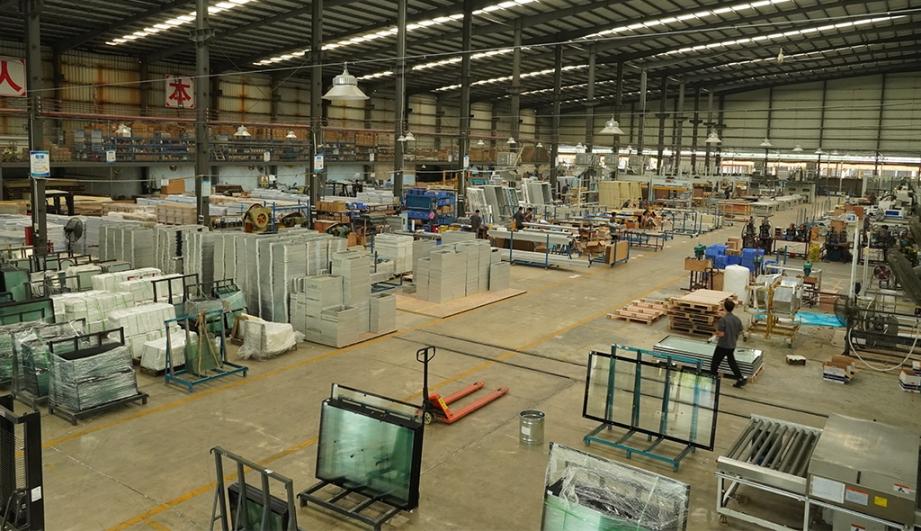
E-ZONG has manufactured cleanroom doors, hermetic doors, and airtight hospital doors for pharmaceutical, hospital, laboratory, and electronics cleanroom projects since 1996. With production facilities in Foshan, Dongguan, Zhongshan, and Taishan, we integrate seal material selection into the overall door specification rather than treating it as an afterthought.
Our cleanroom door range includes:
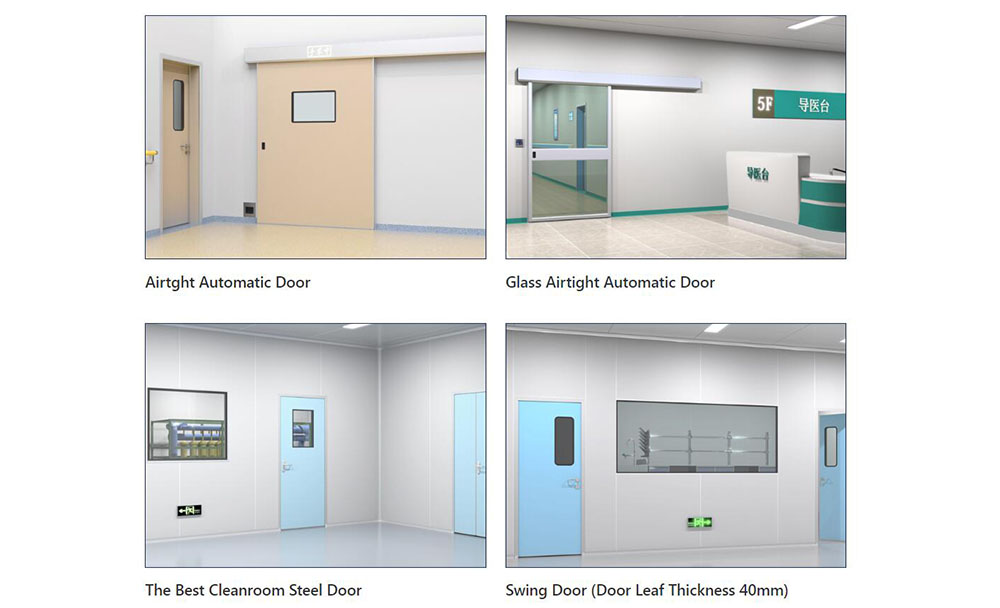
- Cleanroom sliding doors, flush cleanroom doors, and swing doors with customizable seal groove geometries for silicone, EPDM, or neoprene gaskets
- Hermetic doors with compression-seal mechanisms designed to maximize the performance of specified gasket materials
- Airtight hospital doors engineered for pressure differential maintenance in operating theaters and isolation wards
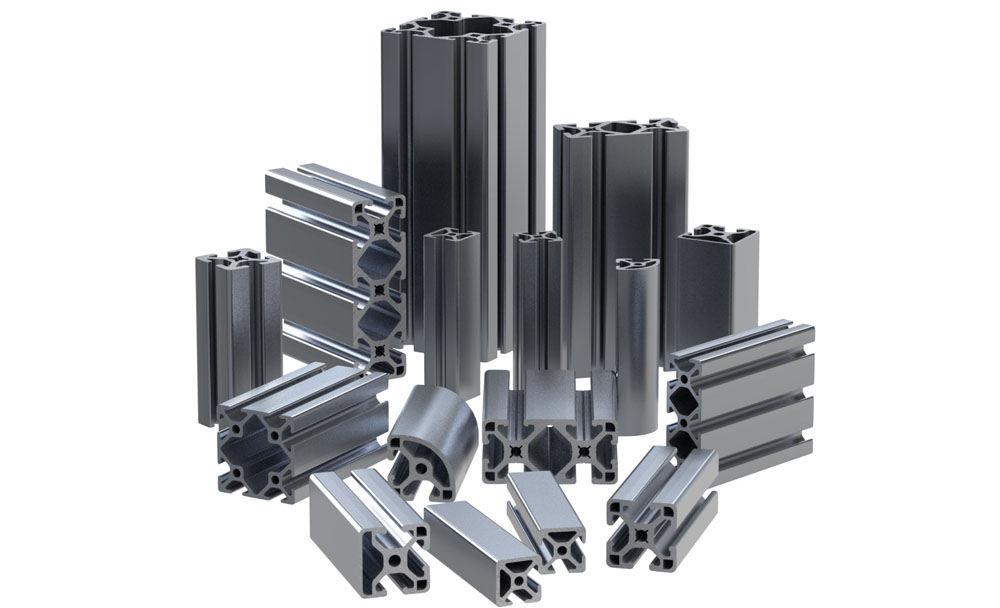
- Matching cleanroom aluminum profiles and hardware systems that ensure seal compression uniformity across the full door perimeter
From project consultation and shop drawings through quotation, order delivery, field support, and warranty service, we align seal material recommendations with your cleanroom classification, cleaning protocol, and regulatory requirements.
Our project portfolio includes installations at Sun Yat-sen Memorial Hospital (pediatric surgery department), Brunei National Isolation Center, Hezhou People’s Hospital, large chemical and pharmaceutical clean spaces, and Mingde Bio mobile shelter PCR laboratories.
FAQs
What is the best seal material for pharmaceutical cleanroom doors?
Silicone is generally the best choice for pharmaceutical cleanroom doors due to its superior chemical resistance to hydrogen peroxide vapor (VHP), peracetic acid, and alcohol-based disinfectants used in sterile processing environments. It also offers the lowest compression set, ensuring long-term air-tightness for GMP compliance.
Can EPDM be used in cleanroom door seals?
Yes. EPDM is suitable for standard pharmaceutical, hospital, and laboratory cleanrooms operating within ambient HVAC temperature ranges (+18°C to +25°C). It offers excellent value for multi-door projects where extreme chemical exposure or high temperatures are not present. Avoid EPDM in steam-sterilization areas or where hydrocarbon oils are present.
How long do cleanroom door seals last before replacement?
Under normal cleanroom conditions with standard cleaning cycles, silicone seals typically last 8–12 years, EPDM seals 5–8 years, and neoprene seals 4–6 years before compression set or surface degradation affects air-tightness. High-traffic doors, aggressive chemical protocols, or temperature extremes will shorten these intervals.
Why does my cleanroom door lose pressure differential?
The most common cause is seal degradation—compression set hardening the gasket, creating a permanent gap that no longer recovers when the door closes. Other causes include misaligned door leaves, damaged hinges, or incorrect installation. Seal material selection addresses only one part of the system; installation quality and hardware condition are equally critical.
What hardness (Shore A) should a cleanroom door seal be?
For standard cleanroom swing doors, Shore A 50–60 provides adequate compression with reasonable closing force. For hermetic doors with mechanical compression mechanisms, Shore A 40–50 allows the latch to compress the seal fully without excessive force. For heavy-duty industrial doors, Shore A 60–70 offers better durability against mechanical contact. Match the hardness to the door type and closing mechanism.
Do cleanroom door seal materials affect GMP audit outcomes?
Yes. Inspectors examine seals for cracks, hardening, discoloration, and contamination traps. A degraded seal can generate audit findings related to contamination control, air-tightness, and maintenance program adequacy. Using the correct material for the environment—and documenting a replacement schedule—demonstrates proactive quality management to auditors.
Conclusion
Need help selecting the right cleanroom door seal material for your project?
Submit your cleanroom classification, door dimensions, cleaning protocol, and pressure differential requirements. E-ZONG’s technical team will provide a material recommendation, seal specification, and sample evaluation for your pharmaceutical, hospital, or laboratory cleanroom project.
E-ZONG — Cleanroom Door and Aluminum Profile Manufacturer since 1996. Serving pharmaceutical, hospital, laboratory, and electronics cleanroom projects worldwide.
-
 Cleanroom Glass Windows Are The Key to Maintaining a Clean Environment
 -
 Top Aluminium Profile Manufacturers in China: Leading the Global Market
 -
 The Evolution of Air Tight Sliding Doors
 -
 AHU Aluminium Profile: A Comprehensive Guide
 -
 The Importance of Choosing the Right Cleanroom Door in Vietnam
 -
 The Benefits of Hospital Automatic Doors: Enhancing Efficiency and Safety
 -
.jpg) The Best Bathroom Door Manufacturers - Unlocking Endless Possibilities!
The Best Bathroom Door Manufacturers - Unlocking Endless Possibilities! -
 Unlock the Possibilities with AJ Manufacturing Doors
 -
 Make a Statement with Manufactured Home Interior Doors!
 -
 what is aluminum profile? Aluminum Profiles for Your Home is the best option
-
 Cleanroom Doors: Replace or Retrofit? Save 40% on Cost
 -
 Why Pharmaceutical Doors Fail VHP: Seal and Material Fixes
 -
 Hospital Entrance Doors 2026: Touchless, ADA, Security Specs
 -
 Hospital Doors: Types, Codes, and Selection by Department
 -
 Clean Room Airlock Design: Pressure Cascade, Size, Doors
 -
 Cleanroom Automatic Sliding Doors: How They Work and Spec
 -
 How a Fire Exit Door Serves Fire and Cleanroom Code
 -
 Hospital Room Pressure and Doors 101 | Sealing Envelope
 -
 Why a Flush Inspection Door Matters in GMP Facilities
 -
 Automatic vs Manual Door Seal: Which Holds Pressure Better



-

Home
-

Tel
-

Email
-

Contact


Guangzhou Yizhong Aluminum Industry Co., Ltd.
We are always providing our customers with reliable products and considerate services.
We are always providing our customers with reliable products and considerate services.
Speak Your Mind