Laminate Doors for Cleanrooms: HPL vs CPL GMP Guide
In controlled environment construction, the cleanroom door is the most frequently operated architectural component, serving as a critical node for maintaining pressure cascades, contamination control, and personnel workflow. When specifying a cleanroom laminate door, facility planners and validation engineers face a fundamental decision: selecting between High-Pressure Laminate (HPL) and Continuous Pressure Laminate (CPL) surfaces.
This choice directly impacts GMP compliance, lifecycle maintenance costs, and long-term facility reliability. Since 1996, E-ZONG has leveraged over 26 years of manufacturing expertise to engineer cleanroom architectural components for pharmaceutical, biotechnology, hospital, and electronics facilities globally. This guide provides a technical breakdown of HPL versus CPL performance, mapping these materials to specific GMP zone requirements to help you optimize both compliance and capital expenditure.
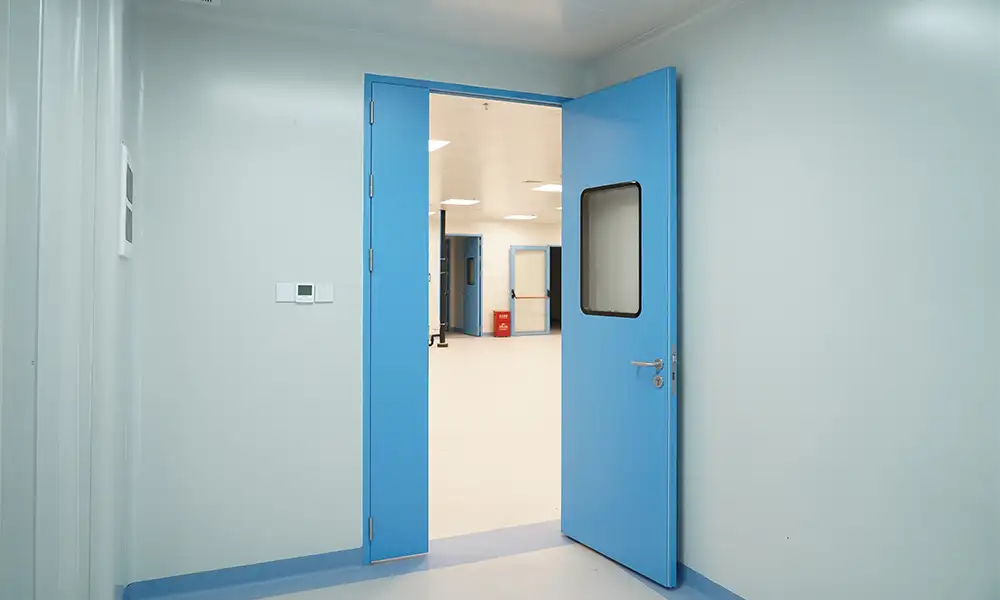
HPL vs. CPL Cleanroom Doors: Key Performance Differences
The performance divergence between HPL and CPL originates in their manufacturing processes, which dictate their density, chemical resistance, and structural integrity under rigorous cleanroom conditions.
Material Composition and Manufacturing Process
High-Pressure Laminate (HPL) is manufactured by saturating multiple layers of kraft paper with phenolic resin, topping it with a decorative melamine layer, and curing it under high pressure (exceeding 1,000 psi) and high heat. This creates a dense, monolithic, and highly cross-linked surface. In cleanroom door engineering, HPL sheets are typically bonded to a rigid core—such as an aluminum honeycomb core or fire-rated mineral wool—and encapsulated within an aluminum profile frame.
While traditional cleanroom doors might rely on galvanized steel or color steel plate frames with basic melamine finishes, E-ZONG recommends pairing HPL faces with 50mm to 200mm thick aluminum profile frames for ISO Class 5 to 8 environments. Compared to standard steel, powder-coated or anodized aluminum profiles provide superior dimensional stability, effectively preventing door warping under strict HVAC pressure differentials (typically 15 to 30 Pascals).
In contrast, Continuous Pressure Laminate (CPL) is produced in a continuous band process using lower pressure and heat. While it shares a similar melamine top layer, the underlying substrate is less densely compacted, resulting in comparatively lower physical strength.
Chemical Resistance and Delamination Prevention
The most critical failure point for any cleanroom door is surface degradation and edge delamination caused by aggressive cleaning protocols.
Pharmaceutical and biotechnology facilities routinely use Vaporized Hydrogen Peroxide (VHP), sodium hypochlorite, and quaternary ammonium compounds for spatial decontamination. HPL cleanroom doors exhibit exceptional resistance to these oxidizing agents. The highly cross-linked phenolic core prevents chemical penetration, ensuring the surface remains non-porous and easy to clean. Furthermore, E-ZONG integrates anti-bacterial laminate treatments directly into the melamine wear layer, inhibiting microbial growth between cleaning cycles.
Due to their lower density and the limitations of the continuous manufacturing process, CPL doors are more susceptible to micro-fissures at the edges. When harsh disinfectants penetrate these micro-fissures, they compromise the adhesive bond between the laminate and the core, ultimately leading to delamination.
Durability and Impact Resistance
In high-traffic areas, flush laminate doors must withstand constant impact from equipment carts, material transfer bins, and personnel.
HPL surfaces consistently score higher on Taber abrasion resistance tests (typically achieving AC4 or AC5 ratings). The dense phenolic structure absorbs impact without cracking. Being thinner and less dense, CPL surfaces are prone to chipping and scratching when subjected to heavy mechanical impact. For easy-to-clean HPL doors, scratch resistance is vital; surface micro-scratches harbor particulates and bacteria, directly compromising the room's ISO 14644-1 classification.
HPL vs. CPL Cleanroom Door Cost and ROI
Procurement managers often note that CPL doors carry a 20% to 30% lower initial CAPEX compared to HPL doors. However, evaluating the HPL vs. CPL cleanroom door cost requires a Total Cost of Ownership (TCO) perspective.
- HPL Lifespan: 15 to 20 years in critical zones.
- CPL Lifespan: 8 to 12 years in lower-grade zones.
When factoring in the costs of premature replacement, validation re-qualification downtime, and increased maintenance labor to repair CPL surface damage, HPL delivers a superior ROI in high-grade cleanrooms. CPL remains a cost-effective solution only when deployed in appropriate, lower-risk applications.
GMP Zone Selection: Matching Door Materials to Cleanroom Classifications
Selecting the correct door material is not just about durability; it is a strict regulatory requirement. EU GMP Annex 1 and FDA cGMP guidelines mandate that surfaces in controlled environments must be smooth, impervious, unbroken, and easily cleanable.
Grade A/B and ISO 5 Requirements: The Case for HPL
In Grade A and B environments (ISO 5 operational and ISO 5 at rest), the risk of product contamination is at its highest. These zones involve open product exposure, such as aseptic filling lines or sterile compounding.
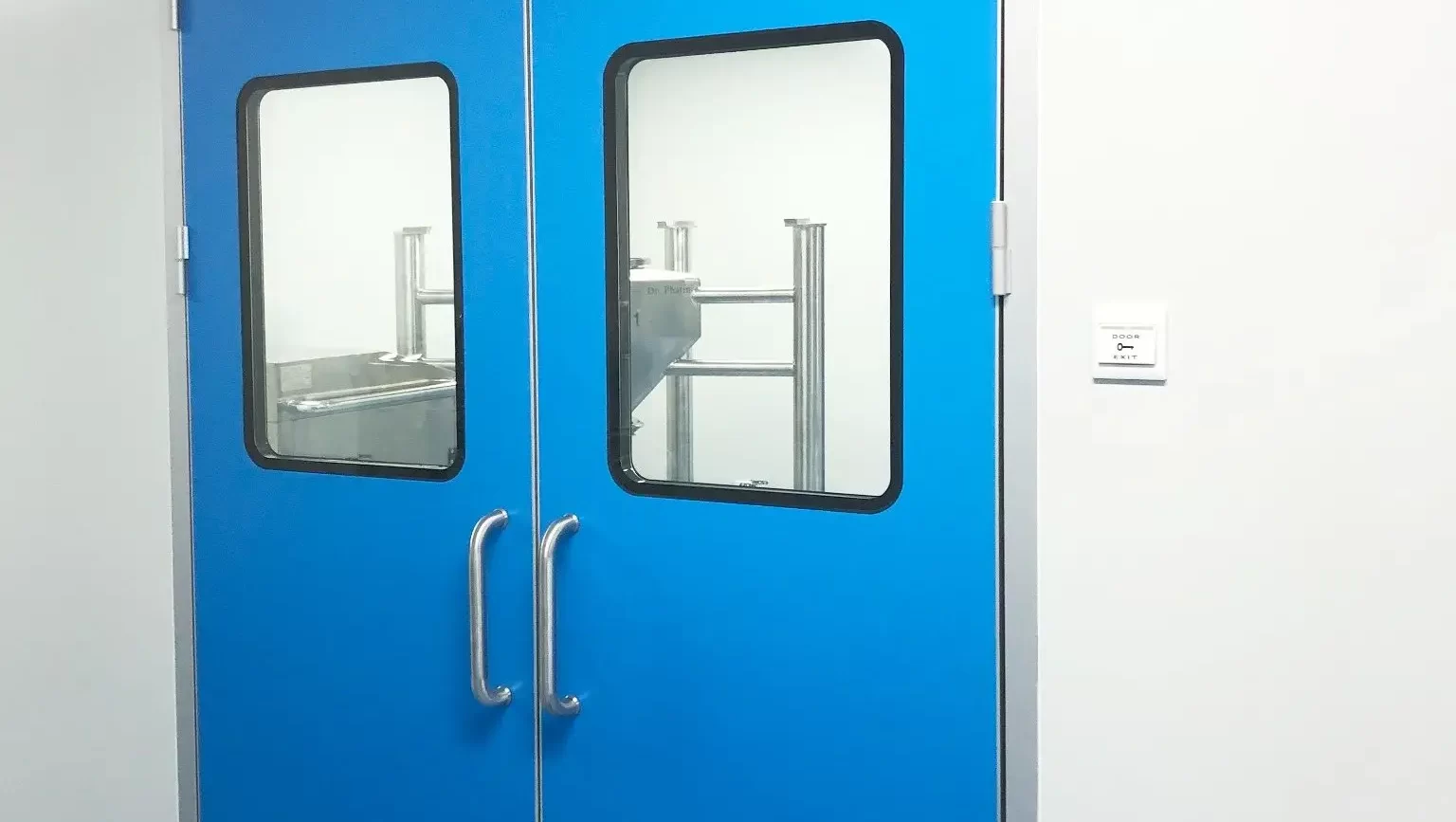
HPL is the mandatory specification for Grade A/B. The stringent decontamination cycles (like VHP or formaldehyde fumigation) required for these rooms will rapidly degrade CPL surfaces. Furthermore, Grade A/B doors must be hermetic cleanroom doors featuring airtight sealing mechanisms, such as automatic drop-down door sweeps or pneumatic perimeter gaskets, to maintain strict pressure differentials. For Grade A/B airlocks, interlocking cleanroom laminate door systems must be specified to prevent simultaneous opening. These doors should integrate double-glazed, fog-free vision panels, flush-mounted with the door face to eliminate dust traps. E-ZONG’s arc design technology ensures all frame-to-glass transitions feature rounded corners, preventing particulate accumulation.
Grade C/D and ISO 7/8 Applications: CPL Cost-Effectiveness
Grade C and D environments (ISO 7 and ISO 8) support critical zones but do not involve open product exposure. Typical applications include component preparation, gowning areas, and secondary packaging.
In these zones, decontamination requirements are less aggressive, typically relying on manual wiping with IPA or mild disinfectants. CPL cleanroom doors are highly suitable here. Utilizing CPL in Grade C/D corridors and gowning rooms allows facility planners to optimize the project budget without violating GMP compliance, provided the doors are properly sealed and maintained.
Selection Matrix: Matching Material to Application
| GMP Grade | ISO Class | Recommended Laminate | Justification & Risk Assessment | Typical Applications |
|---|---|---|---|---|
| Grade A | ISO 5 (Operational) | HPL | Mandatory. VHP cycles destroy CPL. High risk of product contamination if surface degrades. | Aseptic filling suites, isolator airlocks. |
| Grade B | ISO 5 (At Rest) | HPL | Mandatory. Requires frequent, aggressive spatial decontamination. | Background for Grade A, sterile gowning. |
| Grade C | ISO 7 | HPL or CPL | Conditional. HPL preferred for high-traffic. CPL acceptable if cleaning is manual and non-abrasive. | Clean corridors, compounding prep, equipment wash. |
| Grade D | ISO 8 | CPL | Acceptable. Lower risk. CPL provides adequate chemical resistance for standard wiping. | Gowning, secondary packaging, material airlocks. |
| Unclassified | N/A | CPL / Melamine | Acceptable. General controlled environments. | HVAC plant rooms, general storage, admin areas. |
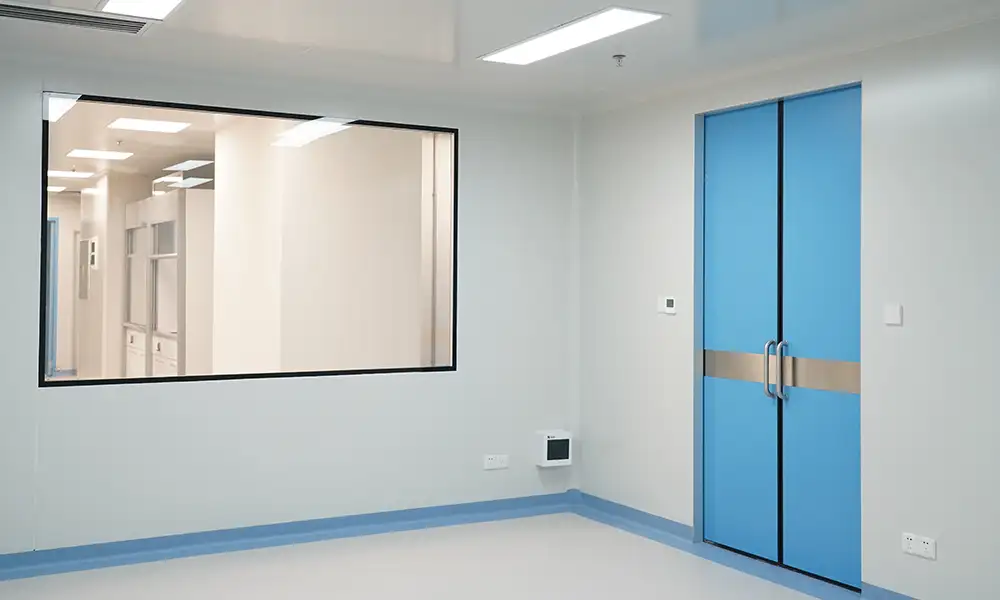
Regulatory Compliance and Lifecycle Value in Controlled Environments
Specifying the right door is only the first step. Ensuring the installed product maintains compliance throughout its lifecycle requires rigorous documentation and precise installation.
Documentation and Validation Requirements
For pharmaceutical and medical device facilities, the door is a validated component of the facility envelope. E-ZONG provides comprehensive documentation packages to support Installation, Operational, and Performance Qualification (IQ/OQ/PQ).
Required documentation for GMP compliant doors includes:
- Material Certificates: Full traceability for HPL/CPL sheets, core materials, and aluminum profiles.
- Surface Finish Specifications: Ra (roughness average) test reports proving the surface meets the "smooth and impervious" requirement (typically Ra < 0.8 µm).
- Chemical Resistance Test Reports: Independent lab data confirming compatibility with facility-specific disinfectants.
- Fire Ratings: Compliance with local building codes (e.g., Class A fire rating for the honeycomb core and laminate assembly).
Installation and Maintenance Best Practices
A premium HPL door will fail validation if installed incorrectly. The integration of the door into the cleanroom wall system is critical:
- Flush Mounting Systems: The door must sit perfectly flush with the cleanroom wall panels. E-ZONG utilizes specialized aluminum profile frames designed to integrate seamlessly with 50mm to 200mm thick cleanroom wall panels, eliminating any ledges that could trap dust.
- Airtight Sealing: We specify continuous silicone perimeter gaskets and adjustable, dust-proof bottom sweeps. For hospital operating rooms and pharma applications, magnetic drop seals or pneumatic inflation seals are used to guarantee airtightness when closed.
- Dust-Proof Hinge Designs: Hinges must be designed to prevent particulate generation. Stainless steel, concealed or flush-mounted hinges with self-lubricating bearings prevent metal-on-metal friction dust.
- Arc Design for Contamination Control: All frame profiles and door edges feature radiused (arc) corners. Sharp 90-degree angles are impossible to clean effectively and are a primary cause of failed environmental monitoring swab tests.
Total Cost of Ownership: Beyond Initial Purchase Price
When planning facility upgrade projects or hospital renovations, procurement teams must look beyond the purchase invoice. The TCO of a cleanroom door includes:
- Initial CAPEX: Door, frame, hardware, and installation.
- Validation Costs: IQ/OQ documentation review and initial swab testing.
- Maintenance Labor: Daily cleaning time (smooth HPL reduces cleaning time by up to 15% compared to textured or degraded surfaces).
- Re-qualification: If a door surface degrades (common with CPL in high-grade zones), the room must be taken offline, cleaned, and re-validated, costing thousands in lost production time.
- Replacement: The physical cost and labor of swapping the door unit.
Investing in HPL for critical zones mitigates the hidden costs of downtime and re-validation, making it the economically sound choice for the facility's lifecycle.
Expert Procurement & Configuration Guide
Selecting the right door goes beyond the laminate face. The configuration, sizing, and operation mechanism must align with the facility's workflow and spatial constraints.
Door Configuration & Material Matrix
| Configuration Type | Dimensions (W x H) | Best Application | Technical Considerations |
|---|---|---|---|
| Single Swing Door | 800-950mm x 2100mm | Standard personnel access, standard airlocks. | Requires clear swing space. Ideal for standard pressure cascades. |
| Double Swing Door | 1200-1350mm x 2100mm | Equipment transfer, large material airlocks. | Requires heavy-duty hinges. Interlocking systems mandatory for airlocks. |
| Single Sliding Door | 900-1500mm x 2100mm | Space-constrained corridors, high-traffic electronics manufacturing cleanrooms. | Saves floor space. Requires top-hung track systems; bottom track avoided to prevent dust traps. |
| Hermetic Sliding Door | 1000-1800mm x 2100mm | Hospital Operating Rooms (OR), isolation rooms. | Features pneumatic seal that expands upon closing for absolute airtightness. |
Lead times and custom sizing are critical factors in project planning. While standard sizes (e.g., 900x2100mm) offer faster lead times (typically 4 to 6 weeks), pharmaceutical and hospital projects often require custom widths up to 1500mm to accommodate specific equipment. Custom sizing with HPL and specialized aluminum profiles generally requires 8 to 12 weeks. Procurement teams should factor these lead times into the master project schedule to avoid critical path delays.
Automation and Hardware Compatibility
For high-traffic areas (e.g., central cleanroom corridors or hospital wards), manual operation introduces contamination risk via touch panels and handles.
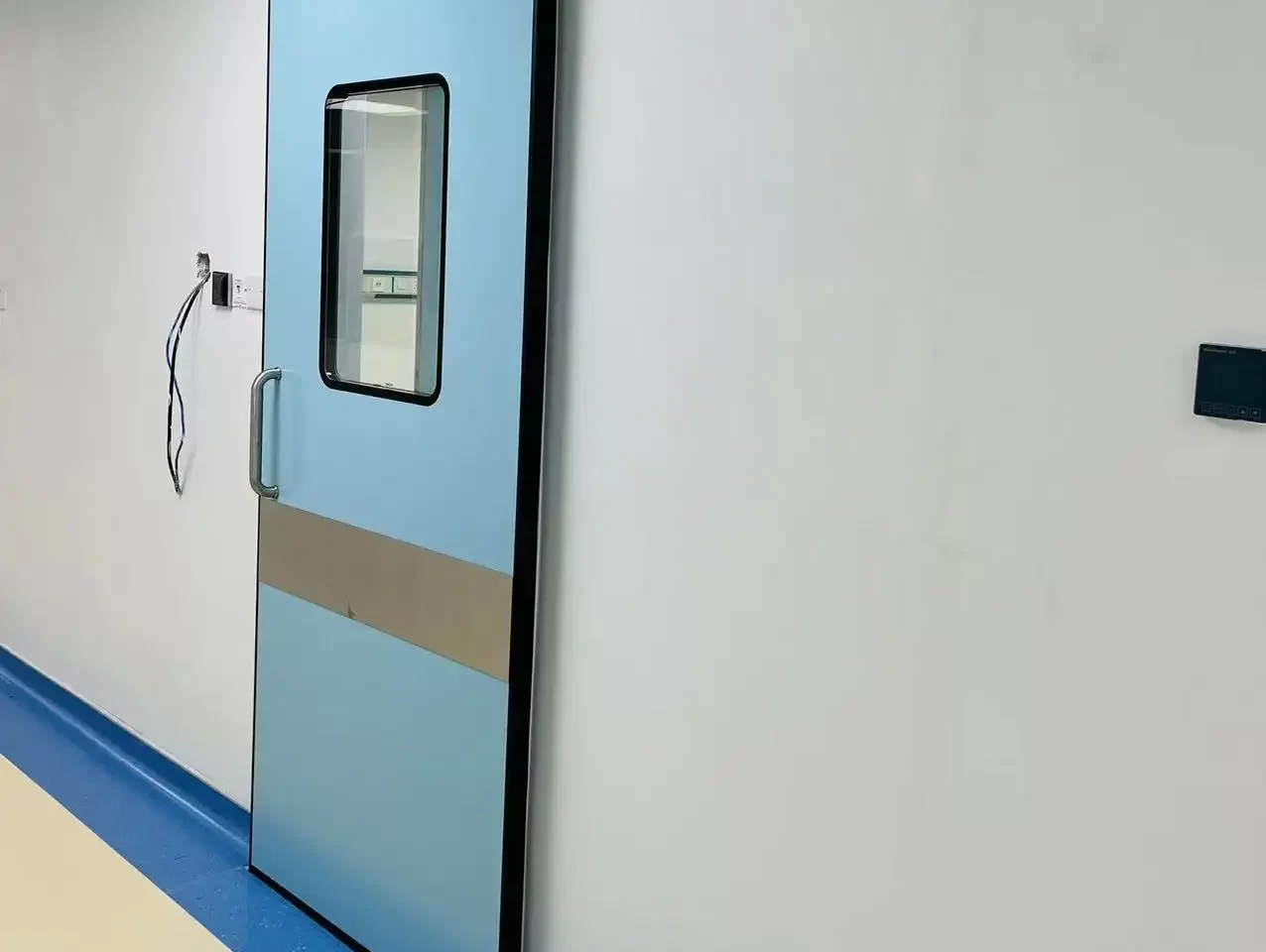
Automatic door systems utilizing motion sensors or proximity cards are highly recommended. When specifying automatic operators, ensure the cleanroom door hardware (tracks, motors, and sensors) is rated for controlled environments. The motor housing must be sealed to prevent particle emission, and the system must integrate seamlessly with the facility's Building Management System (BMS) for access control and alarm monitoring.
Frequently Asked Questions (FAQ)
1. How do you prevent deflection in extra-wide (e.g., >1200mm) HPL cleanroom doors?
For extra-wide equipment transfer doors, standard core materials will bow under continuous HVAC pressure differentials. The engineering solution requires upgrading to a high-density aluminum honeycomb core and encapsulating it within reinforced, thick-wall aluminum profile frames (typically 100mm to 200mm series). This ensures dimensional stability and long-term airtightness even under heavy, frequent operation.
2. How do automatic cleanroom doors maintain pressure differentials and ensure safe egress during a power failure?
High-quality cleanroom automatic systems feature a "fail-safe" mechanism. Upon power loss, the pneumatic sealing strips automatically depressurize and retract. The magnetic or mechanical locks disengage, allowing the door to be manually pushed open with minimal force (typically <30 lbs) to meet fire egress codes. Once power is restored, the system automatically re-engages the seal and resumes the airlock interlocking logic.
3. What is the engineering solution for "pressure lock" in interlocking airlocks during sudden HVAC pressure spikes?
In tightly sealed facilities, a sudden HVAC pressure spike can create a differential so high that the door becomes physically impossible to open, trapping personnel. To prevent this, E-ZONG integrates adjustable pressure relief dampers directly into the door frame or specifies interlock control panels with programmable "pressure equalization timeouts." This allows the system to briefly vent the excess pressure before unlocking the door, ensuring both compliance and personnel safety.
Partnering for Precision in Controlled Environments
Selecting the right laminate door is a critical intersection of material science, regulatory compliance, and facility workflow optimization. At E-ZONG, we do not just manufacture doors; we engineer the architectural envelope that protects your most critical processes.
With independent R&D, appearance design patents, and stable quality control systems across our production facilities in Foshan, Dongguan, Zhongshan, and Taishan, we deliver cleanroom construction solutions that meet the exacting standards of the pharmaceutical, biotech, and healthcare industries.
Optimize your next facility project. Share your project specifications—including cleanroom classification (ISO/GMP), door dimensions, material preferences, and facility layouts—with our engineering team. Contact E-ZONG today for a free technical consultation, custom sizing evaluation, and comprehensive material selection guidance.
-
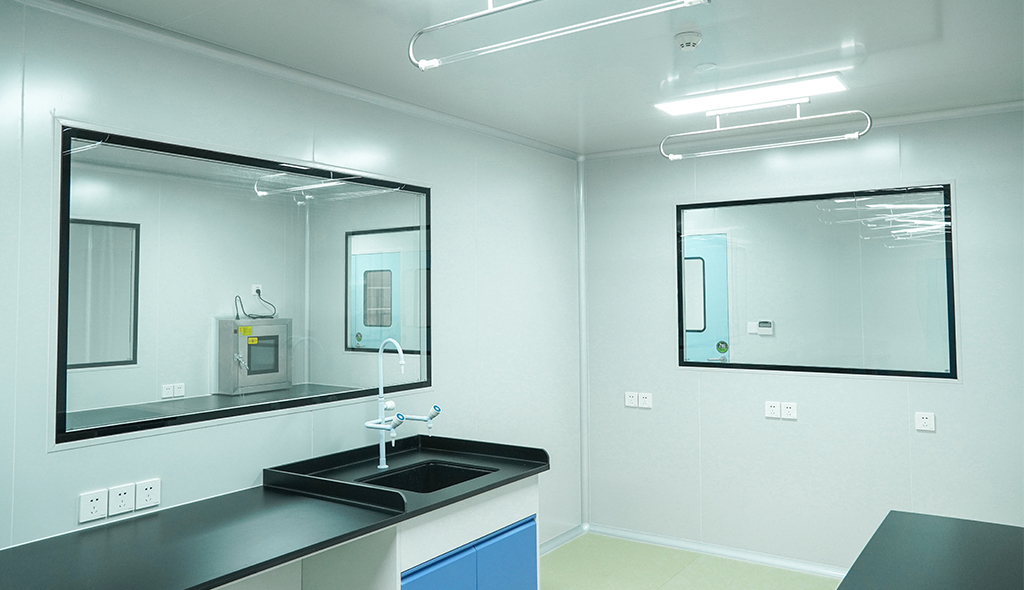 Cleanroom Glass Windows Are The Key to Maintaining a Clean Environment
 -
 Top Aluminium Profile Manufacturers in China: Leading the Global Market
 -
 The Evolution of Air Tight Sliding Doors
 -
 AHU Aluminium Profile: A Comprehensive Guide
 -
 The Importance of Choosing the Right Cleanroom Door in Vietnam
 -
 The Benefits of Hospital Automatic Doors: Enhancing Efficiency and Safety
 -
.jpg) The Best Bathroom Door Manufacturers - Unlocking Endless Possibilities!
The Best Bathroom Door Manufacturers - Unlocking Endless Possibilities! -
 Unlock the Possibilities with AJ Manufacturing Doors
 -
 Make a Statement with Manufactured Home Interior Doors!
 -
 what is aluminum profile? Aluminum Profiles for Your Home is the best option
-
 Hospital Emergency Exit Doors: 90 Minute Fire Rating Meets Infection Control
 -
 ICU and Isolation Door Requirements Hospitals Often Overlook
 -
 Laboratory Door Requirements for BSL-2 and BSL-3 Containment
 -
 Retrofitting Hospital Sliding Doors: Upgrade Wards Without a Rebuild
 -
 Why Airtight Hospital Sliding Doors Are Critical for Infection Control
 -
 Automatic cleanroom door systems: sensor, actuator and access control integration
 -
 Cleanroom Door Materials: Stainless Steel vs HPL vs FRP vs Aluminum Comparison
 -
 X-Ray Room Door Buying Guide: Lead Thickness & Compliance
 -
 Operating Room Doors: Hermetic & Infection-Control Guide
 -
 Hospital ICU Door Selection: Sealing, Sterility & Workflow


-

Home
-

Tel
-

Email
-

Contact


Guangzhou Yizhong Aluminum Industry Co., Ltd.
We are always providing our customers with reliable products and considerate services.
We are always providing our customers with reliable products and considerate services.
Speak Your Mind