
Cleanroom Door Maintenance Schedule: Daily, Weekly & Monthly GMP Checklist
A cleanroom door gets opened and closed dozens of times a day, sometimes hundreds, and somehow it's still supposed to do the one job that justifies the whole room: keep contamination out. In pharma, biotech, med-device, hospital, semiconductor, and electronics sites, the door is both a wall and a compliance device. When the seal starts to slip or the operator drifts out of line, the pressure differential goes first, then your particle counts, and the audit comes last.
This guide sets out a practical cleanroom door maintenance schedule using the cadences facility managers and validation engineers actually run: a daily cleanroom door check, a weekly seal and gasket inspection, monthly hardware lubrication, quarterly frame-alignment verification, and annual GMP audit prep. If you're still picking doors for a new or renovated facility, start with the cleanroom door product range to see how sliding, swing, hermetic, and airtight builds differ in what they ask of you later.
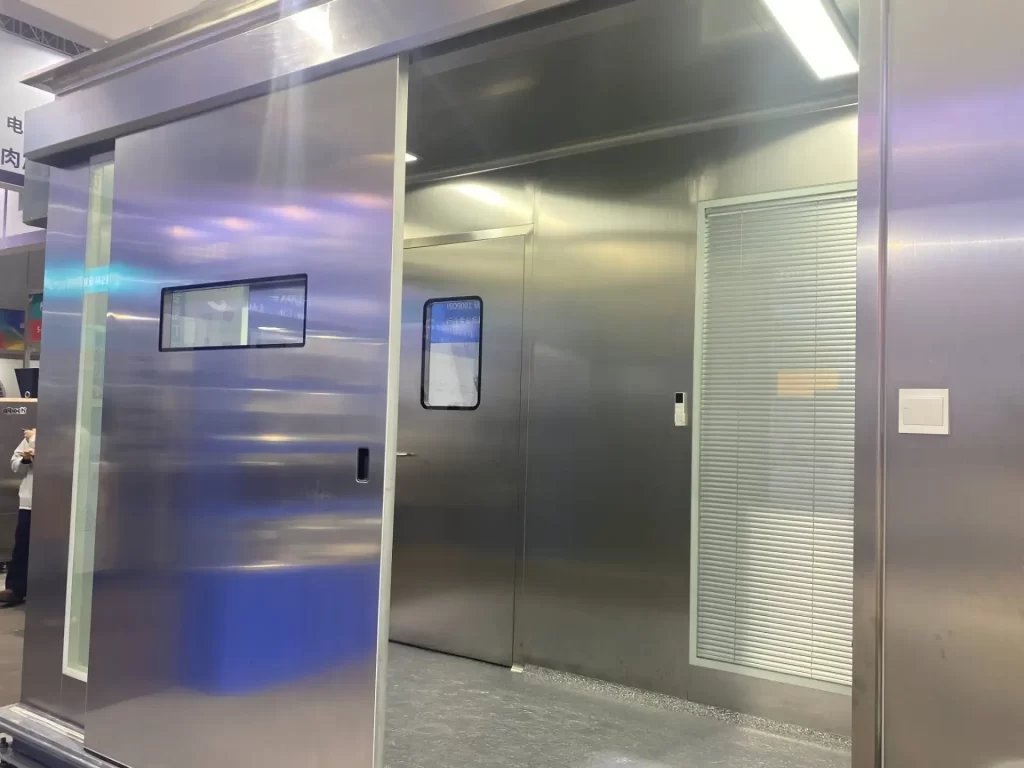
Why a cleanroom door maintenance schedule matters
Most door-related contamination events aren't dramatic failures. They're slow drift you can't see coming: a gasket that's taken a compression set, a floor sweep that no longer meets the threshold, a sliding operator that's lost its sync and now leaves a gap. None of it shows up on a walkthrough until the pressure-differential alarm does.
A schedule earns its keep for four reasons:
- Contamination control. The door is the one movable break in an otherwise sealed envelope. Seals, interlocks, and airtight closures are what stop particulates and microbes moving between zones.
- Pressure differential stability. GMP and ISO 14644 rooms run on a cascading pressure hierarchy. One leaking door breaks the gradient and can turn a low-grade corridor into a path into a high-grade zone.
- Compliance and audit readiness. GMP, ISO 9001, and ISO 14644 all expect documented, repeatable controls. To an auditor, an undocumented door is an uncontrolled door.
- Total cost of ownership. Preventive maintenance stretches service life and avoids unplanned downtime, which is what facility and operations directors are actually held to account for.
A GMP cleanroom door maintenance schedule isn't paperwork for its own sake. It makes the door's condition visible and recorded before it becomes a quality incident.
Who owns the schedule
The maintenance brief and the customer profile behind this article point to the same owner: the facility manager runs it, the maintenance team does the work, and QA and validation review rather than execute.
In practice it works best like this:
- The facility manager holds the master schedule and the records.
- The maintenance technician runs the daily and weekly checks and logs them.
- QA / validation reviews the monthly and annual records as part of document control.
- The engineering manager signs off on anything that touches the envelope (frame, seal, or interlock).
This split matters because GMP audits don't ask whether a check was possible. They ask whether it was done and written down. Clear ownership is the difference between a checklist that's used and one that gets backdated the week before the audit.
Daily cleanroom door check
The daily cleanroom door check is short, visual, and quick. A technician can do a high-traffic door in a couple of minutes, and it folds into the normal daily walk of the cleanroom.
Visual inspection
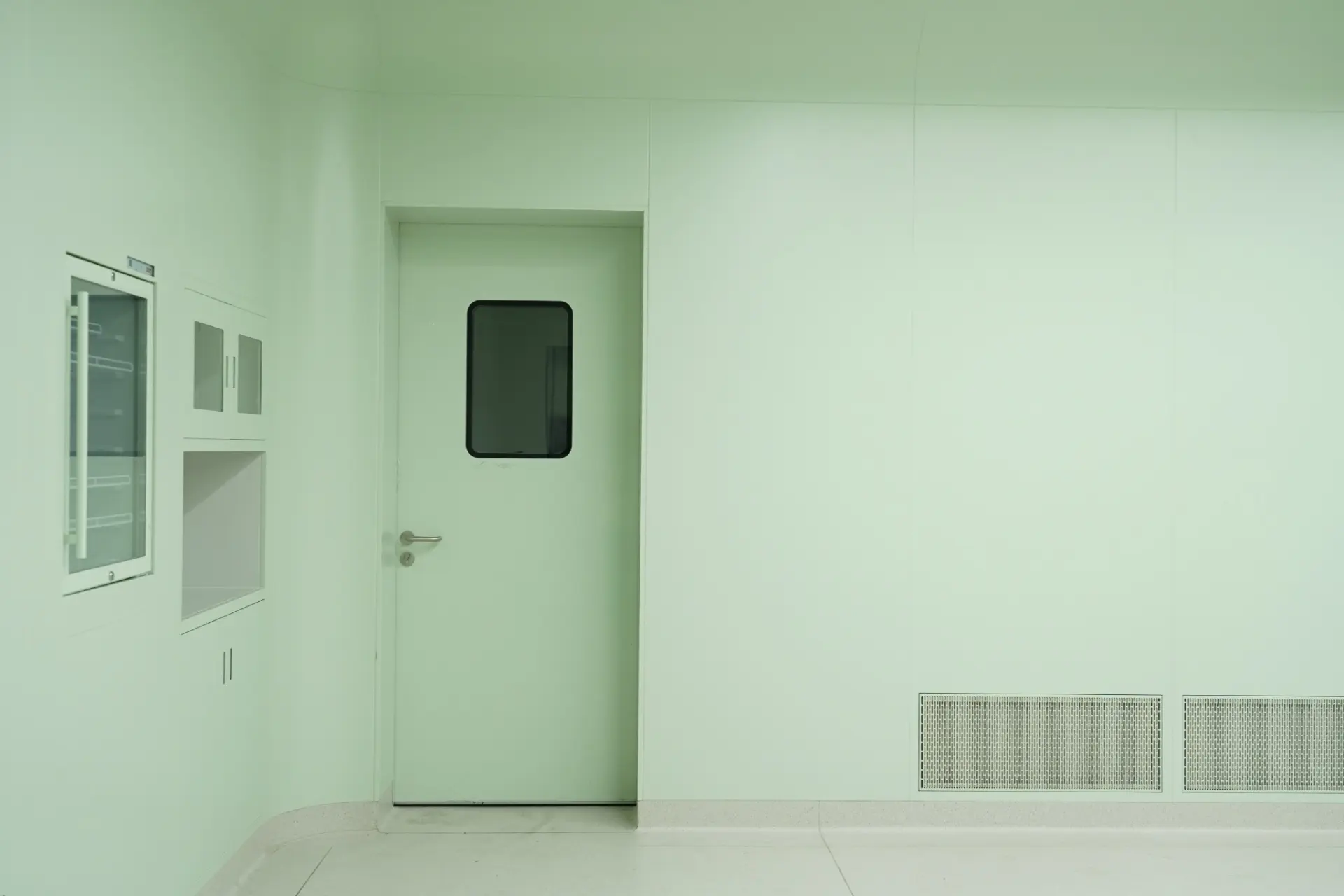
- Check the leaf, frame, and the wall joint around it for damage, dents, or gaps.
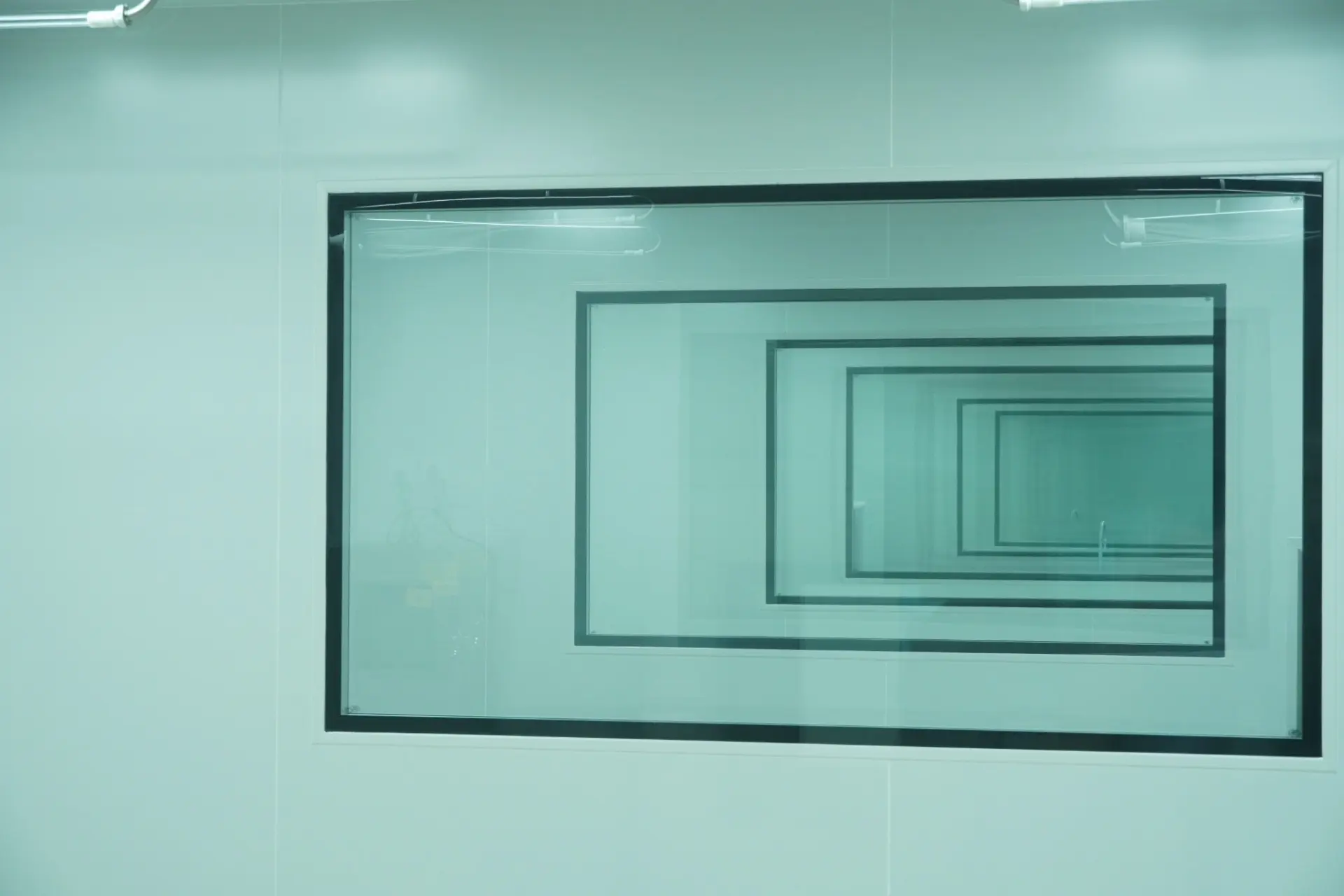
- Make sure the observation window (where there is one) is intact and not fogged.
- Confirm the door closes fully and latches without someone pushing it.
Operation test
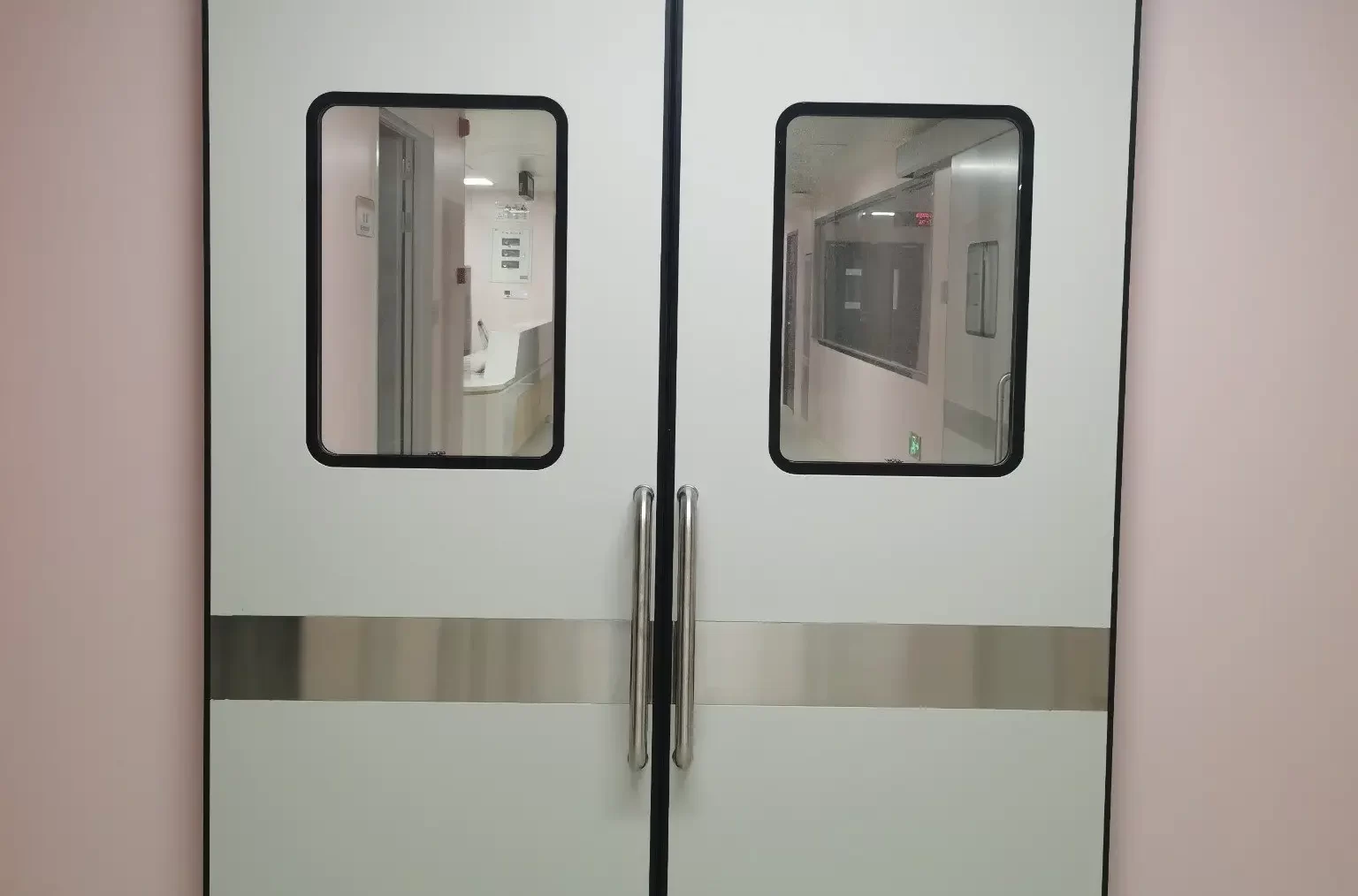
- On swing doors, the leaf should move freely and the self-closer should pull it back to a positive seal.
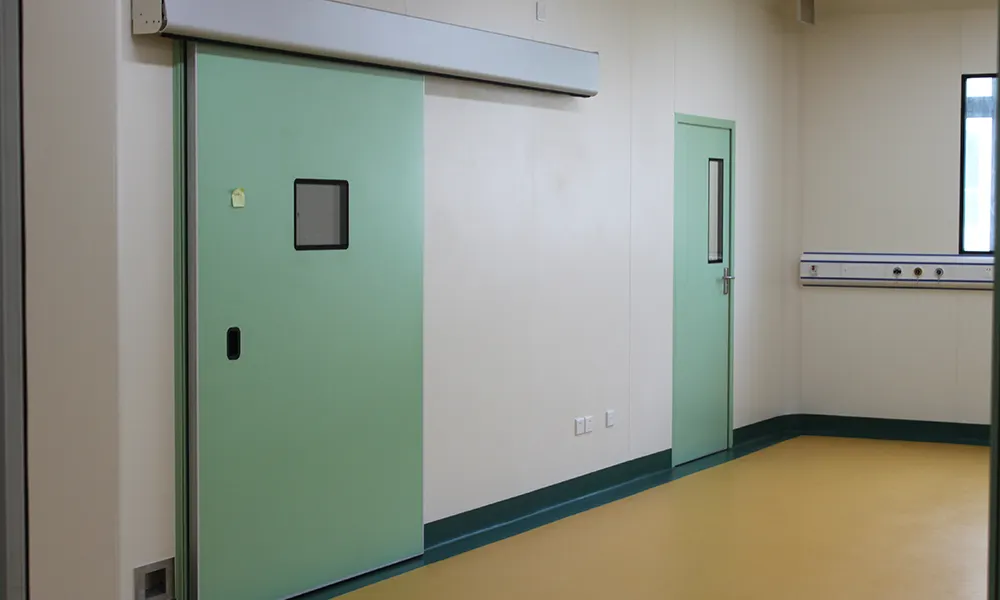
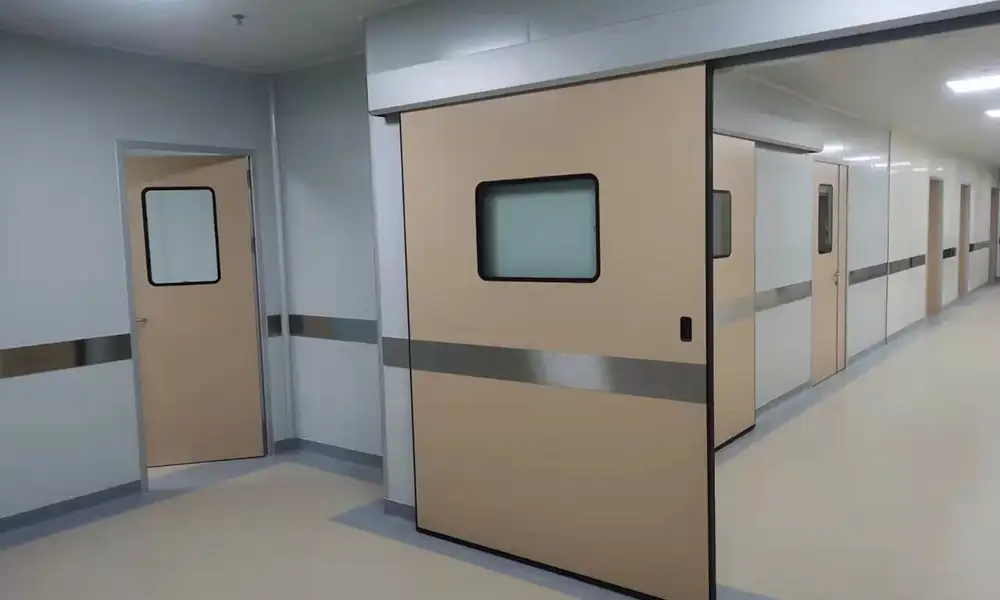
- On sliding doors, watch for smooth travel and a complete close. Automatic sliding operators are where the daily check pays for itself: a knocked sensor or a dragging carriage is the usual reason an airlock sits partially open. See Clean Room Sliding Doors: Airtight Glass Automatic Entrance for what healthy automatic sealing should look like.
Log pass or fail. The daily check is a tripwire, not a diagnosis. Its only job is to flag.
Weekly inspection: seals and gaskets
The weekly step is where a cleanroom door inspection checklist earns its name. This is the cadence that catches compression set and sweep-seal wear before they turn into leaks.
Gasket and seal integrity
- Look at the perimeter gaskets for cracking, hardening, compression set, or any sign they've come away from the frame.
- Check the floor sweep (or drop seal) for wear and for full contact when the door is shut.
- On hermetic and airtight hospital doors, confirm the continuous perimeter seal compresses evenly around the leaf. Uneven compression is the early warning of a frame or hinge problem.
When a seal keeps failing, the root cause is usually the install, not the part. Cleanroom Door Installation: Why Seals Fail & How to Fix walks through the usual failure modes, from frame misalignment to bad seal seams, and how to put them right.
Air leakage and pressure differential
- If your building-management system shows it, confirm the zone pressure differential holds with the door closed.
- Feel for a draft at the leaf edge. A draft at a sealed door isn't a breeze, it's a failed seal.
- Watch airtight swing doors in patient rooms and isolation areas especially closely, because there the seal is doing infection-control work. The Patient Room Wall-Mounted Air-Tight Swing Door piece explains the air-pressure job these doors do and what "right" looks like in service.
Photograph weekly findings where you can and attach them to the record. A photo of a cracked gasket beats a ticked box in an audit.
Monthly maintenance: hardware and lubrication
Monthly is the service cadence. Lighter than a shutdown task, more than a look. It's also the cadence for emergency-egress doors, which carry their own life-safety code load: the Emergency Exit Door: NFPA 101 & IBC Compliance Guide for Facilities explains the NFPA 101 and IBC requirements that govern those doors.
Hinges, handles, and locks
- Lubricate hinges and moving hardware with a cleanroom-compatible, low-particulate lubricant. Don't over-apply; it migrates onto surfaces.
- Check handles, latches, and locks for play or stiffness.
- Confirm the interlock logic on airlock setups still sequences correctly, one leaf open at a time.
Automatic operators and sensors
- On powered sliding or swing operators, verify open/close timing, safety-reverse behavior, and sensor alignment.
- Test battery backup or fail-safe close where fitted.
- Note any change in cycle time. A slow upward creep is the first sign of a worn drive.
Specialized doors
- Radiation-shielded and X-ray doors carry lead-lined leaves and shielded frames, and they need a different lens: you're not just checking the seal, you're confirming the shielding is intact and that nobody has drilled, modified, or compromised it. The X Ray Room Door design challenges article covers what sets these doors apart, and the Radiation Shielding Doors: Lead Thickness & Code Guide sets out the lead-equivalent and code requirements to verify during maintenance.
Quarterly: door frame alignment and wall integration
Every quarter, step back from the leaf and look at the system. The frame-to-wall interface is where cleanroom doors live or die, because a door is only as good as how it ties into the panel system around it.
- Check frame alignment. A racked frame twists the leaf and breaks the seal on the opposite corner.
- Inspect the frame-to-wall joint, usually a cleanroom aluminum profile system, for gaps, failed sealant, or movement.
- Confirm flush mounting holds. Any lip or recess at the threshold becomes a particle trap and a cleaning blind spot.
- Re-torque fixings to the manufacturer's spec and write the values down.
Quarterly is also the time to look at cycle counts. A door on a busy pharma corridor wears far faster than a storeroom door in the same building. Weight your checks to traffic, not just the calendar.
Annual: GMP audit preparation and documentation
The annual step is documentation-heavy on purpose. Its job is to make the last twelve months defensible.
- Pull the daily, weekly, and monthly logs into one controlled record.
- Confirm every door has a current spec on file: classification served (ISO Class 5 to 8, or GMP grade), door type, dimensions, seal spec, and install date.
- Review corrective actions. Were flagged seals swapped inside the documented window? Was the swap recorded and verified?
- Check that interlocks, alarm points, and pressure monitoring still match the original validation.
- Build a spares list so next year's failures are a purchase order, not a stoppage.
Under GMP and ISO 9001, this pack often gets asked for verbatim during audit. Treat it as a deliverable.
Building your cleanroom door inspection checklist
You don't need bespoke software to start. A workable cleanroom door inspection checklist is one controlled document, a row per door, a column per cadence, plus a field for photos.
Minimum columns:
- Door ID and location
- ISO classification / GMP grade served
- Door type (sliding / swing / hermetic / airtight)
- Daily, visual + operation (pass/fail + initials)
- Weekly, seal + pressure (pass/fail + photo)
- Monthly, hardware + lubrication (done / date)
- Quarterly, alignment + frame joint (done / date)
- Annual, record compiled + validated (done / date)
- Corrective actions and close-out
If you want a ready template, E-ZONG's project team can put together a maintenance checklist framework sized to your classification and door mix as part of a customized maintenance scheduling service. That's useful when you're standardizing several sites or bringing a new maintenance crew up to speed.
Common mistakes in cleanroom door maintenance programs
Most failed programs repeat themselves:
- Backfilling records. Writing the week's checks the day before the audit. Auditors read the pattern, not just the box.
- Treating all doors the same. A busy automated entrance and a rarely used storeroom door need different check weights.
- Ignoring the frame. Leaf seals get the attention; the frame-to-wall joint, the real leak path, gets nothing.
- No spares plan. A failed gasket becomes a two-week lead-time emergency instead of a same-day swap.
- Splitting maintenance from validation. When maintenance and QA don't share one record, the gaps open up exactly where the audit looks.
Fix those five habits and your audit outcome improves more than it would from any new tool.
Industry-specific maintenance notes
The same schedule bends by sector, because what's at risk behind the door changes:
- Pharmaceutical & biotechnology. Pressure cascade and cross-contamination control dominate. Lean hard on weekly seal checks and annual validation, and document everything for GMP.
- Hospital & healthcare. Infection control and airtight performance matter most. Airtight swing and hermetic doors in ORs and isolation wards need steady seal verification; the modular hospital application solutions show how these get specified in practice.
- Semiconductor & electronics. Particle control and high traffic push more frequent checks on automated entrances.
- Medical device & laboratory. Balance contamination control against access frequency; interlock sequencing on airlocks is the check that comes up most.
E-ZONG supplies cleanroom doors across these sectors, from pharmaceutical workshops and biotech clean rooms to modular hospital builds, and its project record includes hospital, isolation-center, and laboratory installs where door performance tied straight to the facility's compliance result.
When to engage your door manufacturer
Not everything is your in-house team's job. Call the manufacturer when:
- A frame is racked or the wall interface has moved. That's integration work, not lubrication.
- A shielded or hermetic door shows any sign its integrity is compromised.
- You're changing classification, traffic, or door type and need the schedule re-baselined.
- You have no spares and lead time is threatening a production window.
E-ZONG's project service runs from shop drawings and quotation through order confirmation, delivery, field support, and warranty, so maintenance and upgrade work plan against the same chain that delivered the door. Early contact turns an emergency into a booked visit.
FAQs
How often should cleanroom doors be inspected?
At minimum daily (visual + operation), weekly (seals + pressure), monthly (hardware + lubrication), quarterly (alignment + frame), and annually (documentation + validation). High-traffic automated doors may need checks more often.
What is the most common cleanroom door failure?
Slow seal degradation: gasket compression set, worn floor sweeps, misaligned sliding operators. Not sudden breakage. The daily and weekly checks exist to catch that drift early.
Who is responsible for cleanroom door maintenance?
Mainly the facility manager, with the maintenance team running checks, QA / validation reviewing records, and engineering signing off on any envelope-level change.
Do airtight hospital doors need different maintenance?
Yes. Their perimeter seals do infection-control and pressure-differential work, so seal verification is a compliance check, not just a hardware one.
How do I prepare door maintenance records for a GMP audit?
Keep a controlled, dated log per door across every cadence, attach photos of defects, record corrective actions and close-out, and compile the year into one validated pack before the audit.
Conclusion
A cleanroom door maintenance schedule isn't overhead. It's the cheapest insurance you have for your classification, your audit, and your uptime. Start with the daily cleanroom door check, build it into a cleanroom door inspection checklist, and let the weekly, monthly, quarterly, and annual steps carry the rest.
If you're specifying, upgrading, or standardizing doors across sites, send E-ZONG your cleanroom classification, door dimensions, material preferences, and facility layout for a free technical consultation and a maintenance schedule sized to how you actually run.
-
 Cleanroom Glass Windows Are The Key to Maintaining a Clean Environment
 -
 Top Aluminium Profile Manufacturers in China: Leading the Global Market
 -
 The Evolution of Air Tight Sliding Doors
 -
 AHU Aluminium Profile: A Comprehensive Guide
 -
 The Importance of Choosing the Right Cleanroom Door in Vietnam
 -
 The Benefits of Hospital Automatic Doors: Enhancing Efficiency and Safety
 -
.jpg) The Best Bathroom Door Manufacturers - Unlocking Endless Possibilities!
The Best Bathroom Door Manufacturers - Unlocking Endless Possibilities! -
 Unlock the Possibilities with AJ Manufacturing Doors
 -
 Make a Statement with Manufactured Home Interior Doors!
 -
 what is aluminum profile? Aluminum Profiles for Your Home is the best option
-
 Cleanroom Door Maintenance Schedule: Daily, Weekly & Monthly GMP Checklist
 -
 Cleanroom Door Viewing Windows: Glass vs Polycarbonate Panel Selection
 -
 Types of Cleanroom Doors Explained: Sliding vs Swing vs Roll-Up vs Hermetic
 -
 Cleanroom Airlock Design: Door Sequencing and Pressure Cascade Basics
 -
 BSL Laboratory Door Requirements: Biosafety Level 2 and 3 Containment Guide
 -
 ISO Cleanroom Door Standards by Class: ISO 5 to ISO 8 Requirements Explained
 -
 Cleanroom Door Seal Materials: Silicone vs EPDM vs Neoprene Performance Guide
 -
 Cleanroom Door Pressure Cascade: How Room-to-Room Differential Works
 -
 Laminate Doors for Cleanrooms: HPL vs CPL GMP Guide
 -
 Guide to Self-Closing Doors in Hospitals and Cleanrooms




-

Home
-

Tel
-

Email
-

Contact


Guangzhou Yizhong Aluminum Industry Co., Ltd.
We are always providing our customers with reliable products and considerate services.
We are always providing our customers with reliable products and considerate services.
Speak Your Mind