
Pharmaceutical Cleanroom Door Selection by Cleanroom Grade
If you've managed a GMP project, you've likely faced this: top-tier panels and HVAC are installed, yet the Grade A area fails environmental qualification due to pressure drops. The culprit? Often, it's just a few unassuming doors.
In pharmaceutical engineering, a pharmaceutical cleanroom door is never just a physical passage; it’s a dynamic barrier maintaining pressure cascades and blocking microbes. Applying a "one-size-fits-all" procurement approach across Grades A to D inevitably leads to validation risks and energy waste.
This guide cuts through the jargon, diving straight into the engineering logic of selecting the right GMP cleanroom doors for specific ISO/GMP grades.
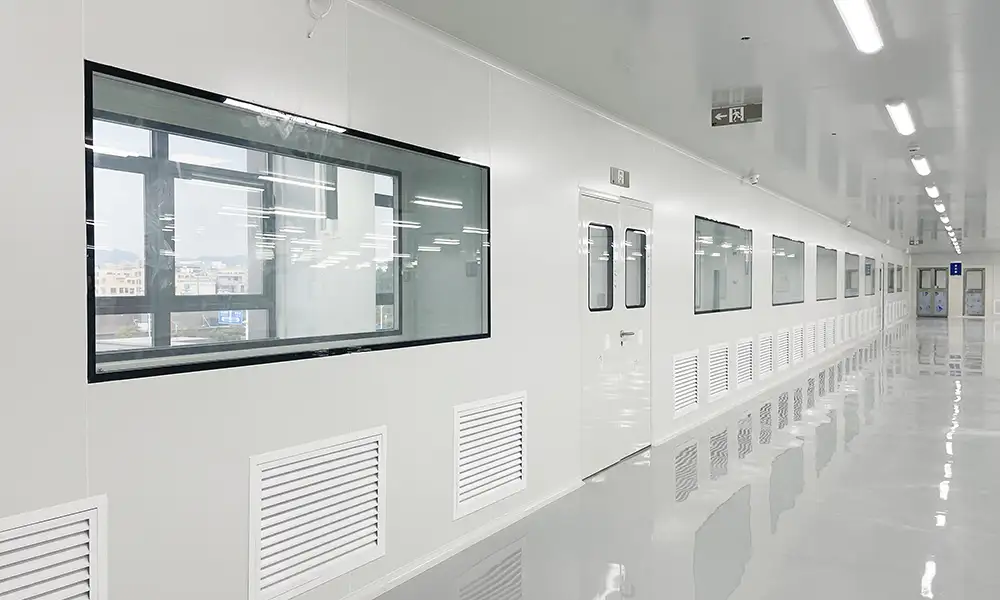
Differential Requirements for Four Core Performance Metrics
The core of door engineering lies in "control." Whether it's GMP cleanroom doors or ISO class cleanroom doors, the stringency of control increases exponentially with the cleanroom grade. This directly dictates the selection logic for the four core door components.
1. Sealing Systems: The Grade Leap from Physical Compression to Inflatable Seals
Sealing is the lifeline of a cleanroom door. The choice of cleanroom door seals directly determines the room's leakage rate, but the tolerance for sealing errors varies drastically across grades.
- Lower Grades (C/D): Standard pressure differentials are typically 10-15 Pa. High-quality silicone or EPDM physical sealing gaskets are sufficient. Mechanical compression (2-3 mm) is enough to block large dust particles and maintain basic pressure.
- Higher Grades (A/B): Core sterile areas require high pressure differentials (15-25 Pa) and face the severe challenge of VHP decontamination. Addressing cleanroom door requirements for VHP, physical gaskets easily develop micro-gaps under chemical corrosion. Therefore, inflatable cleanroom door seals (or inflatable door gaskets) are mandatory.
- Engineering Spec: After closure, clean compressed air expands the seal by 15-20 mm to conform to frame irregularities. Inflation time must be <3s, deflation <2s, equipped with real-time pressure sensors to form an absolute airtight barrier.
2. Surface Materials: Balancing Cleanability and Extreme Decontamination
The door surface is the first line of defense. For high-standard VHP resistant cleanroom doors, material requirements are particularly stringent.
- Grade C/D Configuration: Surfaces must be ultra-smooth and non-linting. High-quality cold-rolled steel with electrostatic epoxy powder coating and a premium antibacterial layer (Ra≤0.4μm) is standard. Pro-tip: Install a stainless steel kick plate on the lower half to resist cart impacts.
- Grade A/B Configuration: In high-risk areas (e.g., sterile filling), 304 or 316L stainless steel is mandatory.
- Engineering Spec: The surface requires electropolishing or passivation, reducing roughness to Ra≤0.2μm. If chlorine-based disinfectants are used, 316L stainless steel must be selected for its Molybdenum (Mo) content to resist pitting corrosion. This mirror-level finish withstands frequent >35% VHP fumigation without oxidizing.
3. Vision Panel Design: Anti-Condensation and Flush Mounting
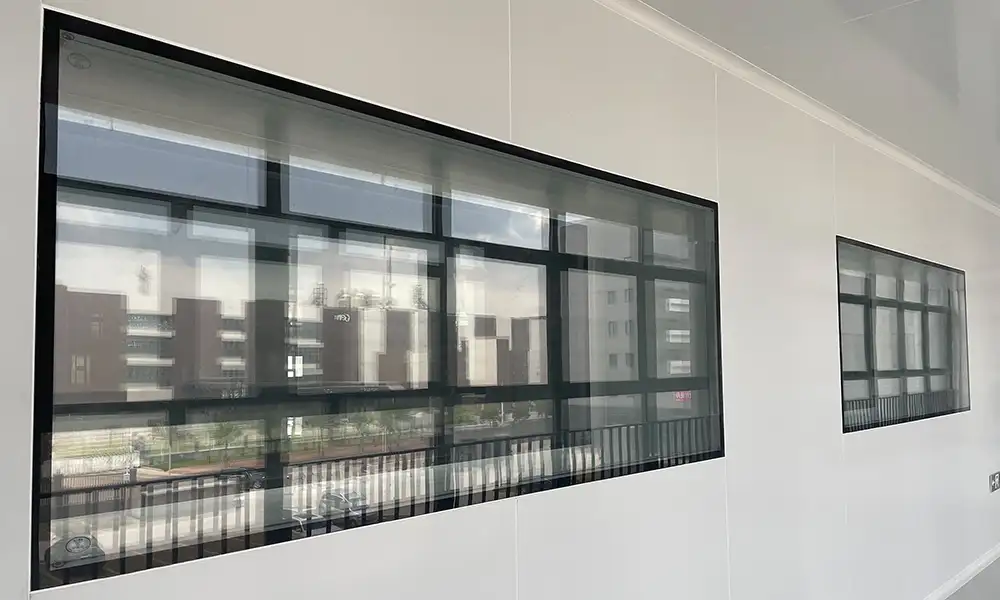
Vision panels are the "eyes" of the door and the weakest link in thermal performance. The design of flush cleanroom windows is standard for high-grade areas.
- Grade C/D Solutions: Double-pane tempered glass (e.g., 5mm+9A+5mm) ensures clarity. The key is that the sealing silicone around the glass edges must be perfectly flat, with no protrusions or depressions.
- Grade A/B Engineering Details: In high-grade areas, low HVAC supply air temperatures can cause standard glass to condense, leading to microbial growth.
- Engineering Spec: Grade A/B must use triple-pane tempered glass filled with dry argon. Use warm edge spacer technology instead of aluminum to reduce heat conduction. Furthermore, flush glazed cleanroom doors must be adopted, where glass edges are completely flush with the door leaf (tolerance within ±0.5mm), eliminating dust accumulation dead corners.
4. Interlocking and Control Systems: Deep HVAC Integration
The value of the control system lies in protecting indoor airflow organization. The cleanroom airlock interlock system is key to maintaining airflow stability.
- Grade C/D Standard: Standard electromagnetic interlocking (response <0.5s) paired with access control or push buttons meets basic personnel management.
- Grade A/B Smart Integration: Airlock controls must be deeply integrated with the HVAC and BMS to build a complete HVAC interlocking system.
- Engineering Spec: The moment a door opens, the system automatically minimizes supply/exhaust valves in adjacent rooms to prevent the "piston effect" from dropping pressure below alarm limits. Grade A/B doors also require touchless activation, anti-pinch radar, and fire emergency release functions.
Specific Selection Matrix for Each Cleanroom Grade
To facilitate quick decision-making, below is a standard configuration matrix categorized by ISO/GMP grades.
Grade A/B (High-Risk / Sterile Core Areas)
The configuration for cleanroom doors for Grade A and B spares no expense in pursuing ultimate airtightness and decontamination resistance.
- Door Material: 316L stainless steel, electropolished (Ra≤0.2μm).
- Sealing System: Fully automatic inflatable cleanroom door seals (frame and bottom) with pressure monitoring.
- Vision Panel: Triple-pane tempered glass, argon-filled, warm edge spacers, flush-mounted.
- Opening Mechanism: Automatic sliding or heavy-duty automatic swing door.
- Control System: Smart interlock, deeply integrated with HVAC/BMS, supporting 21 CFR Part 11 audit trails.
- Typical Applications: Sterile filling cores, RABS/isolator loading ports, core airlocks.
Grade C/D (Clean Auxiliary / Non-Sterile Areas)
Focuses on high durability, easy cleaning, and operational convenience for frequent traffic.
- Door Material: 304 stainless steel or high-quality cold-rolled steel (antibacterial epoxy).
- Sealing System: High-quality silicone physical gaskets + automatic drop seal.
- Vision Panel: Double-pane tempered glass, flush or slightly protruding.
- Opening Mechanism: Manual swing (with heavy-duty closer) or semi-automatic.
- Control System: Standard electromagnetic interlock, card/induction opening.
- Typical Applications: Compounding rooms, secondary packaging, personnel gowning areas.
Background / Controlled Areas (ISO 8 and below)
Selection core lies in meeting basic dust prevention, fire ratings, and cost control.
- Door Material: Steel door or double-sided color steel sandwich panel (rock wool/aluminum honeycomb core).
- Sealing System: Basic rubber gaskets.
- Vision Panel: Single or standard double-pane acrylic/glass.
- Opening Mechanism: Manual swing.
- Control System: Mechanical interlock or no interlock.
- Typical Applications: Warehousing, general production corridors, equipment rooms.
Impact of Detail Design on Airflow and Maintenance
Once the macro configuration is determined, the ultimate operational performance often hinges on easily overlooked engineering details.
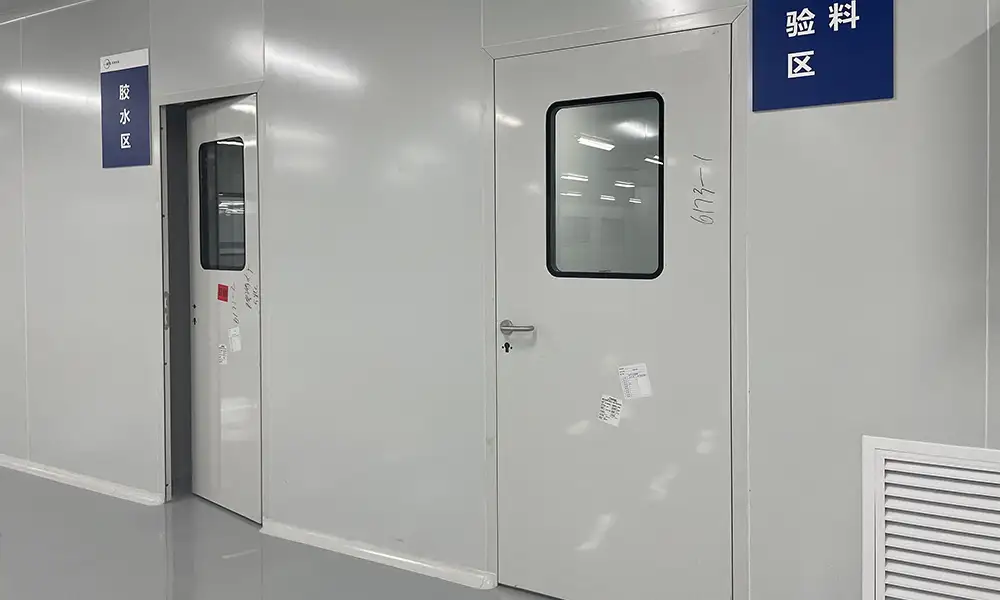
Bottom Sealing and Threshold Design
Traditional fixed thresholds are tripping hazards and hinder carts. Modern cleanroom doors universally adopt a threshold-free design.
- The Solution: The cleanroom door sweep mechanism, specifically the automatic drop seal for cleanroom doors.
- How it Works: When opening, a precision mechanical cam retracts the seal (5-10mm clearance). When closing, it triggers the seal to press uniformly against the floor.
- Crucial Engineering Note: This demands high floor flatness. Engineering standards must require floor epoxy/PVC flatness errors to be controlled within ≤2mm/2m; otherwise, the drop seal cannot achieve a perfect seal.
Door Frame Node Treatment
The junction between the door frame and the cleanroom panel is prone to cracking due to different thermal expansion coefficients. Simple surface caulking will inevitably fail. Professional installation must follow these steps:
- Internal Fill: Use dedicated connectors internally and fill the junction with polyurethane foam or high-density silicone to absorb stress and block air leakage.
- External Finish: Use dedicated radiused aluminum profiles (R-corner transitions) for finishing.
- Final Sealing: Apply neutral anti-fungal silicone sealant. This "internal fill, external radius" approach eliminates hygiene dead corners and meets strict GMP cleaning validation.
Opening Speed and Airflow Compensation
A 2-meter swing door opening too fast (>0.5m/s) can cause pressure fluctuations exceeding ±10 Pa.
- VFD Control: High-grade automatic doors must adopt Variable Frequency Drive (VFD) technology with a "slow start - acceleration - slow stop" curve to minimize airflow impact.
- PID Compensation: In engineering design, pair this with the HVAC system's PID control algorithm to automatically increase supply air volume during the door opening seconds.
- Validation Data: Third-party tests show that Grade A airlock doors using VFD + PID can control pressure fluctuation to within ±2.8 Pa (during 2m/s opening) with a leakage rate of <0.3 m³/h, meeting ISO 14644-3 dynamic airtightness requirements.
Cleanroom-Grade Adaptation of Hardware
Standard hardware generates metallic particulates and attracts dust.
- Design: Use concealed hinges or pivot (floor/ceiling) designs to avoid dust accumulation dead corners caused by side-mounted hinges.
- Materials: Hardware must use self-lubricating materials (e.g., PTFE coatings) or maintenance-free designs to ensure no dust generation under high-frequency operation.
Conclusion
Selecting doors for pharmaceutical cleanrooms is never simply "buying a door." It is a systematic engineering project involving fluid dynamics, materials science, and automation control. There is no universal "magic formula," only the "best-matched solution" based on specific cleanroom grades and process scenarios.
If you are advancing a pharmaceutical project and have doubts about door configurations or node detailing, please contact our cleanroom door control engineering team to obtain exclusive selection recommendations customized to your project's CAD drawings.
-
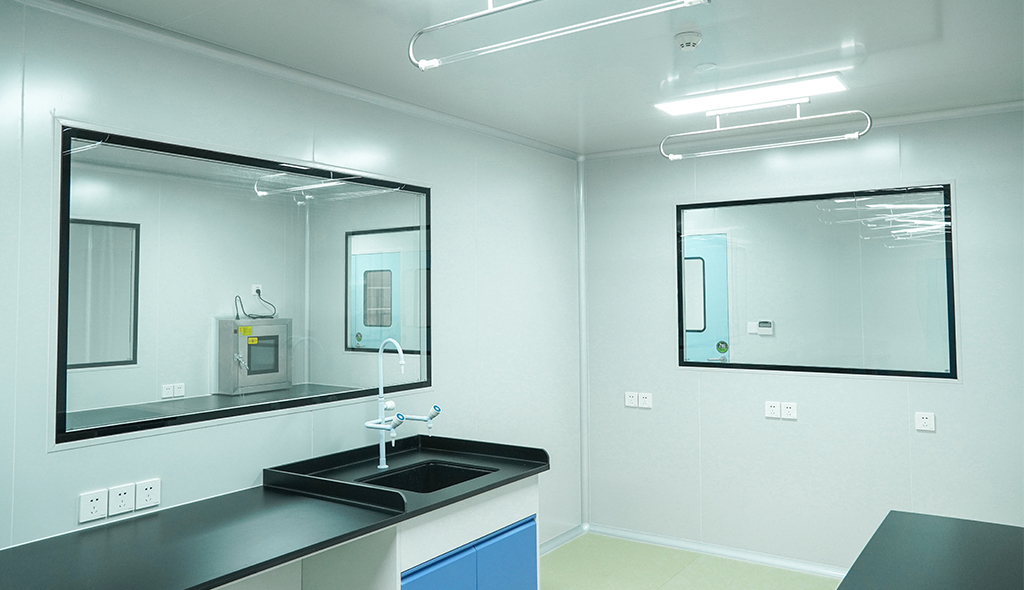 Cleanroom Glass Windows Are The Key to Maintaining a Clean Environment
 -
 Top Aluminium Profile Manufacturers in China: Leading the Global Market
 -
 The Evolution of Air Tight Sliding Doors
 -
 AHU Aluminium Profile: A Comprehensive Guide
 -
 The Importance of Choosing the Right Cleanroom Door in Vietnam
 -
 The Benefits of Hospital Automatic Doors: Enhancing Efficiency and Safety
 -
.jpg) The Best Bathroom Door Manufacturers - Unlocking Endless Possibilities!
The Best Bathroom Door Manufacturers - Unlocking Endless Possibilities! -
 Unlock the Possibilities with AJ Manufacturing Doors
 -
 Make a Statement with Manufactured Home Interior Doors!
 -
 what is aluminum profile? Aluminum Profiles for Your Home is the best option
-
 Hospital Emergency Exit Doors: 90 Minute Fire Rating Meets Infection Control
 -
 ICU and Isolation Door Requirements Hospitals Often Overlook
 -
 Laboratory Door Requirements for BSL-2 and BSL-3 Containment
 -
 Retrofitting Hospital Sliding Doors: Upgrade Wards Without a Rebuild
 -
 Why Airtight Hospital Sliding Doors Are Critical for Infection Control
 -
 Automatic cleanroom door systems: sensor, actuator and access control integration
 -
 Cleanroom Door Materials: Stainless Steel vs HPL vs FRP vs Aluminum Comparison
 -
 X-Ray Room Door Buying Guide: Lead Thickness & Compliance
 -
 Operating Room Doors: Hermetic & Infection-Control Guide
 -
 Hospital ICU Door Selection: Sealing, Sterility & Workflow




-

Home
-

Tel
-

Email
-

Contact


Guangzhou Yizhong Aluminum Industry Co., Ltd.
We are always providing our customers with reliable products and considerate services.
We are always providing our customers with reliable products and considerate services.
Speak Your Mind