How Do Cleanroom Doors Help Maintain Room Pressure
Many cleanroom facility managers and HVAC engineers know this frustration. You invest heavily to upgrade the HVAC system. You install higher-grade HEPA filters. Yet, room pressure still fluctuates like a roller coaster. During frequent personnel traffic, pressure alarms sound constantly. This sometimes causes particle count exceedances. Our team has years of commissioning experience in semiconductor and pharmaceutical cleanrooms. We often see engineers focus solely on fans, ducts, and filters. They overlook the weakest dynamic link in the cleanroom envelope: the door.
Pressure control is not just the job of the air handling unit and variable frequency drives. When discussing cleanroom doors pressure control, we must recognize its critical role. It remains the most overlooked dynamic variable in the entire cleanroom environmental barrier. This article combines airflow dynamics and pressure differential principles. We will analyze how door gaps, weatherstripping, interlocking systems, and opening frequency determine pressure stability. Ultimately, this achieves superior airborne contamination control.
The Fundamental Logic of Cleanroom Pressure Differentials and Airflow Dynamics
To understand how doors affect pressure, we must view them within overall cleanroom airflow management.
In cleanroom design, the essence of a pressure differential is to use directional airflow to block contaminant migration. Positive pressure environments maintain higher indoor pressure than adjacent areas. This prevents external particles from entering semiconductor lithography or sterile filling zones. Conversely, negative pressure environments keep internal hazardous substances contained. You see this in biosafety laboratories and high-potency drug production areas.
This pressure control relies on pressure cascading design. Air flows from the highest cleanliness area to secondary zones, and finally to non-clean areas. This forms an invisible "air wall." However, the door is not just a physical passage. It acts as a "dynamic valve" in the airflow network. Gaps or open doors break the stable laminar flow. This generates turbulence and causes the pressure gradient to fail. If the door control design is inadequate, even the most powerful HVAC system cannot make up for this "last mile" of leakage.
Core Mechanisms: Four Key Factors Influencing cleanroom doors pressure control
In engineering practice, cleanroom doors pressure control depends on four core dimensions. These physical and control factors must work together.
1. Door Gaps and Weatherstripping: The Last Line of Defense for Controlling Static Leakage
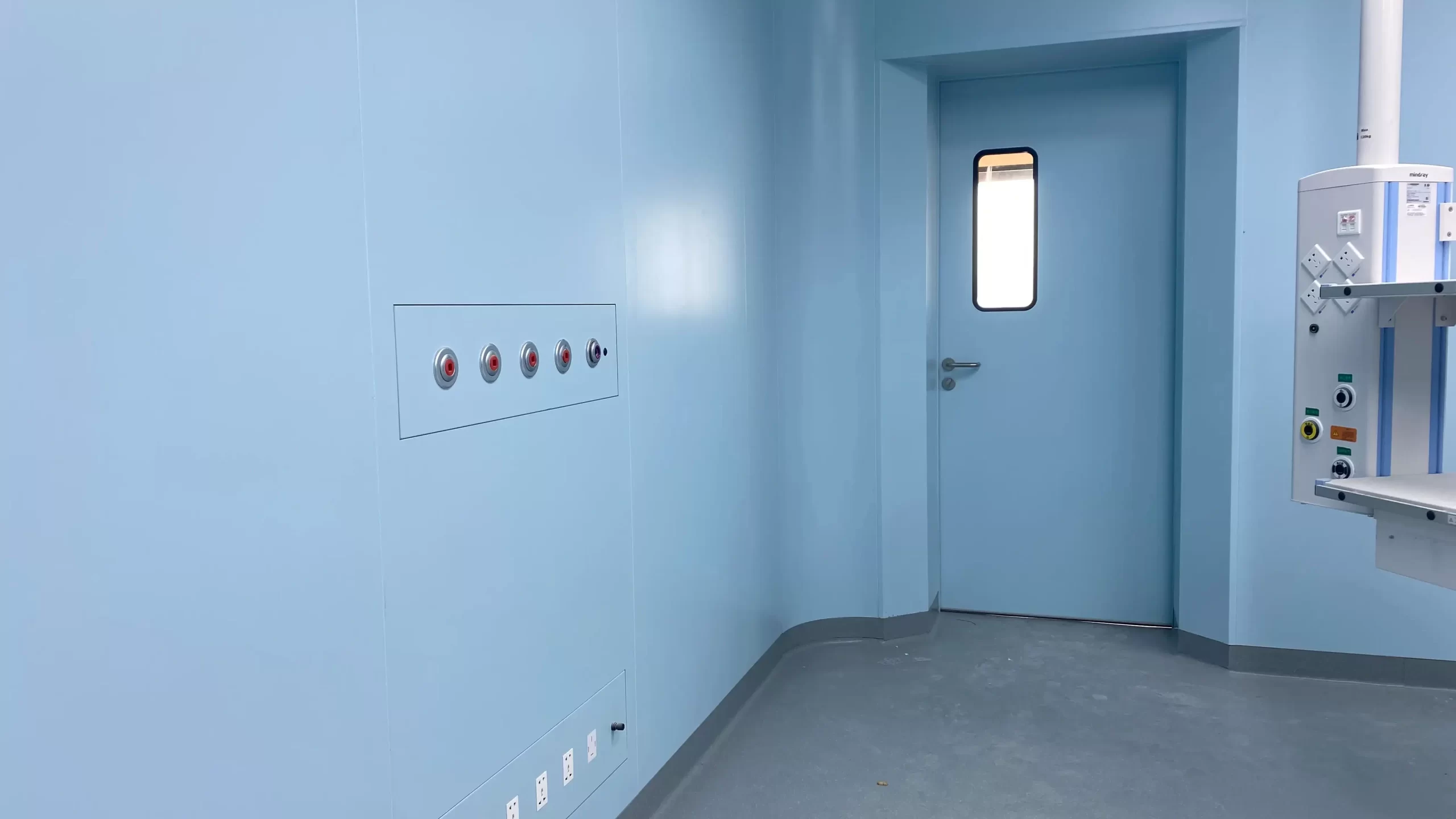
Even when a door closes completely, microscopic gaps cause continuous static air leakage. Fluid mechanics dictates the orifice flow principle. Here, leakage volume scales with the square root of the pressure differential. This underscores the critical importance of cleanroom door seal and weatherstripping.
- The Hidden Cost of Leakage Rates: Consider a standard 2m × 1m cleanroom door. A uniform 1mm gap around its perimeter causes significant issues. Under a 15Pa pressure differential, hourly leakage reaches 30-50 m³/h. This directly drops indoor pressure. It also forces the HVAC system into overload. The system must work harder to replace leaked air, sharply increasing energy consumption.
- Professional Weatherstripping Technology: Traditional rubber seals age and deform under long-term compression. Modern high-end cleanroom doors employ better technologies:
- Medical-Grade Silicone and Magnetic Closure: Medical-grade silicone offers excellent resilience. Magnetic strips provide automatic suction. Together, they achieve a "zero-leakage" edge fit the moment the door closes.
- Automatic Drop-Down Seals: These seals solve bottom leakage effectively. A mechanical linkage forces the bottom seal down when the door closes. It presses tightly against the floor. The seal rises automatically when the door opens. This design overcomes minor floor unevenness. It ensures absolute airtightness instantly.
2. Interlocking Systems: The Intelligent Barrier Against "Pressure Collapse"
In cleanroom buffer zones, the airlock maintains the pressure cascade. Understanding cleanroom airlock door requirements starts with preventing pressure collapse. Opening both airlock doors simultaneously connects clean and non-clean areas directly. The pressure differential drops to zero in seconds. Engineers call this phenomenon "pressure collapse." Unfiltered air rushes in with strong airflow, blowing suspended particles into the core process area.
- Electromechanical Interlocks: Electromechanical interlocks form the physical baseline of a cleanroom door interlock system. Electromagnetic locks and magnetic door switches work together. They enforce a strict "close first, open second" rule. Door B remains deadlocked until Door A closes completely and triggers the magnetic switch.
- Software Interlocks and BMS Integration: Advanced systems integrate interlock logic directly into the Building Management System (BMS). The BMS controls door locks and monitors door status continuously. If someone forces a door open, the system triggers audible and visual alarms immediately. It also logs the violation.
- Emergency Release Mechanism: Compliance remains equally important alongside pressure control. Facilities must equip interlock systems with emergency push buttons or break-glass devices. During a fire or power outage, the system automatically unlocks all interlocked doors. This ensures compliance with fire evacuation codes.
3. Opening Frequency and Automation: Suppressing Dynamic Pressure Fluctuations
If door gaps affect static leakage, door opening causes dynamic pressure shocks. Frequent personnel traffic creates sudden drops in indoor pressure. Slow manual door opening creates similar issues. Both actions generate inward airflow, pulling contaminated corridor air into the cleanroom.
- High-Speed Doors and Rapid Opening/Closing: Logistics airlocks require frequent material transfer. A standard manual door takes 3-5 seconds to open. High-speed roller shutters or sliding doors open much faster. They reach speeds of 1.5m/s to 2.0m/s, cutting opening time to 1-2 seconds. This minimizes the open doorway time window. It reduces dynamic pressure fluctuations significantly.
- Non-Contact Sensing and Traffic Flow Optimization: Modern cleanroom doors use non-contact triggering mechanisms to reduce hand contamination:
- Microwave Radar and Infrared Photoelectric Sensing: Sensors detect approaching personnel. The door opens automatically and closes when they leave. This prevents prolonged openings caused by lingering staff.
- RFID Access Control and Foot Pedal Sensors: High-grade biopharmaceutical areas use RFID tags. Employees wear these tags to verify access rights automatically. The door opens instantly, ensuring smooth traffic flow and preventing cross-contamination.
4. Door Structural Rigidity and Deflection Resistance
Engineers often overlook this physical mechanics issue. A large pressure differential on both sides of a door creates massive air thrust. This is particularly critical when designing a negative pressure cleanroom door or a high-pressure differential positive pressure door.
- Pressure Differential Deflection Effect: Consider a 50Pa pressure differential. You find this in high-grade biosafety laboratories and negative pressure isolation wards. A 2-square-meter door leaf must withstand a 100 kg (1000 Newtons) unidirectional thrust. A loose internal structure will fail here. The door leaf will "bulge" or bend under continuous wind pressure.
- Professional Solutions: Deflection of just a few millimeters causes edge seals to detach. This results in massive air leakage. Professional cleanroom doors prevent this effectively. Manufacturers use high-strength aluminum honeycomb filling or internal steel frame reinforcement. Aluminum profile edging reinforces all four sides. This structure controls door leaf deflection at the millimeter level. It maintains continuous, uniform seal contact even at extreme 100Pa pressure differentials.
Synergistic Optimization of Door Configurations and HVAC/Airflow Systems
Isolated door design cannot achieve perfect pressure control. cleanroom doors pressure control requires deep HVAC system integration. This creates efficient closed-loop control. It also answers the common question: how to maintain positive pressure in a cleanroom?
Linkage Compensation Between Door Control and Sensors
Airlock doors cause brief pressure drops in dynamic environments. High-precision micro-pressure sensors (0-60Pa range) capture these changes in real time. If pressure drops below the threshold (e.g., from 25Pa to 15Pa), the BMS acts immediately. It sends a signal to the HVAC variable frequency drive (VFD). PID control algorithms automatically increase the supply fan speed. This adds make-up air to compensate for the pressure loss. The system smoothly restores the set air volume once the door closes.
Airflow Organization and Return Air Grille Layout
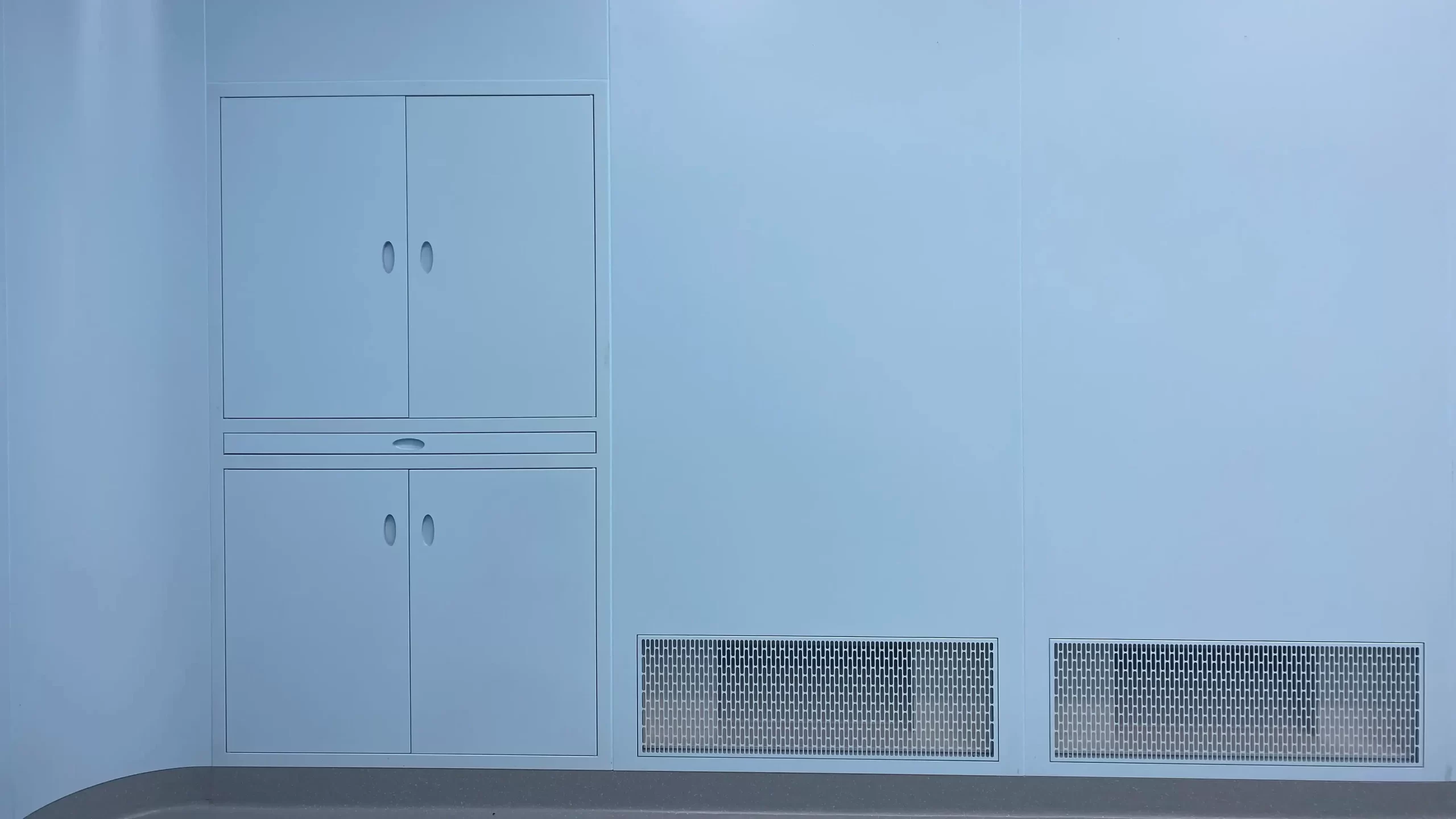
Door placement and return air grille design must prevent short-circuiting. Placing return grilles too close to door gaps causes problems. Supply air extracts directly through the gap. It fails to cover the critical process area below. Proper airflow organization solves this. Clean air descends uniformly from ceiling diffusers. It passes over the operation area. Finally, return grilles near the door bottom exhaust the air. This forms a unidirectional, "piston-like" airflow purge.
The Micro-Airlock Effect of Pass-Through Boxes
Pass-through boxes act as micro-doors. High-grade cleanrooms equip them with electronic interlocks. They also feature built-in UV or VHP (vaporized hydrogen peroxide) sterilization. Advanced models include an "air shower" function. High-speed clean airflow blows away surface particles during material transfer. This blocks contamination risks caused by pressure imbalance.
Industry Compliance and Standards Verification
Pharmaceuticals, medical devices, and semiconductors are highly regulated industries. In these sectors, doors must undergo rigorous testing. This verification ensures cleanroom doors pressure control meets the latest ISO 14644 compliance and industry guidelines.
- ISO 14644 Standard System: ISO 14644-4:2022 specifies design, construction, and start-up requirements for cleanrooms. The standard explicitly addresses the building envelope. It mandates that doors possess sufficient airtightness. This maintains designed pressure differentials and air change rates (ACH).
- cGMP and FDA Guidelines: FDA and EMA cGMP guidelines emphasize cross-contamination prevention in the pharmaceutical industry. Door airtightness and interlock logic serve as key engineering controls. They prevent cross-contamination between different products or batches.
- On-Site Testing and Verification Methods:
- Pressure Decay Test: The pressure decay test serves as the gold standard for evaluating envelope airtightness. Testers seal the room and pressurize it to 50Pa. They then stop the air supply and record the time. The clock stops when pressure drops to 25Pa. A longer duration proves better airtightness for the envelope and doors.
- Smoke Study / Airflow Visualization: Smoke studies visualize airflow during dynamic door operations. Technicians release non-toxic smoke at door gaps and critical paths. Video cameras record the airflow patterns. This intuitively verifies reverse leakage when doors close. It also confirms directional airflow when doors open.
Conclusion
Cleanroom pressure control is never a solo act. It requires a systems engineering approach. This approach deeply integrates door structures, sealing technologies, automation control, and HVAC systems. An excellent cleanroom door plays the role of an "intelligent gatekeeper" in maintaining pressure stability through ultimate airtight design and reliable interlock logic. Does your facility face pressure fluctuations or excessive energy consumption? Contact our environmental control experts today to obtain a customized evaluation plan for your pressure control door configurations.
-
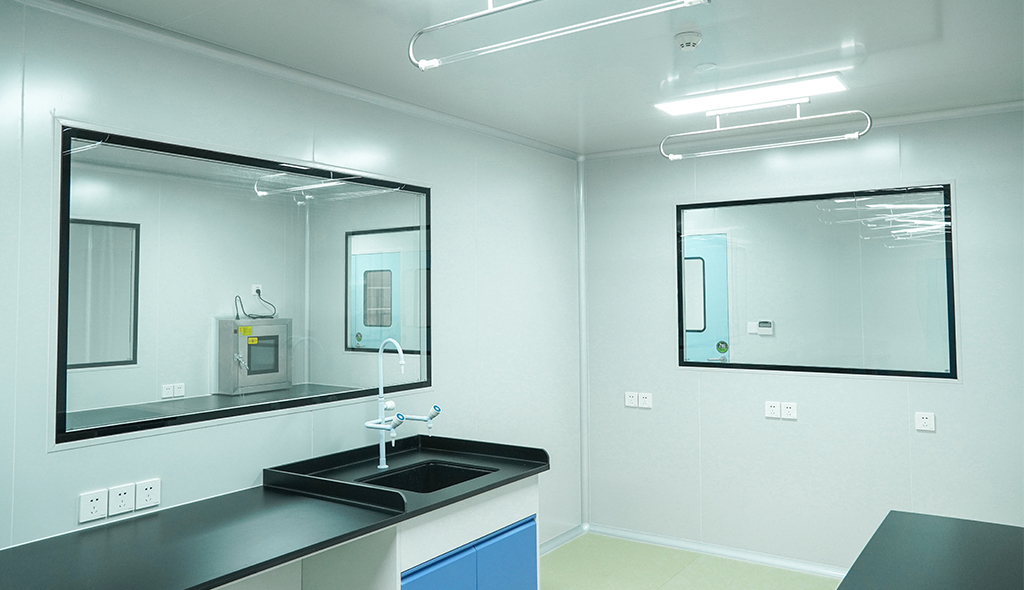 Cleanroom Glass Windows Are The Key to Maintaining a Clean Environment
 -
 Top Aluminium Profile Manufacturers in China: Leading the Global Market
 -
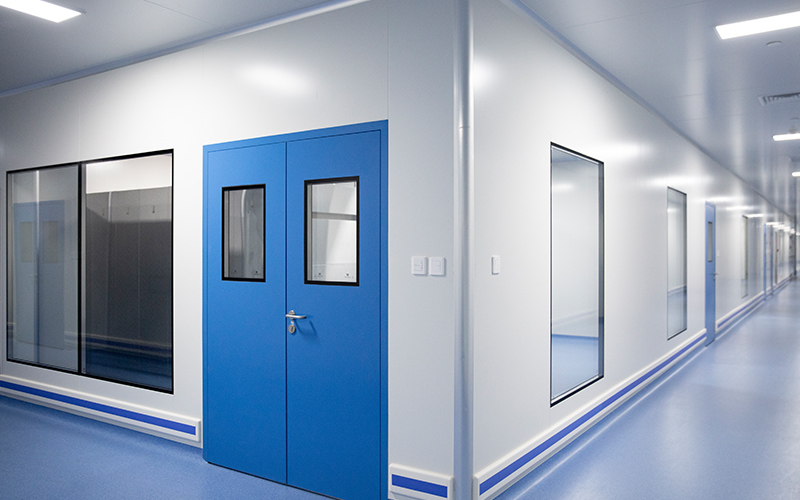 The Evolution of Air Tight Sliding Doors
 -
 AHU Aluminium Profile: A Comprehensive Guide
 -
 The Importance of Choosing the Right Cleanroom Door in Vietnam
 -
 The Benefits of Hospital Automatic Doors: Enhancing Efficiency and Safety
 -
.jpg) The Best Bathroom Door Manufacturers - Unlocking Endless Possibilities!
The Best Bathroom Door Manufacturers - Unlocking Endless Possibilities! -
 Unlock the Possibilities with AJ Manufacturing Doors
 -
 Make a Statement with Manufactured Home Interior Doors!
 -
 what is aluminum profile? Aluminum Profiles for Your Home is the best option
-
 Hospital Emergency Exit Doors: 90 Minute Fire Rating Meets Infection Control
 -
 ICU and Isolation Door Requirements Hospitals Often Overlook
 -
 Laboratory Door Requirements for BSL-2 and BSL-3 Containment
 -
 Retrofitting Hospital Sliding Doors: Upgrade Wards Without a Rebuild
 -
 Why Airtight Hospital Sliding Doors Are Critical for Infection Control
 -
 Automatic cleanroom door systems: sensor, actuator and access control integration
 -
 Cleanroom Door Materials: Stainless Steel vs HPL vs FRP vs Aluminum Comparison
 -
 X-Ray Room Door Buying Guide: Lead Thickness & Compliance
 -
 Operating Room Doors: Hermetic & Infection-Control Guide
 -
 Hospital ICU Door Selection: Sealing, Sterility & Workflow

-

Home
-

Tel
-

Email
-

Contact


Guangzhou Yizhong Aluminum Industry Co., Ltd.
We are always providing our customers with reliable products and considerate services.
We are always providing our customers with reliable products and considerate services.
Speak Your Mind