
Hermetic Door vs Airtight Door vs Hygienic Door: Key Differences
If you've ever sat in a specification meeting where someone said "hermetic" and meant "airtight enough," you're not alone. The words get thrown around like they mean the same thing. They don't. And the difference isn't academic—get it wrong in a BSL-4 lab or a USP <800> compounding suite, and you're not just buying the wrong hardware; you're creating a liability.
I've spent enough time around controlled-environment doors to know that vendors love this confusion. "Hermetic" sounds expensive and important, so it's an easy upsell. Meanwhile, the facility manager just needs something that keeps the cleanroom at 20 Pa and doesn't cost six figures. This guide is an attempt to stop that cycle, or at least slow it down.
What Is a Hermetic Door?
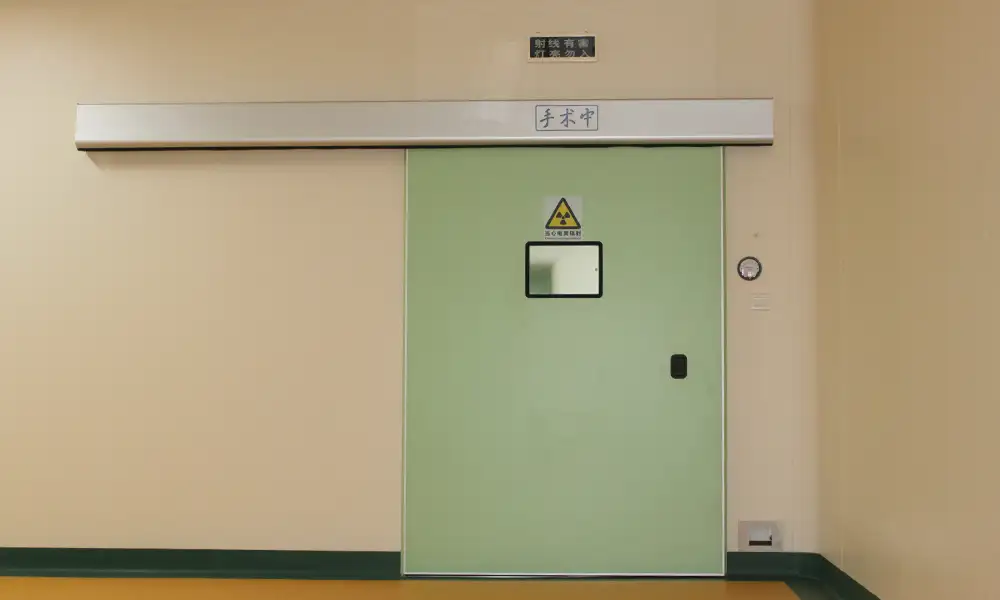
"Hermetic" means gas-tight. Not mostly tight. Not tight under normal conditions. Gas-tight. These doors are built to maintain a pressure differential between two spaces with essentially no leakage.
The mechanism is the giveaway. A true hermetic door doesn't just compress a rubber gasket against a frame. It uses an inflatable silicone gasket—usually integrated into the door leaf or frame—that fills every microscopic gap between the door and the frame when the door closes and locks. The seal expands, conforms to the surface, and equalizes with the room pressure. Done right, it holds ±50 Pa to ±100+ Pa with leakage rates well under 0.1 m³/h.
This is overkill for most cleanrooms. That's the point. Hermetic doors are for situations where any leakage is unacceptable: BSL-3 and BSL-4 laboratories, hazardous drug compounding under USP <800>, infectious disease isolation rooms, and pharmaceutical isolators or RABS where the product or the pathogen cannot be allowed to migrate.
They also come with real engineering baggage. The track and carrier systems have to be much heavier than standard automatic doors because the door is compressing against an inflated seal. Power failure? The seal has to deflate automatically so people can get out. Testing isn't optional—smoke pencil tests and pressure decay tests are standard, and if a door can't pass them, it isn't hermetic no matter what the brochure says.
What Is an Airtight Door?
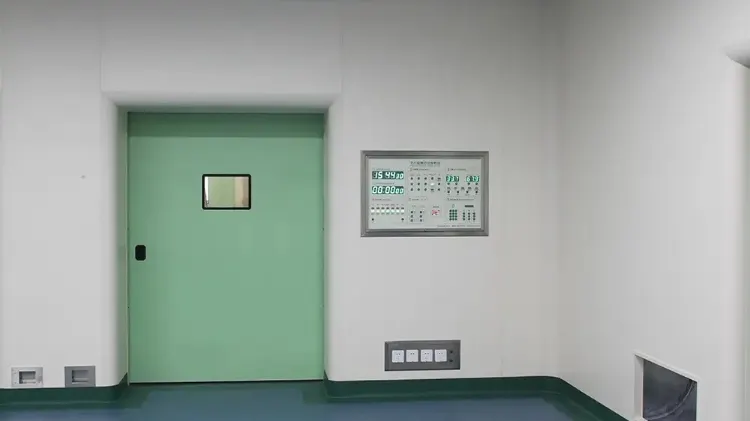
An airtight door is the practical middle ground. It restricts airflow, maintains pressurization, and has a measurable—but acceptable—leakage rate. It's not gas-tight, and it doesn't pretend to be.
The seal is the main difference. Instead of an inflatable gasket, airtight doors use mechanical compression: magnetic gaskets that pull the leaf tight, or EPDM rubber profiles that compress when the door closes. These typically hold 15–30 Pa, which is plenty for ISO 7 or ISO 8 cleanrooms, electronics fabs, secondary packaging areas, and general airlocks.
Here's where buyers routinely overspend. If your ISO 8 cleanroom only needs 15 Pa positive pressure to keep corridor dust out, an airtight door with a magnetic gasket is exactly what you want. Specifying a hermetic door in that situation doesn't make you safer; it just makes you poorer, and you'll be paying for inflatable seal maintenance you never needed.
What Is a Hygienic Door?

"Hygienic" has almost nothing to do with air pressure. It describes a door's surface and cleanability. A hygienic door is designed to be wiped down, disinfected, and audited without finding pockets of grime or bacteria.
Think flush surfaces, no embossed panels, no recessed hardware, no ledges. The bottom usually has a coved transition to the floor so there's no sharp 90-degree corner where dirt collects. Hinges, closers, and locks are hidden inside the leaf or frame. Materials are typically 304 or 316L stainless steel, or anti-bacterial HPL that can survive hydrogen peroxide or bleach without degrading.
A hygienic door can be airtight, but it isn't automatically hermetic. In fact, it doesn't have to be airtight at all. Its job is sanitation, not pressurization. You'll find these doors in hospital operating theaters, food processing plants, cosmetics manufacturing, and healthcare corridors—places where the main contamination risk is on the surface, not airborne.
One detail that gets missed constantly: the glazing bead. If the glass isn't flush-mounted and sealed with medical-grade silicone, that protruding bead becomes a ledge, and it will fail a hygiene audit. I've seen brand-new doors fail for this exact reason.
How the Three Actually Compare
| Feature | Hermetic Door | Airtight Door | Hygienic Door |
|---|---|---|---|
| Primary job | Gas-tight containment | Airflow restriction and pressure control | Surface cleanability |
| Seal type | Inflatable silicone gasket | Magnetic gasket or EPDM compression | EPDM or magnetic (if also airtight) |
| Pressure rating | High: ±50 Pa to ±100+ Pa | Moderate: 15–30 Pa | Low to moderate; depends on seal |
| Leakage | Near zero, tested and documented | Low but measurable | Not the main metric |
| Surface focus | Smooth, seal-centric | Smooth, cleanroom-grade | Ultra-flush, coved, no crevices |
| Relative cost | Highest | Moderate | Lowest to moderate |
Use these rules of thumb when you specify:
- Hermetic if you're containing BSL-3/4 pathogens, potent compounds at OEB 4/5, or any space where leakage is a safety or product-integrity failure.
- Airtight if you're building an ISO 5–8 cleanroom and need standard pressurization without paying for containment-grade performance.
- Hygienic if your core problem is surface sanitation and chemical cleaning. Order a "hygienic airtight" door if you need both cleanability and moderate pressure control.
Cost vs. Performance
A rough industry rule of thumb: if a basic hygienic door is your 10x baseline, an airtight door lands around 30x, and a hermetic door with inflatable seals, heavy carriers, and air supply management can hit 50–60x. Those ratios are rough, but the point is real: hermetic doors are not a minor upgrade.
Purchase price isn't the whole story. Hermetic doors need gasket replacement every 3–5 years, air supply compressor checks, and solenoid valve maintenance. An airtight door with a magnetic gasket needs far less. If you buy containment-grade hardware for a standard cleanroom, you're burning money in both CapEx and OpEx.
Specifying the Right Door
Start with compliance, not catalogs.
- ISO 14644 / EU GMP Annex 1: Pressure cascades between adjacent grades usually don't require hermetic seals. Airtight is often enough.
- FDA / USP <800: Hazardous drug compounding needs negative pressure. The ante-room door may need airtight or hermetic, depending on the cascade.
- CDC / ASHRAE 170: Healthcare isolation rooms care about ACH and pressure differential. Airtight doors with automatic closers are typical here.
Once you know the performance tier, think about materials and operation. Powder-coated aluminum frames with HPL or steel skins are standard for dry cleanrooms. For wet, corrosive, or biotech environments, go with 316L stainless steel. In high-traffic areas, touchless operation is worth the money—manual handles are contamination vectors, and they're easy to underestimate.
If you're using airlocks, make sure the controller supports magnetic interlocks. Two doors open at once will destroy a pressure profile faster than any seal failure.
Testing and Installation
Don't trust a brochure. Require documented FAT (Factory Acceptance Testing) and SAT (Site Acceptance Testing). Smoke pencil tests show visual leakage. Pressure decay tests quantify it. Get the leakage rate at the specified Pa in writing.
Installation matters as much as the door itself. A hermetic door mounted in a standard drywall partition is a waste—air will bypass through the wall seams. The wall needs to be a sealed, monolithic cleanroom panel system. The frame has to be integrated with cleanroom-grade silicone, and the HVAC system must be rebalanced after installation because the doors will change the room's airflow behavior.
Maintenance Reality
- Hermetic (inflatable seals): Check the compressor and solenoid valves quarterly. Inspect the silicone gasket annually for micro-tears. Replace every 3–5 years depending on cycles and chemical exposure.
- Airtight (magnetic/EPDM): Check for demagnetization or deformation. EPDM hardens and cracks over time; replace it when it loses compressibility.
- Cleaning: Use pH-neutral, cleanroom-approved disinfectants. Abrasive pads and unapproved solvents will destroy elastomers prematurely.
Quick FAQ
Hermetic vs. airtight—what's the real difference? Seal mechanism and pressure rating. Hermetic uses inflatable silicone and holds high differentials (±50+ Pa). Airtight uses magnetic or EPDM compression and holds moderate pressure (15–30 Pa) with some leakage.
Do all cleanrooms need hermetic doors? No. Most ISO 7 and 8 cleanrooms only need airtight. Hermetic is for high-containment or safety-mandated spaces.
Can a hygienic door be airtight? Yes. Hygienic refers to the surface design; airtight refers to the seal performance. You can specify both.
How do you test airtightness? Smoke pencil for visual checks, pressure decay test for quantified leakage rate at a specific Pa.
How long does a hermetic door last? The leaf and track can last 15–20 years. The inflatable gasket and air supply parts need service every 3–5 years.
Are hermetic doors fire-rated? They can be, but it's not trivial. The inflatable seal and track system have to be specifically engineered and tested for the rated duration. Verify certification with the manufacturer.
How much more does a hermetic door cost? Roughly 3–5x an airtight cleanroom door, and more when you include installation and maintenance. The premium is real, but it's justified only when the application demands it.
Bottom Line
Choosing between these doors comes down to matching the hardware to the actual risk. Over-specifying wastes money. Under-specifying fails audits and, in the worst cases, endangers people. If you're unsure which category your facility falls into, start with the pressure cascade and the regulatory driver, then work backward to the door. That's a lot cheaper than fixing it after commissioning.
-
 Cleanroom Glass Windows Are The Key to Maintaining a Clean Environment
 -
 Top Aluminium Profile Manufacturers in China: Leading the Global Market
 -
 The Evolution of Air Tight Sliding Doors
 -
 AHU Aluminium Profile: A Comprehensive Guide
 -
 The Importance of Choosing the Right Cleanroom Door in Vietnam
 -
 The Benefits of Hospital Automatic Doors: Enhancing Efficiency and Safety
 -
.jpg) The Best Bathroom Door Manufacturers - Unlocking Endless Possibilities!
The Best Bathroom Door Manufacturers - Unlocking Endless Possibilities! -
 Unlock the Possibilities with AJ Manufacturing Doors
 -
 Make a Statement with Manufactured Home Interior Doors!
 -
 what is aluminum profile? Aluminum Profiles for Your Home is the best option
-
 Hospital Emergency Exit Doors: 90 Minute Fire Rating Meets Infection Control
 -
 ICU and Isolation Door Requirements Hospitals Often Overlook
 -
 Laboratory Door Requirements for BSL-2 and BSL-3 Containment
 -
 Retrofitting Hospital Sliding Doors: Upgrade Wards Without a Rebuild
 -
 Why Airtight Hospital Sliding Doors Are Critical for Infection Control
 -
 Automatic cleanroom door systems: sensor, actuator and access control integration
 -
 Cleanroom Door Materials: Stainless Steel vs HPL vs FRP vs Aluminum Comparison
 -
 X-Ray Room Door Buying Guide: Lead Thickness & Compliance
 -
 Operating Room Doors: Hermetic & Infection-Control Guide
 -
 Hospital ICU Door Selection: Sealing, Sterility & Workflow


-

Home
-

Tel
-

Email
-

Contact


Guangzhou Yizhong Aluminum Industry Co., Ltd.
We are always providing our customers with reliable products and considerate services.
We are always providing our customers with reliable products and considerate services.
Speak Your Mind