
Cleanroom Door Hardware: What Buyers Actually Get Wrong
When a cleanroom gets designed, the HVAC system and HEPA filtration eat most of the budget and most of the meeting time. The doors get treated as an afterthought. That's backwards. The doors are where contamination control actually fails—not in theory, but in practice, over and over.
A door that sheds particles, traps microbes, or can't hold a pressure differential undoes whatever your filtration system accomplished. We've seen it happen enough times that it's worth laying out what matters when you're specifying hinges, handles, and seals.
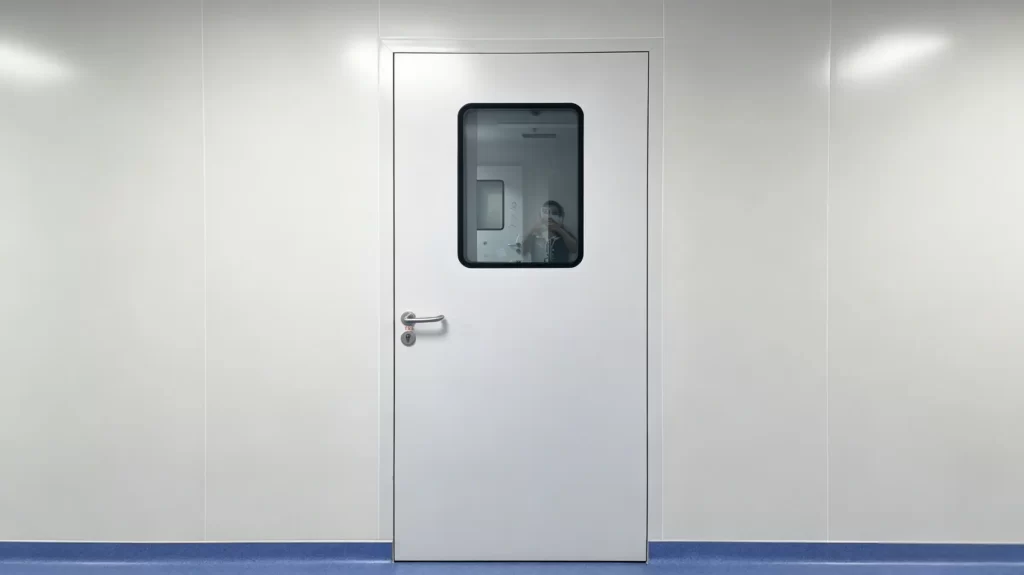
Cleanroom Door Hinges
The hinge carries the door's weight and has to move smoothly without generating particles. Standard commercial hinges don't belong in a cleanroom. Their exposed pins and knuckles shed metal dust and give microbes places to hide.
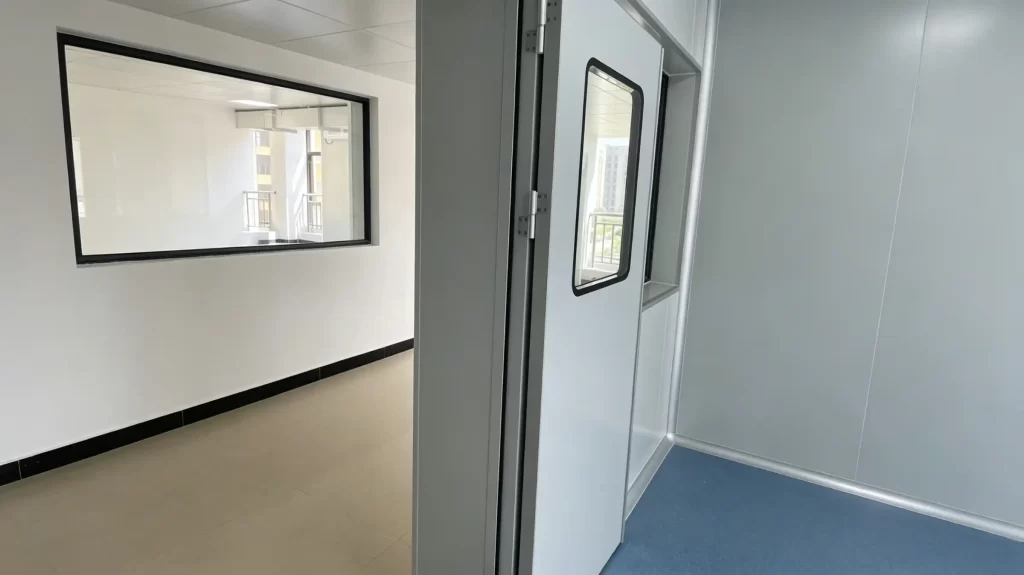
Stainless Steel Cleanroom Door Hinges
Stainless steel isn't a preference here. It's the floor. Standard steel or aluminum oxidizes and sheds. You need non-shedding material, period.
Good cleanroom hinges use sealed bearings. That keeps lubricant in and contaminants out.
Friction is the real problem. Every time a standard hinge cycles, metal rubs on metal. In an ISO 5 environment, that particulate can wreck a semiconductor yield or get a pharmaceutical batch rejected. Sealed, precision-machined stainless hinges stop that wear from happening.
Cleanroom Hinge Types
The geometry depends on door weight, traffic, and classification.
Butt hinges handle most standard lightweight cleanroom doors. They need to be fully sealed with no exposed pins.
Continuous (piano) hinges run the full length of the door and spread the load. Use them for heavy doors—lead-lined radiology doors, high-traffic airlocks.
Pivot hinges mount top and bottom. They carry the most weight but need precise floor and header framing to work.
One thing we see go wrong: specifying a standard-gauge continuous hinge for a heavy lead-lined door. The door sags, the seal fails, and nobody catches it until the pressure differential drops. Match the hinge material thickness to the door leaf weight.
Cleanroom Door Handles
Hinges carry the mechanical load. Handles carry the biological one. The handle is the thing every person touches, which makes it the highest-risk surface for cross-contamination.
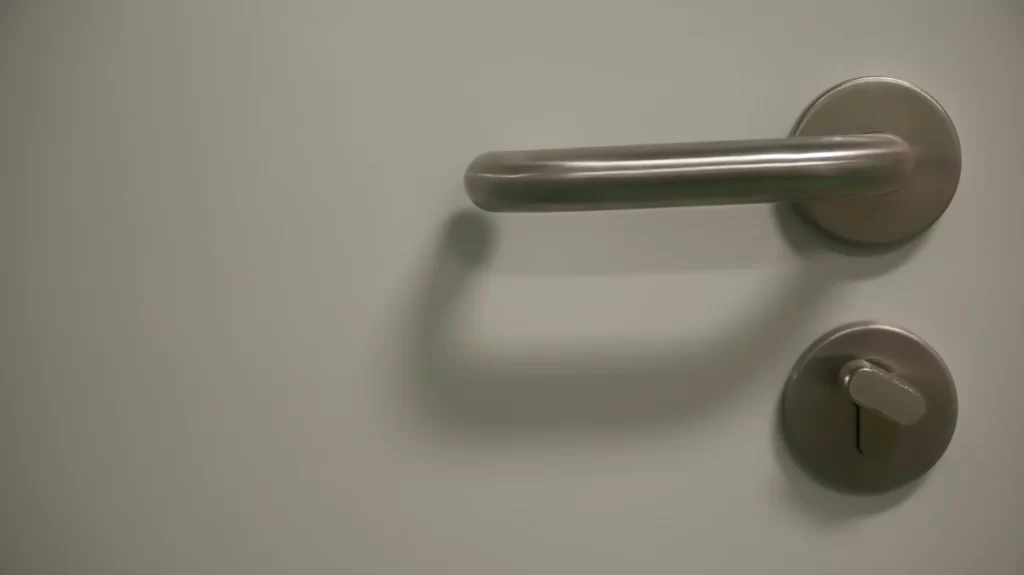
Cleanroom Door Handle Specifications
Cleanability beats ergonomics. Protruding or ornate handles create shadows, trap dirt, and catch cleanroom garment sleeves.
The spec should call for a smooth, streamlined profile. Flush-mounted or recessed wherever possible.
Here's why flush matters: in a unidirectional airflow environment, any protrusion creates turbulence. HEPA-filtered air can't sweep the door surface cleanly, and you get dead zones where particles settle. A flush mount keeps laminar flow intact across the door.
Antimicrobial Door Handles
Pharma and healthcare cleanrooms need to control surface bioburden. Antimicrobial handles help—but buyers conflate two different things.
Surface coatings (silver-ion sprays and the like) degrade. Cleanroom disinfectants are aggressive. Once the coating wears off, the handle is just a handle.
Specify solid antimicrobial alloys instead—copper-nickel-silicon, for example. The antimicrobial property is in the bulk material, so it doesn't wear off. It lasts as long as the hardware does.
Cleanroom Door Seals
The seal maintains the pressure differential between the cleanroom and everything around it. If it fails, air leaks, and your HVAC balance goes with it.
Cleanroom Door Seal Types
Compression seals (bulb or tube profiles) compress when the door closes. Good general sealing, but they suffer from material creep—permanent deformation over time.
Blade (swipe) seals have a flexible lip that sweeps the door stop as the door closes. They're the right choice for positive pressure because internal air pressure pushes the blade tighter against the frame.
Magnetic gaskets work like refrigerator doors. Airtight on contact, but they need precise door alignment.
Here's a practical point on airlocks: if you've got opposing doors with a 15–20 Pascal differential, a standard compression seal fights that pressure constantly and fatigues faster. A blade seal uses that same pressure to seal harder. In high-differential applications, that's the one to specify.
Silicone Cleanroom Door Seals
Silicone is the standard seal material for cleanrooms—temperature resistance, flexibility, chemical compatibility. But not all silicone is the same.
Standard industrial silicone contains plasticizers and curing byproducts that outgas. Those VOCs end up in your cleanroom.
For critical applications, specify platinum-cured silicone. Platinum curing avoids the toxic byproducts you get with tin-cured silicone. The seal won't contaminate the environment it's supposed to protect.
Cleanroom Door Hardware Materials
Material choice determines how long the hardware lasts, how cleanable it is, and whether it passes compliance. Get this wrong and you're replacing hardware early.
304 vs 316 Stainless Steel Door Hardware
This comes up in every procurement conversation. Both resist corrosion at a baseline. They diverge fast in harsh chemical environments.
316 has molybdenum. That changes the crystal structure and gives better resistance to pitting and crevice corrosion from chlorides and halogens.
Example: a biotech facility decontaminating doors with Vaporized Hydrogen Peroxide or harsh quats. 304 will eventually develop micro-pitting. Those pits become bacterial harborage points you can't clean. 316 holds up through those chemical cycles.
If you use VHP, operate in a coastal environment, or manufacture APIs, mandate 316L (low carbon) for all door hardware. The cost premium is small. The cost of a failed environmental monitoring test is not.
Electropolished Door Hardware
Even with the right alloy, surface finish matters. Machined stainless steel has microscopic roughness that traps contaminants.
Electropolishing removes that amorphous contaminated layer and exposes a pure chromium oxide surface.
We measure this as Ra (Roughness Average). Standard machined finish might be 0.8 µm. Electropolishing gets you under 0.4 µm. At that level, bacteria and particles have no topography to grab onto. The hardware becomes dramatically easier to clean.
Cleanroom Door Hardware Compliance
Hardware doesn't exist in isolation. It has to meet the standards your facility operates under.
ISO 14644 Cleanroom Door Compliance
ISO 14644 sets airborne particle concentration limits. The standard doesn't name door hinges specifically, but the hardware directly affects whether you pass certification.
During testing, the room runs in its at-rest or operational state. If hinges shed particles or seals let unfiltered air past the HEPA system, you fail the particle count. Every hardware component needs to be non-shedding, cleanable, and able to hold the pressure differential.
GMP Compliant Door Hardware
For pharma and biotech, GMP regulations (FDA, EMA) set strict facility design requirements.
GMP-compliant hardware eliminates harborage points—places where product, dust, or microbes accumulate and can't be cleaned. Under GMP, hardware must be smooth and impervious, free of crevices and exposed threads, and resistant to the cleaning agents in use.
Inspectors look hard at the interface between hardware and door leaf. Gaps, exposed screws, rough edges—that's a citation.
Cleanroom Door Hardware Maintenance
Good hardware fails without maintenance. Even 316L electropolished hardware degrades eventually. Build maintenance into your SOPs.
Daily/shift: Wipe down with approved non-abrasive cleanroom wipes and disinfectants. Abrasive pads scratch the electropolished finish and ruin the low-Ra surface.
Monthly: Check the door gap and gasket compression. If the door drags on the threshold or you see light bleed, the hinges need adjustment.
Annually: Replace seals. Silicone and EPDM fatigue even when they look fine. Elasticity degrades. Replacing seals on a schedule prevents unexpected pressure loss.
One thing that ruins cleanrooms fast: petroleum-based lubricants on hinges. They outgas, attract particles, and turn into black gritty sludge. If a hinge needs lubrication, use cleanroom-grade dry-film PTFE or synthetic oils validated for your ISO class. Nothing else.
Frequently Asked Questions (FAQ)
How do I choose cleanroom door hardware?
Start with your ISO class and environmental hazards (VHP, humidity, chemical exposure). Match the material to the chemical exposure—316L if you're using aggressive disinfectants. Go flush-mount for laminar flow. Pick the seal type based on your pressure differentials.
What materials are best for handles?
Solid 316L stainless, electropolished. For high-touch pharma or healthcare areas, solid antimicrobial copper alloys. Skip surface coatings—they degrade under cleaning protocols.
How often should seals be replaced?
Inspect monthly, replace every 12–18 months depending on traffic and cleaning frequency. If pressure differentials drop or you see light leakage around the frame, replace immediately.
304 vs 316—what's the actual difference?
316 has molybdenum, which resists pitting and crevice corrosion from chlorides. 304 works for general ISO 7/8 environments. 316L is what you need for ISO 5/6, pharma, and VHP decontamination.
How do I maintain the hardware?
Daily wipe-downs with non-abrasive wipes. Monthly hinge and seal inspections. Cleanroom-approved lubricants only—dry-film PTFE, not petroleum.
What should I verify when buying?
Material grade (request mill certificates for 316L). Surface finish (electropolished, Ra < 0.4 µm). Flush-mounted design, no exposed threads. Platinum-cured silicone seals.
In cleanroom engineering, the hardware is where the spec meets reality. Get the materials right, demand electropolished finishes, maintain them on a schedule. Everything else is downstream of that.
-
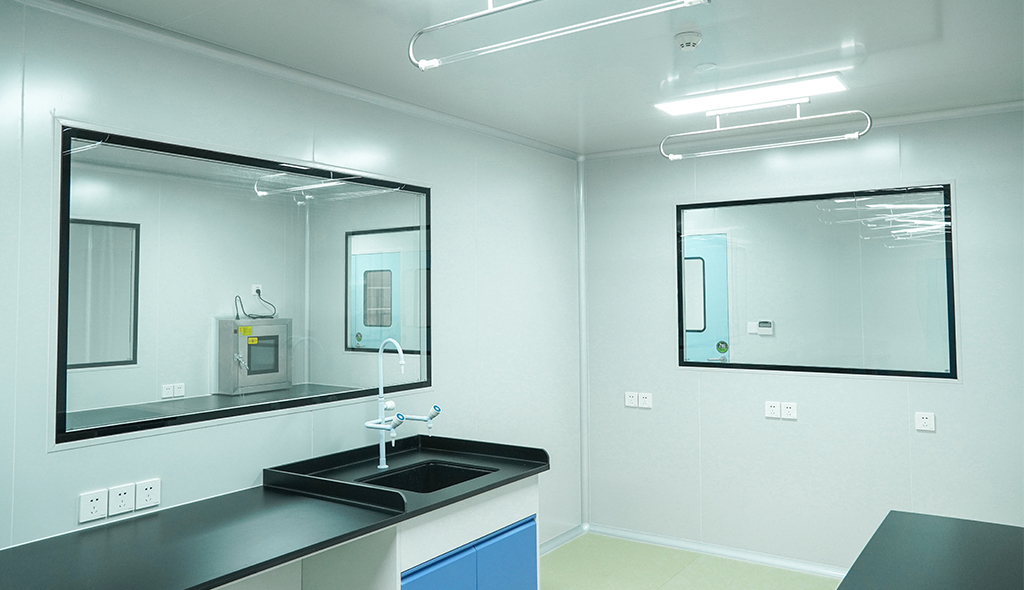 Cleanroom Glass Windows Are The Key to Maintaining a Clean Environment
 -
 Top Aluminium Profile Manufacturers in China: Leading the Global Market
 -
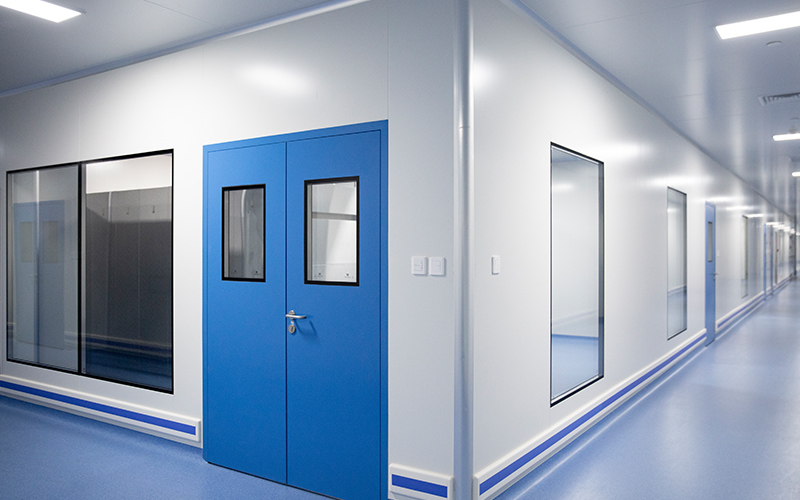 The Evolution of Air Tight Sliding Doors
 -
 AHU Aluminium Profile: A Comprehensive Guide
 -
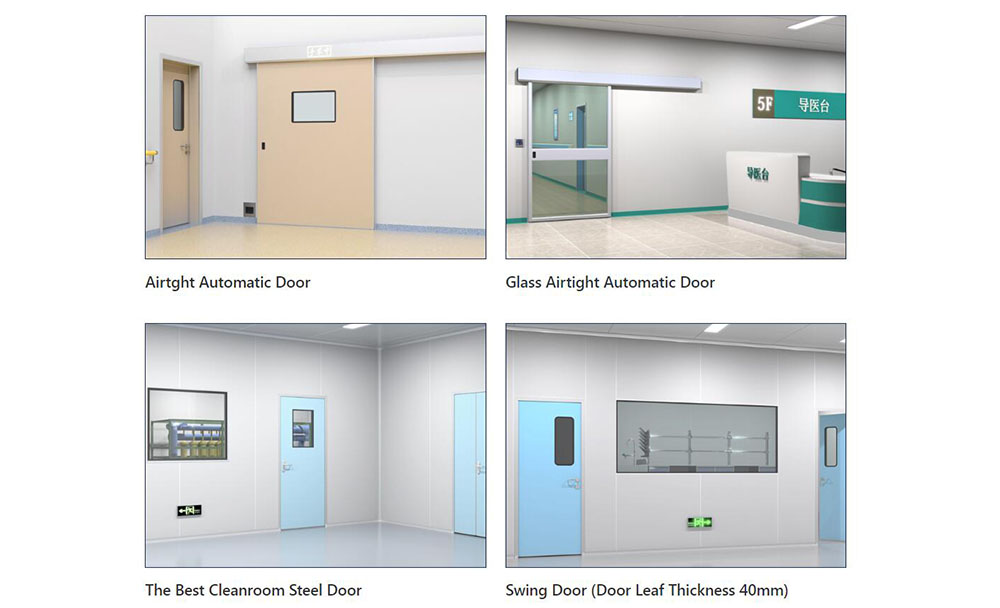 The Importance of Choosing the Right Cleanroom Door in Vietnam
 -
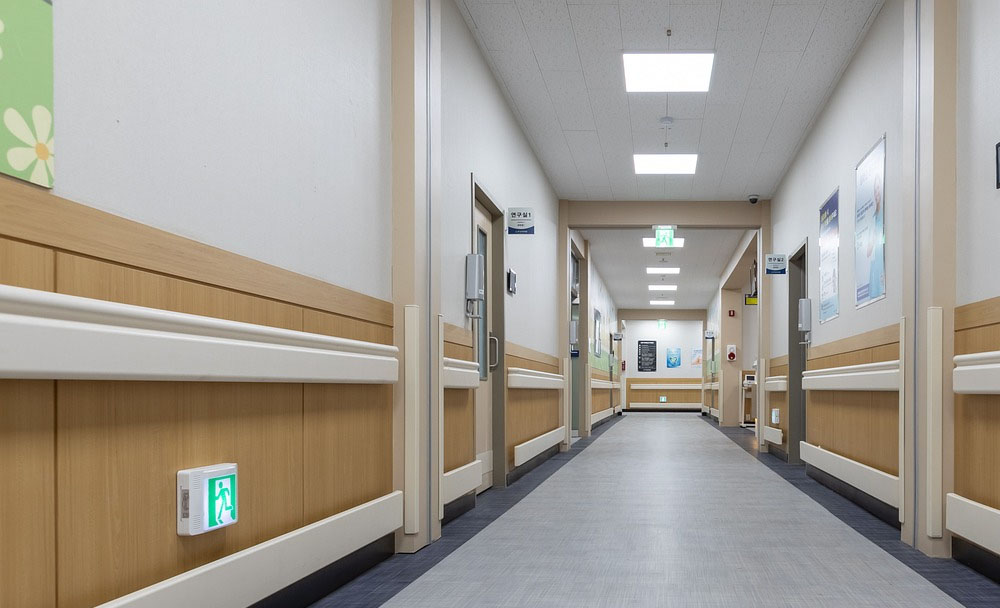 The Benefits of Hospital Automatic Doors: Enhancing Efficiency and Safety
 -
.jpg) The Best Bathroom Door Manufacturers - Unlocking Endless Possibilities!
The Best Bathroom Door Manufacturers - Unlocking Endless Possibilities! -
 Unlock the Possibilities with AJ Manufacturing Doors
 -
 Make a Statement with Manufactured Home Interior Doors!
 -
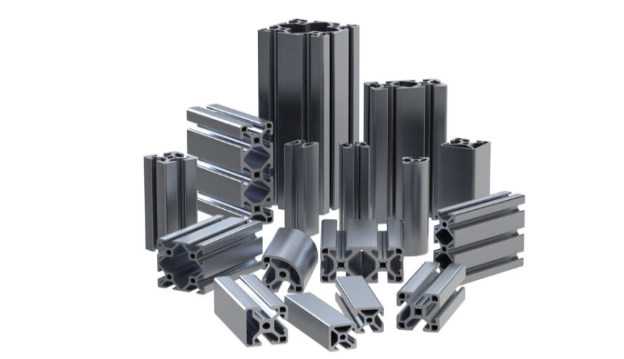 what is aluminum profile? Aluminum Profiles for Your Home is the best option
-
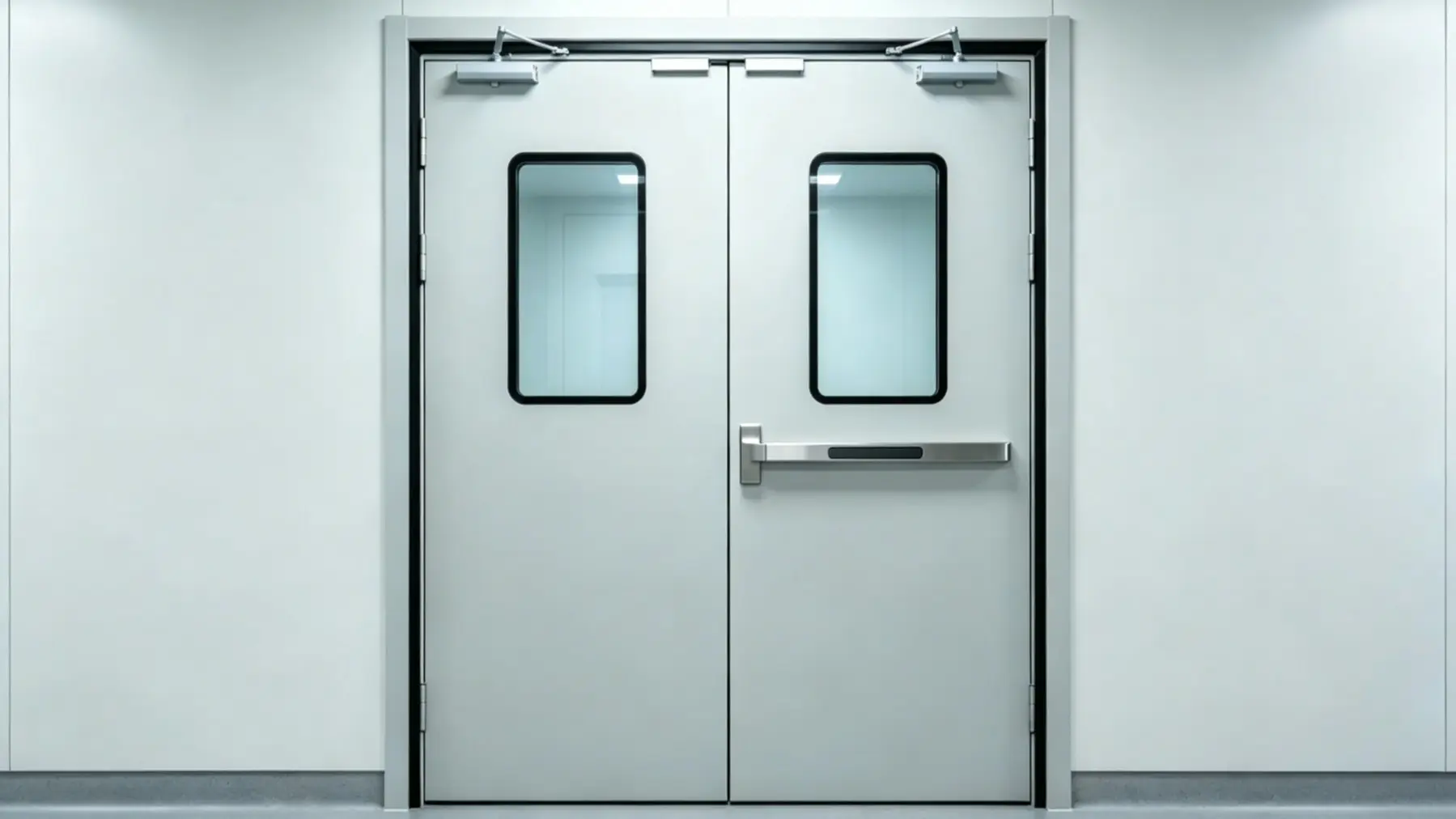 Hospital Emergency Exit Doors: 90 Minute Fire Rating Meets Infection Control
 -
 ICU and Isolation Door Requirements Hospitals Often Overlook
 -
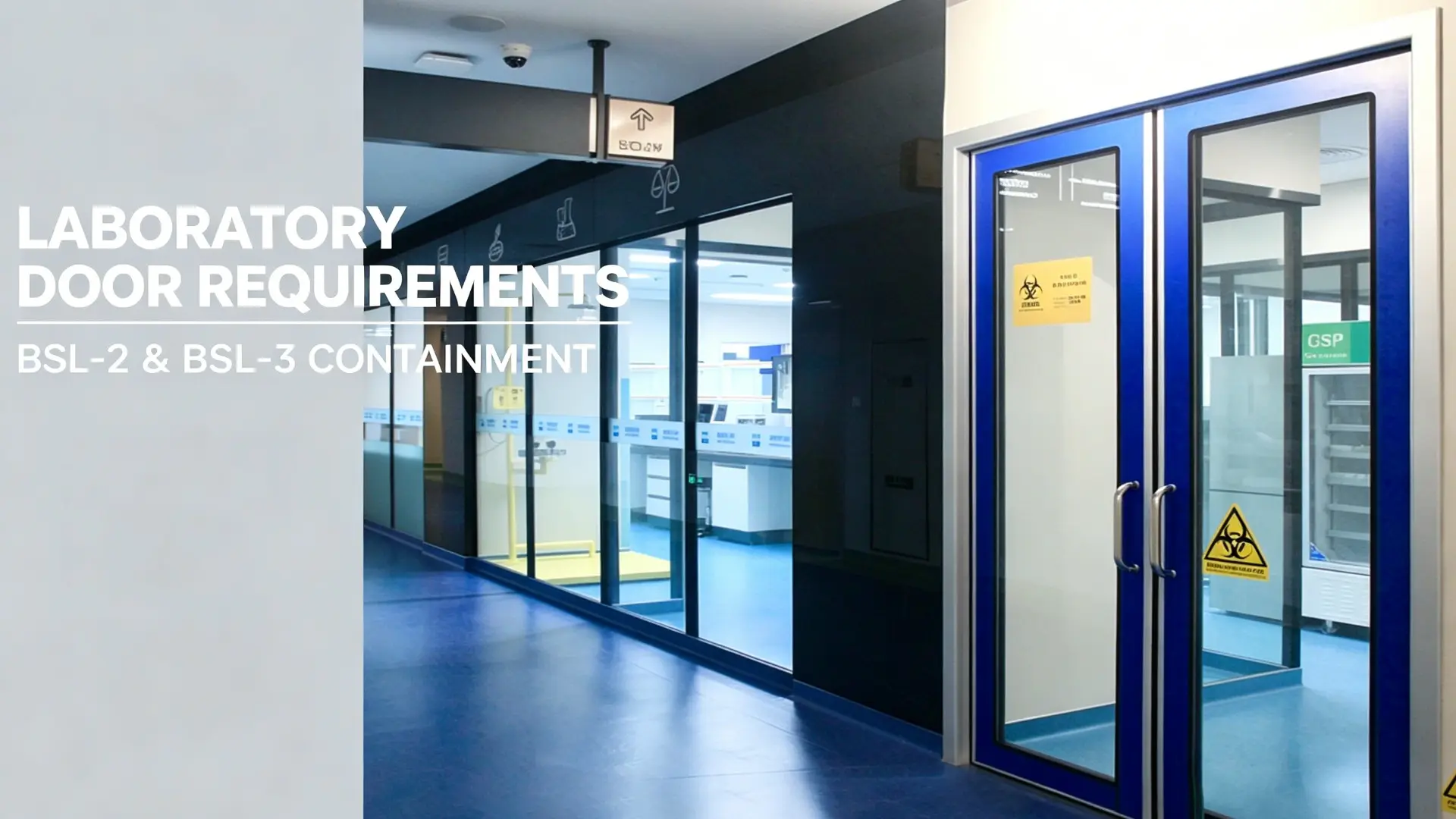 Laboratory Door Requirements for BSL-2 and BSL-3 Containment
 -
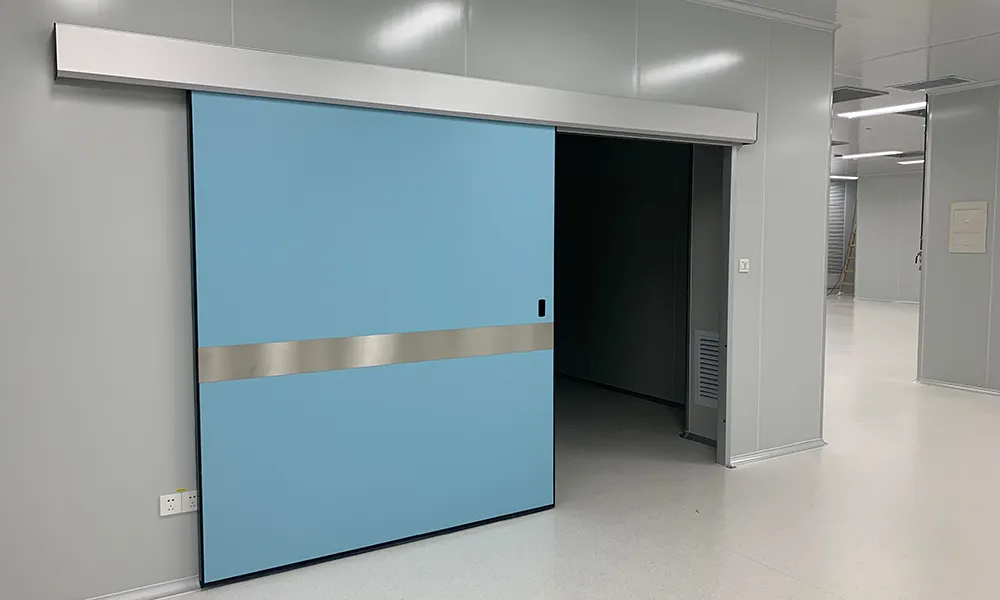 Retrofitting Hospital Sliding Doors: Upgrade Wards Without a Rebuild
 -
 Why Airtight Hospital Sliding Doors Are Critical for Infection Control
 -
 Automatic cleanroom door systems: sensor, actuator and access control integration
 -
 Cleanroom Door Materials: Stainless Steel vs HPL vs FRP vs Aluminum Comparison
 -
 X-Ray Room Door Buying Guide: Lead Thickness & Compliance
 -
 Operating Room Doors: Hermetic & Infection-Control Guide
 -
 Hospital ICU Door Selection: Sealing, Sterility & Workflow

-

Home
-

Tel
-

Email
-

Contact


Guangzhou Yizhong Aluminum Industry Co., Ltd.
We are always providing our customers with reliable products and considerate services.
We are always providing our customers with reliable products and considerate services.
Speak Your Mind