
Cleanroom Pass Doors: Getting Personnel and Material Flow Right
The Critical Role of Cleanroom Doors in Contamination Control
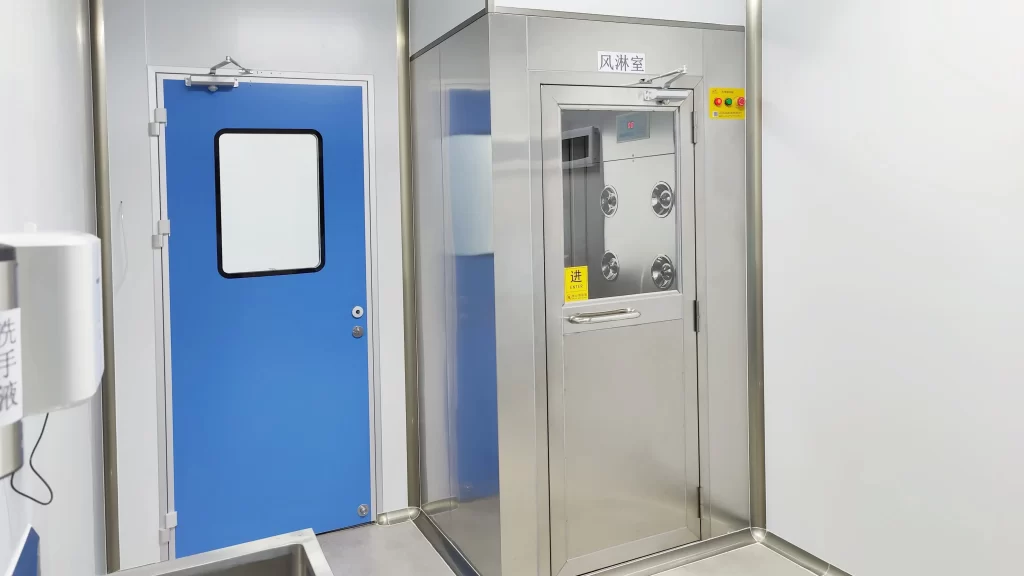
Cleanroom contamination control gets treated as an HVAC problem most of the time. Airflow, filtration, pressure cascades. That stuff matters. But doors are the thing nobody budgets enough attention for, and they are the most frequent breach point in the entire barrier. Every time a door opens, you get a pressure event. Air moves. Particles move with it. The hardware and the placement determine whether that event is a rounding error or a contamination incident.
This is about pass doors: full-scale entry points for people and equipment. Not pass-through boxes, not transfer hatches. The stuff you walk through or roll a pallet through. If you are laying out a pharma or biotech facility and trying to spec doors that will not come back to haunt you during commissioning, this is what to think about.
People are the biggest source of particles
Operators shed skin flakes, fibers, and microbes constantly. Where you put the doors in a gowning sequence matters because it sets the path people take. A well-designed gowning room moves operators forward through progressively cleaner zones. Get the door placement wrong and you create shortcuts, backtracking, or dead zones where people congregate and shed.
Door cycling frequency matters too. Every swing is a pressure fluctuation. If operators are going in and out constantly because the workflow forces it, you are losing control of the room faster than the HVAC can recover. Minimizing unnecessary door cycles through layout is cheaper than upgrading the air handling.
Materials need their own path
Carts, pallets, and equipment carry surface contamination between zones. The doors handling this traffic are wider, heavier, and reinforced, and they should be on a separate route from personnel flow. When both streams share the same corridor, you have to clean harder to compensate for a layout problem. Separating the flows means you can write different decontamination protocols for each and actually enforce them.
What a seal actually does
A closed door has one job: restore the barrier. The gasket is where that either works or fails. Silicone and EPDM handle most applications. For ISO 5 and 6 spaces, compression alone may not cut it, inflatable or magnetic seals are more common because standard gaskets leak enough to matter at those classifications.
Seal degradation is easy to miss. A door can look fine, open and close smoothly, and still leak around a worn gasket. If your pressure differential is drifting and you cannot find the HVAC issue, check the door seals.
Cleanroom Door Types for Personnel and Material Access
Personnel doors
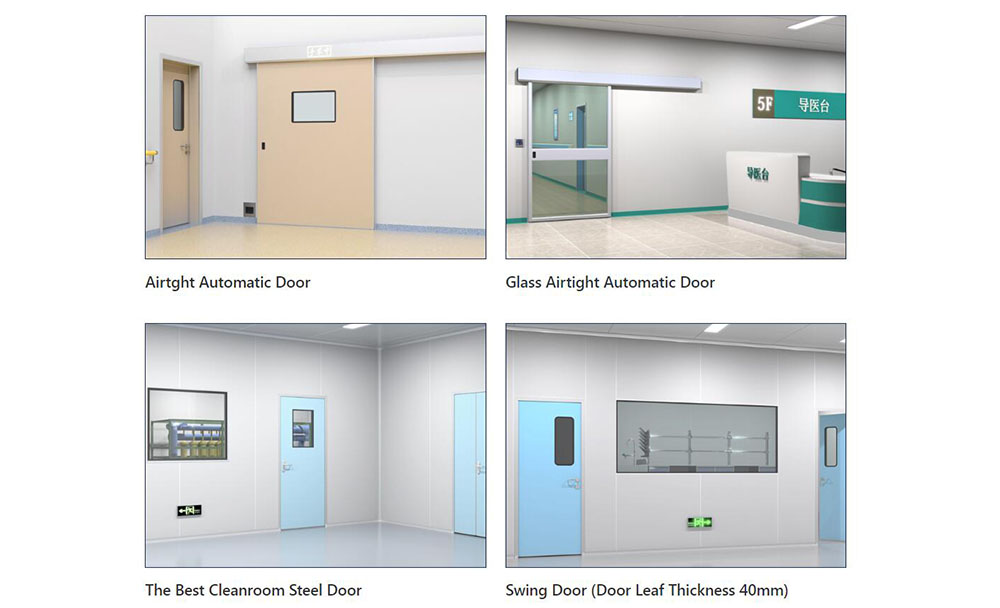
Swing doors are the default. They are cheap, simple, and seal well when closed. The trade-off: they need clearance, and manual operation creates more turbulence than people expect. Fine for ISO 7 and 8 support areas. Frustrating in high-traffic corridors where they get propped open because someone is tired of pulling them.
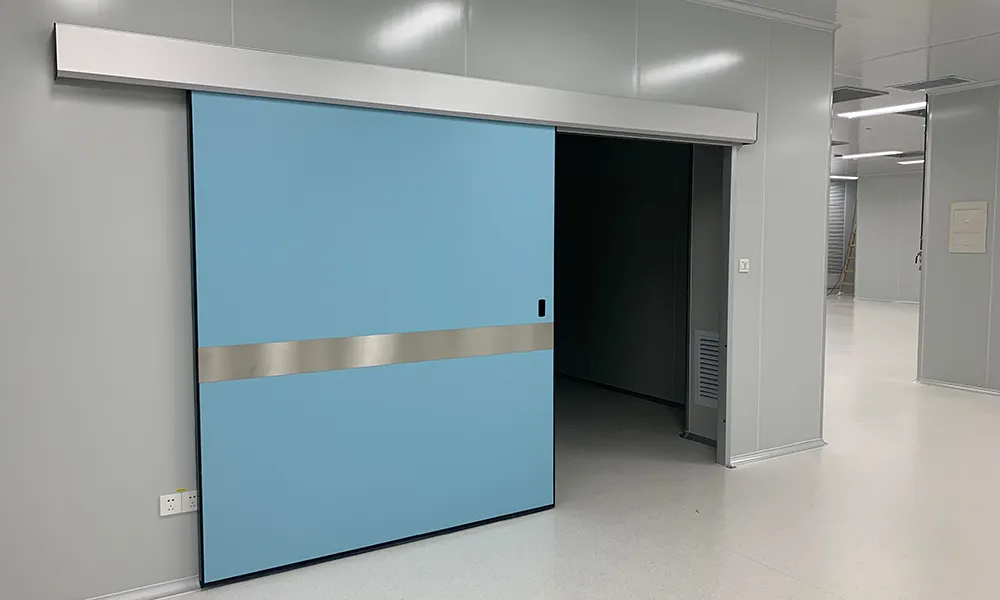
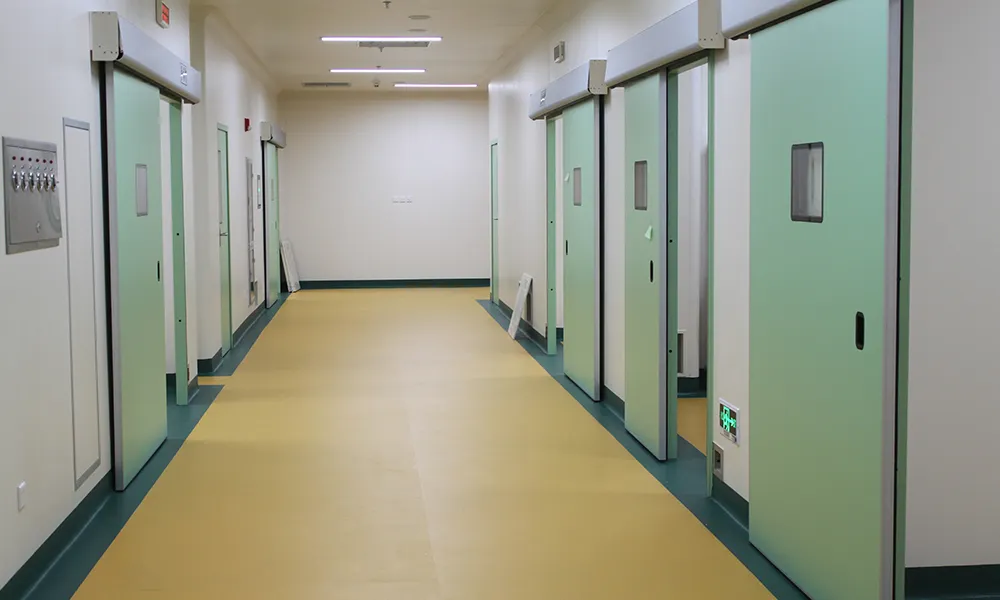
Sliding doors solve the clearance problem. They move parallel to the wall, create less turbulence, and cannot be propped open as easily. The sealing mechanism is trickier and the track needs regular cleaning to stay particle-free. Worth it in tight spaces or where swing clearance would block equipment movement.
Automatic doors are what you want in high-traffic or critical zones. Motion sensors open and close them at controlled speed, so the barrier is only breached for as long as necessary. The upfront cost is higher, but in ISO 5 or 6 environments where every second of open door matters, they pay for themselves in reduced HVAC load and fewer contamination events.
Material passage doors
These are different from personnel doors. They are wider, usually double-leaf, with reinforced frames. When you are moving a pallet of raw materials from an unclassified warehouse into an ISO 8 staging area, you need a door that handles the width, the weight, and the sealing requirements. High-speed flexible shutters are common at these transitions because they open and close fast enough to limit air exchange while accommodating large loads.
Cleanroom Door Hardware and Construction Standards
Door materials
Stainless steel (304 or 316L) is the standard in pharma and food plants. It handles VHP, bleach, and whatever else the cleaning crew throws at it. Use 316L when the disinfectants are harsh enough to pit 304 over time. You will know within a year if you picked wrong because the door will tell you.
Powder-coated aluminum works for ISO 8 support areas where the cleaning regimen is less aggressive. It is lighter and cheaper. Just do not spec it somewhere that gets daily peroxide fogging.
HPL (high-pressure laminate) is for non-critical areas. Smooth surface, easy to wipe, but not rated for the kind of chemical exposure that stainless handles. Right material, wrong place, and it delaminates.
Seals and gaskets
Silicone and EPDM are the workhorses. Both resist chemicals and hold compression over time. EPDM is slightly better with hot water and steam; silicone handles a wider chemical range. For critical applications, compressed air or magnetic gaskets are the upgrade path. They cost more and need more maintenance, but they seal tighter.
One thing that does not get checked enough during inspections: gasket compression set. A gasket that looks intact but has lost its rebound will leak. If your certification is coming up, replace the seals before testing, not after you fail.
Handles, hinges, hardware
Everything should be flush, recessed, or touch-free. Concealed hinges eliminate dust traps. Elbow pads, foot pulls, and sensor-activated openers reduce surface contact. The goal is a door you can wipe down without navigating around protruding hardware. If there is a ledge, it will collect dust. If there is a gap, something will grow in it.
Access Control and Door Interlock Systems
Who goes where
RFID cards, biometrics, or PIN codes control access and create an audit trail. In pharmaceutical manufacturing, that audit trail is not optional, it is a regulatory requirement under 21 CFR Part 11. You need to know who entered which zone and when, and the door system needs to log it automatically.
Interlocks: the simple thing that prevents disasters
An interlock means if Door A is open, Door B stays locked. That is it. In a gowning room or material airlock, this prevents both doors from being open at the same time, which would defeat the pressure cascade entirely. Mechanical interlocks are simpler and cheaper. Electronic interlocks integrate with the BMS and give you data, but they can fail in more interesting ways.
The distinction between interlocks and access control trips people up. Access control says "you are authorized to open this door." Interlocks say "this door will not open right now regardless of authorization, because the other door is open." You need both, and you need them to play nicely together.
Personnel Flow Design and Door Placement Strategy
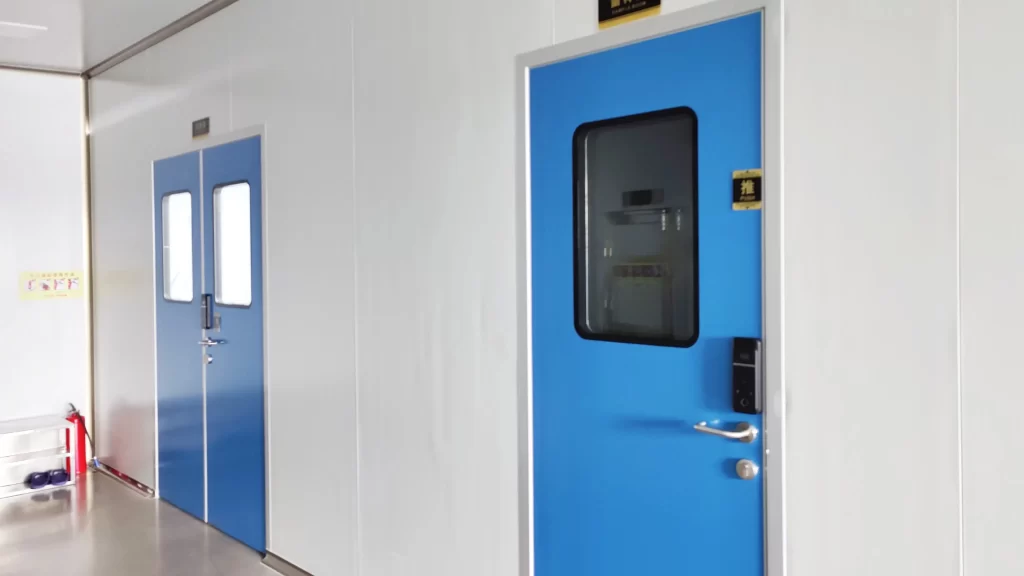
Gowning room door sequences
The gowning room is the buffer between the outside world and your cleanroom. Doors here are interlocked and arranged in sequence: unclassified → ISO 8 → ISO 7 → ISO 5 (or whatever your classification ladder looks like). Operators don PPE at each stage. The doors physically enforce the progression because you cannot go backward without breaching the interlock.
If someone can skip a stage because of how the doors are laid out, the gowning sequence exists only on paper. I have seen facilities where a side door let operators bypass the ISO 8 vestibule entirely. Nobody used it, supposedly. But it was there, and the auditor noticed.
Gowning room layout is one of the most common FDA observation categories. The problems are usually subtle: a door swings the wrong direction and blocks flow, a vestibule is too small for two people in gowning gear, an interlock has a manual override that gets used too often. These cost almost nothing to fix during design. After construction, you are cutting into walls.
Material flow through production
Incoming materials should enter on one side of the facility. Finished products should exit on the other. The doors serving each stream should not overlap. When both flows share a route, you are relying on procedure and discipline to prevent cross-contamination instead of relying on the building.
Dedicated material doors on the "dirty" side of the facility, separate from finished goods doors, is the simplest way to get this right. It also makes cleaning schedules easier to write because each zone has a clear boundary.
Conclusion
Here is the thing about cleanroom doors: they are boring when they work. You stop noticing them. That is the goal.
When they do not work, the problems are expensive and hard to trace. A drifting pressure differential. A particle count that spikes on third shift. An FDA observation about gowning room flow that requires reconfiguring walls.
Most of these failures are preventable at the design stage. Pick the right door type for each transition. Specify seals that match your cleaning chemicals and ISO class. Get the interlock logic right. Separate personnel and material flows with actual physical barriers, not just SOPs. Do those things and the doors disappear into the background. Skip any of them and the HVAC cannot save you.
Frequently Asked Questions (FAQ)
Q: What is the difference between a cleanroom pass door and a pass-through box?
Scale, mostly. Pass doors are what you walk through or push a cart through: full-size assemblies with frames, seals, hardware. Pass-through boxes are wall-mounted chambers for samples, documents, small items. If it fits a person, it is a door. If it fits a petri dish, it is a pass-through. They serve different purposes and you do not substitute one for the other.
Q: How do interlocks differ from access control?
Interlocks prevent two doors from opening at the same time to maintain pressure barriers. They control the physical state of the doors. Access control determines who can open a door and when, using credentials like cards or biometrics, and logs the event. An interlock does not care who you are; access control does not care if the other door is open. Both are needed, and most facilities integrate them.
Q: Do all cleanroom doors need the same specs regardless of ISO class?
No. ISO 5 and 6 critical zones need the highest sealing performance, often automatic doors, and stainless steel construction. ISO 7 and 8 support areas can use swing doors with standard seals and less demanding materials. Match the door to the classification of the room you are entering, not the room you are leaving.
Q: Why do cleanroom doors have windows, and what are the requirements?
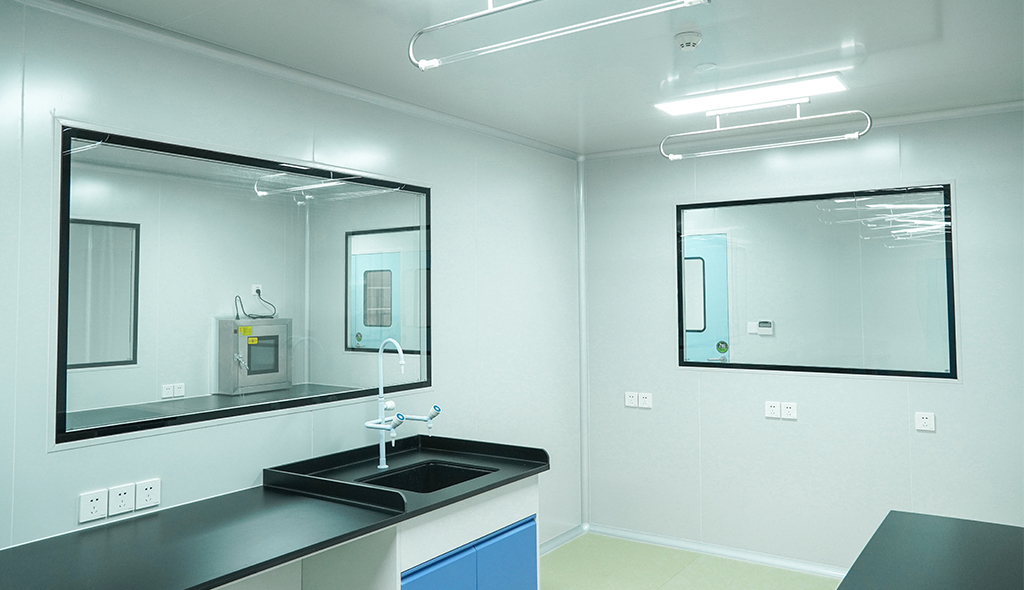
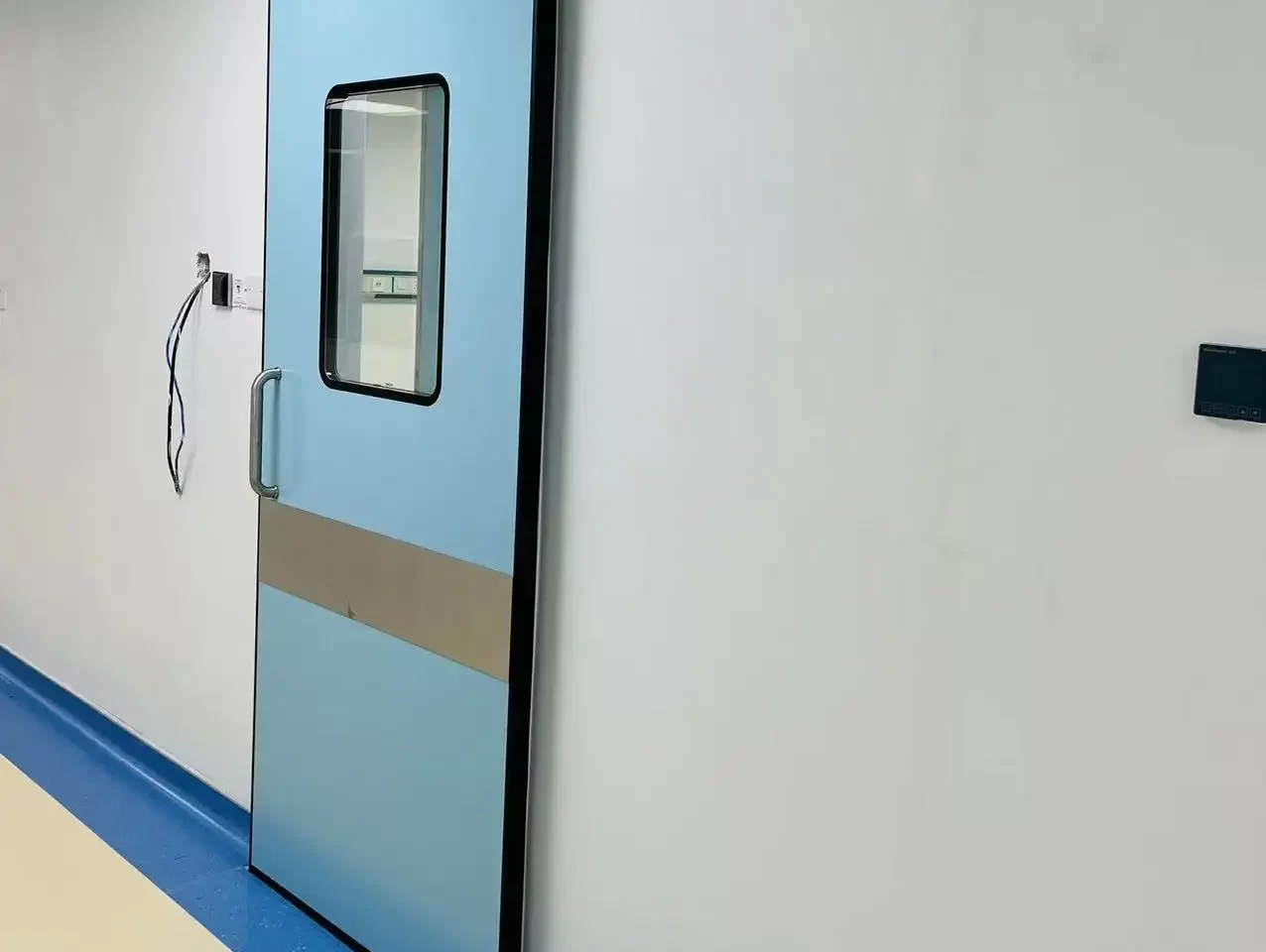
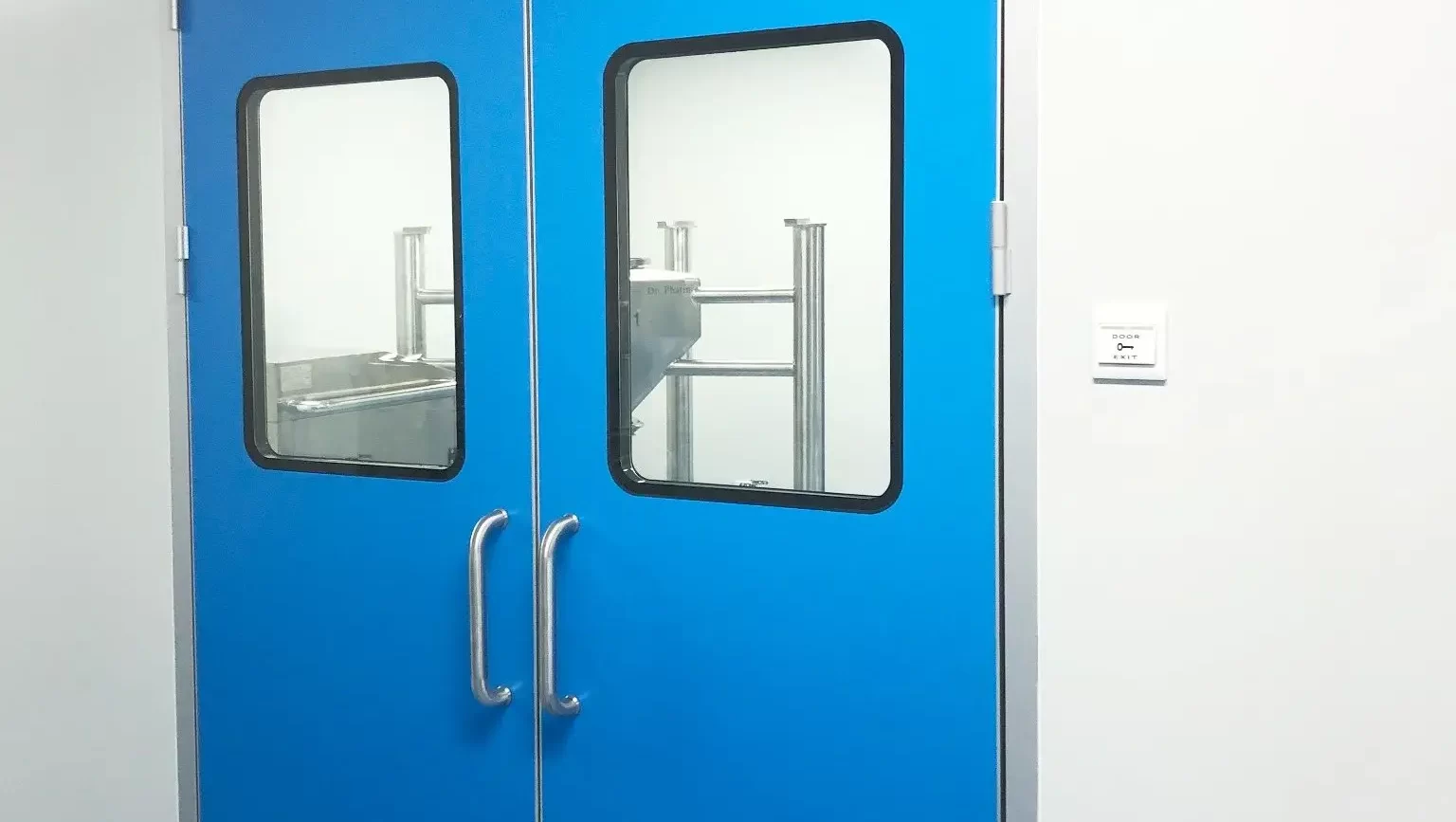
Vision panels let you see what is on the other side before opening, which prevents collisions and reduces unnecessary door cycles. Requirements: double-glazed sealed units to prevent condensation, flush-mounted on both sides so there are no ledges collecting dust, and tempered safety glass. Single-pane windows will fog in humid environments. Flush mounting is not optional, it is how you avoid contamination traps.
Q: Can cleanroom doors handle washdown or high-humidity environments?
They can, but the standard spec will not cut it. You need 316L stainless (304 will pit), silicone or EPDM gaskets rated for continuous moisture, IP65 hardware, and sloped tops so water drains instead of pooling. Continuous welds, no exposed fasteners. I have seen facilities spec standard cleanroom doors in washdown zones and regret it within six months. The rust starts at the fasteners and spreads from there.
Q: How does door speed affect contamination control?
Directly. Fast-opening automatic doors minimize the time the barrier is open, which reduces air exchange. This matters most in ISO 5 through 7 zones with high traffic. Manual swing doors stay open longer and create more turbulence. Closing speed matters too: a door that slams shut creates a pressure spike. Controlled closing is worth specifying.
Q: How do fire-rated doors balance safety and contamination control?
Fire-rated cleanroom doors have to do two contradictory things: hold back fire for 60 to 90 minutes and seal airtight under normal operation. The solution is intumescent seals that expand when heated but stay compressed otherwise, paired with fire-rated vision panels and hardware that satisfies both fire codes and cleanroom cleanability standards. These doors cost more and weigh more, so plan the frame reinforcement accordingly.
Q: What maintenance keeps cleanroom doors performing over time?
Daily: visual inspection. Monthly: check seal compression, lubricate hinges with cleanroom-compatible fluids. Quarterly: test interlock logic and verify closing speeds. Annually: air leakage testing. Replace seals every 3 to 5 years whether they look worn or not. Keep maintenance logs. Doors maintained this way last 15 to 25 years. Neglected ones fail quietly in ways that show up in environmental monitoring data long before anyone notices the door itself.
-
 Cleanroom Glass Windows Are The Key to Maintaining a Clean Environment
 -
 Top Aluminium Profile Manufacturers in China: Leading the Global Market
 -
 The Evolution of Air Tight Sliding Doors
 -
 AHU Aluminium Profile: A Comprehensive Guide
 -
 The Importance of Choosing the Right Cleanroom Door in Vietnam
 -
 The Benefits of Hospital Automatic Doors: Enhancing Efficiency and Safety
 -
.jpg) The Best Bathroom Door Manufacturers - Unlocking Endless Possibilities!
The Best Bathroom Door Manufacturers - Unlocking Endless Possibilities! -
 Unlock the Possibilities with AJ Manufacturing Doors
 -
 Make a Statement with Manufactured Home Interior Doors!
 -
 what is aluminum profile? Aluminum Profiles for Your Home is the best option
-
 Hospital Emergency Exit Doors: 90 Minute Fire Rating Meets Infection Control
 -
 ICU and Isolation Door Requirements Hospitals Often Overlook
 -
 Laboratory Door Requirements for BSL-2 and BSL-3 Containment
 -
 Retrofitting Hospital Sliding Doors: Upgrade Wards Without a Rebuild
 -
 Why Airtight Hospital Sliding Doors Are Critical for Infection Control
 -
 Automatic cleanroom door systems: sensor, actuator and access control integration
 -
 Cleanroom Door Materials: Stainless Steel vs HPL vs FRP vs Aluminum Comparison
 -
 X-Ray Room Door Buying Guide: Lead Thickness & Compliance
 -
 Operating Room Doors: Hermetic & Infection-Control Guide
 -
 Hospital ICU Door Selection: Sealing, Sterility & Workflow




-

Home
-

Tel
-

Email
-

Contact


Guangzhou Yizhong Aluminum Industry Co., Ltd.
We are always providing our customers with reliable products and considerate services.
We are always providing our customers with reliable products and considerate services.
Speak Your Mind