
Food Processing Doors: USDA-compliant options for plants.
In a commercial food manufacturing facility, a door acts as a critical control point. Specifically, it separates temperature zones, blocks contamination, and handles hundreds of openings per shift. Consequently, when specifying a food processing door, facility engineers and plant managers look beyond basic access. Ultimately, they evaluate a core component of the facility's food safety infrastructure.
Selecting the right sanitary industrial doors means balancing regulatory compliance with the realities of daily production throughput. Unfortunately, a poorly specified door introduces cross-contamination risks, accelerates energy loss in cold rooms, and creates bottlenecks on the production floor. Conversely, a properly engineered model with non-porous door surfaces and precise sealing mechanisms does the opposite. As a result, it protects product integrity without requiring constant oversight.
Therefore, this guide covers the engineering, compliance, and operational requirements for selecting doors for your hygiene zones and production lines.
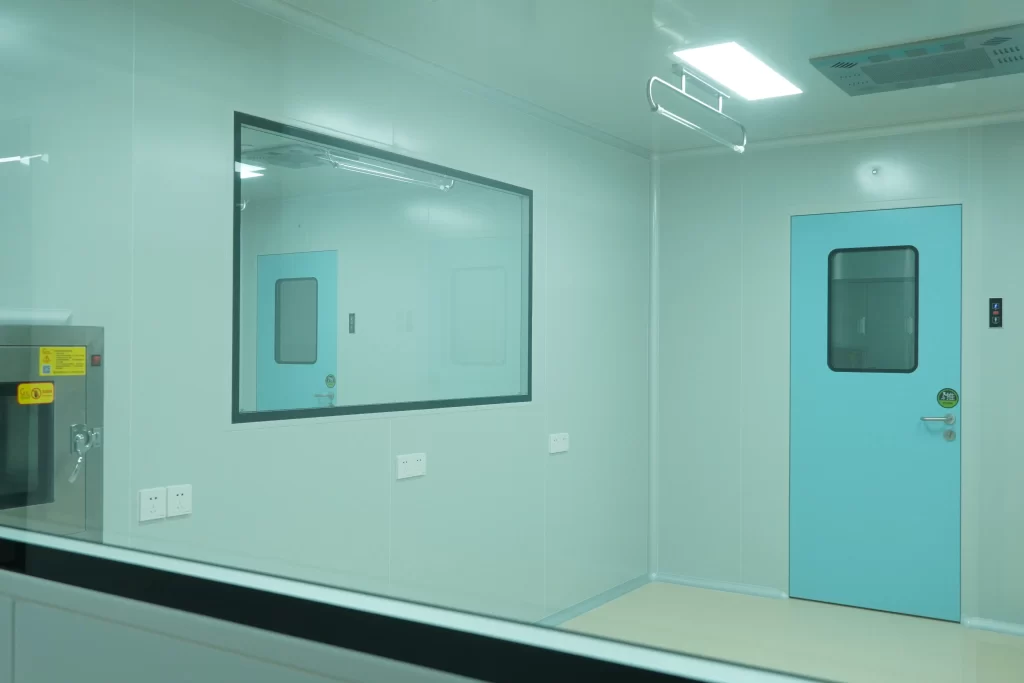
What Are Food Grade Doors and Why Do They Matter?
Understanding USDA Compliance vs. General Food-Grade Standards
To specify the right equipment, we first need to answer a common question: what is a food grade door?
Fundamentally, manufacturers construct basic food-grade doors from materials that will not leach toxins into food and can withstand standard cleaning. However, "food grade" merely represents a baseline material standard. In contrast, regulatory bodies engineer USDA compliant entry doors to meet the specific mandates of the USDA Food Safety and Inspection Service (FSIS). Particularly under 9 CFR 416.2, this regulation dictates that facilities must build and maintain structures to prevent product adulteration.
Ultimately, the gap between a generic food-grade door and a USDA-compliant door lies in the details. For instance, compliant models eliminate hollow tubes where bacteria harbor, utilize continuous welded seams, and integrate hermetic door seals that prevent air and moisture migration.
In modern sanitary plant design, facility managers divide operations into distinct hygiene zones (e.g., raw handling, high-care processing, and packaging). Consequently, doors serve as the physical boundaries between these zones. Furthermore, when transitioning from a low-care to a high-care area, these barriers must actively manage airflow.
By using positive pressure seals, the HVAC system keeps the high-care zone at a slightly higher air pressure than the low-care zone. As a result, when the door opens, air pushes out, which stops airborne pathogens from drifting in. Clearly, this aerodynamic barrier matters just as much as the physical door panel.
First, never rely on physical seals alone to stop cross-contamination. Additionally, if your HVAC system fails to maintain positive pressure in high-care zones, even the best hermetic door seals will not prevent airborne bacterial ingress when the door opens.
Key Features of USDA-Compliant Entry Doors
Material Requirements: 304 Stainless Steel and Beyond
Material selection dictates the lifespan and cleanability of the door. Generally, stainless steel food doors serve as the industry standard for high-moisture and high-temperature environments. Specifically, 304 stainless steel doors give you a good balance of corrosion resistance and cost. Moreover, the chromium in 304 stainless forms a passive oxide layer that protects against rust and withstands caustic cleaning chemicals.
However, 304 stainless does not cover every scenario. In environments with high chloride exposure (like certain seafood processing or heavy salt-curing applications), facility engineers must specify 316 stainless steel to prevent pitting corrosion. Alternatively, for dry hygiene zones such as packaging or secondary processing areas, food grade PVC panels offer a cost-effective, impact-resistant option. Furthermore, PVC remains non-porous, lightweight, and handles standard washdowns well without the thermal conductivity of metal.
Hermetic Seals and IP69K-Rated Hardware
Ultimately, the panel performs only as well as its perimeter seal. True USDA compliance requires continuous, bulb-style hermetic door seals that manufacturers fabricate from FDA-approved silicone or EPDM. Consequently, these seals compress fully when the door closes, which eliminates gaps where moisture and microbes accumulate.
Additionally, all hinges, handles, and actuators must feature IP69K rated hardware. Essentially, the IP69K rating means the components can withstand close-range, high-pressure (100 bar), high-temperature (80°C) washdowns without water ingress. In contrast, standard IP65 or IP67 hardware will fail in a food plant, leading to internal corrosion and eventual mechanical seizure.
Touchless Operation and Automatic Door Actuators
Manual doors require physical contact, which makes them vectors for cross-contamination. Fortunately, touchless door actuators remove this risk entirely. Moreover, with motion sensors, foot pedals, or knee switches, automatic food processing doors let personnel and forklifts pass through without breaking the hygiene barrier.
First, when specifying touchless actuators, make sure the sensor housing is fully sealed and sloped. Otherwise, flat-top sensor housings collect condensation and dust, which becomes a sanitation problem for your cleaning crew.
Selecting High-Speed Hygienic Doors for Production Lines
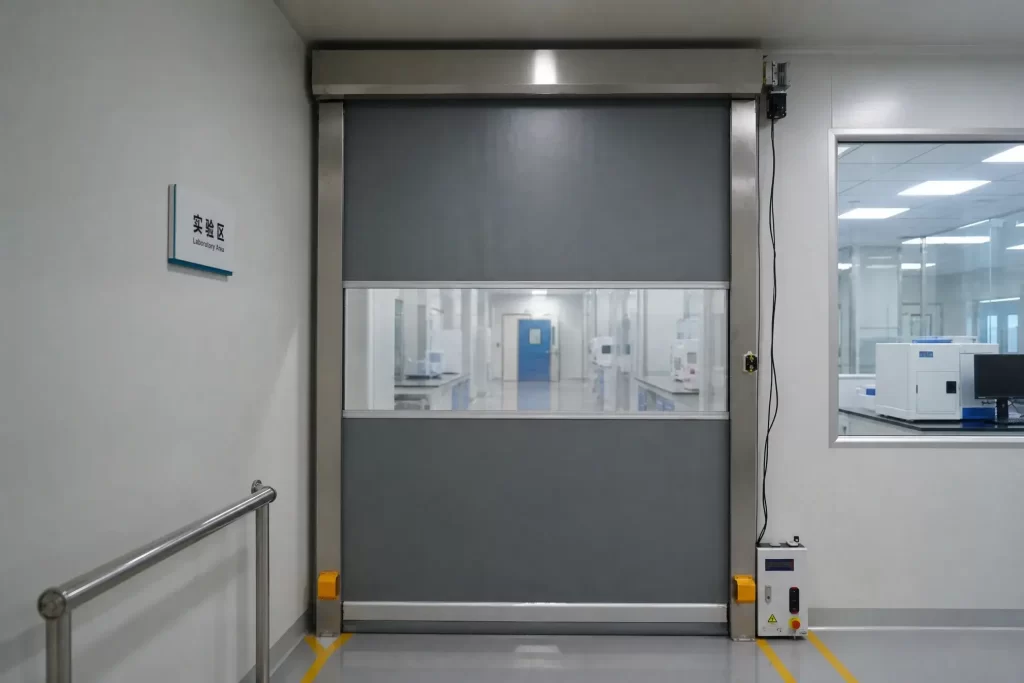
When to Choose High-Speed Doors vs. Swing Doors
In high-traffic areas, the debate comes down to high speed vs swing doors. Typically, a standard swing door takes 3 to 5 seconds to open and close manually. Conversely, a high speed hygienic doors system operates at speeds up to 2 meters per second, completing a cycle in under 1.5 seconds.
When weighing automatic vs manual food doors, look at your traffic volume. Specifically, if a doorway experiences more than 40 openings per hour, a high-speed door becomes an operational necessity. As a result, high-speed doors minimize the time the physical barrier remains open, which cuts temperature loss, energy transfer, and the risk of pest or airborne contamination. On the other hand, swing doors work better for low-traffic pedestrian access or emergency egress routes.
Optimizing Cold Storage Facility Doors
Cold rooms present unique thermodynamic challenges. Consequently, cold storage facility doors must combat thermal bridging, condensation, and ice buildup.
A properly engineered cold room door has a heated frame to prevent freezing shut, combined with a fast-acting high-speed fabric panel to minimize the duration of the opening. Furthermore, positive pressure seals are critical here. As cold room temperatures drop, internal air pressure decreases, which can suck warm, moist air in through poorly sealed gaps. Therefore, a self-adjusting perimeter seal compensates for these pressure differentials and holds the airtight barrier.
Industry-Specific Applications and Compliance
Meat Processing Entry Doors: Meeting Strict Washdown Requirements
Meat and poultry facilities rank among the harshest environments for industrial doors. In these settings, meat processing entry doors face heavy organic loads (blood, fats, proteins) and aggressive daily washdowns using hot water and caustic foaming agents.
In these environments, USDA compliant entry doors must feature 304 or 316 stainless steel construction with continuous welds. Additionally, maintenance teams must eliminate or fully seal hollow sections. Moreover, the hardware must carry an IP69K rating to survive the daily thermal shock of 180°F washdowns followed by 40°F refrigeration.
Dairy Plant Cleanroom Doors and Positive Pressure Systems
Dairy processing, particularly in pasteurization and culturing areas, requires tight particulate and bacterial control. Consequently, plant cleanroom doors in these facilities often operate in ISO Class 8 or higher environments.
These doors rely on interlocking systems and positive pressure seals so that the interlocking mechanism allows only one door in an airlock vestibule to open at a time. As a result, this setup forces personnel through a controlled hygiene protocol (hand washing, boot washing, air showering) before they enter the high-care zone.
HACCP-Compliant Door Systems for Audit Readiness
Compliance depends heavily on documentation. Therefore, HACCP compliant door systems require physical attributes, but they also demand a rigorous paper trail.
When auditors ask why use USDA compliant doors instead of standard industrial doors, the answer is traceability. Specifically, a HACCP-compliant door supplier provides material certifications, FDA-compliant declarations for all seals and plastics, and detailed maintenance logs. Furthermore, engineers must design the door so workers can disassemble it for inspection without specialized tools.
Installation, Maintenance, and Sanitation Protocols
Best Practices for Cleaning and Sanitizing Industrial Doors
Even the best sanitary industrial doors will fail if cleaned improperly. Therefore, knowing how to sanitize industrial doors without damaging the components remains critical for maintenance teams.
- First, start with a low-pressure pre-rinse to remove gross organic debris. Do not use high pressure directly on the hermetic door seals, as this can force debris into the seal track.
- Next, apply an approved, non-corrosive foaming cleaner and let it dwell according to the chemical manufacturer's instructions.
- Then, rinse from top to bottom. Make sure IP69K rated hardware and non-porous door surfaces are thoroughly rinsed, because chemical residue degrades seals over time.
- Finally, apply the final sanitizer and let it air dry. Do not wipe down, as wiping re-introduces contaminants.
Monthly, inspect hermetic door seals for tears, compression set, or biological growth. Additionally, check touchless door actuators for proper alignment and sensitivity.
Quarterly, lubricate hinges and tracks with food-grade, NSF H1 registered lubricants. Furthermore, verify the operation of heated frames in cold rooms.
Annually, perform a full load test and inspect the structural integrity of the door panel and frame.
Ultimately, implement a "clean-as-you-go" policy for door tracks. In fact, organic buildup in the bottom track is the number one cause of premature seal failure and panel misalignment in high-speed doors.
Cost Considerations and ROI Analysis
Total Cost of Ownership: Beyond the Initial Purchase Price
When evaluating food safety infrastructure, the initial purchase price represents only a fraction of the total cost of ownership (TCO). For instance, a cheap, non-compliant food grade doors system might save 30% upfront, but it will cost more over a five-year period.
Consequently, the hidden costs add up: energy waste from poor thermal seals in cold rooms, production downtime from frequent mechanical failures, labor for excessive cleaning and maintenance, and regulatory fines or product recalls from contamination events.
Calculating ROI from Efficiency Gains and Energy Savings
The ROI of high speed hygienic doors and properly sealed cold storage facility doors is highly quantifiable.
For example, consider a cold room door that personnel open 50 times a shift. A slow swing door leaves the opening exposed for an extra 3 seconds per cycle. Consequently, over a year, that equates to nearly 65 hours of open-door time. Moreover, the refrigeration load to compensate for that thermal exchange can exceed $3,000 to $5,000 annually in energy costs alone. Ultimately, when you add the labor efficiency from faster throughput, the ROI on a high-speed, hermetically sealed door typically lands within 12 to 18 months.
Making the Final Selection: A Decision Framework
Matching Door Specifications to Your Hygiene Zone Classification
Selecting the right USDA compliant entry doors means mapping the door to the specific hygiene zone.
For instance, for low-care and raw zones, heavy-duty swing doors or high-speed roll-up doors work well. In these areas, impact resistance and basic washdown capability remain the top priorities.
In high-care and processing zones, use high-speed hygienic doors with touchless actuation. Specifically, you want rapid cycle times, hermetic sealing, and non-porous surfaces.
Cold storage and freezer zones need high-speed cold room doors with heated frames and self-adjusting positive pressure seals. Here, thermal efficiency and ice mitigation come first.
Questions to Ask Your Food Processing Door Supplier
Ultimately, before finalizing a purchase, vet your supplier with these questions:
- Can you provide third-party certification for your IP69K hardware ratings?
- Additionally, do you manufacture your door seals from FDA-compliant, non-toxic materials?
- Moreover, do you offer continuous welded seams on all stainless steel components to prevent bacterial harborage?
- Also, what is your lead time for replacement parts, specifically seals and actuators?
- Finally, can you provide a detailed preventive maintenance schedule and operator training?
Frequently Asked Questions (FAQ)
What is a food grade door?
Fundamentally, manufacturers construct food grade doors from materials that remain non-toxic, non-absorptive, and capable of withstanding frequent cleaning and sanitizing. However, "food grade" merely represents a baseline material standard. Consequently, this classification does not automatically mean the door meets the structural and hygiene design requirements of USDA compliance.
How do I sanitize industrial doors properly?
First, start by removing gross debris with a low-pressure pre-rinse. Next, apply an approved foaming cleaner and let it dwell. Then, rinse thoroughly from top to bottom, leaving no chemical residue on the non-porous door surfaces or hermetic seals. After that, finish with an approved sanitizer and allow the surface to air dry. Finally, avoid abrasive tools or high-pressure sprays directly on the seal tracks.
Why use USDA compliant doors instead of standard doors?
Primarily, regulatory bodies engineer USDA compliant doors to prevent product adulteration. Specifically, they eliminate hollow tubes, feature continuous welded seams, use FDA-approved seals, and incorporate IP69K-rated hardware. In contrast, standard doors do none of this. Therefore, using USDA-compliant doors helps you pass regulatory audits, avoid costly recalls, and maintain your HACCP plan.
Are automatic doors better than manual doors for food processing?
In high-traffic and high-care hygiene zones, absolutely. For one, touchless automatic doors eliminate physical contact, which cuts cross-contamination risk. Furthermore, they also open and close faster than manual doors, which reduces temperature loss, lowers energy costs, and improves production throughput.
-
 Cleanroom Glass Windows Are The Key to Maintaining a Clean Environment
 -
 Top Aluminium Profile Manufacturers in China: Leading the Global Market
 -
 The Evolution of Air Tight Sliding Doors
 -
 AHU Aluminium Profile: A Comprehensive Guide
 -
 The Importance of Choosing the Right Cleanroom Door in Vietnam
 -
 The Benefits of Hospital Automatic Doors: Enhancing Efficiency and Safety
 -
.jpg) The Best Bathroom Door Manufacturers - Unlocking Endless Possibilities!
The Best Bathroom Door Manufacturers - Unlocking Endless Possibilities! -
 Unlock the Possibilities with AJ Manufacturing Doors
 -
 Make a Statement with Manufactured Home Interior Doors!
 -
 what is aluminum profile? Aluminum Profiles for Your Home is the best option
-
 Hospital Emergency Exit Doors: 90 Minute Fire Rating Meets Infection Control
 -
 ICU and Isolation Door Requirements Hospitals Often Overlook
 -
 Laboratory Door Requirements for BSL-2 and BSL-3 Containment
 -
 Retrofitting Hospital Sliding Doors: Upgrade Wards Without a Rebuild
 -
 Why Airtight Hospital Sliding Doors Are Critical for Infection Control
 -
 Automatic cleanroom door systems: sensor, actuator and access control integration
 -
 Cleanroom Door Materials: Stainless Steel vs HPL vs FRP vs Aluminum Comparison
 -
 X-Ray Room Door Buying Guide: Lead Thickness & Compliance
 -
 Operating Room Doors: Hermetic & Infection-Control Guide
 -
 Hospital ICU Door Selection: Sealing, Sterility & Workflow


-

Home
-

Tel
-

Email
-

Contact


Guangzhou Yizhong Aluminum Industry Co., Ltd.
We are always providing our customers with reliable products and considerate services.
We are always providing our customers with reliable products and considerate services.
Speak Your Mind