
Insulated Roll-Up Doors for Cold Storage Environments
Speed matters in facility throughput. But in temperature-controlled environments, what really counts is thermal retention and airtightness. If you're procuring doors for pharmaceutical warehousing, food processing, or cold chain logistics, you have to get into R-values, foam thickness, sealing systems, and how cold storage differs from cleanroom requirements.
Standard fast-access doors prioritize speed. Insulated roller shutter doors are built to hold a thermal and particulate boundary. In our work with pharma and cold chain clients, we've found that the spec sheets rarely tell the full story. This guide skips the speed talking points and gets into what actually matters: R-value selection, polyurethane foam thickness, hermetic sealing, and why deep cold storage and pharmaceutical cleanrooms need different insulation approaches.
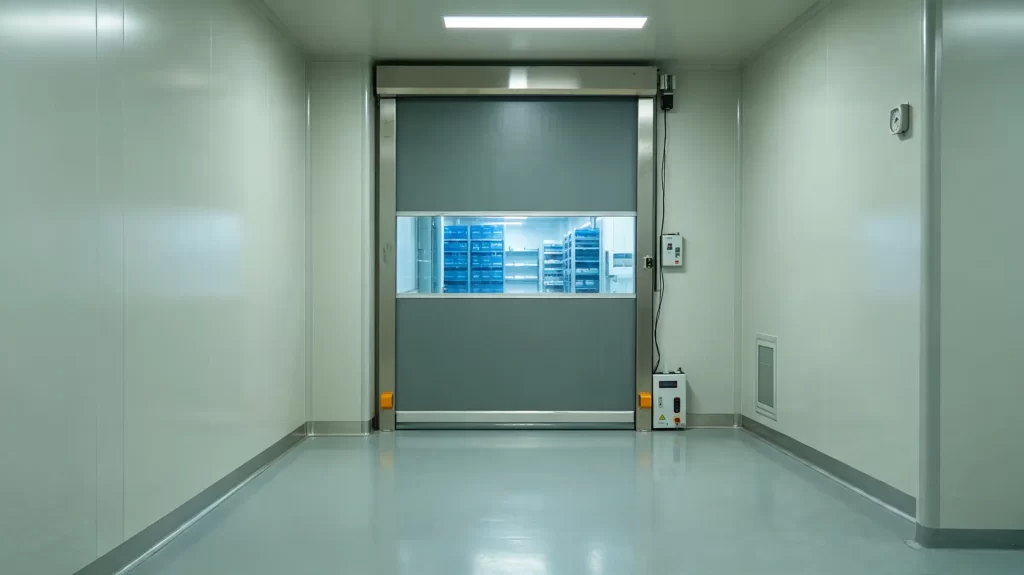
Why High-Speed Insulated Doors Are Critical for Controlled Environments
In a controlled environment, a door is part of the HVAC and contamination control strategy, not just a physical barrier. When it opens, the pressure differential between adjacent rooms forces air exchange. Without insulation and sealing, that exchange disrupts the environment.
Preventing Cross-Contamination in Cleanroom Transitions
Pharmaceutical and biotech facilities need to hold ISO 14644 classifications. Uninsulated or poorly sealed doors let unfiltered, unconditioned air from corridors leak into processing zones. High-speed operation cuts the time the boundary is open, but insulation and sealing are what stop particle migration when the door is closed.
Reducing Temperature Loss and HVAC Strain
In cold storage and food processing, every second a door is open costs money. Every minute it leaks when closed costs more. Warm air pushing into a -20°C freezer forces the refrigeration system to work overtime. An insulated roll up door with a high R-value cuts the thermal load on your HVAC and refrigeration systems and stops the temperature fluctuations that degrade product quality.
Maintaining Positive Room Pressure and Airflow Integrity
Cleanrooms and cold rooms depend on precise pressure cascades. If a door's sealing system fails, the room loses its positive or negative pressure. That disrupts the engineered airflow patterns and lets contaminants or warm, moist air bypass the HVAC filtration system.
Technical Specifications That Matter for Pharmaceutical and Biotech Facilities
When you're evaluating an insulated roller shutter door for a regulated facility, the data sheet needs to show real engineering. Here's what to look for.
Polyurethane Foam Insulated Door Panels: R-Value and Thermal Performance
The foam layer is what does the insulating. High-density polyurethane (PUR) or polyisocyanurate (PIR) foam gets injected under high pressure between two structural skins, typically stainless steel or food-grade PVC.
- Thickness. Standard doors use 20mm to 30mm foam. Pharmaceutical cold rooms and deep freezers need 40mm, 50mm, or even 80mm panels.
- R-value. A 50mm PUR panel typically delivers an R-value of approximately 2.2 to 2.5 m²·K/W (U-value of ~0.4 W/m²K). This level of thermal resistance is what holds strict temperature tolerances.
Thermal Break Aluminum Profiles for Condensation Prevention
Aluminum is a good structural material but also a highly efficient thermal conductor. If an aluminum frame connects the cold interior to the warm exterior without interruption, you get thermal bridging. Better insulated rapid doors use thermal break aluminum profiles. These are frames where a polyamide bar physically separates the inner and outer aluminum extrusions, which stops thermal transfer and eliminates condensation.
Servo Motor vs. AC Motor: Speed, Reliability, and Lifecycle Costs
AC motors are cheaper upfront but lack precision. Servo motor high-speed drives give you exact control over the door's acceleration, deceleration, and positioning. That reduces mechanical stress on the insulated panels, extends the door's lifecycle, and keeps the bottom seal meeting the floor consistently without bouncing (which would break the hermetic seal).
Hermetic Sealing Systems: Gaskets, Guides, and Bottom Seals
Insulation is useless if air leaks through the gaps. A true airtight roll up door has a multi-point sealing system:
- Vertical guides: brush seals combined with compression gaskets in the side tracks.
- Bottom seal: an inflatable or flexible elastomeric bulb that compresses against uneven floors to create a continuous gasket.
Ensuring GMP and ISO 14644 Compliance for Cleanroom Doors
For QA and Validation Engineers, the door has to be a validated component of the facility's Contamination Control Strategy (CCS), following EU GMP Annex 1 guidelines and FDA 21 CFR Part 211.
FDA and EU GMP Requirements for Cleanroom Entrances
Regulatory bodies require facility surfaces to be smooth, impervious, free from cracks, and easily cleanable. The exterior skins of the insulated roll up door must be 304 or 316L stainless steel, or a high-grade, non-shedding polymer. No exposed fasteners, rivets, or hollow tubes where air and microbes can accumulate.
ISO 14644 Classification and Door Performance Standards
ISO 14644-1 sets airborne particulate limits. The door itself has to support the room's air change rates. The door's leakage rate (measured in m³/h per meter of seal) must be low enough that the HVAC system can compensate when the door is closed.
Validation Documentation: IQ/OQ/PQ Support for Regulated Facilities
A compliant supplier ships more than a door. They ship a validation package. That includes material certificates (3.1 certificates for stainless steel), surface roughness (Ra) reports, and templates for Installation, Operational, and Performance Qualification (IQ/OQ/PQ).
Material Traceability and Cleanroom Compatibility Certifications
All lubricants, gaskets, and sealants used in the door's construction must be cleanroom-compatible. They cannot outgas VOCs (Volatile Organic Compounds) that could contaminate pharmaceutical products or interfere with environmental monitoring systems.
Integration with Modular Cleanroom Wall Systems
A door's effectiveness depends on how well it integrates with the surrounding structure. E-ZONG's approach is to create a single, monolithic envelope.
Cleanroom Airlock and Transition Area Applications
In airlocks, space is tight. Insulated roll-up doors need minimal headroom compared to sectional doors, which makes them a good fit for transition zones between different ISO classifications or temperature gradients.
Flush Finish Installation for Seamless Wall Integration
To meet GMP standards and make cleaning easy, the door frame must sit flush with the modular cleanroom wall panels. This is done using custom extruded aluminum sub-frames that match the wall system's profile, getting rid of ledges and shadow gaps.
Custom Sizing and Configuration for Existing Facilities
Retrofitting an insulated roller shutter door into an existing cold room or cleanroom takes precise dimensional tolerance. The door's framing system has to handle out-of-plumb walls while keeping a perfect seal, which often means adjustable sub-frames and custom sill profiles.
Coordination with HVAC, Fire Safety, and Building Management Systems
Modern insulated rapid doors need to integrate with the facility's BMS (Building Management System). In practice, this means dry contacts for door status (open/closed/fault), interlocking with HVAC systems to reduce air handling during door operation, and tying into fire alarm panels for fail-safe operation.
Insulated Roll-Up Door vs. Sectional Overhead Doors: Which Is Right for Your Facility?
Procurement teams often debate between insulated roll-up doors and traditional sectional overhead doors. Both provide thermal benefits, but they operate quite differently.
| Feature | Insulated Roll-Up Door | Sectional Overhead Door |
|---|---|---|
| Operation Speed | High (0.8 - 1.5 m/s) | Slow (0.2 - 0.3 m/s) |
| Space Requirements | Compact roll above opening; minimal headroom | Requires significant headroom for panel tracking |
| Insulation (R-Value) | High (20mm - 80mm PUR/PIR core) | Very High (40mm - 100mm+ panels) |
| Cycle Life | Extremely High (1,000+ cycles/day) | Moderate (100-300 cycles/day) |
| Sealing Performance | Excellent (flexible bottom seal, track brushes) | Good (compression weatherstripping) |
| Impact Recovery | High (panels can pop out of tracks and reset) | Low (panels bend or break upon impact) |
Speed and Throughput: Impact on Contamination Control
Sectional doors are slow. In a high-traffic forklift corridor, a slow door tempts operators to prop it open, which undermines the thermal barrier entirely. An insulated roll up door's speed means the boundary stays closed 95% of the time, even in high-traffic areas.
Space Requirements and Headroom Considerations
Sectional doors need a large drum and track radius above the opening. In facilities with low ceilings or complex overhead piping, an insulated rapid door is often the only option that works, because the curtain rolls tightly into a compact box directly above the header.
Insulation Performance: R-Value Comparison
Thick sectional doors can hit slightly higher absolute R-values. But the effective insulation of a roll-up door is often better in practice. Why? Because the roll-up door is actually closed. A sectional door left open by an impatient forklift driver has an effective R-value of zero.
Total Cost of Ownership: Initial Investment vs. Long-Term Value
Sectional doors usually cost less to buy. But when you factor in energy losses from slower operation, higher maintenance costs from spring replacements, and downtime from track damage, the insulated roll-up door tends to deliver better ROI over a 5-to-10-year lifecycle.
Applications Across Industries: From Pharmaceutical Manufacturing to Cold Chain Logistics
Pharmaceutical Manufacturing and Sterile Processing
In sterile processing, the priorities are cleanability, flush integration, and keeping particulates out. Insulation here is mainly about preventing condensation and holding stable room temperatures for product stability, not extreme cold retention.
Biotechnology Research and Production Facilities
Biotech labs need strict pressure cascades to protect both the product and the personnel. Hermetically sealed insulated doors hold these pressure differentials while allowing rapid access for personnel and material transfer.
Medical Device Manufacturing Cleanrooms
Like pharma, medical device cleanrooms care about ISO classification and particulate control. The doors have to withstand frequent VHP (Vaporized Hydrogen Peroxide) decontamination cycles without degrading the seals or skins.
Semiconductor and Electronics Fab Facilities
Thermal insulation matters less in standard fab areas, but insulated doors show up in specific chemical storage or specialized processing zones. There, what matters is ESD (Electrostatic Discharge) properties and ultra-low particle generation.
Cold Storage Warehouses and Food Processing
This is where thermal performance gets tested hardest. Doors here face extreme temperature deltas (-30°C to +15°C), high humidity, and frequent washdowns. These doors call for maximum foam thickness (50mm-80mm), heated bottom seals to prevent freezing to the floor, and impact-resistant skins.
Total Cost of Ownership: Beyond the Initial Purchase Price
Energy Savings from Superior Insulation and Rapid Operation
A poorly sealed door in a -20°C cold room can cost thousands of dollars a year in excess refrigeration energy. Combine high R-value panels with rapid closing speeds and hermetic seals, and an insulated roll up door can cut energy loss at the threshold by up to 80% compared to standard strip curtains or non-insulated doors.
Maintenance Requirements and Expected Lifecycle
Servo-driven insulated doors need minimal maintenance. Unlike sectional doors with complex spring, cable, and hinge systems that suffer from metal fatigue, roll-up doors use a simple, balanced belt or chain drive. Expected lifecycle before major overhaul exceeds 1 million cycles.
Downtime Costs: Reliability and Service Support
In a cold chain or pharma warehouse, a failed door means stopped production or compromised product. The reliability of the servo drive, combined with self-repairing track features (where the curtain re-seats itself after a forklift impact), cuts unplanned downtime significantly.
Warranty, Service Contracts, and Parts Availability
When procuring, look past the standard 1-year warranty. Check the supplier's availability of spare parts, especially custom-sized insulated panels and servo drives, and their response time for service contracts.
How to Specify and Procure Insulated Roll-Up Doors for Your 2026 Project
Key Questions to Ask Suppliers During the RFP Process
- What is the exact R-value and U-value of your standard and heavy-duty insulated panels?
- Do your aluminum frames use a true polyamide thermal break?
- Can you provide 3.1 material certificates and cleanroom compatibility data for all gaskets?
- What is the leakage rate of the door when closed, and how is the bottom seal engineered to handle uneven floors?
Lead Times, Installation, and Commissioning Timeline
Custom-sized insulated doors with specific RAL color matching and specialized seals typically take 8 to 12 weeks to manufacture. Add another 1 to 2 weeks for professional installation and commissioning.
Factory Acceptance Testing (FAT) and Site Acceptance Testing (SAT)
For pharmaceutical applications, insist on a FAT. Your validation team can witness the door's speed, sealing pressure, and control integration at the manufacturer's facility before it ships, which makes the SAT on-site go more smoothly.
Training, Documentation, and Handover Requirements
Make sure the supplier provides O&M (Operations and Maintenance) manuals, as-built CAD drawings, and on-site training for both operators (to prevent impact damage) and facility maintenance teams (for routine seal and drive inspections).
Frequently Asked Questions About Insulated Roll-Up Doors
1. How to validate cleanroom roll-up doors for GMP?
Validation follows the standard V-model. It starts with a User Requirement Specification (URS), then Design Qualification (DQ). Once installed, the IQ verifies materials and installation against the design. The OQ tests operational parameters (speed, interlocks, alarms). The PQ verifies performance under actual operational conditions, including smoke studies for airflow and particle counting.
2. How to integrate roll-up doors with cleanroom wall systems?
Integration requires a specialized sub-frame. The door's aluminum frame is secured to the structural opening, and a custom trim profile bridges the gap between the door frame and the cleanroom wall panel. All joints are sealed with cleanroom-grade, non-outgassing silicone for a flush, monolithic finish.
3. What is the maintenance schedule for servo motor doors?
Servo motors are basically maintenance-free. The real maintenance is on the mechanical components: inspect the track seals for wear every 3 months, check the drive belt tension every 6 months, and lubricate the guide tracks annually.
4. What opening speed is required for ISO Class 7 and Class 8 cleanrooms?
Speed is secondary to sealing in these classes, but 0.8 to 1.2 m/s is standard. That's fast enough to minimize the duration of the pressure drop, so the HVAC system can recover the room's positive pressure and particle counts quickly.
5. Can insulated roll-up doors be retrofitted into existing facilities?
Yes. Modern doors come with adjustable sub-frames that fit existing openings. But careful surveying is essential to make sure the structural header can support the door box and the floor is level enough for the bottom seal to work.
6. What is the typical R-value for pharmaceutical cold storage doors?
For standard pharmaceutical cold rooms (2°C to 8°C), a 30mm to 40mm PUR panel (R-value ~1.5 to 1.8 m²·K/W) is enough. For deep freeze applications (-20°C to -30°C), an 80mm panel (R-value ~3.5 m²·K/W) is required to prevent frost buildup and handle the extreme thermal load.
Secure Your Facility's Thermal and Contamination Boundaries
Picking the right thermal barrier affects your compliance, energy costs, and product integrity. It's not a decision to rush, and the cheapest door on the spec sheet often turns out to be the most expensive one over a 10-year lifecycle.
Contact E-ZONG's Cleanroom Engineering Team to talk through your project requirements. We'll help you figure out the right R-value for your insulated roller shutter doors, work out precise cold storage door dimensions for your layout, and put together temperature control project solutions that fit your facility.
-
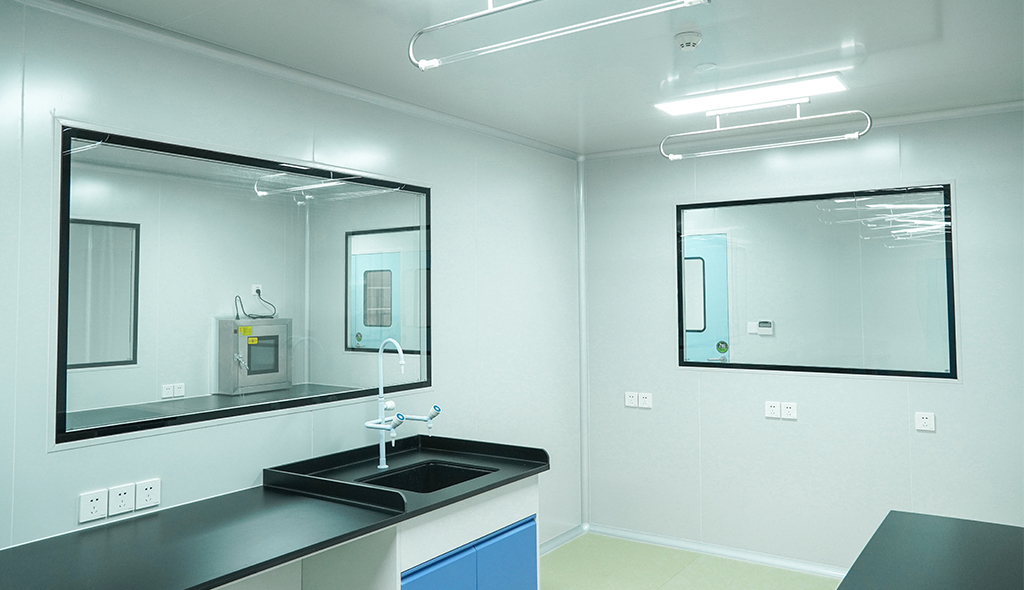 Cleanroom Glass Windows Are The Key to Maintaining a Clean Environment
 -
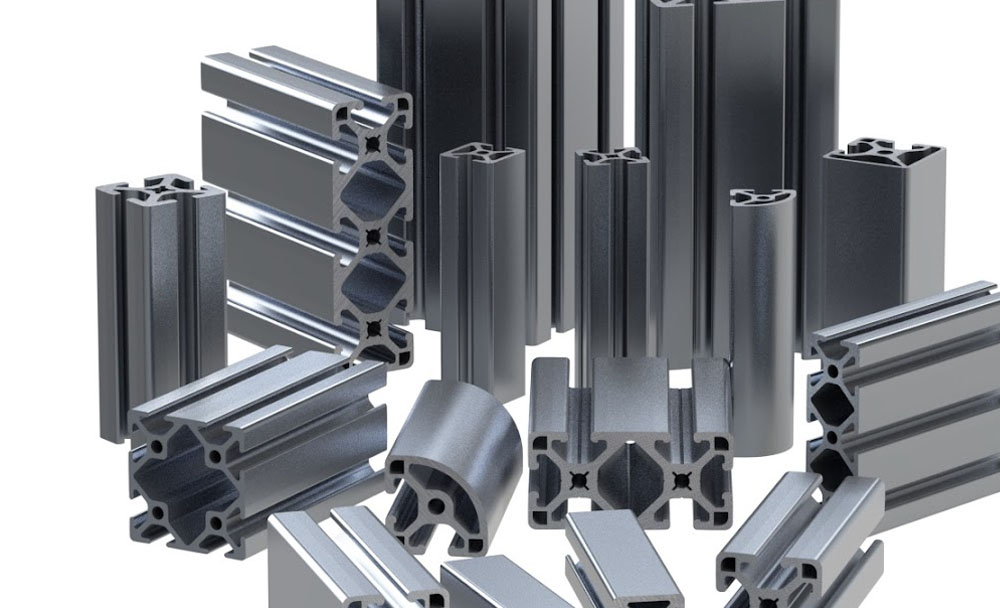 Top Aluminium Profile Manufacturers in China: Leading the Global Market
 -
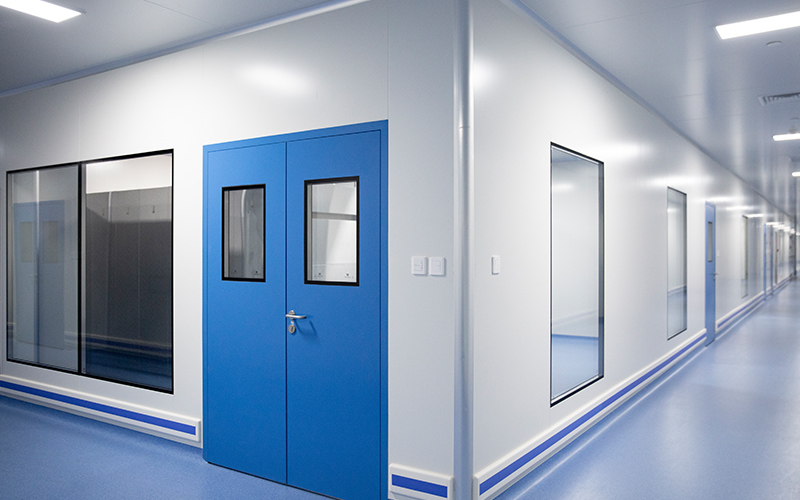 The Evolution of Air Tight Sliding Doors
 -
 AHU Aluminium Profile: A Comprehensive Guide
 -
 The Importance of Choosing the Right Cleanroom Door in Vietnam
 -
 The Benefits of Hospital Automatic Doors: Enhancing Efficiency and Safety
 -
.jpg) The Best Bathroom Door Manufacturers - Unlocking Endless Possibilities!
The Best Bathroom Door Manufacturers - Unlocking Endless Possibilities! -
 Unlock the Possibilities with AJ Manufacturing Doors
 -
 Make a Statement with Manufactured Home Interior Doors!
 -
 what is aluminum profile? Aluminum Profiles for Your Home is the best option
-
 Hospital Emergency Exit Doors: 90 Minute Fire Rating Meets Infection Control
 -
 ICU and Isolation Door Requirements Hospitals Often Overlook
 -
 Laboratory Door Requirements for BSL-2 and BSL-3 Containment
 -
 Retrofitting Hospital Sliding Doors: Upgrade Wards Without a Rebuild
 -
 Why Airtight Hospital Sliding Doors Are Critical for Infection Control
 -
 Automatic cleanroom door systems: sensor, actuator and access control integration
 -
 Cleanroom Door Materials: Stainless Steel vs HPL vs FRP vs Aluminum Comparison
 -
 X-Ray Room Door Buying Guide: Lead Thickness & Compliance
 -
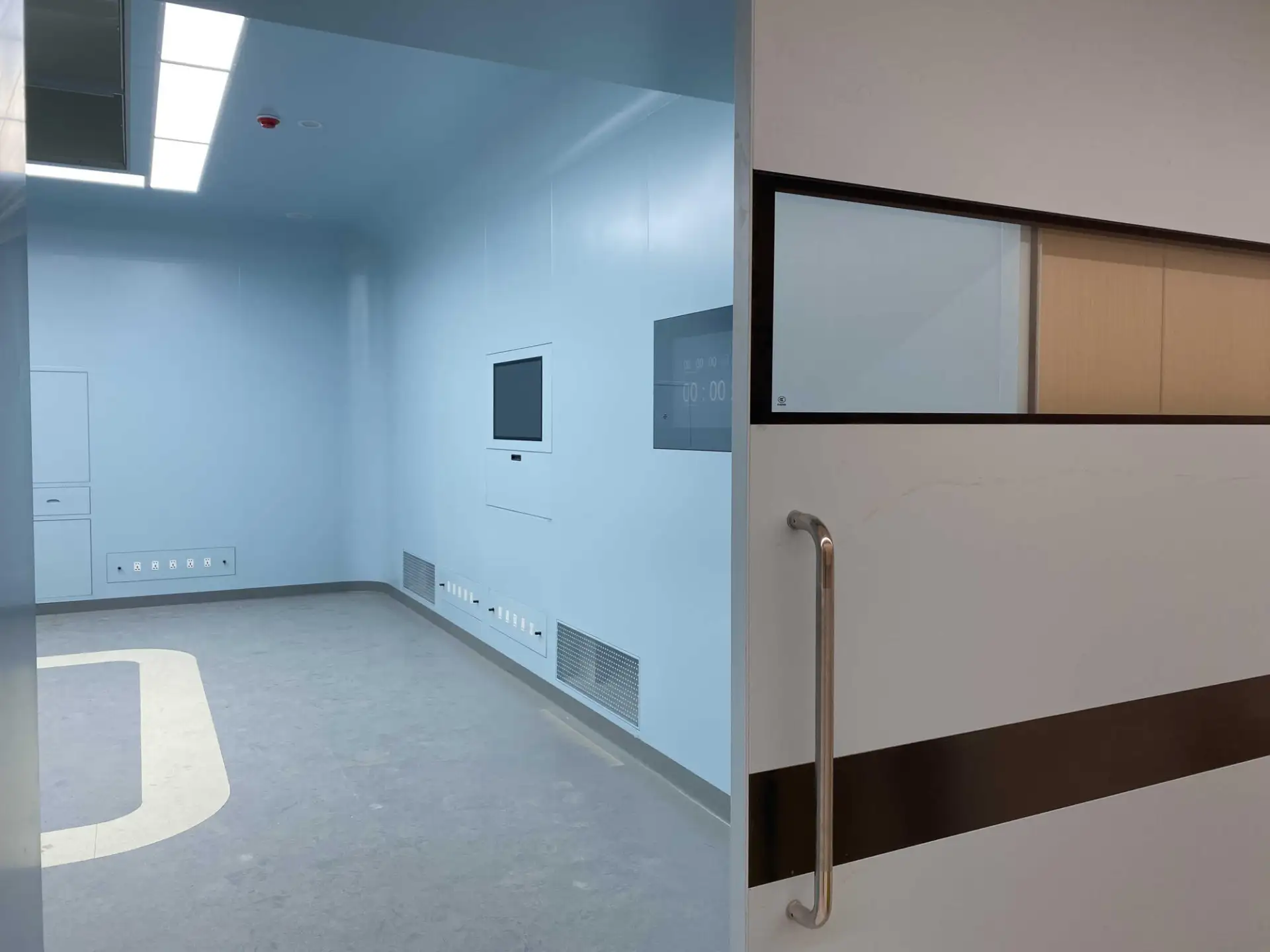 Operating Room Doors: Hermetic & Infection-Control Guide
 -
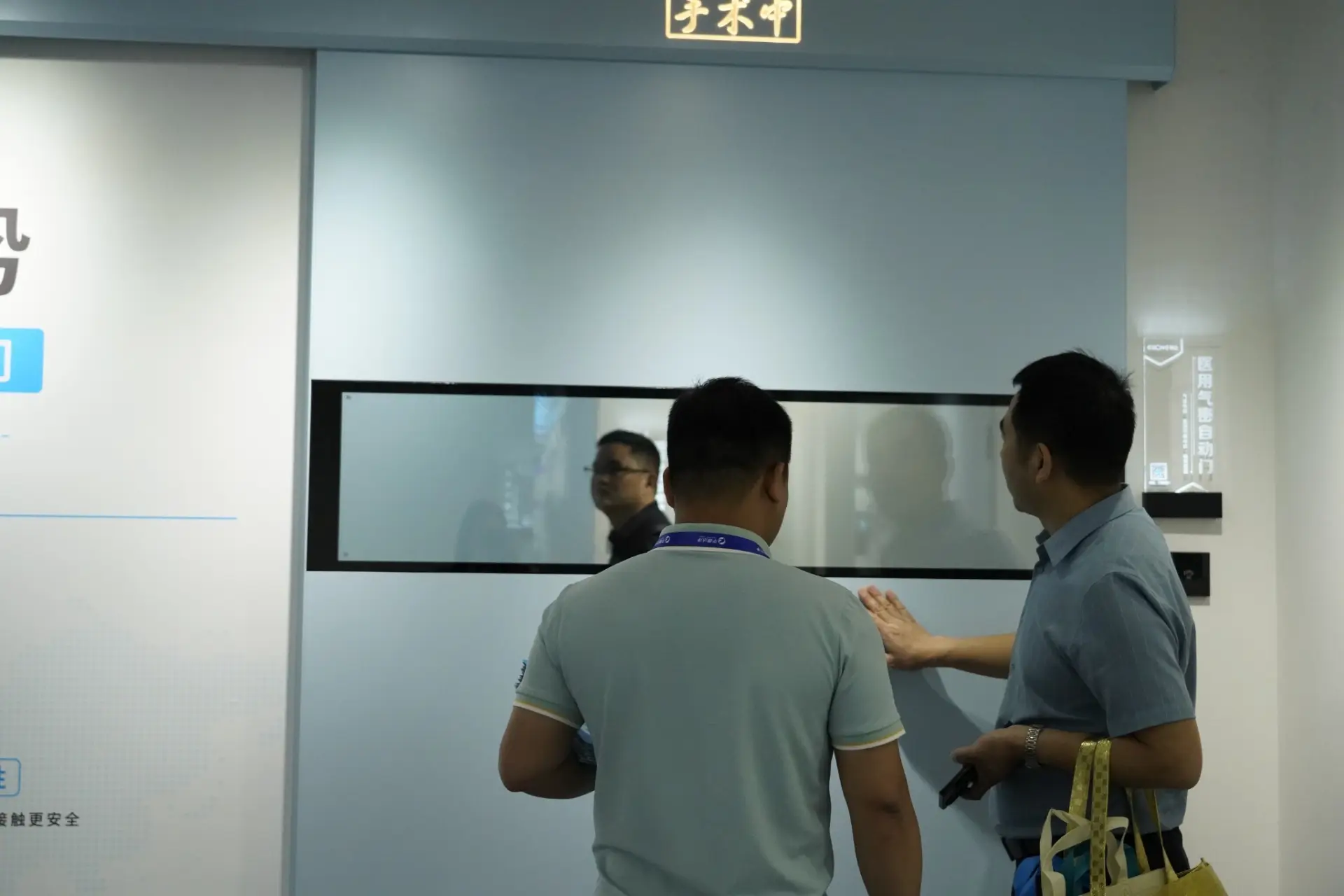 Hospital ICU Door Selection: Sealing, Sterility & Workflow




-

Home
-

Tel
-

Email
-

Contact


Guangzhou Yizhong Aluminum Industry Co., Ltd.
We are always providing our customers with reliable products and considerate services.
We are always providing our customers with reliable products and considerate services.
Speak Your Mind