
7 Maintenance Tips to Extend Automatic Sliding Door Life

I. Introduction
Automatic doors operate silently day in and day out, yet they rarely receive the proactive attention they require. The reality is that many systems begin jamming, generating abnormal noise, or failing prematurely—often reaching only half their engineered lifespan. The solution isn't complex: implementing a structured automatic door maintenance program drastically cuts unplanned downtime, enhances pedestrian safety, and keeps traffic flow seamless. Drawing on field engineering experience, this guide breaks down seven essential maintenance practices to help facility teams keep their automatic sliding door systems running longer, quieter, and more reliably.
II. Core Maintenance Techniques (7 Practices)
1. Track Cleaning & Precision Alignment: Eliminating Micro-Friction at the Source
The track is the geometric baseline for linear door movement. Deformation or contamination directly translates into running resistance, motor strain, and abnormal vibration. Maintenance must move beyond "looks clean enough" to data-driven calibration.
Standard Operating Procedure (SOP)
- Use an industrial explosion-proof vacuum paired with a lint-free microfiber cloth to clear metal shavings, silicone dust, and environmental debris from the track groove.
- Verify parallelism and gauge spacing using a laser level and feeler gauges, paying close attention to the interface tolerance between the track and the aluminum door frame.
- Apply the manufacturer-specified lubricant evenly along the running path in a clean, dry state. Avoid pooling or over-application.
Key Technical Parameters & Standards
- Parallelism deviation per meter: ≤0.5 mm/m
- Gauge manufacturing tolerance: ±0.3 mm (aligned with standard doorway width specifications)
- Recommended lubricant: PFPE (Perfluoropolyether) or polyurea-based composite grease. Operating range: -30°C to 150°C, with excellent fretting wear resistance.
- Track surface roughness: Replace or refinish if Ra exceeds 1.6 μm.
Common Maintenance Pitfalls
- Misusing solvent-based rust removers like WD-40. These strip existing grease, attract dust, and create an abrasive paste that accelerates micro-pitting on the track surface.
- Over-lubrication causes grease to migrate into the door bottom channel or motor heat sink, risking short circuits or thermal throttling.
2. Periodic Inspection of Roller Assemblies & Load Bearings: The Lifeline for Weight & Guidance
Roller assemblies carry over 80% of the door's dynamic load. Failure typically manifests as lateral sway, derailment, or high-frequency squealing. The wider the door width, the more concentrated the shear stress on individual rollers, making quantitative inspection non-negotiable.
SOP
- Measure roller outer diameter with a vernier caliper and calculate the wear rate against the original specification.
- Use a dial indicator to measure radial runout and axial play, tracking clearance trends over time.
- Tighten mounting bolts to the manufacturer's torque specification using a digital torque wrench to ensure even preload distribution.
Key Technical Parameters & Standards
- Replacement threshold: Outer diameter wear >10%, or coating cracks/permanent flat spots.
- Allowable radial runout: ≤0.05 mm; axial play: ≤0.03 mm.
- Bolt tightening torque: 8–12 N·m (adjust per bolt grade).
- Inspection interval: High-traffic zones (≥100,000 cycles/year): 6–8 months. Medium/Low-traffic: 12 months.
Common Maintenance Pitfalls
- Assuming "it still spins" means it's fine. This ignores internal cage fatigue, increased clearance, and dried-out grease.
- Mixing roller batches or brands. Differences in hardness and elastic modulus cause uneven load distribution, accelerating unilateral wear and track overload.
3. Calibration & Maintenance of Safety Sensors & Detection Modules: Holding the Line on Anti-Pinch Safety
Safety detection systems are critical for pedestrian protection. Sensitivity drift or blind spot expansion frequently causes false closures or pinch hazards. In healthcare and public facilities, compliance with hospital doors safety protocols is mandatory.
SOP
- Clean microwave/IR emitter lenses with dedicated lens paper and anhydrous ethanol. Avoid abrasive wiping that causes diffuse reflection loss.
- Sweep a standard 100 mm × 100 mm black test rod through the detection zone at a uniform speed to verify trigger logic and blind spot coverage.
- Identify environmental interference, adjust mounting angles, or install sun shields to stabilize the signal field.
Key Technical Parameters & Standards
- Compliance: EN 16005 or GB 50898-2013 (Automatic Door Safety Standard)
- System response time: <0.5 s, with reliable reverse activation at any point in the detection field.
- Installation clearance: >2 m from direct sunlight; avoid reflective metal facades and direct HVAC airflow.
Common Maintenance Pitfalls
- Artificially lowering anti-pinch sensitivity to speed up traffic flow. This strips safety redundancy and exposes operators to legal liability in case of injury.
- Ignoring Doppler shift interference from metal carts or swinging decor. These cause false microwave triggers and must be mitigated during commissioning.
4. Drive Motor & Transmission System Care: Ensuring Long-Term Powertrain Efficiency
Modern units typically use brushless DC (BLDC) motors paired with planetary gearboxes or timing belts. The initial alignment precision during sliding door installation directly dictates the drive chain's long-term durability.
SOP
- Monitor operating current with a true-RMS clamp meter and check motor housing temperature rise using an infrared thermal imager.
- Verify belt deflection and elongation rate. Inspect rack-and-pinion engagement and contact patch distribution.
- Replace gearbox oil on schedule and verify breather cap integrity to prevent internal vacuum from drawing in moisture.
Key Technical Parameters & Standards
- Operating current fluctuation: ≤±10% of rated value. Max housing temperature rise: ≤70°C.
- Timing belt deflection: 5–8 mm under specified load. Replace entire set if elongation exceeds 2%.
- Gearbox oil viscosity: ISO VG 150 or 220 (selected per ambient temperature and load profile).
- Rack-and-pinion engagement rate: ≥75%, with contact patches evenly distributed along the pitch line.
Common Maintenance Pitfalls
- Ignoring a clogged gearbox breather. Thermal cycling creates negative pressure, drawing in humid air that causes early gear pitting and scuffing.
- Patching a damaged belt instead of replacing it. Uneven tension leads to instantaneous slippage and repeated motor overcurrent trips.
5. Control Board & Software Parameter Optimization: Resolving "Soft Faults" at the Core
Control system stability dictates smart operation and interference resistance. Parameter drift and loose terminals are the primary culprits behind intermittent "soft faults."
SOP
- Regularly export and back up original control parameters to prevent logic loss from power surges or accidental resets.
- Pull historical fault logs via the upper-computer interface to pinpoint voltage fluctuations, elevated ground impedance, or EMC interference sources.
- Tighten terminal blocks to specification and replace desiccants/moisture barriers in the control cabinet to maintain electrical integrity.
Key Technical Parameters & Standards
- Terminal block tightening torque: 0.5–0.8 N·m.
- Control cabinet ingress protection: Maintain IP54 minimum. Upgrade to IP65 in high-humidity or dusty environments.
- Power/signal wire separation: ≥30 cm. Add ferrite beads to signal lines to suppress high-frequency noise.
- Critical parameters: Opening/closing speed, hold-open time, S-curve deceleration profile, dead-zone compensation.
Common Maintenance Pitfalls
- Treating frequent power cycling as a universal fix. This masks underlying loose wiring or EMC issues and can corrupt EEPROM data over time.
- Unauthorized tweaking of PID control gains (proportional/integral coefficients). This causes door oscillation, overshoot, or buffer failure.
6. Sealing System & Threshold Drainage Maintenance: Blocking Environmental Degradation
Sealing performance directly impacts building energy efficiency and internal equipment protection. It's often the "invisible weak link." Aging of the door seal and door gasket destroys pressure equilibrium.
SOP
- Perform compression set tests and visual inspections on weatherstripping. Record permanent deformation rates.
- Quantify airtightness using differential pressure or smoke tracing methods to pinpoint micro-leaks.
- Regularly clear threshold drainage channels and verify slope to prevent water pooling and subsequent track corrosion.
Key Technical Parameters & Standards
- EPDM/silicone weatherstripping compression set: ≤20%. Replace if hardened or powdered.
- Commercial door air leakage threshold: ≤3.0 m³/(h·m²) at 50 Pa differential.
- Threshold drainage slope: ≥1%. Cold climates require electric anti-ice threshold modules.
- Electric threshold insulation resistance (winter test): ≥1 MΩ.
Common Maintenance Pitfalls
- Only checking macro-level closure while ignoring micro-leaks that cause prolonged water ingress, electrochemical track corrosion, and bottom sensor short circuits.
- Failing to verify smoke-seal compliance for fire rated door applications, leading to fire inspection failures.
7. Operational Data Logging & Predictive Maintenance Framework: The Leap to Digital Operations
The ultimate path to extending equipment life is building a lifecycle predictive maintenance (PdM) system. For high-cleanliness environments like cleanroom doors, data-driven intervention is a compliance necessity.
SOP
- Deploy a digital logbook to track cycle counts, fault codes, energy curves, and maintenance work orders in real time.
- Execute tiered inspection schedules (daily/monthly/quarterly/annual) to create a traceable maintenance loop.
- Install IoT vibration/current sensors and pair them with algorithmic models to generate degradation alerts and spare parts forecasts.
Key Technical Parameters & Standards
- Predictive warning window: 14–30 days ahead of bearing spalling, belt slack, or insulation breakdown.
- Safety protocol: Strict LOTO (Lockout-Tagout) enforcement for all cross-disciplinary work. Zero tolerance.
- Third-party service providers: Prioritize those with CNAS laboratory accreditation or OEM certification.
Common Maintenance Pitfalls
- Treating data logging as paperwork. Without linking it to spare parts inventory and off-peak maintenance windows, predictive value is lost.
- Relying on intuition for scheduling. This leads to over-maintaining high-traffic zones and missing critical checks in low-traffic areas.
III. Advanced Practices: Tool Enablement & Scenario-Specific Strategies
Automatic door maintenance isn't one-size-fits-all. It must be tailored to building typology, environmental load, and traffic patterns. Structural demands for door with frame assemblies, door height clearances, and door swings backup logic vary significantly by use case.
Professional Inspection & Maintenance Toolkit
- Geometric & Precision: Laser levels, laser distance meters, feeler gauges, dial indicators.
- Electrical & Thermal: IR thermal imagers, true-RMS clamp meters, megohmmeters (500V/1000V).
- Mechanical & Fastening: Digital torque wrenches, tension gauges, standard anti-pinch test rods (100×100 mm).
- Digital Aids: IoT vibration/current sensor modules, CMMS/SaaS work order platforms.
Scenario-Specific Maintenance Strategies
- Healthcare & Public Buildings: hospital doors require enhanced anti-pinch redundancy and backup power switchover testing. Integrate with air control damper systems for HVAC linkage to maintain positive/negative pressure balance in wards.
- Industrial & Clean Environments: cleanroom doors focus on airtightness validation and antimicrobial seal replacement. Conduct ISO 14644 differential pressure and particulate tests regularly to protect laminar airflow.
- Commercial & Hospitality: Optimize user experience parameters. Calibrate anti-pinch sensitivity and deceleration curves to reduce complaints. Maintain vision panel door glazing for spatial transparency.
- Fire & Egress Routes: Verify fire rated door release logic and closer reset functions. Ensure zero obstruction during emergencies.
Standardized Inspection Cycle Reference
- Daily: Visual damage, operational noise, traffic smoothness, indicator status.
- Monthly: Sensor cleaning/blind spot tests, track dust removal, seal rebound evaluation.
- Quarterly: Drive component tension checks, terminal tightening, control log analysis, drainage clearance.
- Annual: Full teardown & calibration, bearing runout re-test, oil replacement, insulation/ground resistance testing, full-system functional sign-off.
IV. Conclusion
Automatic doors aren't "install and forget" assets. Investing a little time in proactive care drastically cuts unexpected breakdowns and extends operational life. By adopting proven automatic door maintenance practices and embedding a preventive mindset into daily operations, facility managers will find that the savings go far beyond repair costs—they translate to reliability, safety, and efficiency. Master the fundamentals of commercial door lifespan extension, and your building's entryways will remain secure, seamless, and energy-efficient for the long haul.
-
 Cleanroom Glass Windows Are The Key to Maintaining a Clean Environment
 -
 Top Aluminium Profile Manufacturers in China: Leading the Global Market
 -
 The Evolution of Air Tight Sliding Doors
 -
 AHU Aluminium Profile: A Comprehensive Guide
 -
 The Importance of Choosing the Right Cleanroom Door in Vietnam
 -
 The Benefits of Hospital Automatic Doors: Enhancing Efficiency and Safety
 -
.jpg) The Best Bathroom Door Manufacturers - Unlocking Endless Possibilities!
The Best Bathroom Door Manufacturers - Unlocking Endless Possibilities! -
 Unlock the Possibilities with AJ Manufacturing Doors
 -
 Make a Statement with Manufactured Home Interior Doors!
 -
 what is aluminum profile? Aluminum Profiles for Your Home is the best option
-
 5 Hermetic Door Mistakes That Break the Seal
 -
 Hospital Room Door Size by Room Type: Width and Clearance
 -
 Retrofit Manual Doors with Electronic Glass Operators
 -
 Hospital Emergency Exit Doors: 90 Minute Fire Rating Meets Infection Control
 -
 ICU and Isolation Door Requirements Hospitals Often Overlook
 -
 Laboratory Door Requirements for BSL-2 and BSL-3 Containment
 -
 Retrofitting Hospital Sliding Doors: Upgrade Wards Without a Rebuild
 -
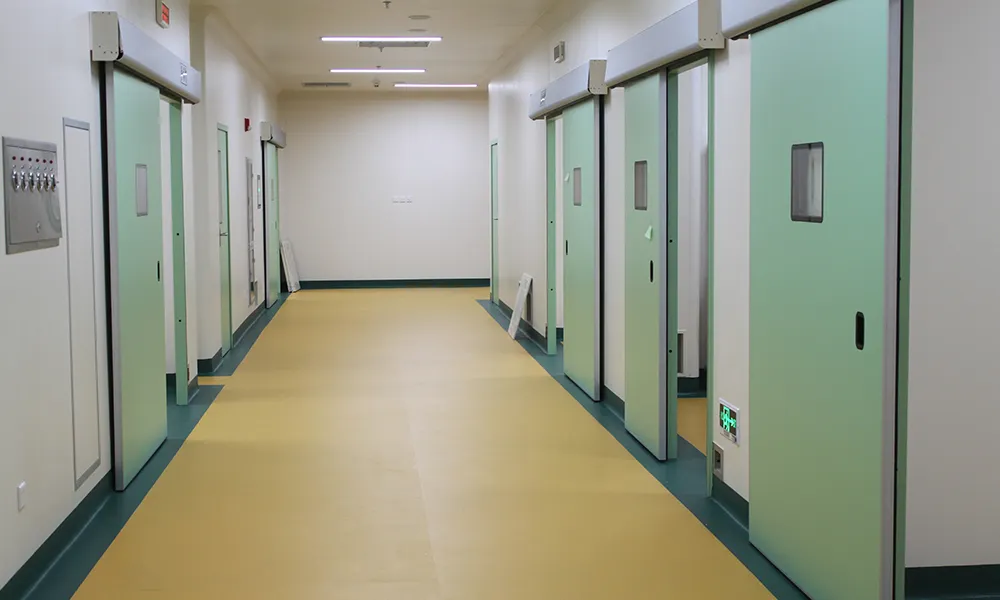 Why Airtight Hospital Sliding Doors Are Critical for Infection Control
 -
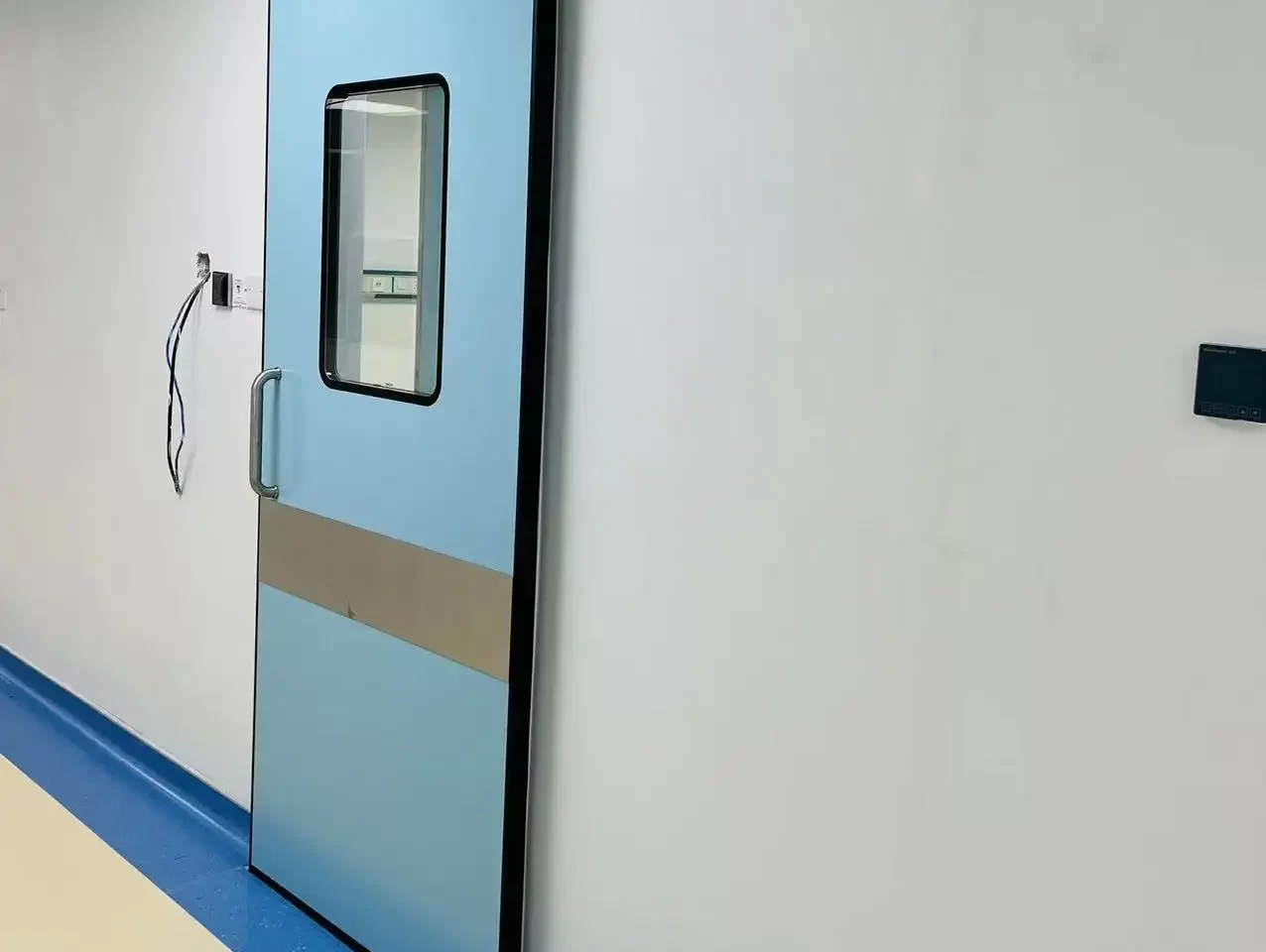 Automatic cleanroom door systems: sensor, actuator and access control integration
 -
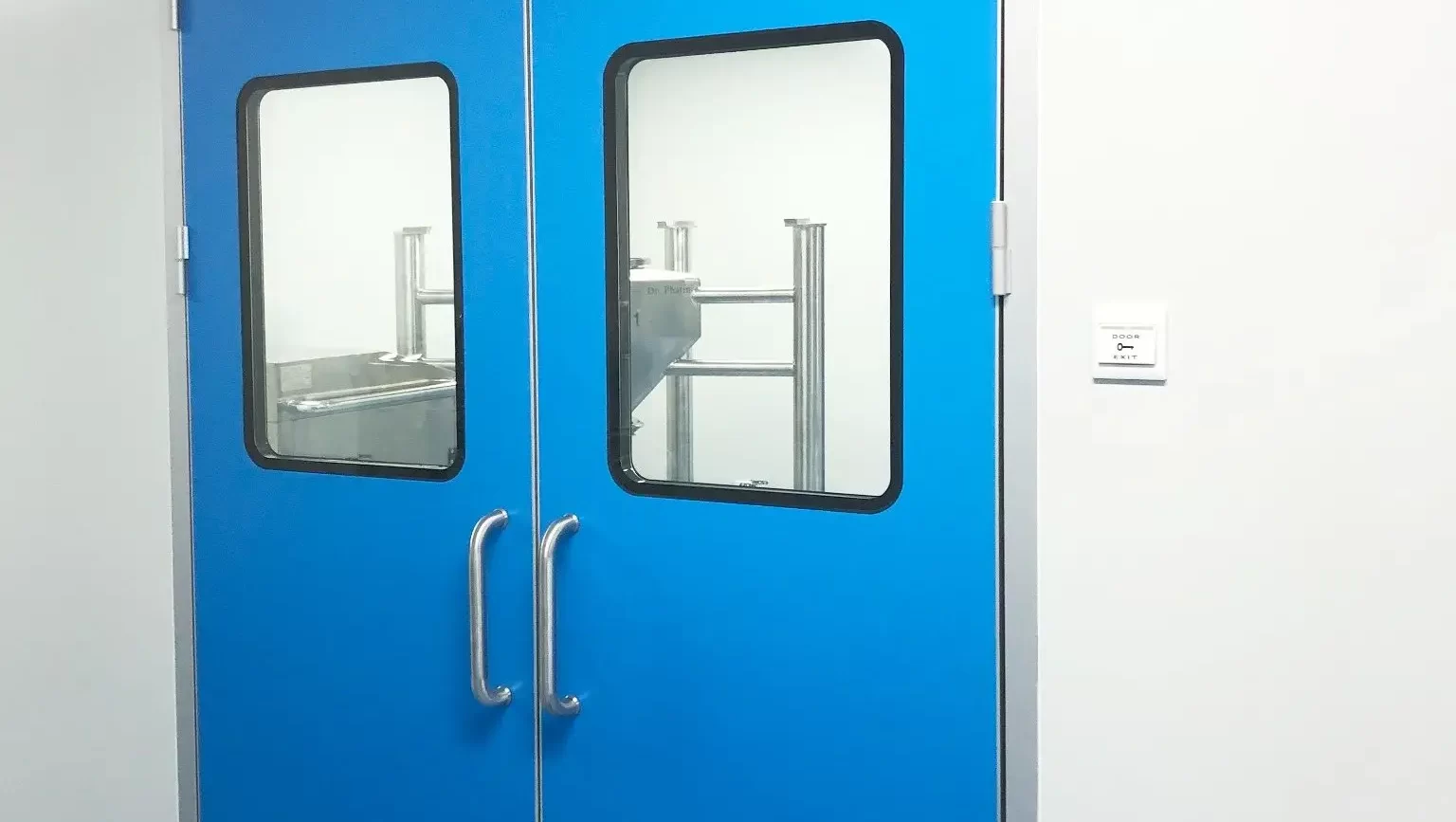 Cleanroom Door Materials: Stainless Steel vs HPL vs FRP vs Aluminum Comparison




-

Home
-

Tel
-

Email
-

Contact


Guangzhou Yizhong Aluminum Industry Co., Ltd.
We are always providing our customers with reliable products and considerate services.
We are always providing our customers with reliable products and considerate services.
Speak Your Mind