Cleanroom door lead time: avoid 2026 project delays

1. The Underestimated "Critical Path"
1.1 Why Misclassification Fails
Engineering teams have led over 50 biopharma and semiconductor cleanroom projects. A clear pattern emerges from these sites. Project managers often misclassify the cleanroom door as simple finish work. Consequently, they bundle its procurement into civil or MEP contracts. However, microenvironment demands have shifted dramatically. Doors are no longer basic partitions. They now serve as core barriers for cleanroom contamination control. They also function as critical nodes for airflow organization. The ISPE Baseline Guide Vol. 5 mandates a ≤3 second response time for airtight partitions. Therefore, doors define the rigid boundary for ISO 14644-4 air change calculations. They also act as hard Hold Points for GMP acceptance.
1.2 The Domino Effect of Delays
Project delays usually follow a predictable chain. Without cleanroom doors, MEP teams cannot seal HEPA filters. Furthermore, they cannot run pressure differential tests on FFUs. EMS and BMS calibration also lose their physical anchor. Fire linkage logic cannot be debugged. Meanwhile, epoxy flooring crews must halt work. They simply cannot maintain the required micro-positive pressure. Ultimately, third-party certification stalls completely. In a Critical Path Method (CPM) diagram, door delivery looks like a minor 2–3 week task. In reality, cross-trade stoppages extend the critical path by 12–18%. This directly compresses the Commissioning & Qualification window.
1.3 The WBS Solution
Therefore, 2026 requires a strategic shift. Managers must integrate clean room door delivery as a Level-1 WBS node. Traditional procurement intuition is no longer sufficient. Systematic engineering logic must replace it immediately. This approach is essential to avoid structural delays.
2. 2026 Lead Time Reality Check: Data, Regional Variations & Hidden Time Pools
The market typically quotes 8–12 weeks for standard doors. However, 2025–2026 data tells a different story. Actual delivery for cleanroom doors now averages 14–22 weeks. Grand View Research’s Cleanroom Technology Market Report 2025 highlights this shift. Top-tier manufacturers showed a 71.4% On-Time Delivery (OTD) rate in late 2025. This marks a 6.2% drop from 2022. Moreover, procurement data from 200+ engineering projects confirms the trend. The extended clean room doors lead time stems from two main factors. First, capacity constraints persist. Second, compliance reviews have become rigid. We can break this down into three modules.
2.1 Full-Chain Man-Hour Breakdown
- Technical kick-off & BOM freeze takes 2–3 weeks.
- Long-lead material procurement requires 4–6 weeks.
- Structural fabrication & surface treatment lasts 3 weeks.
- Electrical integration & pre-commissioning needs 2 weeks.
- Factory Acceptance Test (FAT) release spans 2–4 weeks.
- Logistics & customs clearance adds 1–3 weeks. Note: A single delay amplifies downstream impacts at a 1:1.5 ratio.
2.2 Core Component & Material Delays
Certification cycles now dominate 2026 schedules. Specifically, door seal and door gasket approvals face stricter scrutiny. Low-outgassing silicones, EPDM, and FKM now require REACH/SVHC and USP Class VI reviews. Consequently, COA/MTC issuance takes 5–7 extra days. Meanwhile, automated drives face severe bottlenecks. Brushless servo motors and PLCs compete with the EV sector. Standard lead times have stretched from 4 weeks to 8–10 weeks. Additionally, alternative component validation adds 2–3 weeks. SIL2 safety assessments further extend the timeline.
2.3 Overlooked Time Black Holes
Hidden delays often derail projects. For instance, FAT booking queues now average 10–14 days. Third-party testing bodies operate at full capacity. If pressure leak rates exceed limits, corrective loops consume 7–12 days. Furthermore, third-party reports take 25–35 days to issue. Airtightness and particle emission tests are strict prerequisites. Consequently, sites cannot proceed without them. On the logistics side, tolerance mismatches cause major setbacks. Failing to align standard door dimensions with standard doorway width triggers rework. Each iteration wastes 4–6 days. Finally, customs disputes add friction. Ambiguous DDP/DAP terms often cause 3–5 day demurrage penalties.
3. Core Variables Driving Lead Times: From Technical Specs to Compliance Deep Dive
3.1 Technical Customization Dimensions
The lead time depends heavily on technical complexity. hermetic door and airtight door models demand precise structural alignment. Sliding tracks require different load calculations than swing hinges. Heavy-duty models need track flatness ≤1.5 mm/m per GB 50243-2016. Civil deviations often trigger costly fixes. Secondary grouting can consume 5–8 days. Furthermore, the aluminum door frame must balance weight and rigidity. Surface coating thickness directly affects corrosion resistance. Anodized layers must exceed 25 μm. fire rated door assemblies require even stricter validation. Fireproof infills undergo dual integrity and insulation tests. Welds demand RT/UT inspections. Consequently, manufacturing cycles expand significantly. Meanwhile, door with window selections require early planning. Teams must specify glazing type and anti-condensation features upfront. Otherwise, cleaning dead zones will force late-stage rework.
3.2 Compliance & Validation Cycles
Regulatory standards now dictate delivery schedules. pharmaceutical doors and laboratory doors face intense audit pressure in 2026. EU GMP Annex 1 became fully mandatory in January 2025. It requires airlocks to feature differential pressure interlocks. Additionally, online particle monitoring interfaces are now standard. FDA 21 CFR Part 11 enforces strict digital compliance. Electronic records and Audit Trails must function flawlessly. Therefore, Software Development Life Cycle (SDLC) validation is mandatory. The process must cover URS, FS, DS, IQ/OQ, and PQ stages. The documentation package must ship with the hardware. WPS/PQR records and ISO/IEC 17025 certificates are essential. Without them, Site Acceptance Testing (SAT) cannot begin. Project stagnation follows immediately.
3.3 Supply Chain Breakdown
The delivery chain follows a strict sequence. It begins with technical kick-off and BOM freeze. Long-lead procurement follows immediately. Machining and surface treatment come next. Final assembly and QA release precede dispatch. On-site SAT support concludes the cycle. Requirement changes before BOM freeze cause the largest delays. Logistics bottlenecks form the second major risk. Specifically, door frame dimensions must undergo 3D clash detection early. Front-end verification eliminates on-site cutting. This prevents secondary contamination and schedule loss.
4. Practical Strategies to Avoid Delays: Full-Lifecycle Management Framework
4.1 Early Planning: Specification Freeze & Cross-Disciplinary Coordination
Teams must establish a Technical Requirement Matrix first. This document should cover ±2 mm dimensional tolerance. It must also specify SUS304/316L material grades. Pressure differential ranges should stay within ±5–50 Pa. Data protocols like BACnet or Modbus require explicit mapping. Furthermore, a modular base strategy reduces non-standard tooling risks. BIM integration provides crucial early validation. LOD 400 models reveal hidden clashes. They also optimize installation routes. Freezing standard door dimensions during conceptual design prevents costly grouting work. For high-traffic zones, automatic sliding door tracks need special attention. Load capacity and anti-pinch logic must decouple from HVAC fluctuations.
4.2 Vendor Selection & Contractual Risk Control
Supplier evaluation requires a structured model. Capacity utilization should stay below 85%. The 12-month OTD rate must exceed 80%. Core component self-supply indicates stability. Backup production lines offer essential redundancy. Contractual terms must hedge financial risks. Milestone payments should tie directly to progress. We recommend a 30/30/20/15/5 split. Liquidated damages (LDs) should use tiered calculations. A 0.5% Week 1 rate can scale to 1.0% weekly. The cap should remain at 10%. Additionally, FAT/SAT protocols must front-load testing criteria. Smoke tracer methods and 0.5% leak rate limits belong in appendices. Supply chain resilience demands proactive planning. Sign safety stock agreements for door seal materials. Implement dual-sourcing for critical drives. Regional bonded warehouses provide reliable buffer stock.
4.3 Project Execution & Concurrent Engineering
Critical paths require schedule buffers. A 15–20% contingency protects against volatility. Non-critical paths should follow JIT coordination. sliding door installation demands parallel workflows. Site teams must verify openings while fabrication occurs. Pull-out tests for embedded parts must happen concurrently. Power routing and Ethernet connectivity cannot wait. Logistics optimization requires precise Incoterms alignment. Advance HS classification prevents customs holds. Specialized packaging standards protect fragile components. The cleanroom door installation team must arrive 7 days early. They must verify site readiness immediately. A signed handover document closes the responsibility loop. This prevents futile mobilization due to mismatched openings or dead utilities.
5. Case Studies & Lessons Learned
5.1 Case A: Delay Reversal in Semiconductor Fabs
A Yangtze River Delta Fab faced a 28-day delay. OEM servo motors were unavailable. CE certification queues caused further bottlenecks. The team activated a rapid contingency plan. First, they switched to a UL-certified drive solution. Engineers completed torque matching within 72 hours. Anti-pinch logic received immediate calibration. Second, they decoupled the FAT process. Core airtightness tests occurred at the factory. Protocol integration ran parallel to on-site MEP work. Third, they utilized a regional bonded warehouse. Pre-clearance procedures accelerated customs processing. Consequently, the team recovered 19 days. The cleanroom enclosure met its deadline. This proves that dynamic substitution works effectively.
5.2 Case B: First-Time Right Delivery in Biopharma
A sterile filling suite required strict pharmaceutical clean room door compliance. The team froze the URS during conceptual design. BIM calculations covered 12 airlock openings precisely. The contract locked third-party testing slots 45 days early. Pre-SAT simulation drills prepared the acceptance team. The cleanroom door installation crew intervened early. They managed site interfaces proactively. Zero rework occurred during delivery. OQ/PQ validation achieved a 100% first-pass rate. This shortened the cycle by 21 days versus industry averages.
5.3 Case C: Failure Review & Hard Lessons
An East China CRO lab prioritized upfront cost savings. They skipped USP Class VI validation for the door gasket material. Consequently, particle counts failed twice after SAT. VOC tests also returned non-compliant results. The site team dismantled all seals immediately. Surface cleaning and airflow rebalancing followed. The project lost 14 days. An official Audit Finding was issued. This failure highlights a critical rule. laboratory doors and hermetic door selections require early validation. door seal materials must meet negative pressure rebound standards. In 2026, "deliver first, validate later" strategies guarantee work stoppages.
Core Lessons Extracted Lead time control demands cross-functional coordination. Procurement alone cannot solve systemic delays. Documentation compliance must sync with hardware delivery. Furthermore, cleanroom pass through window units require unified WBS management. Fragmented handovers consistently cause schedule fractures.
6. Conclusion: Return to Engineering Fundamentals for Lead Time Control
6.1 The Shift to System Validation
Commercial promises no longer dictate delivery schedules. Cleanroom door lead times now function as system validation engineering. Hidden costs routinely exceed hardware prices. Validation queues consume weeks. Corrective loops drain budgets. Compliance audits halt progress indefinitely.
6.2 The 2026 Management Framework
Successful management relies on four pillars. First, front-load specification freezes. This stops requirement creep immediately. Second, bind validation milestones to contracts. This hardens delivery standards. Third, implement supply chain transparency. PLM and MES integration eliminates information gaps. Fourth, confirm 100% on-site readiness. This prevents futile logistics expenditures.
6.3 Final Recommendations
Project managers must treat delivery as a traceable Level-1 WBS node. Establish a formal Risk Register. Apply PDCA closed-loop mechanisms consistently. Standardized processes counter supply chain volatility. Furthermore, unify the validation matrix. Incorporate fire rated door certifications, airtight door interlocks, and automatic sliding door protocols. Only then will projects transition smoothly into commissioning.
-
 Cleanroom Glass Windows Are The Key to Maintaining a Clean Environment
 -
 Top Aluminium Profile Manufacturers in China: Leading the Global Market
 -
 The Evolution of Air Tight Sliding Doors
 -
 AHU Aluminium Profile: A Comprehensive Guide
 -
 The Importance of Choosing the Right Cleanroom Door in Vietnam
 -
 The Benefits of Hospital Automatic Doors: Enhancing Efficiency and Safety
 -
.jpg) The Best Bathroom Door Manufacturers - Unlocking Endless Possibilities!
The Best Bathroom Door Manufacturers - Unlocking Endless Possibilities! -
 Unlock the Possibilities with AJ Manufacturing Doors
 -
 Make a Statement with Manufactured Home Interior Doors!
 -
 what is aluminum profile? Aluminum Profiles for Your Home is the best option
-
 5 Hermetic Door Mistakes That Break the Seal
 -
 Hospital Room Door Size by Room Type: Width and Clearance
 -
 Retrofit Manual Doors with Electronic Glass Operators
 -
 Hospital Emergency Exit Doors: 90 Minute Fire Rating Meets Infection Control
 -
 ICU and Isolation Door Requirements Hospitals Often Overlook
 -
 Laboratory Door Requirements for BSL-2 and BSL-3 Containment
 -
 Retrofitting Hospital Sliding Doors: Upgrade Wards Without a Rebuild
 -
 Why Airtight Hospital Sliding Doors Are Critical for Infection Control
 -
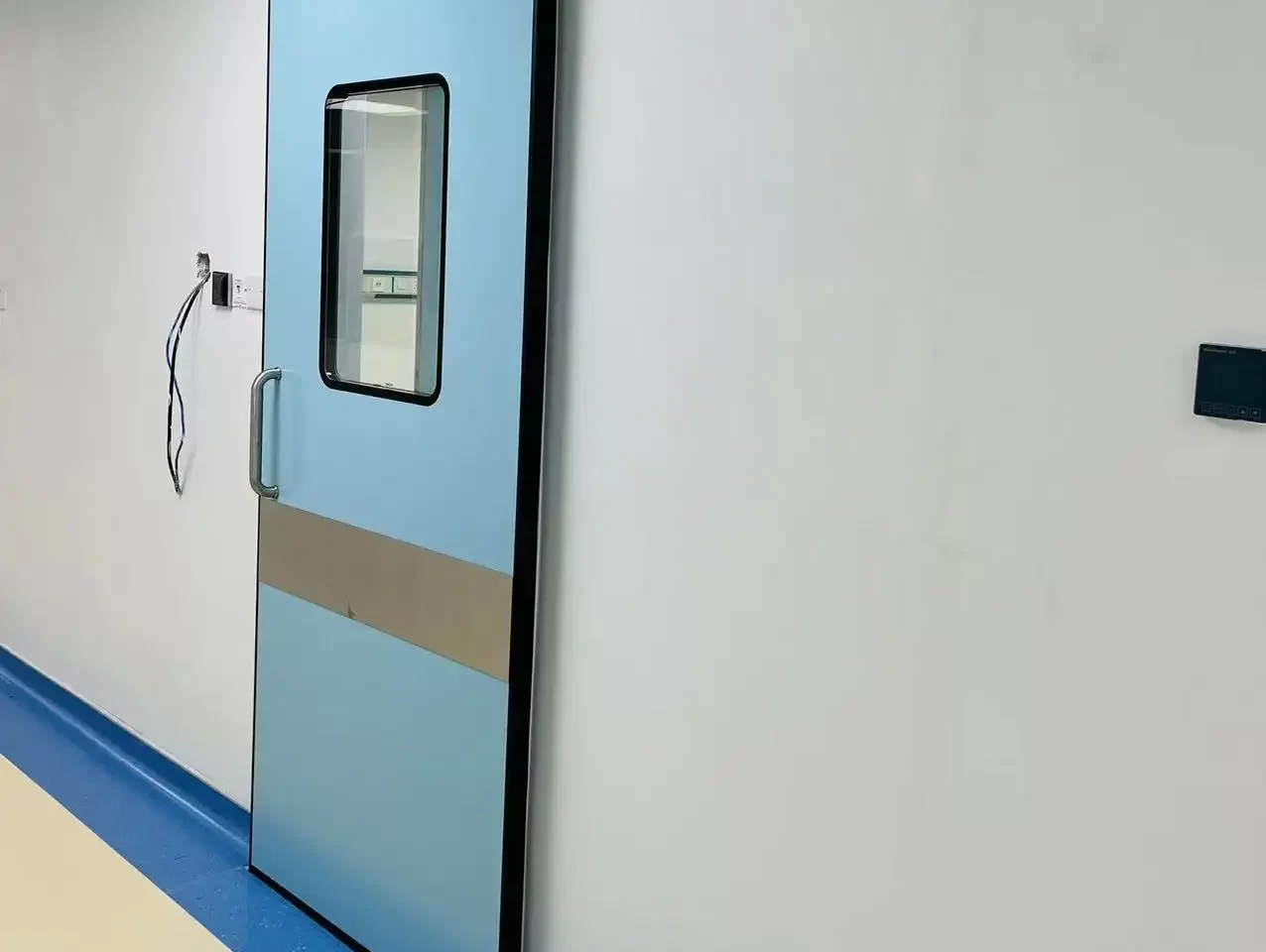 Automatic cleanroom door systems: sensor, actuator and access control integration
 -
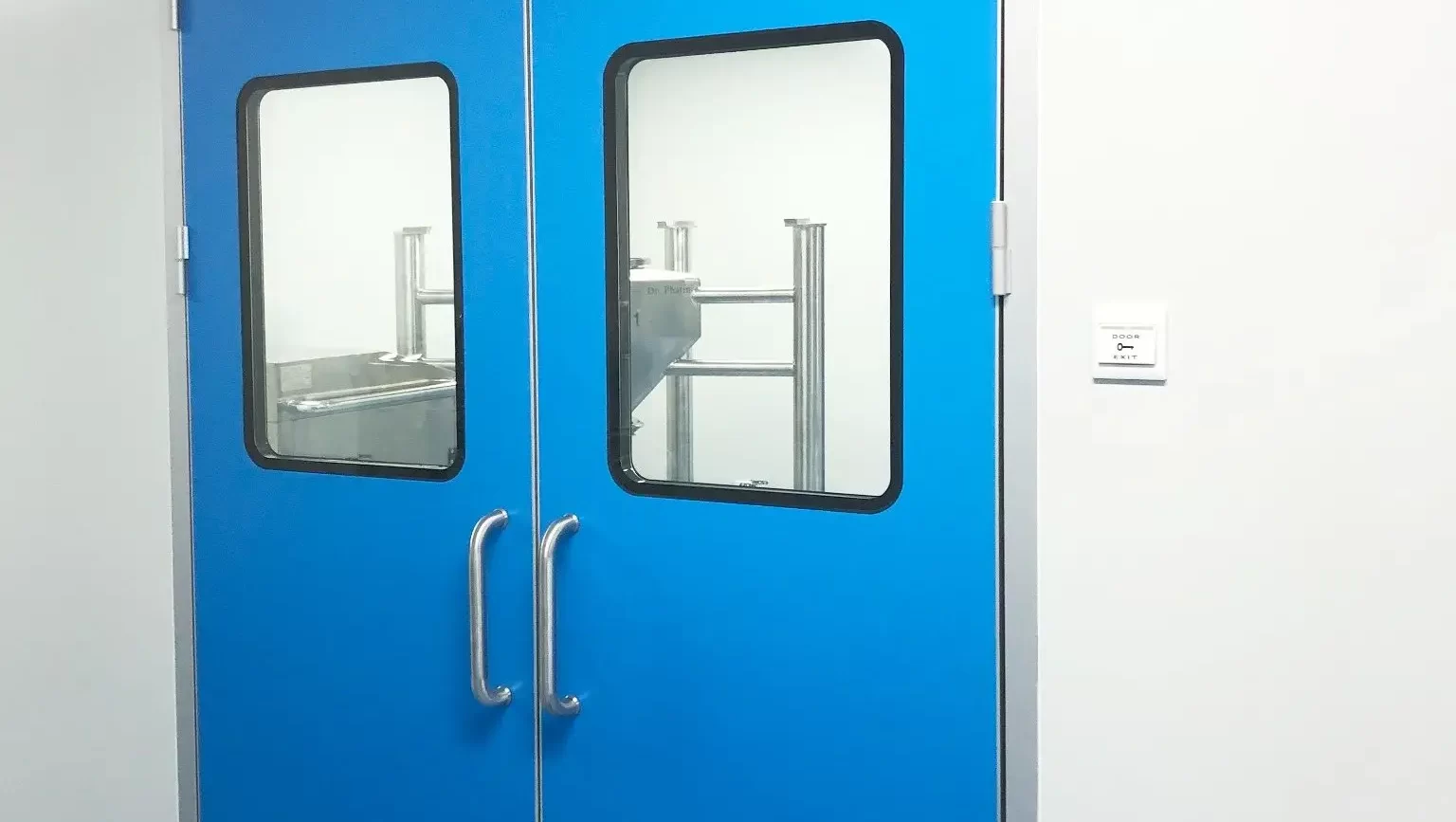 Cleanroom Door Materials: Stainless Steel vs HPL vs FRP vs Aluminum Comparison
-

Home
-

Tel
-

Email
-

Contact


Guangzhou Yizhong Aluminum Industry Co., Ltd.
We are always providing our customers with reliable products and considerate services.
We are always providing our customers with reliable products and considerate services.
Speak Your Mind