
Modular Hospital Cleanroom Doors: 35% Faster Installation
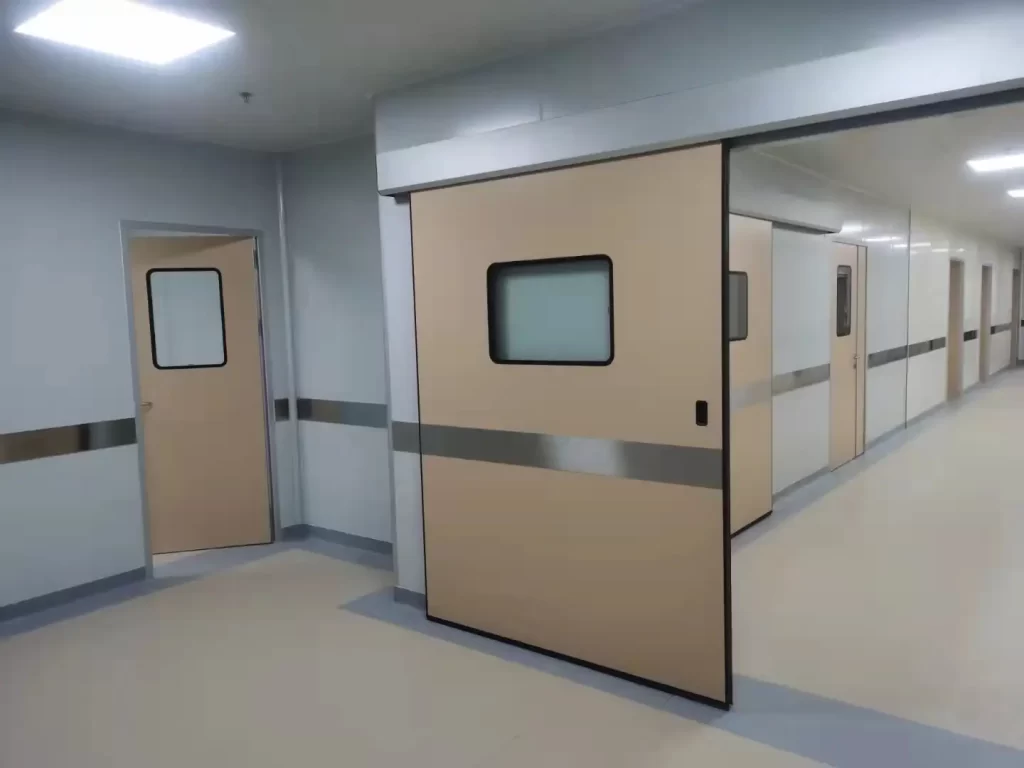
I. A Paradigm Shift in Medical Clean Space Construction
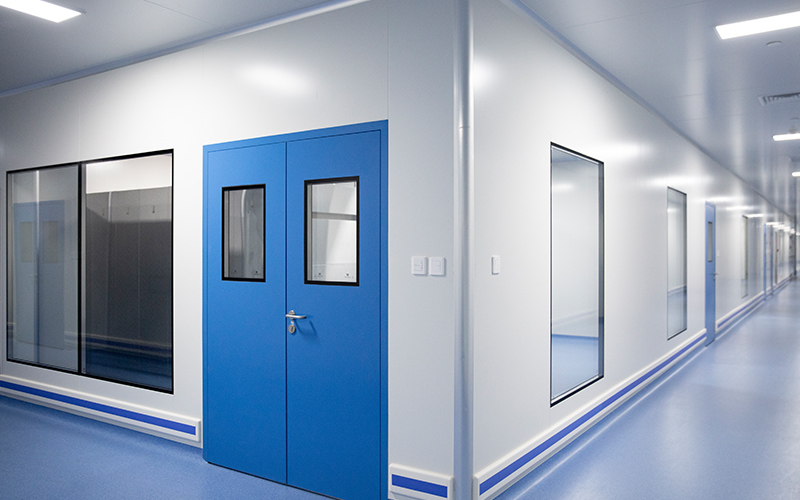
In modern medical infrastructure, cleanroom door systems are far more than physical partitions. They serve as critical engineering hubs for maintaining pressure differentials, controlling aerosol dispersion, and preventing cross-contamination across operating theaters, ICUs, Pharmacy Intravenous Admixture Services (PIVAS), and high-containment laboratories. This hospital cleanroom door case examines how a modular cleanroom door hospital solution fundamentally redefines infection control construction through industrialized prefabrication and standardized dry-assembly protocols.
Traditional on-site fabrication methodologies, characterized by linear workflows of field measurement, custom cutting, welding, grinding, and silicone sealing, have long incurred three hidden costs:
- Unpredictable Scheduling: Linear construction sequences severely delay the hospital renovation timeline, with traditional single-door installation averaging 3.2 labor-days and exhibiting high quality variance.
- Contamination Risks: On-site cutting and welding generate metallic particulates and spark hazards that violate clean-zone hot-work permits, threatening pre-installed FFU HEPA filters and epoxy self-leveling flooring.
- Compliance Challenges: Consistently meeting GB 50333-2013 Technical Code for Construction of Hospital Clean Operating Department requirements for air tightness (leakage rate ≤0.5m³/h·m), surface flatness (≤0.5mm/m), and antimicrobial performance remains difficult under variable site conditions.
As modular design and Industry 4.0 principles penetrate the medical cleanroom sector, standardized prefabrication is rapidly replacing bespoke on-site fabrication. Drawing from a recently delivered tertiary hospital clean ward project, this case study dissects the full project lifecycle. The following sections detail technical parameters, workflow reconstruction logic, and empirically verified metrics to demonstrate how modular systems achieve a 35% reduction in installation time, providing a quantifiable benchmark for future medical cleanroom deployments.
II. Project Background & Core Constraints: Real-World Implementation Challenges
Project Profile:
- Facility Scale: ~28,000 sqm across a new surgical wing, including 6 ISO Class 5 laminar-flow operating rooms, 12 ISO Class 7 ICU suites, and 1 ISO Class 6 PIVAS center.
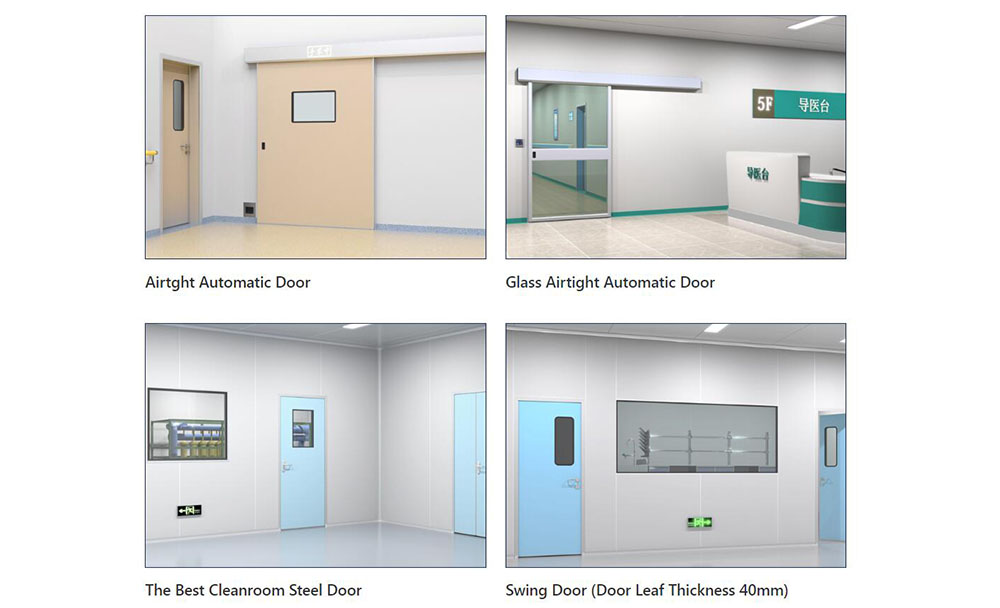
- Door Configuration: 87 units total, comprising airtight automatic sliding doors, lead-lined radiation protection doors, and interlock pass-through windows, with a dedicated ICU cleanroom door upgrade initiative.
- Delivery Window: Strictly capped at 120 days, creating intense schedule rigidity and dense multi-trade interface constraints.
Four Critical Implementation Bottlenecks:
- Linear Schedule Dependency & Critical Path Congestion
- Traditional workflow: civil handover → field remeasurement → fabrication order → manufacturing → site mobilization → installation (strictly sequential).
- Labor demand: 87 doors required ~120 labor-days for installation alone, routinely cannibalizing MEP rough-in and wall-cladding windows.
- Restricted Site Environment & High Coordination Overhead
- hospital stakeholder coordination proves highly complex; hospital infection control, facilities management, MEP general contractors, and cleanroom specialists frequently encounter interface conflicts and version-control gaps in narrow work zones.
- Welding spatter and metallic dust compromise finished epoxy flooring and pre-installed filtration systems.
- Stringent Compliance Verification & Rework Costs
- Third-party audit thresholds: door-leaf leakage ≤0.5m³/h·m, flatness ≤0.5mm/m, antimicrobial coating adhesion ≥Grade 0 (cross-cut test per GB/T 9286).
- Traditional craftsmanship, reliant on artisan skill and sensitive to ambient humidity/temperature, historically yields rework rates exceeding 7.5%.
- Tolerance Stack-Up & Sealing Integrity Failure
- Field tolerance of ±2.0mm compounds with typical civil wall deviations (±3–5mm), complicating frame alignment and resulting in inconsistent silicone bead application, which later triggers pressure differential leakage and elevated particle settling.
III. Technical Core of Modular Design: The Engineering Logic Behind the 35% Time Reduction
To address these constraints, the project deployed a "structural decoupling + quick-connect integration" modular door system. The 35% schedule acceleration stems from four reconstructed engineering pillars:
1. Closed-Loop Tolerance Management: From Field Adaptation to Factory Prefabrication
- Structural Decoupling: Frames, door leaves, drive modules, and sealing gaskets are physically and functionally decoupled, establishing a "base load-bearing matrix + scenario-specific add-ons" architecture.
- Precision Manufacturing Standards: • 3.0mm 304 stainless steel and aerospace-grade aluminum composite bending • Core connection components machined via 5-axis CNC, with出厂 form/position tolerances strictly controlled within ±0.2mm • Eliminates cumulative tolerance drift inherent in field fabrication
2. Dry-Assembly Joint Innovation: A Zero Wet-Work Process
- Six-Degree-of-Freedom Leveling System: Patented elastic snap-fit brackets + pre-installed locating pins enable "second-level" frame positioning. Hinge bases integrate ±3mm micro-adjustment tracks, allowing laser-assisted leveling without shimming.
- Utilizing a patented aluminum door sealing pre-embedding process, EPDM gaskets are hydraulically press-fitted with 45° miter joints at the factory. On-site execution achieves zero silicone application, zero grinding, and zero cure-time waiting, extending service life beyond 10 years.
3. BIM Digital Twin & Virtual Commissioning
- Parametric Modeling Workflow:
- Revit 1:1 door family libraries linked to pressure, access control, and medical gas parameters
- Navisworks multi-discipline clash detection with automated interference reporting
- Pre-execution cleanroom airflow simulation predicts vortex disruption during door actuation, optimizing swing geometry and buffer logic
- Implementation Yield: Field MEP rerouting decreased by 72%, design change response time compressed from 72 hours to 8 hours, and automated BOM generation reduced material omission rates to near-zero.
4. Embedded Compliance: Quality Control Shifted Upstream
- Material Compliance Configuration:
•Antibacterial door surface treated with nano-silver ion coating, achieving ≥99.9% inhibition against E. coli and S. aureus (per GB/T 21551.3)
•Aerospace-grade aluminum honeycomb core, certified to GB 8624-2012 Class A fire rating
•1,000-hour neutral salt spray aluminum durability test validates corrosion resistance in high-humidity, high-chloride environments - Smart Control Integration: High-precision automatic door sensor paired with anti-pinch microwave radar, engineered for seamless cleanroom HVAC integration. The system triggers fan VFD compensation during door actuation to maintain stable pressure differentials.
- Based on an aluminum door customization matrix, each unit ships with complete material certifications, fire-test reports, and preliminary airtightness data (leakage ≤0.35m³/h·m).
IV. Implementation Path Reconstruction: From Site Fabrication to Field Assembly
Modularization is not merely a product substitution; it is a systematic reconstruction of delivery SOPs. The project segmented execution into four standardized phases:
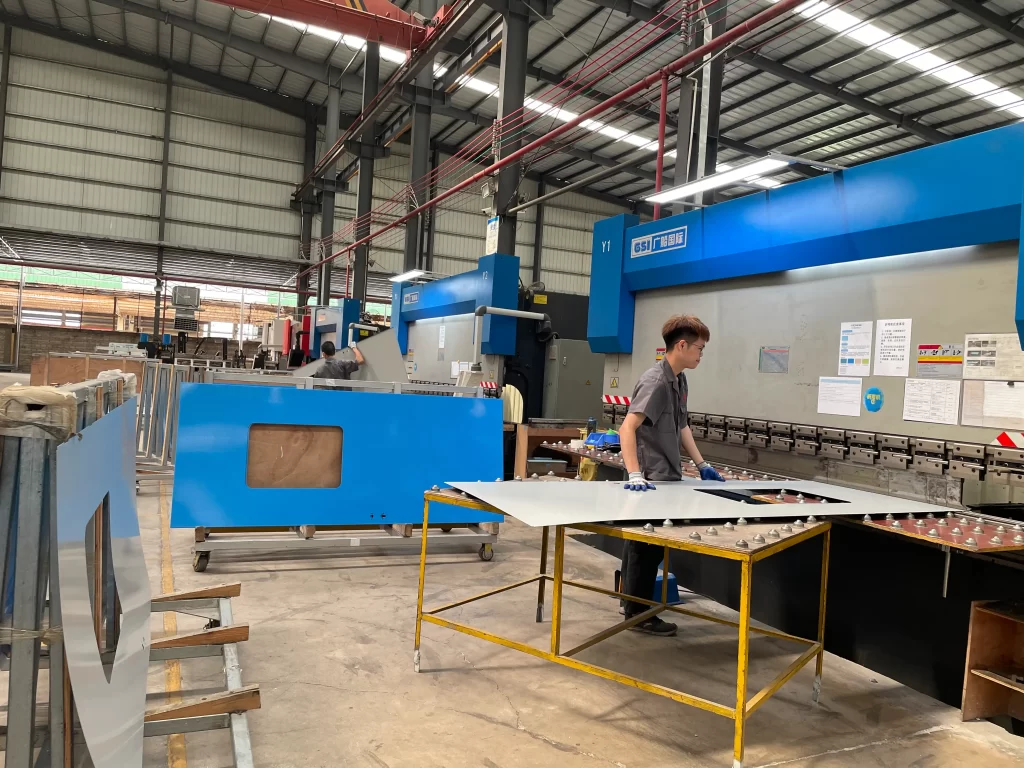
Phase 1: Requirements Mapping & Detailed Design (-15 Days)
- Technical parameters are locked early in the hospital procurement process technical-bid stage, preventing downstream design creep.
- Hospital infection control, facilities management, and MEP contractors input core parameters via standardized digital forms:
- Pressure differential setpoints: +5Pa to +15Pa gradients
- Access control logic: BACnet integration with hospital IBMS
- Special configurations: impact buffers, power-fail reset, dual-door interlock
- Automated generation of module configuration lists, detail drawings, and installation video guides, freezing technical boundaries and interface protocols.
Phase 2: Flexible Production Line Prefabrication (-10 Days)
- Workshop Standardization: • Laser cutting, CNC bending, electrostatic powder coating, and pre-assembly executed in climate-controlled clean workshops • Each door undergoes laser-based airtightness verification and opening-force testing (sliding door initiation force ≤80N)
- Quality Traceability: "One-item-one-code" batch tracking archives QR-scannable machining parameters, QA logs, and assembly videos, closing the manufacturing data loop.
Phase 3: On-Site "Lego-Style" Assembly (Core Acceleration Phase)
- Standardized Crew Configuration: 3-person teams (1 technician + 2 assemblers) utilizing lightweight vacuum lifter spreader
- Seven-Step Single-Door Installation Protocol:
- Baseline layout: Laser line projector establishes centerline and elevation
- Pin insertion: Wall embedments align with frame snap-channels
- Frame locking: Torque wrench ensures uniform fastening without over-torque deformation
- Leaf hanging & leveling: 3D hinge micro-adjustment guarantees uniform door gaps (±0.3mm)
- Gasket seating: Pre-embedded strips snap into channels; zero field sealant
- Controller wiring: Quick-connect circular plugs eliminate miswiring
- Functional checkout: Manual/auto mode switching, cycle count, and noise logging
- Site Management Advantage: Zero hot-work, zero cutting, zero dust generation reduces clean-zone permit approval complexity by 80%. This modular door installation methodology has been third-party validated, with single-door assembly deviations controlled within ±0.3mm, significantly outperforming traditional welding processes.
Phase 4: System Commissioning & Compliance Handover
- Multi-Dimensional Verification: • Precision differential pressure gauges execute cleanroom pressure testing, verifying inter-zone differentials within design tolerance (±1Pa accuracy) • Particle counters (0.3μm/0.5μm) conduct static and dynamic particulate audits • Automatic door controllers undergo BACnet integration, anti-pinch verification, fail-safe reset, and dual-door interlock logic testing
- Deliverables: A comprehensive cleanroom validation report containing pressure gradients, particulate counts, control logic maps, and energy consumption baselines is handed over. Targeted post-installation training clarifies cleanroom maintenance access SOPs and spare-part replacement protocols for hospital facilities staff. Third-party first-pass compliance rate reached 98.6%.
V. Data Validation: The Engineering Logic & Multidimensional ROI of the 35% Reduction
According to the independent cleanroom validation report, the 35% schedule compression is a verifiable engineering outcome, not a marketing claim.
Core Schedule Comparison:
- Traditional Model: 87 doors required 28 working days from field measurement to final handover
- Modular Model: Equivalent scope completed in 18 working days
- Direct comparison of hospital cleanroom door installation time shows a 35% reduction in composite labor-hours (3.2 → 2.08 labor-days per unit)
Multidimensional Benefit Quantification:
| Dimension | Traditional Model | Modular Model | Improvement |
|---|---|---|---|
| Single-Unit Installation Labor | 3.2 labor-days | 2.08 labor-days | ↓35% |
| Cross-Trade Interference Frequency | High (≥4 trades coordinating) | Low (dedicated workstations) | ↓60% |
| Rework/Rectification Rate | 7.5% | 1.1% | ↓85% |
| First-Pass Airtightness Compliance | 82% | 99.3% | ↑17.3% |
| Subsequent Module Replacement Time | 4–6 hours | ≤1.5 hours | ↓65% |
Hidden Value & TCO Optimization:
- Cost Structure Realignment: A detailed renovation cost breakdown reveals that while modular door unit procurement costs increased by 8–12%, labor expenses dropped 41%, site rental periods shortened by 15%, and hot-work permitting/secondary contamination remediation costs were eliminated. Lifecycle Total Cost of Ownership (TCO) demonstrates clear optimization.
- Maintenance Efficiency: Single-module replacements (e.g., drive controllers or gasket strips) compressed from 4–6 hours to ≤1.5 hours. Standardized spare-part inventory decreased by 60%, tripling emergency response speed.
- Commercial Validation: The hospital's 12-day early operational launch generated additional bed-turnover revenue that fully offset the initial technology premium, validating the "industrialize for time, standardize for quality" business model.
VI. Industry Implications: Replicable Boundaries & Ecosystem Synergy
This case validates the scalability of modular cleanroom door systems across the medical construction sector:
1. Rapid Scenario Expansion
- New Construction: Standardized module deployment accelerates overall project delivery.
- Retrofit & Phased Renovations: Specifically for ICU cleanroom upgrade scenarios, modular systems enable off-shift installation, replacing single-ward door assemblies within 48 hours while minimizing clinical disruption.
- Emergency Deployment: Field hospitals and mobile testing units achieve 48-hour on-site assembly.
- Cross-Industry Application: Pharmaceutical manufacturing, biosafety labs, and semiconductor cleanrooms, particularly for high-compliance GMP hospital cleanroom door replacements.
2. Balancing Standardization & Customization
- The "80% Standard + 20% Scenario-Adaptive" Mature Paradigm: • Standard Modules: Frame profiles, drive assemblies, base sealing components, universal control logic • Scenario Adaptations: Lead-lining thickness customization (0.5–3.0mm Pb), impact buffer strips, sterile interlock programming, HIS patient-flow data integration
3. Supply Chain & Delivery Model Evolution
- Leading manufacturers are transitioning from "equipment vendors" to "cleanroom system integrators" and "lifecycle service providers", offering end-to-end EPC coverage spanning BIM detailing, prefabrication control, field assembly, and digital O&M.
- Collaborative Innovation: Drives hospital project management toward digital, assembly-oriented methodologies. Establishes dedicated cleanroom module briefing protocols with general contractors to optimize trade interfaces.
4. Policy & Standard Alignment
- China's GB/T 51129-2017 Evaluation Standard for Prefabricated Buildings incorporates "factory prefabrication rate" and "on-site assembly rate" into scoring matrices.
- Green medical building certification awards additional points for reduced wet-work and material waste.
- Proactively prepares facilities for third-party cleanroom certification audit by front-loading compliance data packages into handover documentation, compressing acceptance cycles.
VII. Conclusion
The 35% schedule compression is the systemic outcome of four coordinated dimensions: parameterized design front-loading, precision factory prefabrication, zero wet-work field assembly, and digital verification. Modular design transforms cleanroom doors from highly variable, site-customized components into traceable, replaceable, and verifiable standardized functional units, fundamentally eliminating cross-contamination risks, tolerance accumulation, and artisan dependency.
-
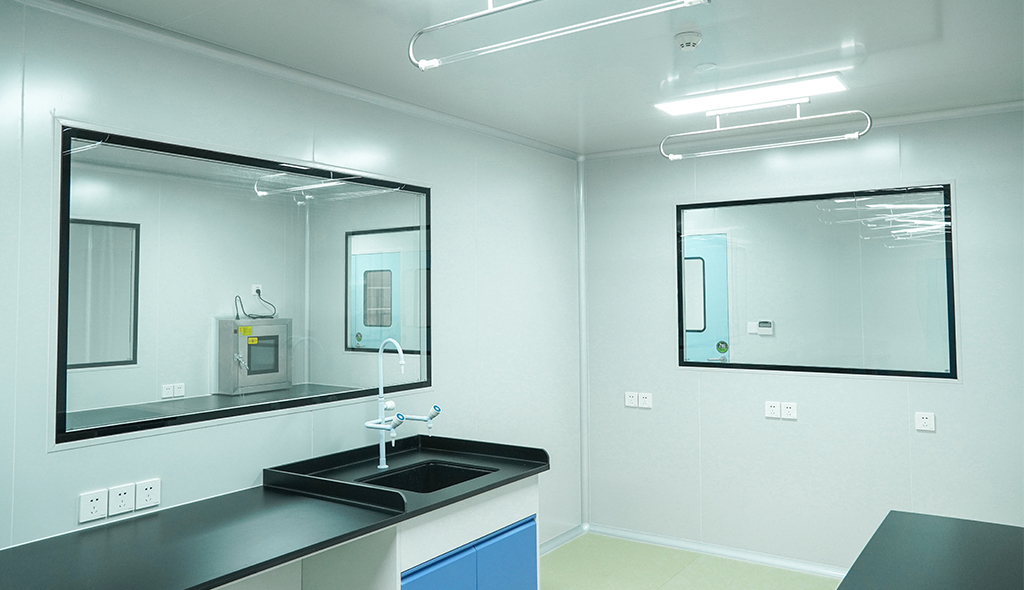 Cleanroom Glass Windows Are The Key to Maintaining a Clean Environment
 -
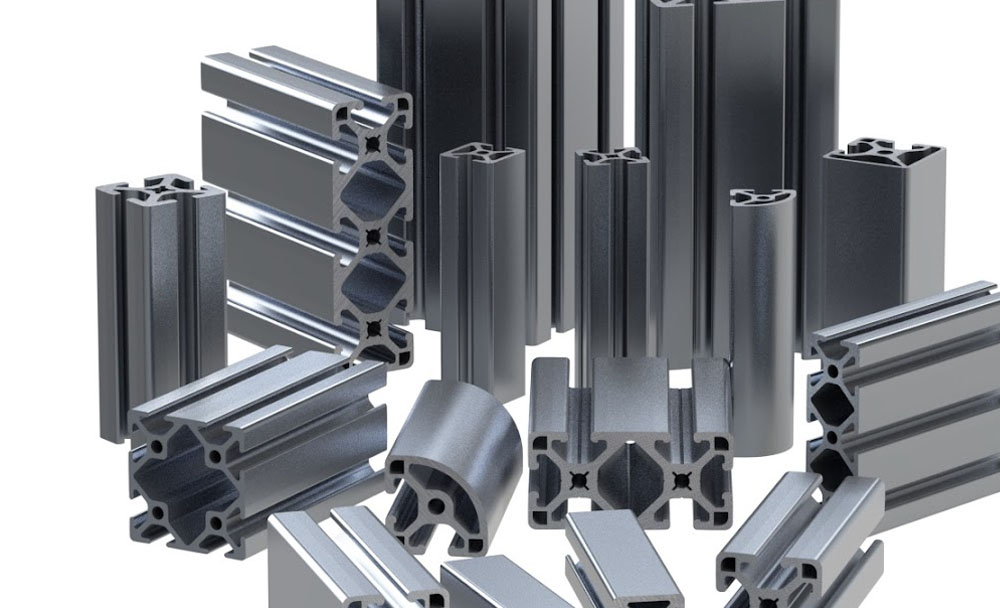 Top Aluminium Profile Manufacturers in China: Leading the Global Market
 -
 The Evolution of Air Tight Sliding Doors
 -
 AHU Aluminium Profile: A Comprehensive Guide
 -
 The Importance of Choosing the Right Cleanroom Door in Vietnam
 -
 The Benefits of Hospital Automatic Doors: Enhancing Efficiency and Safety
 -
.jpg) The Best Bathroom Door Manufacturers - Unlocking Endless Possibilities!
The Best Bathroom Door Manufacturers - Unlocking Endless Possibilities! -
 Unlock the Possibilities with AJ Manufacturing Doors
 -
 Make a Statement with Manufactured Home Interior Doors!
 -
 what is aluminum profile? Aluminum Profiles for Your Home is the best option
-
 5 Hermetic Door Mistakes That Break the Seal
 -
 Hospital Room Door Size by Room Type: Width and Clearance
 -
 Retrofit Manual Doors with Electronic Glass Operators
 -
 Hospital Emergency Exit Doors: 90 Minute Fire Rating Meets Infection Control
 -
 ICU and Isolation Door Requirements Hospitals Often Overlook
 -
 Laboratory Door Requirements for BSL-2 and BSL-3 Containment
 -
 Retrofitting Hospital Sliding Doors: Upgrade Wards Without a Rebuild
 -
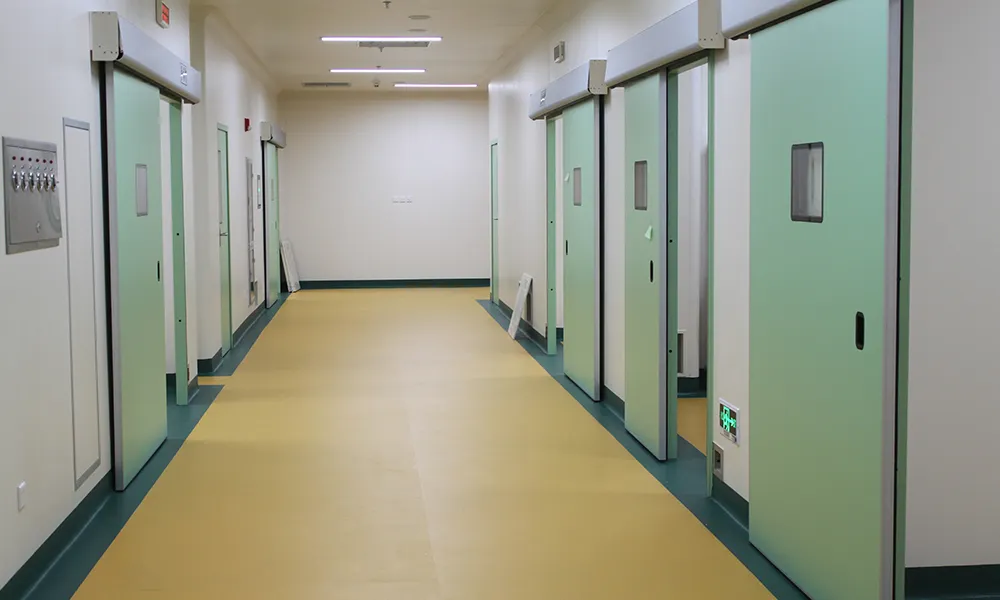 Why Airtight Hospital Sliding Doors Are Critical for Infection Control
 -
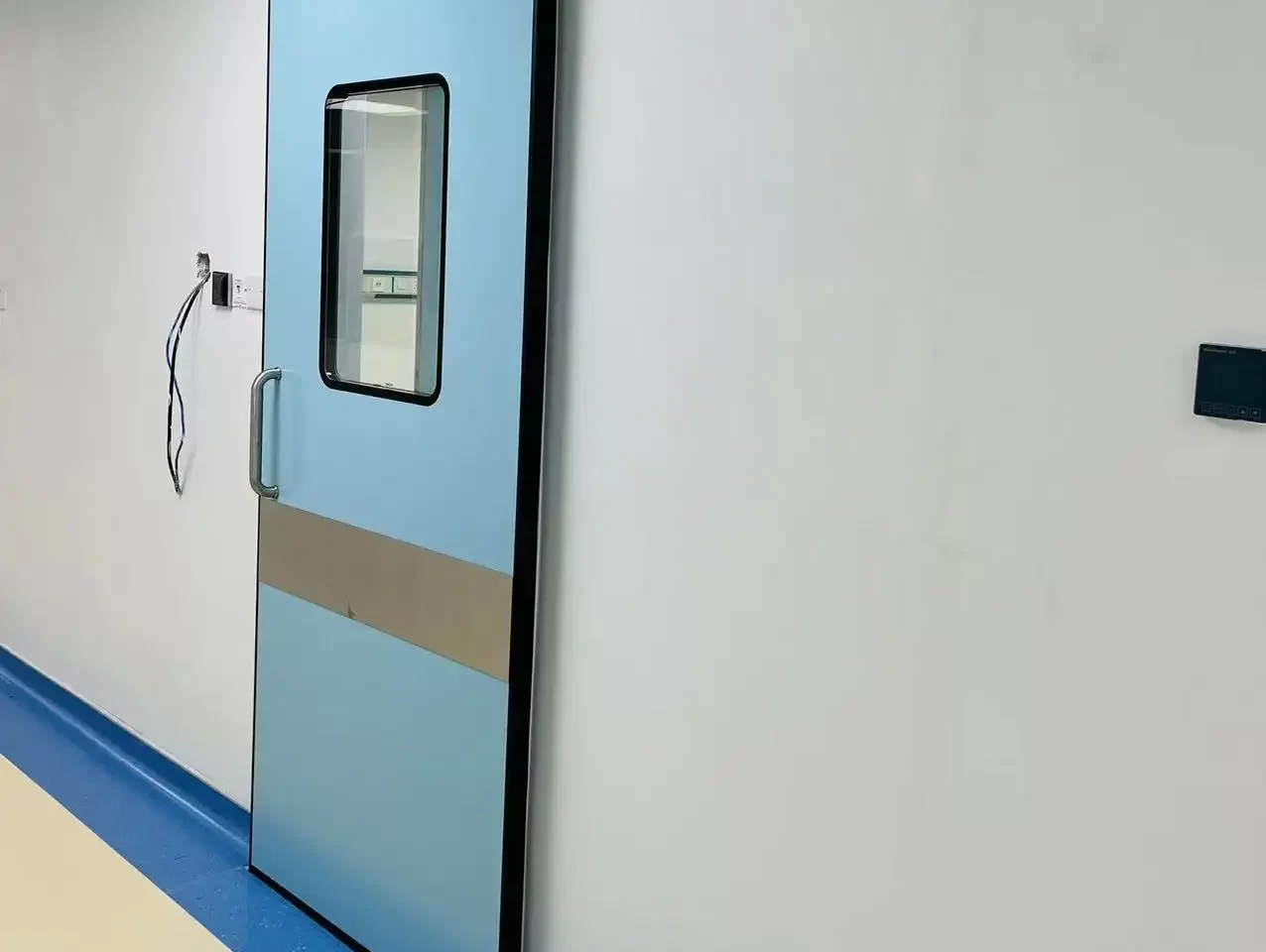 Automatic cleanroom door systems: sensor, actuator and access control integration
 -
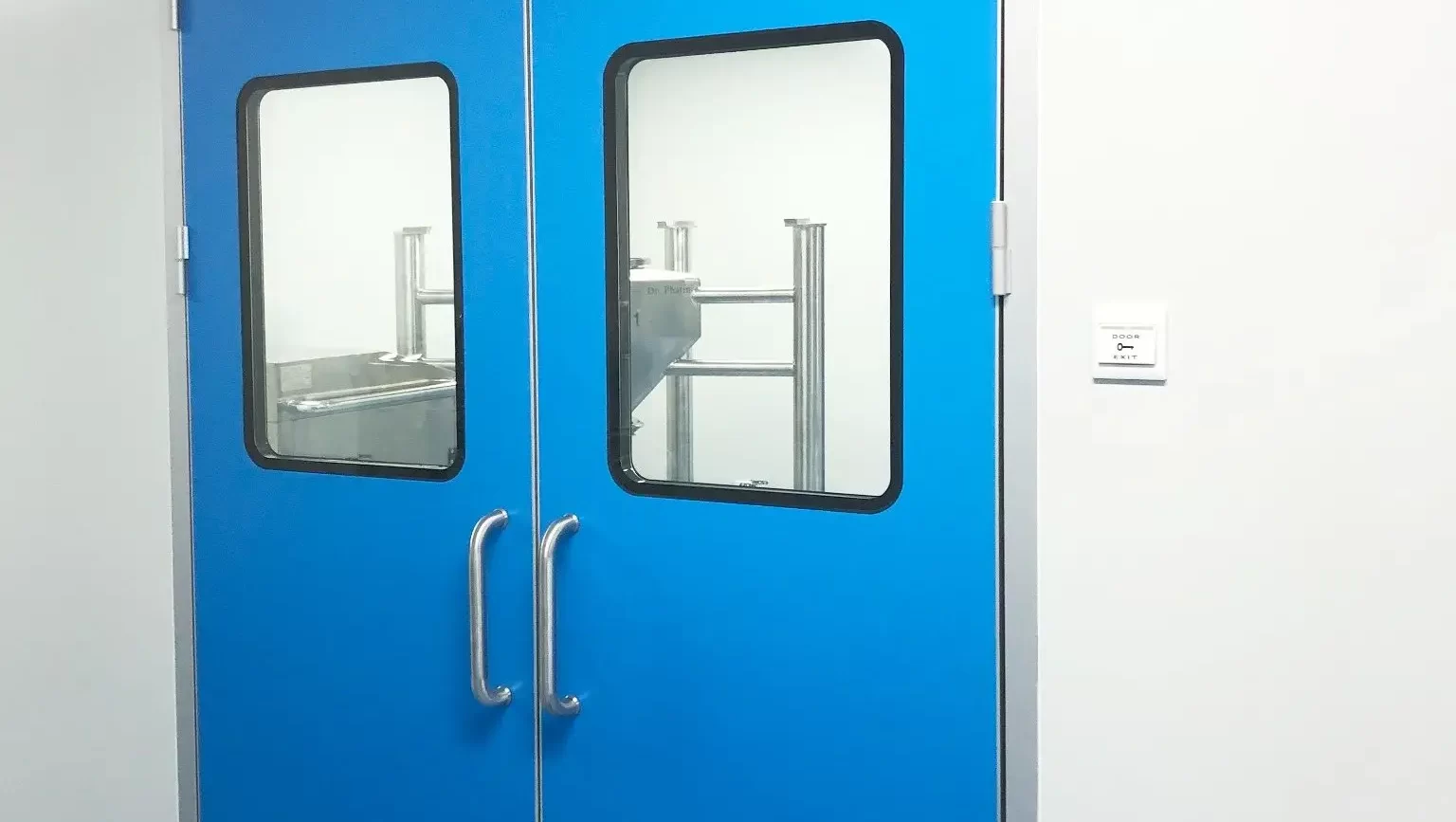 Cleanroom Door Materials: Stainless Steel vs HPL vs FRP vs Aluminum Comparison



-

Home
-

Tel
-

Email
-

Contact


Guangzhou Yizhong Aluminum Industry Co., Ltd.
We are always providing our customers with reliable products and considerate services.
We are always providing our customers with reliable products and considerate services.
Speak Your Mind