
Pharmaceutical Cleanroom Doors: NMPA GMP, ISO 14644, PIC/S Compliance Guide
I. Positioning Cleanroom Door Compliance Under Multiple Parallel Standards
In modern pharmaceutical manufacturing, environmental control serves as the core defense line for ensuring product sterility and preventing cross-contamination. As the critical physical barrier separating different cleanliness grades, maintaining pressure differential gradients, and blocking the diffusion of particles and microorganisms, the design, selection, and validation of a pharmaceutical clean room door directly determine the stability of the production environment. With the deep integration of global regulatory frameworks, the compliance requirements for cleanroom doors across NMPA GMP, ISO 14644, and PIC/S standards form significant overlapping coverage. Equipment that satisfies only a single specification is highly prone to exposing systemic deficiencies during cross-audits or unannounced inspections. This article focuses on the following core objectives to systematically deconstruct the compliance pathway for cleanroom doors:
- Clarify the quantitative requirements and mapping logic of the three major standards for door systems
- Outline technical parameters for materials, sealing, drive mechanisms, and sterilization compatibility in engineering design
- Construct a validation testing framework spanning DQ to PQ, along with an audit documentation checklist
- Provide strategies for multi-regional regulatory practices and dynamic full-lifecycle management
II. Core Requirements of the Three Standards & Clause Mapping Matrix
| Standard System | Core Applicable Clauses/Guidelines | Direct Technical Requirements for Door Systems | Regulatory/Audit Focus |
|---|---|---|---|
| ISO 14644 | -1 (Classification), -3 (Testing & Monitoring), -16 (Airflow Organization) | Airtightness thresholds, surface particle generation rate, pressure disturbance recovery time, material inertness | Validity of third-party test reports, data chain for periodic re-certification |
| NMPA GMP | 2010 Edition & Sterile Products Appendix, Clauses 10/33/47/58 | Cross-contamination prevention design, reliable interlocks, seamless & cleanable structures, controlled changes | High-frequency unannounced inspection items: interlock failure records, unassessed seal aging, lack of material traceability |
| PIC/S | PI 046-1, EU GMP Annex 1 (2022) Ch.3/4/9 | Risk-based Quality Management (QRM), sterile barrier integrity, supplier quality system audits, lifecycle documentation | Defect grading logic, Validation Master Plan (VMP) closure, data integrity (ALCOA+) |
Standard Overlap & Implementation Differences
- Core overlapping metrics:
- Airtightness leak rate control & pressure disturbance recovery threshold
- Surface roughness (Ra ≤ 0.8 μm) & dead-angle-free structure
- Broad-spectrum disinfectant cycle compatibility (≥ 500 cycles)
- Interlock logic redundancy reliability & power-loss safety strategy
- Regulatory implementation differences:
- NMPA emphasizes on-site execution consistency and paper/electronic document traceability
- ISO focuses on standardized testing protocols & quantified classification benchmarks
- PIC/S emphasizes upfront risk assessment (QRM) & extended supply chain quality audits
- Hard Compliance Requirement: In dynamic pressure differential management, the interlock response delay for GMP compliant cleanroom doors must be ≤ 0.5 seconds, and must feature a dual-redundancy architecture of hardwired circuits and PLCs to ensure single-point failures do not compromise the barrier.
III. Engineering Design Elements for Standard-Compliant Cleanroom Doors
3.1 Material Selection & Surface Treatment Specifications
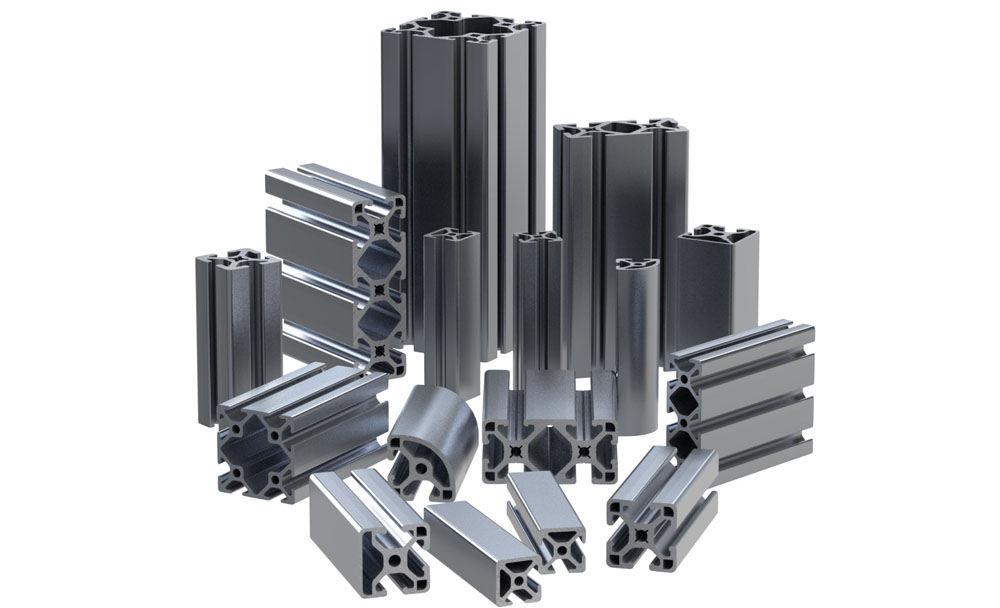
- Base Material Compliance: Mainstream use of SUS304 or 316L stainless steel; 316L is prioritized for core sterile zones to resist halide corrosion. Lighter-weight areas utilize an aluminum door frame structure.
- Surface Engineering: Hard anodized coating thickness ≥ 15 μm, hardness ≥ HV300; internal corner transition radius R ≥ 3 mm, flatness tolerance ≤ ±1 mm/m.
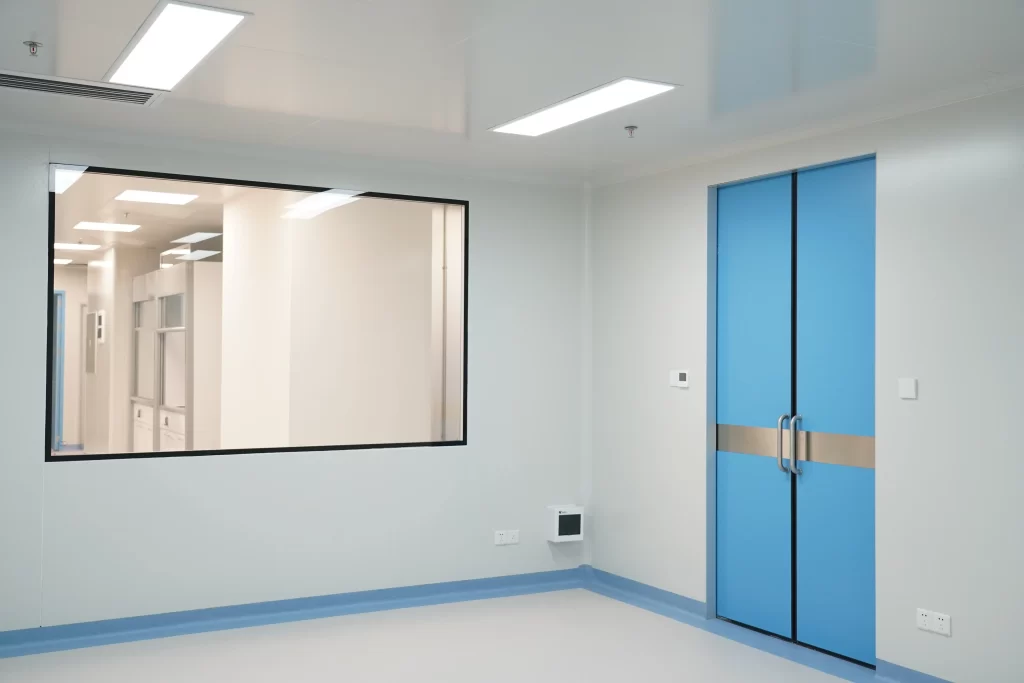
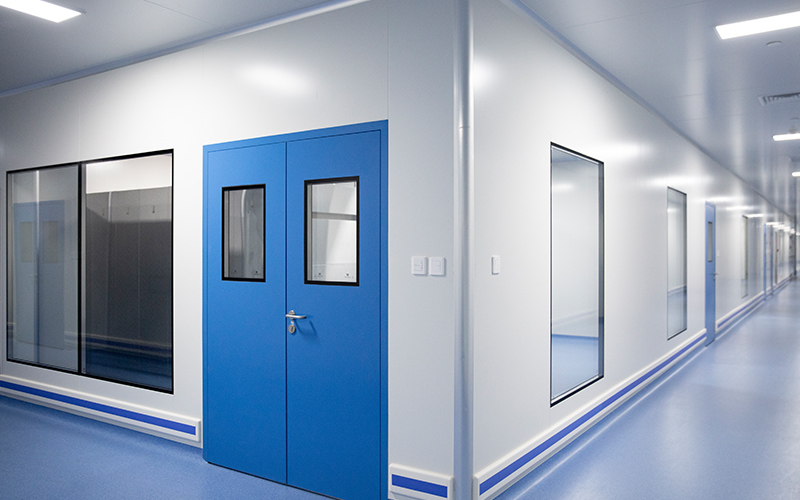
- Vision System: Standard vision panel door or door with glass panel, featuring double-glazed/laminated explosion-proof glass flush-mounted with the door frame, fully sealed around the perimeter with medical-grade silicone.
- Dimensional Matching: The standard doorway width is typically designed between 900 mm and 1200 mm, requiring strict alignment with material transfer carts and personnel traffic flow.
- Coating Requirements: Antibacterial/anti-static coatings must pass third-party abrasion testing, showing no flaking or VOC release after 5,000 cleaning cycles.
3.2 Sealing Structure & Airtightness Control
- Composite Sealing Design: Multi-strip silicone or EPDM seals + magnetic pre-tensioning + mechanical compression, forming a continuous, unbroken sealing band upon closure.
- Deformation Parameters: door seal compression set controlled at 15%–25%, resilience ≥ 85%, with a fluid-dynamics-optimized cross-section to minimize friction-induced particle generation.
- Leakage Control: Strictly aligns with hermetic door airtightness standards. Under pressure disturbance ΔP ≤ 10 Pa, system pressure recovery time must be ≤ 15 seconds.
- Dynamic Compensation: Integrated micro-differential pressure sensors (accuracy ±0.5 Pa) and variable-speed door closers utilize PID algorithms to adjust torque in real-time, maintaining stability within a ±5 Pa range.
- Installation Details: The door gasket retaining channel employs a quick-release snap design, eliminating particle retention and cleaning dead zones caused by traditional bolt fastening.
3.3 Drive Mechanism & Interlock Logic Safety
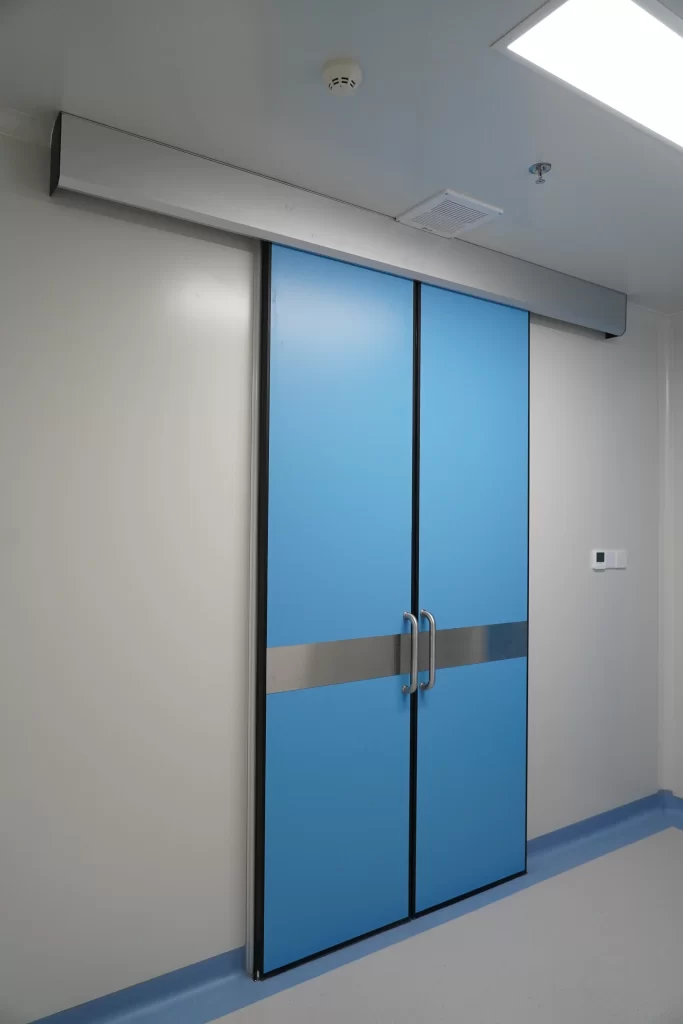
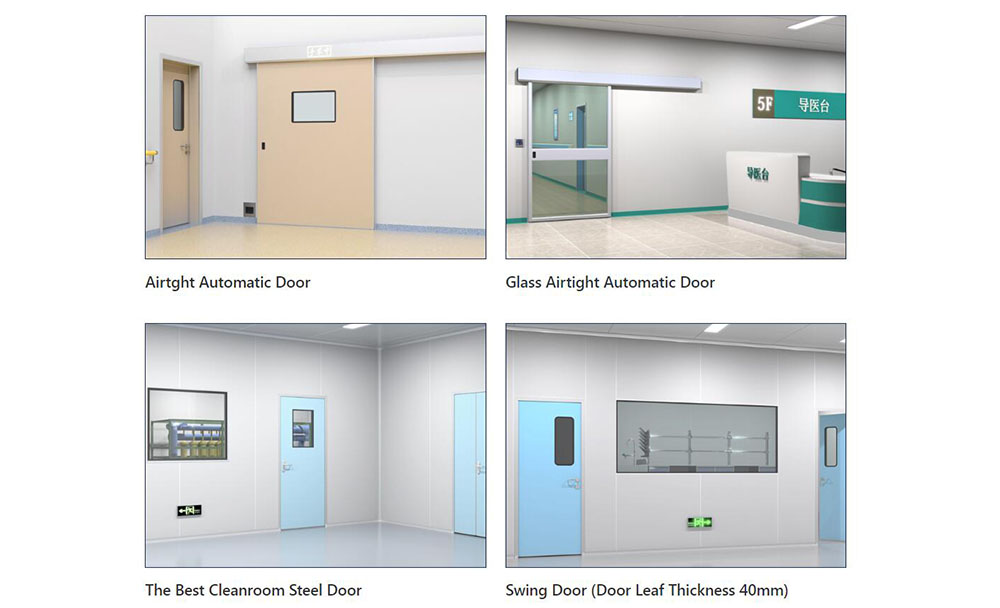
- Door Type Adaptation: High-frequency logistics zones use automatic sliding door, low-disturbance areas utilize cushioned swing doors, and airlock zones employ high-speed roll-up doors.
- Interlock Architecture: Dual-redundant control via PLC + hardwired circuits, supporting two-door/three-door logical interlocking. Automatically switches to a fail-safe egress mode upon power loss (compliant with fire codes).
- Airflow Control: The door swings direction strictly follows unidirectional airflow principles. Swing doors are limited to a 90°–110° opening angle to prevent reverse vortex disturbance.
- Safety Protection: Dual sensing via infrared light curtains + microwave radar. Anti-pinch response ≤ 0.5 seconds, drive torque ≤ 150 N, with a soft-landing opening/closing curve at the final stage.
- Data Traceability: All interlock actions, open/close frequencies, and alarm events generate tamper-proof Audit Trail logs.
3.4 Cleaning & Sterilization Compatibility & Durability
- Disinfectant Matrix: Compatible with alternating cycles of 70% IPA, 3% H₂O₂, peracetic acid, quaternary ammonium compounds, and chlorine-based agents for ≥ 500 cycles without discoloration, swelling, or coating peeling.
- VHP Tolerance: Sealing materials and electrical interfaces must withstand ≥ 5% concentration Vaporized Hydrogen Peroxide (VHP). Internal structures feature zero liquid-accumulation cavity design.
- Track System: hygienic doors utilize groove-less suspended guide rails, bottom clearance ≤ 2 mm, and come standard with insect/dust-proof brushes.
- Fire Safety Extension: When serving as a fire rated door, it must pass EN 1634 or GB 12955 fire resistance testing, with a fire resistance rating ≥ 60 minutes.
- Wall Interface: Joints between the door frame and cleanroom wall panels use seamless welding or cleanroom-grade specialized caulking to eliminate dirt traps.
IV. Validation Testing System & Audit Documentation Framework
4.1 DQ/IQ/OQ/PQ Full-Lifecycle Validation Pathway
- Design Qualification (DQ): Line-by-line URS mapping, FMEA risk assessment (focusing on interlock failure & seal leakage RPN), CFD pressure disturbance simulation.
- Installation Qualification (IQ): Level/plumb tolerance ≤ 2 mm/m, grounding resistance ≤ 0.1 Ω, verification of material metallurgical reports & batch traceability chain.
- Operational Qualification (OQ): Full-coverage interlock logic testing, ≥ 500,000 lifecycle cycles, operating noise ≤ 65 dB, power-loss emergency egress drills.
- Performance Qualification (PQ): Integrated testing with EMS/BMS for particle counting & microbial settle plate disturbance, 72-hour continuous pressure stability monitoring, ensuring no OOT trends.
Note: Execution of the cleanroom door installation protocol must be performed by a team with certified cleanroom construction qualifications. Mobile HEPA negative-pressure vacuum devices must be used throughout on-site operations. pharma cleanroom door validation must cover worst-case scenarios (e.g., simultaneous opening of adjacent airlock doors, transient HVAC start-up/shutdown).
4.2 Key Testing Methods & Standard Alignment
- Airflow Organization Verification: Smoke visualization method (ISO 14644-3 Annex B) to observe vortex paths during door opening/closing.
- Quantitative Leakage Testing: Pressure decay method (referencing ASTM E779 derived protocols), recording pressure decay rate over specific time intervals.
- Microbial Control: ISO 14698 wipe sampling method; critical contact surfaces in Grade A/B must show ≤ 1 CFU/25 cm².
- Material Compatibility: ASTM E2197 quantitative carrier method + GB/T 16886 biocompatibility extended assessment, with third-party toxicology reports.
4.3 Essential Audit Documentation Checklist & Data Integrity
- Basic Qualifications: Material metallurgical reports, coating MSDS, biosafety assessments, CMA/CNAS/SGS/TÜV third-party test certificates.
- Validation Documents: Complete DQ/IQ/OQ/PQ protocols & execution reports, deviation investigations (OOS/OOT), change control logs.
- Data Standards: Strict adherence to ALCOA+ principles, supporting timestamps, permission grading, electronic signatures, and raw data tamper-proofing.
- Audit Focus: Wall joint caulking records, seal strip batch traceability, pressure alarm response logs, on-site SOP execution consistency.
V. Standard Implementation Pathways & Multi-Market Regulatory Practices
5.1 NMPA Compliance Evolution & Unannounced Inspection Response Strategies
- High-Frequency Deficiencies: Software bypass vulnerabilities in interlock logic, expired seal strip usage without replacement records, material changes to doors without re-validation.
- New Regulation Impact: CDE technical guidelines impose new requirements for continuous manufacturing and isolator interfaces; doors must reserve flexible docking flanges and online monitoring ports.
- Local Advantages: Strong rapid customization capabilities, complete Chinese technical documentation systems, high on-site compliance adaptability. However, supplier batch consistency control must be strengthened.
- Control Mechanism: Establish a dedicated deviation log for doors. Pressure fluctuations > ±8 Pa lasting > 30 seconds must trigger Root Cause Analysis (RCA).
5.2 Standard Alignment Mechanisms for Japan, Korea & Southeast Asia
- Japan & Korea Additional Requirements: PMDA/MFDS supplement ISO 14644 with JIS K 3800/KS clauses, detailing high-humidity anti-condensation, seismic bracing, and redundant airlock design for sterile filling zones.
- PIC/S Transition Strategy: Emphasizes international restructuring of documentation systems, relying on mutual recognition of third-party reports (SGS/BV/Intertek).
- Local Assembly Model: Core components (motors/PLCs/sealing profiles) retain origin-country compliance certifications. On-site execution is limited to assembly qualification & functional testing, reducing cross-border audit risks.
5.3 Supply Chain Quality Management Under Parallel Standards
- Supplier Audits: Extend ISO 9001/13485 to tier-2 suppliers. Critical electronic components & medical-grade sealing materials must provide RoHS/REACH declarations & batch COAs.
- Test Mutual Recognition: Confirm test matrix coverage with testing agencies during DQ to avoid redundant multi-standard validation.
- Early Intervention: Lock core parameters (pressure recovery time, interlock delay, noise thresholds) in the URS phase to prevent major deviations from later engineering changes.
- O&M Integration: Strictly follow the cleanroom door maintenance checklist for periodic inspections. Incorporate seal degradation, guide rail wear, and sensor drift into trend monitoring.
VI. Full-Lifecycle Management & Continuous Compliance Strategies
- Preventive Maintenance (PM) Plan:
- Seal strip replacement: 12–24 months (dynamically adjusted based on disinfection frequency)
- Guide rail cleaning: Weekly wipe-down with zero particle residue
- Sensor calibration: Biannual accuracy verification for micro-differential pressure & infrared sensors
- Change Control Triggers: Material substitution, drive firmware upgrades, interlock logic modifications, door opening structural adjustments (any change requires impact assessment & re-validation)
- Personnel & Digital Management:
- Establish standardized operation training & error-interception mechanisms
- Deploy IoT door status real-time monitoring & digital twin pressure simulation
- Integrate operational data into a CSV framework for predictive maintenance & seamless MES/EMS bridging
- Aging Warning Mechanism: Introduce non-contact laser thickness measurement & elastic modulus online assessment to proactively identify door gasket failure risks.
VII. Conclusion & Compliance Selection Recommendations
The compliance of cleanroom doors fundamentally represents the deep coupling of "engineering rigor" and "documentation integrity." Against the backdrop of tightening cross-border regulations, pharmaceutical companies should prioritize the following actions:
- Proactively establish a cleanroom door compliance standards cross-standard mapping matrix, embedding QRM throughout the URS-to-O&M lifecycle.
- Select suppliers with proven NMPA+CE+PIC/S cross-audit experience, explicitly defining hard metrics for pressure recovery, interlock redundancy, and VHP tolerance.
- Reserve sterilization interfaces & digital data acquisition ports, and maintain an independent door change control log.
- Risk-oriented engineering design combined with full-lifecycle documentation management is the core pathway to bridging regulatory differences and ensuring continuous control of the pharmaceutical production environment.
In today's increasingly stringent cleanroom contamination control landscape, every pharmaceutical clean room door is not merely a physical passage, but a tangible defense line of the quality system.
Common Audit Questions & Compliance FAQ
Q1: Must cleanroom door seal strips be replaced during downtime if aging is detected?
A: According to PIC/S PI 046-1 and EU GMP Annex 1, if quantitative leakage testing shows pressure decay exceeds ISO 14644-3 thresholds, or visual/tactile inspection reveals permanent deformation, cracking, or hardness reduction > 15%, preventive replacement must be executed and documented as a change. Continued operation in a degraded state is prohibited and will be classified as a Major deficiency.
Q2: How to mitigate audit risks from automatic door interlock failure during power loss?
A: A dual-redundancy architecture of "hardwired safety relays + PLC logic" is mandatory. Upon power loss, the system must default to a fail-safe (power-off open) egress mode, with power-loss events logged. Interlock logic must never be temporarily bypassed via software overrides or jumper wires. Any debugging requires QA approval and must be logged under change control.
Q3: What are the design differences for doors between adjacent areas of different cleanliness grades?
A: Core Grade A/B zones must be equipped with hermetic door or airlock systems, maintaining a pressure gradient ≥ 10 Pa, with strictly interlocked operation. Grade C/D zones may utilize swing doors with vision panels or automatic sliding doors, but must guarantee a door seam leak rate ≤ 0.1%, and surface materials must pass compatibility testing with ≥ 3 broad-spectrum disinfectants over 500 cycles.
-
 Cleanroom Glass Windows Are The Key to Maintaining a Clean Environment
 -
 Top Aluminium Profile Manufacturers in China: Leading the Global Market
 -
 The Evolution of Air Tight Sliding Doors
 -
 AHU Aluminium Profile: A Comprehensive Guide
 -
 The Importance of Choosing the Right Cleanroom Door in Vietnam
 -
 The Benefits of Hospital Automatic Doors: Enhancing Efficiency and Safety
 -
.jpg) The Best Bathroom Door Manufacturers - Unlocking Endless Possibilities!
The Best Bathroom Door Manufacturers - Unlocking Endless Possibilities! -
 Unlock the Possibilities with AJ Manufacturing Doors
 -
 Make a Statement with Manufactured Home Interior Doors!
 -
 what is aluminum profile? Aluminum Profiles for Your Home is the best option
-
 5 Hermetic Door Mistakes That Break the Seal
 -
 Hospital Room Door Size by Room Type: Width and Clearance
 -
 Retrofit Manual Doors with Electronic Glass Operators
 -
 Hospital Emergency Exit Doors: 90 Minute Fire Rating Meets Infection Control
 -
 ICU and Isolation Door Requirements Hospitals Often Overlook
 -
 Laboratory Door Requirements for BSL-2 and BSL-3 Containment
 -
 Retrofitting Hospital Sliding Doors: Upgrade Wards Without a Rebuild
 -
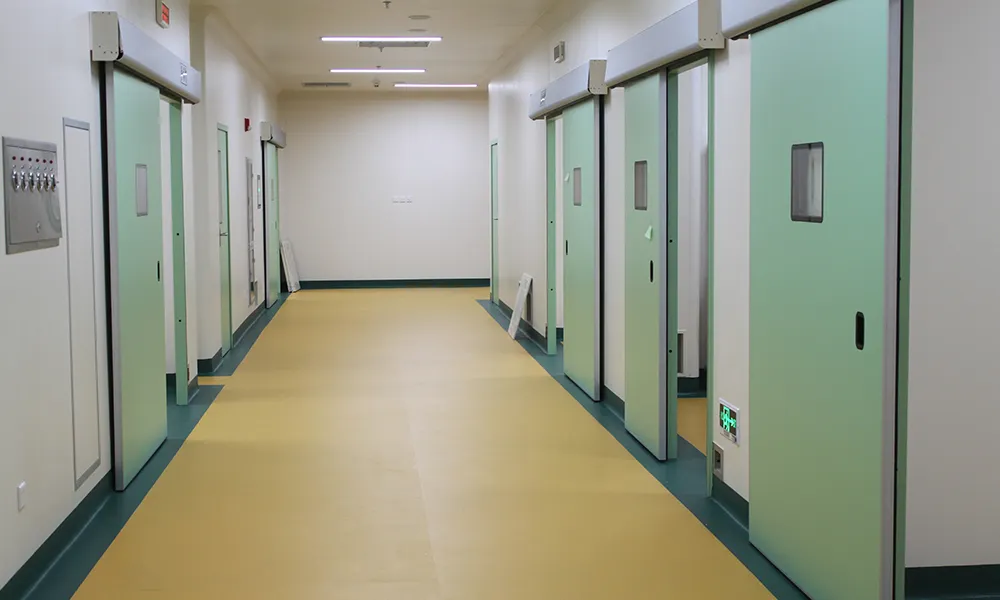 Why Airtight Hospital Sliding Doors Are Critical for Infection Control
 -
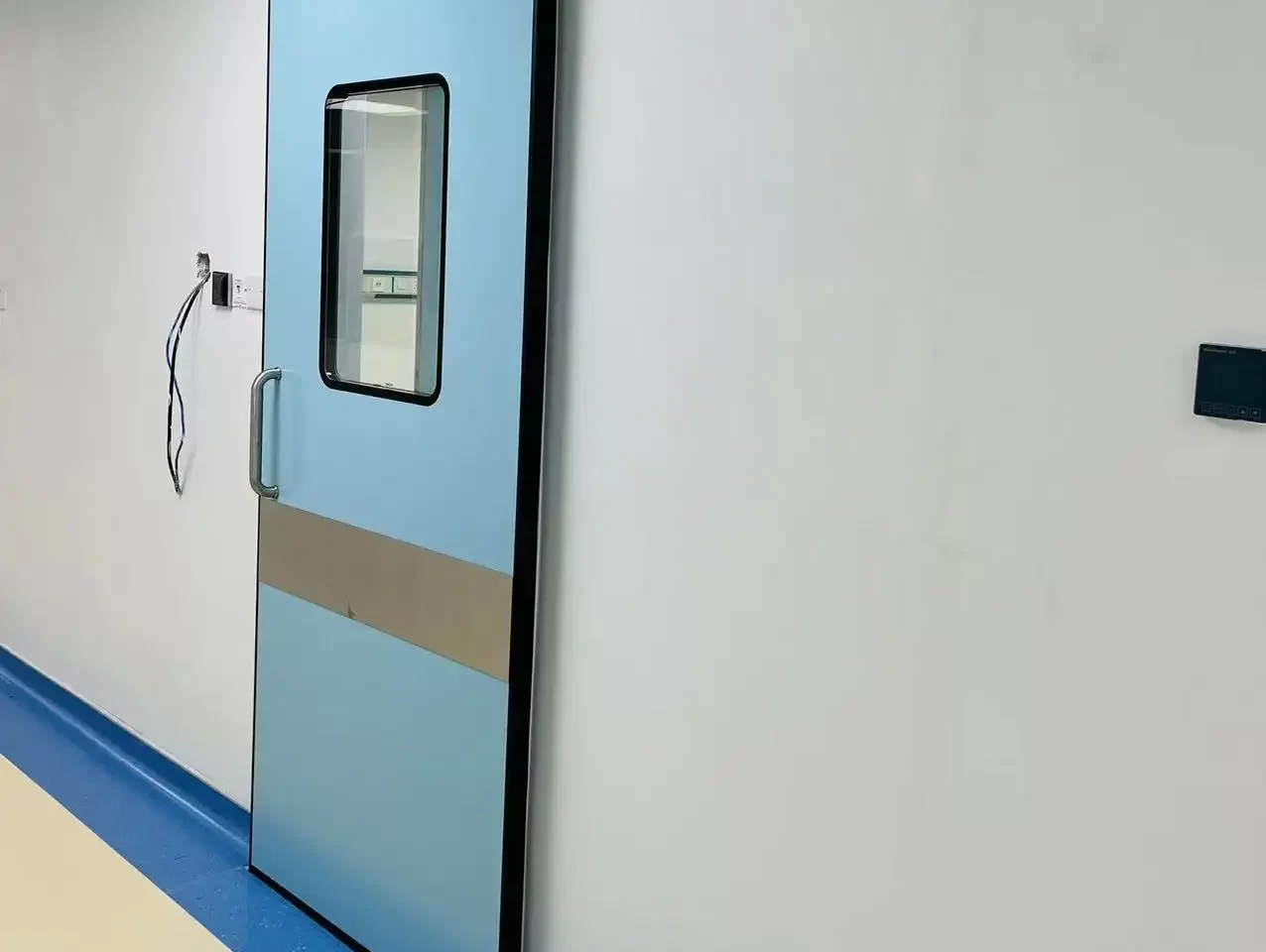 Automatic cleanroom door systems: sensor, actuator and access control integration
 -
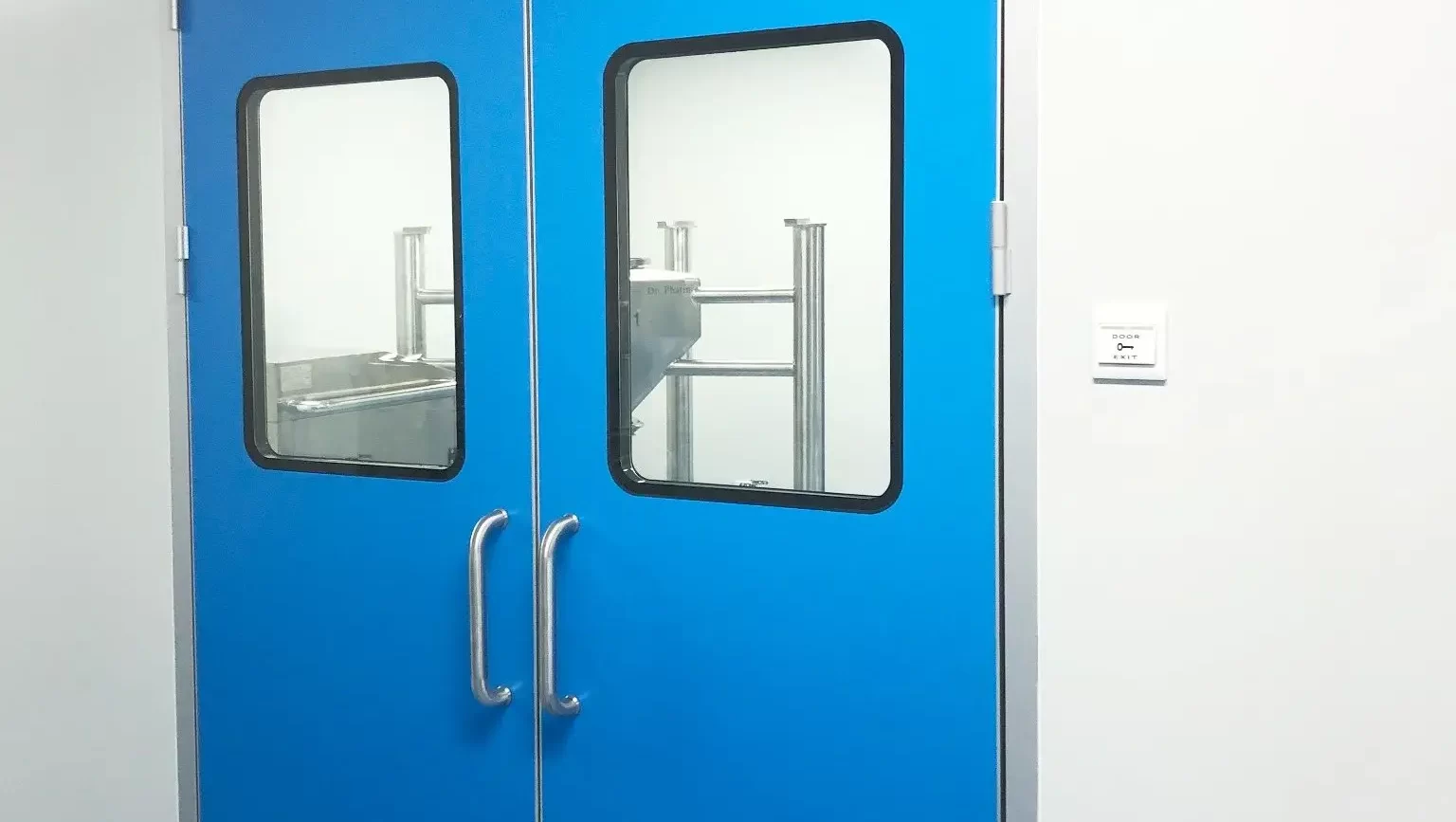 Cleanroom Door Materials: Stainless Steel vs HPL vs FRP vs Aluminum Comparison



-

Home
-

Tel
-

Email
-

Contact


Guangzhou Yizhong Aluminum Industry Co., Ltd.
We are always providing our customers with reliable products and considerate services.
We are always providing our customers with reliable products and considerate services.
Speak Your Mind