
How Airtight Doors Save Building Energy in 2026
The Dynamic Thermal Boundary of the Building Envelope
In building energy modeling, door assemblies account for less than 15% of facade area yet contribute up to 40% of uncontrolled heating and cooling loads due to air infiltration. As 2026 brings stricter global airtightness codes and a focus on existing-building optimization, the airtight door has shifted from a passive barrier to an active energy regulation component. This guide details the physics, materials, compliance standards, and lifecycle ROI of modern airtight door systems, providing engineers and facility managers with a quantifiable framework for reducing operational energy waste.

1. Aerodynamic & Thermal Loss Mechanisms
Energy loss at doorways stems from the coupling of aerodynamics and heat transfer. In operational environments, uncontrolled leakage primarily occurs through three pathways:
- Infiltration & Stack Effect Superposition
- Winter temperature differentials drive cold air inward through lower seams while warm air escapes at the top.
- Summer conditions introduce hot, humid air that simultaneously increases dehumidification and sensible cooling loads.
- Every 10 meters of building height generates an additional 0.8 to 1.2 Pa of stack effect pressure.
- Poorly oriented door swings can create negative pressure suction during peak wind events, drastically increasing unplanned ventilation losses.
- Thermal Bridging & Localized Condensation
- Metal frames without thermal breaks exhibit Ψ-values of 0.8 to 1.5 W/(m·K), far exceeding modern insulated walls (~0.15 W/(m²·K)).
- Surface temperatures below the indoor dew point trigger condensation.
- Persistent moisture accelerates elastomer degradation and promotes mold growth at perimeter joints.
- Multi-Stage Sealing Logic
- Primary Weather Barrier: The door seal manages rainwater runoff and intercepts coarse particulates before they reach the main assembly.
- Compression Air Barrier: The door gasket engages through elastic deformation upon closure, typically calibrated to 50–70 Shore A hardness for optimal rebound and compression set resistance.
- Performance Validation: Field data confirms that composite sealing reduces permeability from 15 m³/(h·m²) to below 3 m³/(h·m²). At a 20°C differential, this cuts annual sensible load by ~850 kWh per door, or ~42.5 MWh across a 50-door commercial facade.
2. Core Component Architecture & System Integration
The performance ceiling of an airtight door is determined by profile engineering, core insulation, and automated compensation systems. Modern products have shifted from passive sealing to active, system-integrated solutions.
- Profile & Frame Thermal Optimization
- A properly embedded door with frame ensures rigid structural continuity, preventing thermal cycling from expanding perimeter gaps.
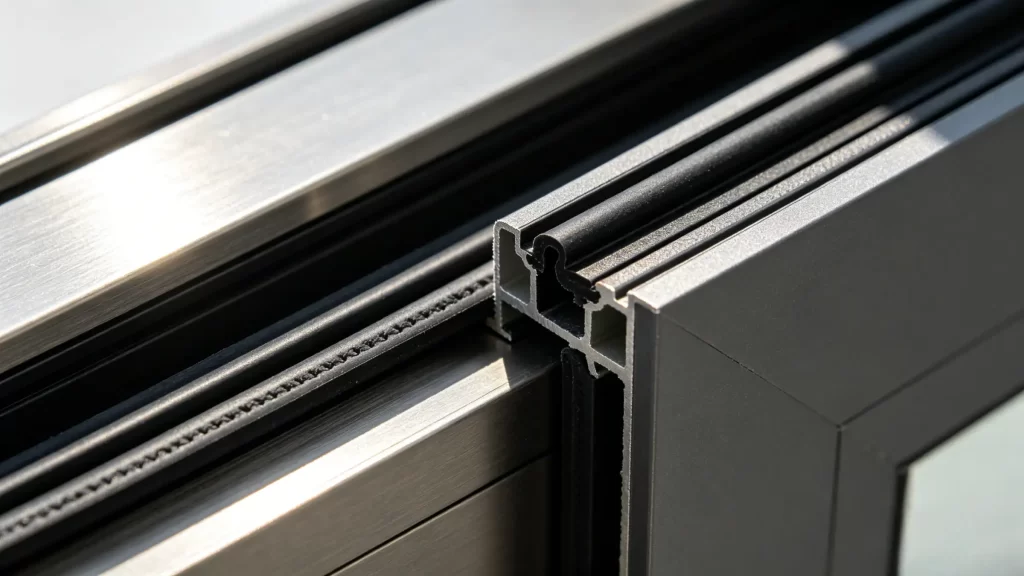
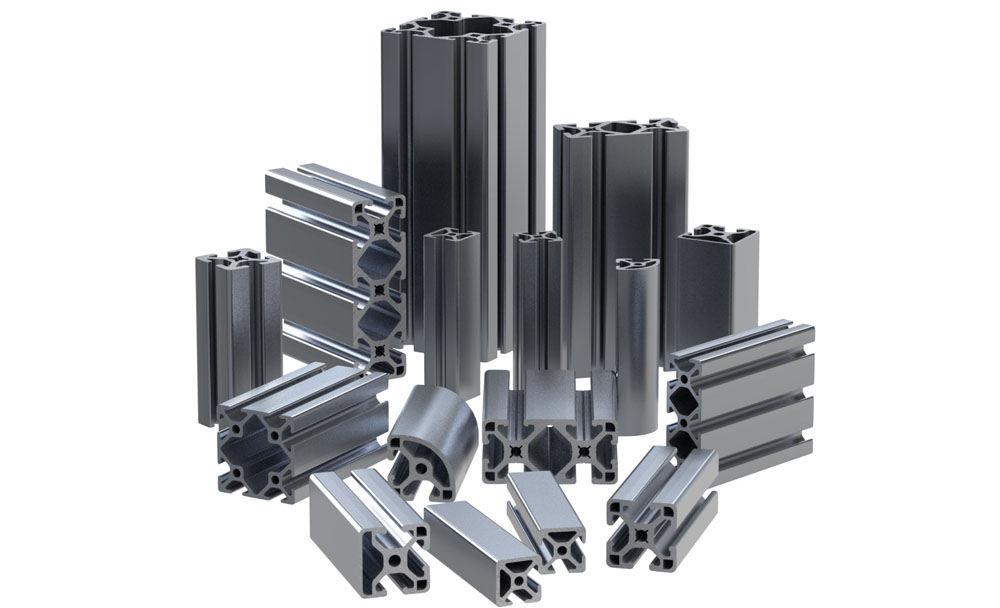
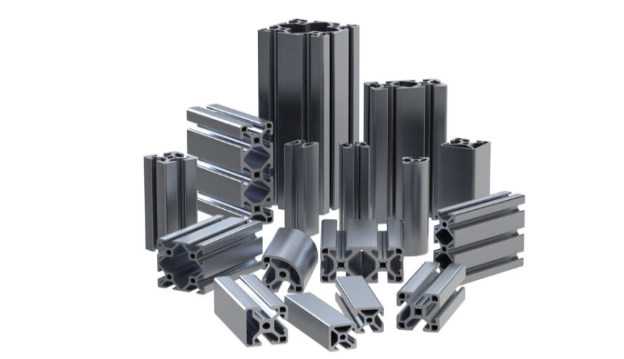
- The aluminum door frame now standardizes PA66 polyamide thermal breaks and multi-chamber cavity designs.
- High-pressure polyurethane foam infill stabilizes the overall U-value between 0.8 and 1.2 W/(m²·K).
- Optimizing the frame-to-panel ratio below 18% significantly reduces effective conductive surface area.
- Vision & Traffic Compatibility
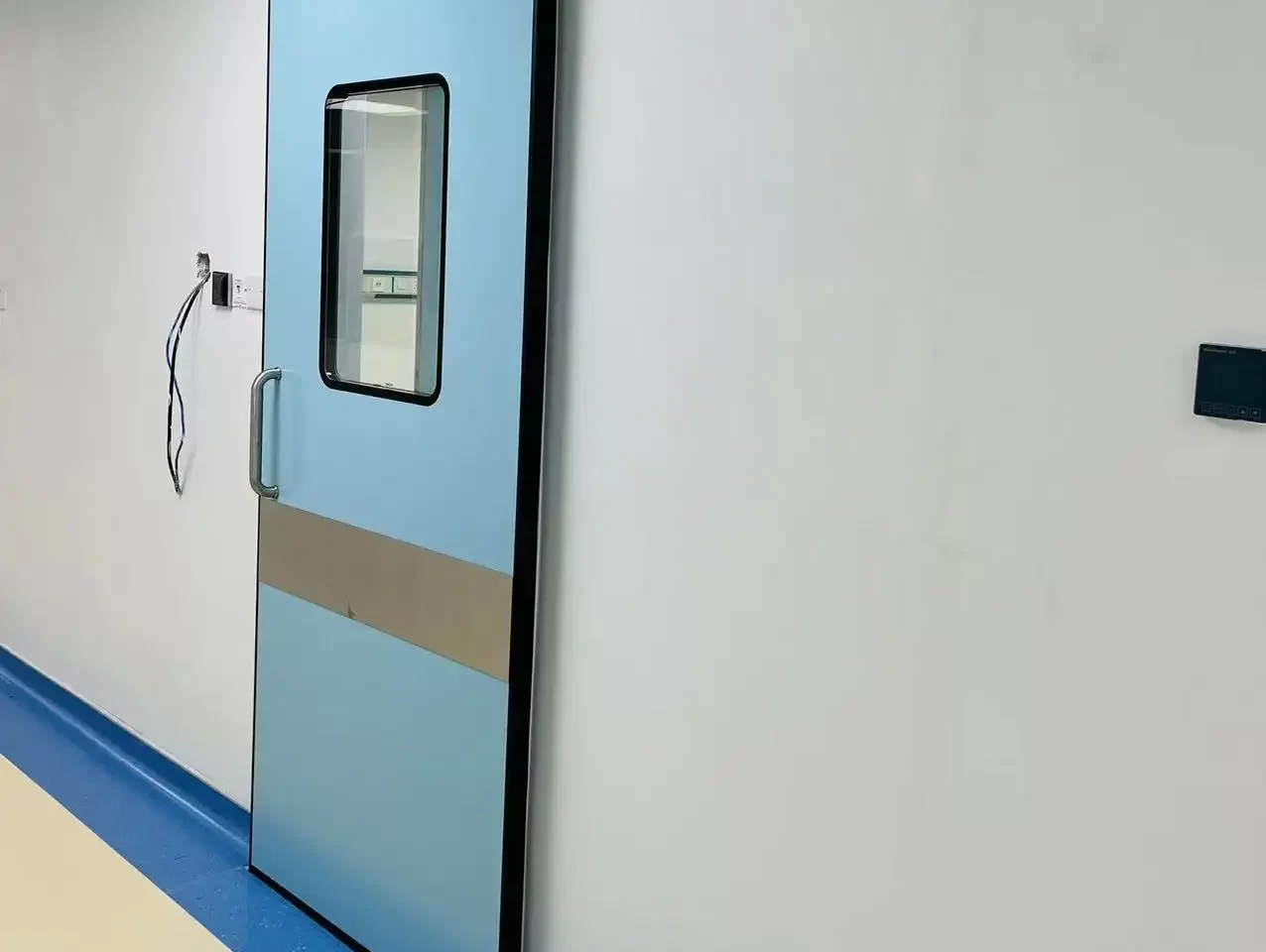
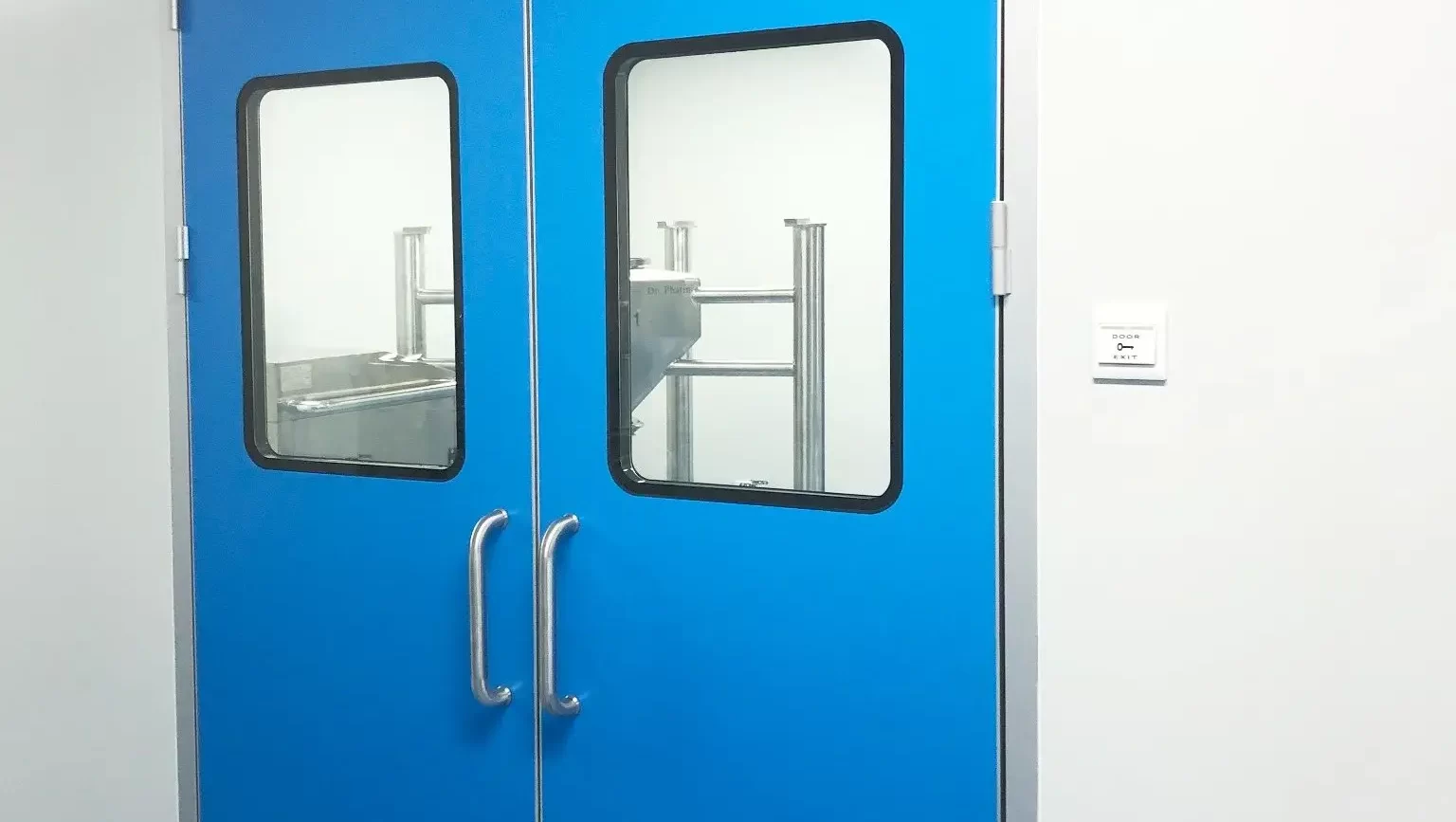
- Demand for the vision panel door continues to grow in clinical and industrial settings.
- Double or triple glazing with argon fills maintains daylight harvesting without degrading thermal performance.
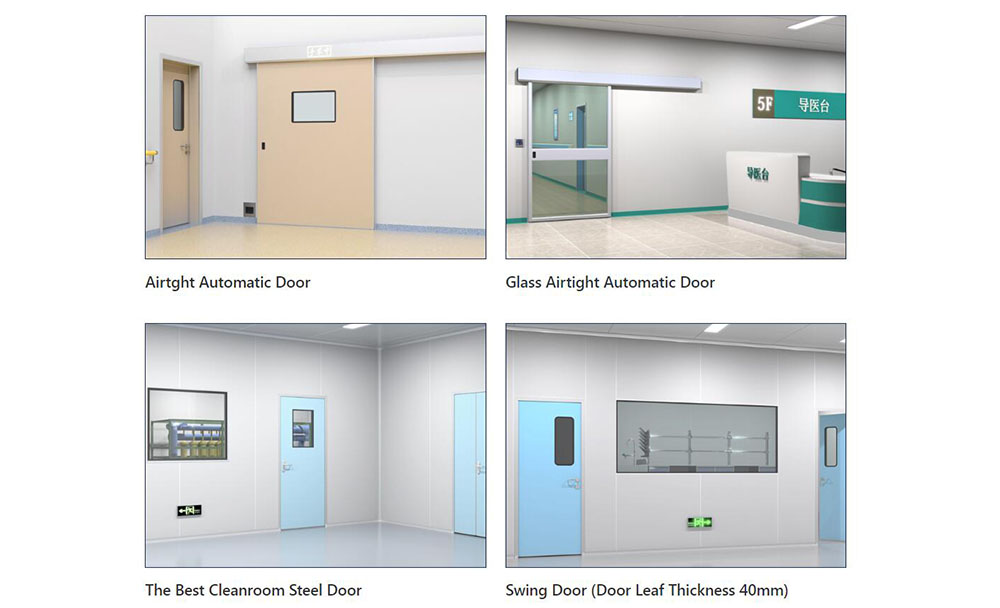
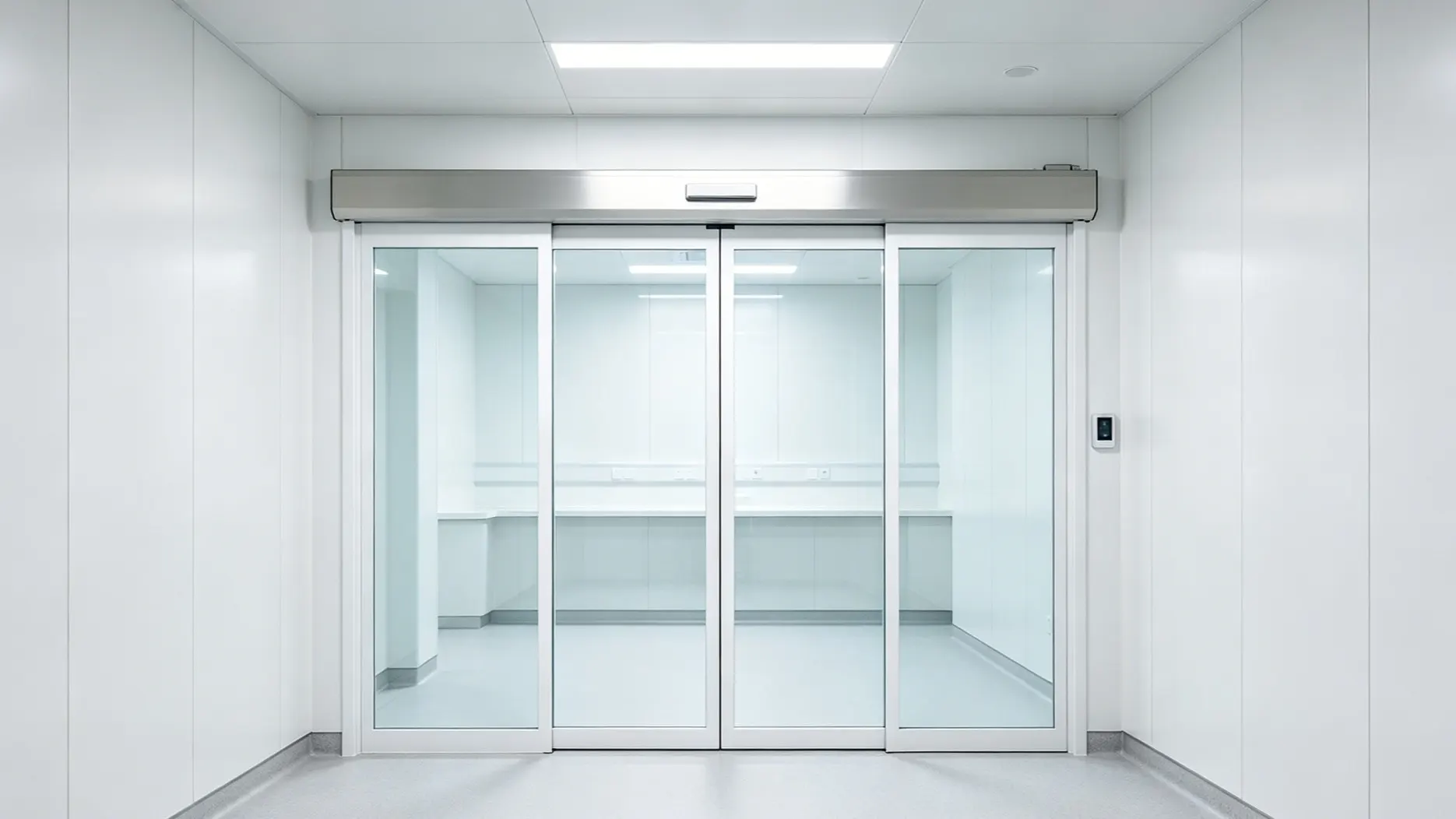
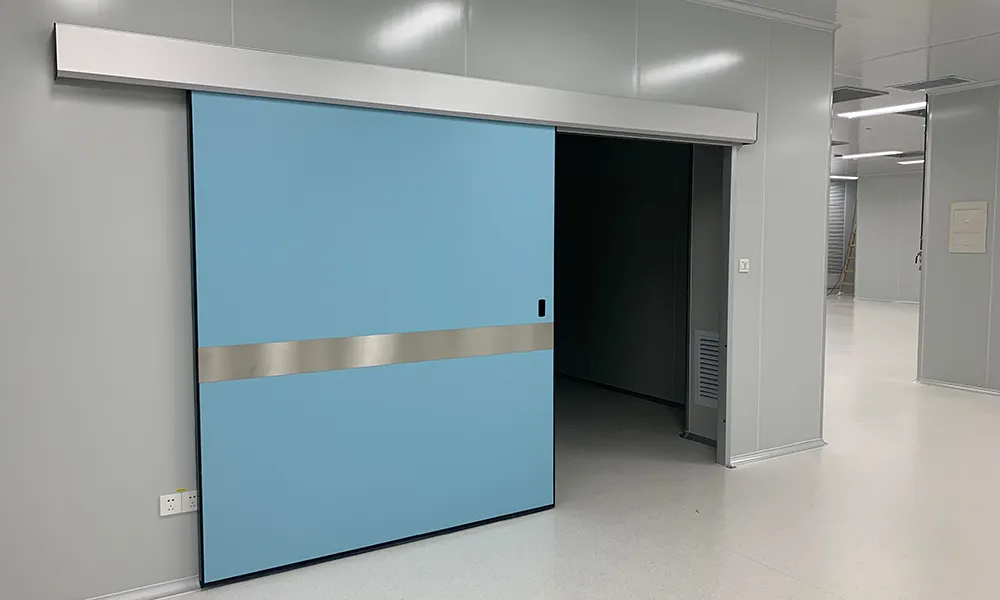
- For high-traffic corridors, the automatic sliding door utilizes track-suspended mounting and synchronized drop-down bottom seals.
- This configuration eliminates lower leakage dead zones while reducing mechanical wear and pedestrian resistance.
- HVAC Pressure Synergy
- Airtight doors directly dictate indoor microclimate stability and require rapid terminal compensation.
- The air diffuser must be strategically placed to decouple supply jets from doorway airflow paths, preventing localized seal disengagement.
- The vent damper in the return network modulates within milliseconds based on differential pressure feedback.
- This integrated logic reduces unnecessary fan runtime by over 20% and stabilizes zone pressurization.
3. Vertical Applications & Compliance Standards
Technical requirements vary significantly across functional zones. Selection must align precisely with space pressurization strategies and contamination control protocols.
- Cleanroom & Pharmaceutical Environments
- cleanroom doors serve as critical control points for ISO 14644 air cleanliness classifications.
- Surfaces require seamless welding and antimicrobial coatings to eliminate dust accumulation zones.
- Frame-to-wall interfaces must be sealed with medical-grade silicone to prevent particulate migration.
- Within cleanroom contamination control frameworks, door-to-HVAC linkage provides a pressure buffer during personnel transit.
- Healthcare & General Building Applications
- hospital doors must balance infection control mandates with accessibility compliance.
- General ward doors prioritize low operating force and chemical resistance to repeated disinfection.
- Operating rooms maintain positive pressure to exclude external contaminants, requiring seam infiltration rates below 0.5 m³/(h·m²).
- Dimension Codes & Safety Compliance
- Standard Sizing: The standard doorway width typically ranges from 1,050 mm to 1,350 mm to accommodate equipment logistics and fire egress. Modular alignment with standard door size and typical door height (2,100–2,400 mm) reduces on-site trimming and secondary caulking.
- Fire & Safety: The fire rated door must satisfy airtightness testing while meeting EN 1634 or GB 12955 fire resistance ratings (60–90 minutes). Dual-certified units use flame-retardant cores and intumescent seals.
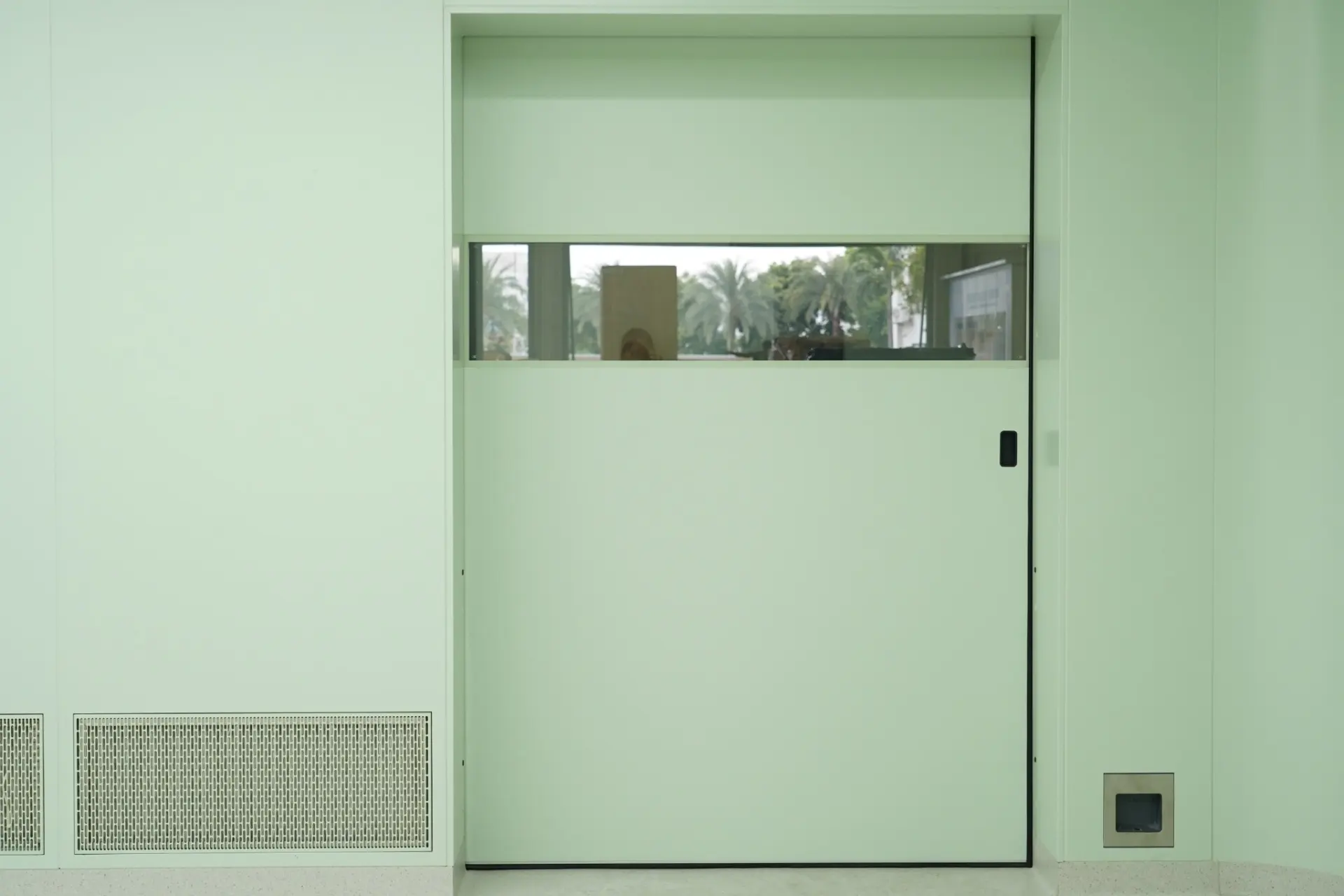
- Terminology Alignment: The industry frequently uses hermetic door interchangeably to denote zero-leakage specifications. Validation requires laboratory differential pressure testing paired with on-site blower door diagnostics.
4. Engineering Implementation, O&M, and Investment Return
The energy savings potential of airtight doors can be front-loaded through systematic modeling, while full lifecycle management sustains long-term performance.
- Standardized Construction & Installation Protocols Installation quality dictates over 60% of final field performance. Strict adherence to the sliding door installation SOP prevents commissioning failures:
- Frame Alignment: Vertical/horizontal deviations must stay ≤2 mm per 2 m, verified with a laser level.
- Gap Infusion: Use low-expansion polyurethane foam. Post-curing trimming must achieve ≥95% fill density to eliminate thermal bridging.
- Gasket Pre-compression: Clean profile channels first. Maintain 15–25% pre-compression to avoid motor overload or barrier failure.
- Three-Step Commissioning: Static pressure hold → dynamic cycle testing → BMS sensor threshold calibration.
- Digital O&M & Lifecycle Management
- Seal Replacement: Elastomeric seals typically require replacement every 5–8 years. Trigger immediate replacement if permanent compression set exceeds 30% or surface hardening occurs.
- Mechanical Care: Clean tracks and hinges quarterly. Apply silicone-based lubricants only; avoid mineral oils to prevent EPDM degradation.
- Predictive Monitoring: automatic door maintenance should track motor current waveforms, controller fault codes, and sensor zero-drift. Digital O&M platforms shift workflows from reactive repair to condition-based servicing.
- ROI & Lifecycle Cost Analysis
- Payback Windows: Initial premiums range from 1.8x to 2.5x over standard doors. Commercial offices average 3.5–4 year paybacks. Climate-controlled hospitals and labs compress this to 2–3 years.
- Dynamic Modeling: LCC calculations must incorporate discount rates (5–7%), projected energy escalation (3–4% annually), and 15–20 year equipment cycles.
- ESG & Certification: Envelope upgrades directly contribute to LEED v5, BREEAM, and China Green Building scoring. Several municipalities offer subsidies for near-zero energy demonstration projects.
Conclusion: From Passive Sealing to Active Energy Management
Modern airtight doors function as active energy regulators rather than passive architectural hardware. By stabilizing indoor pressure, reducing HVAC strain, and integrating with digital building management systems, they deliver verifiable operational savings. For new builds, early-stage airtightness simulation is critical. For retrofits, upgrading high-traffic and conditioned-space doors yields the fastest ROI. As 2026 compliance standards tighten, specifying and maintaining high-performance airtight doors is now essential for energy efficiency, regulatory compliance, and long-term facility resilience.
-
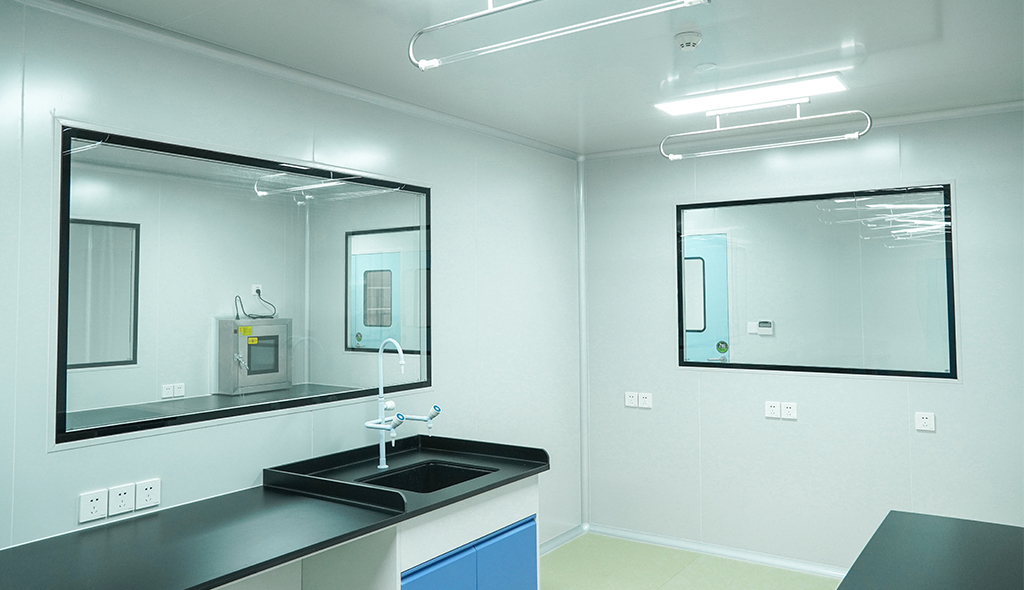 Cleanroom Glass Windows Are The Key to Maintaining a Clean Environment
 -
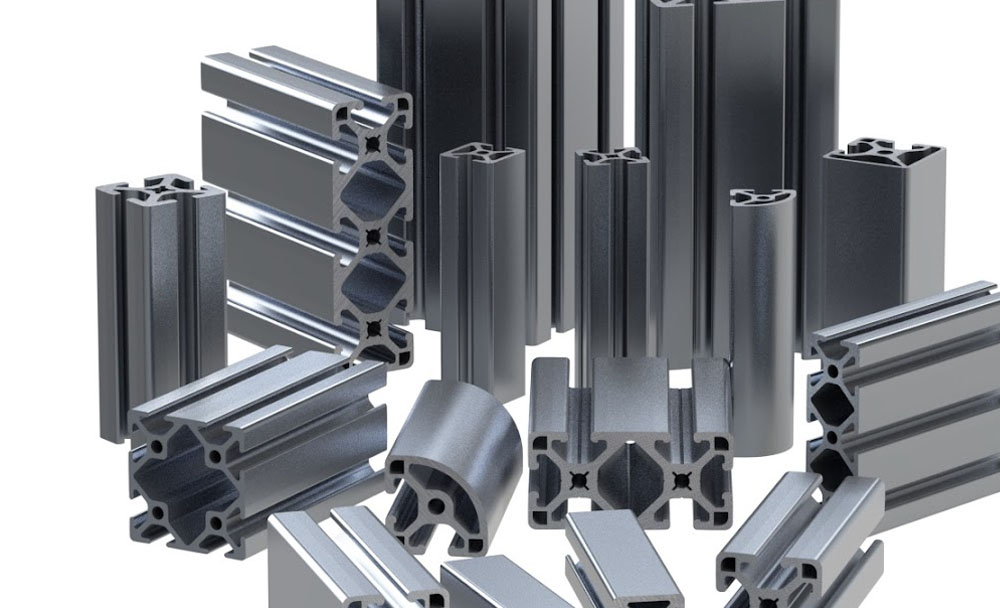 Top Aluminium Profile Manufacturers in China: Leading the Global Market
 -
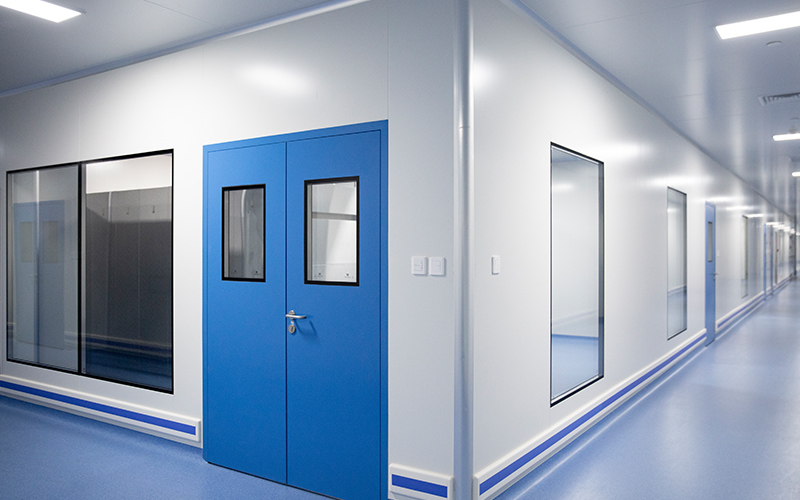 The Evolution of Air Tight Sliding Doors
 -
 AHU Aluminium Profile: A Comprehensive Guide
 -
 The Importance of Choosing the Right Cleanroom Door in Vietnam
 -
 The Benefits of Hospital Automatic Doors: Enhancing Efficiency and Safety
 -
.jpg) The Best Bathroom Door Manufacturers - Unlocking Endless Possibilities!
The Best Bathroom Door Manufacturers - Unlocking Endless Possibilities! -
 Unlock the Possibilities with AJ Manufacturing Doors
 -
 Make a Statement with Manufactured Home Interior Doors!
 -
 what is aluminum profile? Aluminum Profiles for Your Home is the best option
-
 5 Hermetic Door Mistakes That Break the Seal
 -
 Hospital Room Door Size by Room Type: Width and Clearance
 -
 Retrofit Manual Doors with Electronic Glass Operators
 -
 Hospital Emergency Exit Doors: 90 Minute Fire Rating Meets Infection Control
 -
 ICU and Isolation Door Requirements Hospitals Often Overlook
 -
 Laboratory Door Requirements for BSL-2 and BSL-3 Containment
 -
 Retrofitting Hospital Sliding Doors: Upgrade Wards Without a Rebuild
 -
 Why Airtight Hospital Sliding Doors Are Critical for Infection Control
 -
 Automatic cleanroom door systems: sensor, actuator and access control integration
 -
 Cleanroom Door Materials: Stainless Steel vs HPL vs FRP vs Aluminum Comparison


-

Home
-

Tel
-

Email
-

Contact


Guangzhou Yizhong Aluminum Industry Co., Ltd.
We are always providing our customers with reliable products and considerate services.
We are always providing our customers with reliable products and considerate services.
Speak Your Mind