
Do Commercial Buildings Need Fire Rated Doors
In building fire safety and compliance, a fire rated door is not an optional upgrade. It is a mandatory requirement for nearly all commercial and public facilities. Too many projects face inspection rejections, insurance claim denials, or liability issues simply because owners and contractors confuse residential fire standards with commercial codes. This article breaks down the regulatory logic, mandatory installation scenarios, system-level inspection criteria, and procurement strategies to provide a practical compliance framework for your project.
I. Core Concept: Why a fire rated door Is a Complete System, Not Just a Single Door Panel
Standard doors are designed solely for access and basic privacy. In contrast, a fire rated door is engineered to maintain structural integrity and thermal insulation under a standard time-temperature curve, effectively blocking fire spread and toxic smoke migration. According to testing standards like UL 10C, EN 1634, and GB 12955, a compliant door must function as a complete fire door assembly built around a door with frame.
The system relies on four integrated components:
- Door panel and core: Filled with mineral wool or specialized honeycomb structures. Thickness and density are thermally calculated to strictly match door dimensions and the required fire rating duration.
- Frame and anchoring: The frame must carry an equivalent fire resistance rating. Its structural anchors must pass deformation tests to prevent detachment during a fire event.
- Sealing components: A door seal and door gasket (intumescent strips) expand 3–5 times when exposed to 180°C–200°C heat, sealing gaps around the perimeter to block smoke and flames. This is a passive protection feature completely absent in standard doors.
- Hardware and closing system: Hinges, door closers, and coordinators must be rated for the same fire duration. Ordinary hardware softens and fails rapidly under high heat, causing the door to jam or collapse.
II. Residential vs. Commercial Buildings: The Underlying Logic of Code Differences
The fire protection design philosophies for residential and commercial structures differ fundamentally, directly impacting the strictness of commercial compliance requirements.
1. Fire Load and Code Classification
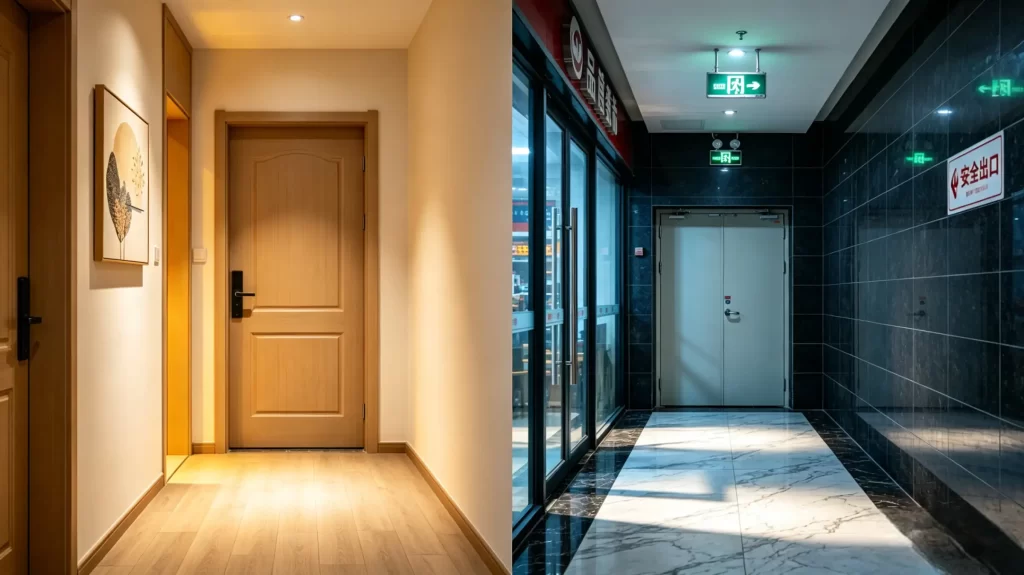
Residential spaces typically have predictable fire loads, and occupants are familiar with escape routes. Commercial buildings, however, combine high occupant density, complex mixed-use functions, and dense vertical shafts. Codes dynamically escalate fire compartment requirements based on occupancy type and building height. Consequently, commercial areas generally mandate 60–120 minute fire ratings. While standard doorway width and standard door size serve as baseline parameters, commercial projects often require custom thermal-structural reviews to accommodate accessibility mandates and heavy equipment movement.
2. Inspection and Maintenance Frequency
Residential buildings typically rely on routine property management checks post-handover. Commercial facilities, however, must undergo mandatory annual third-party inspections. Fire authorities maintain strict logs for the closing performance, alarm integration logic, and seal integrity of every fire rated door. Facilities without documented inspection protocols face fines, operational suspension, or forced retrofits.
III. Mandatory Installation Zones and Specialized Applications in Commercial Buildings
Per mainstream codes like IBC, NFPA 80, and GB 50016, the following commercial zones must be equipped with appropriately rated fire rated door assemblies:
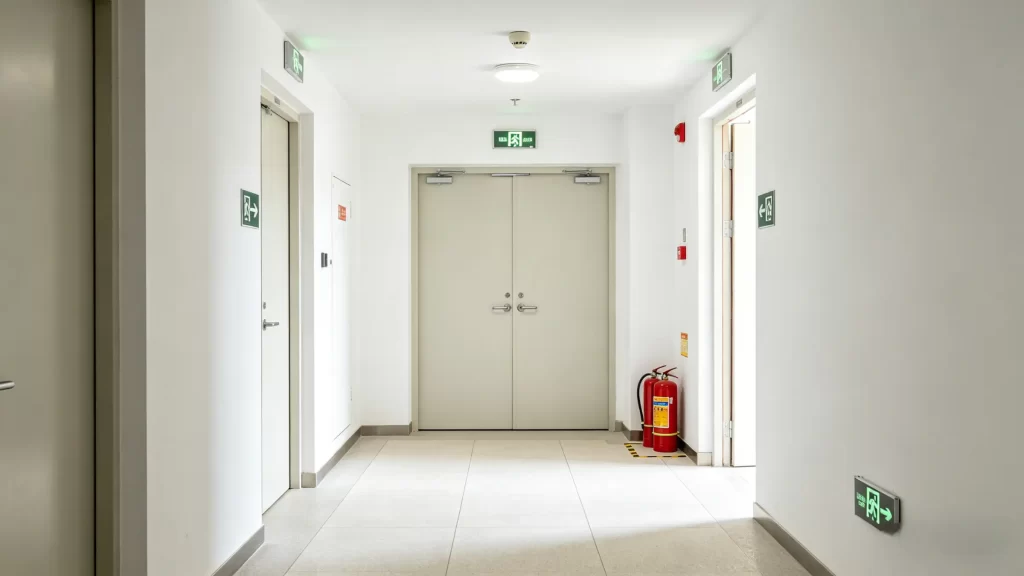
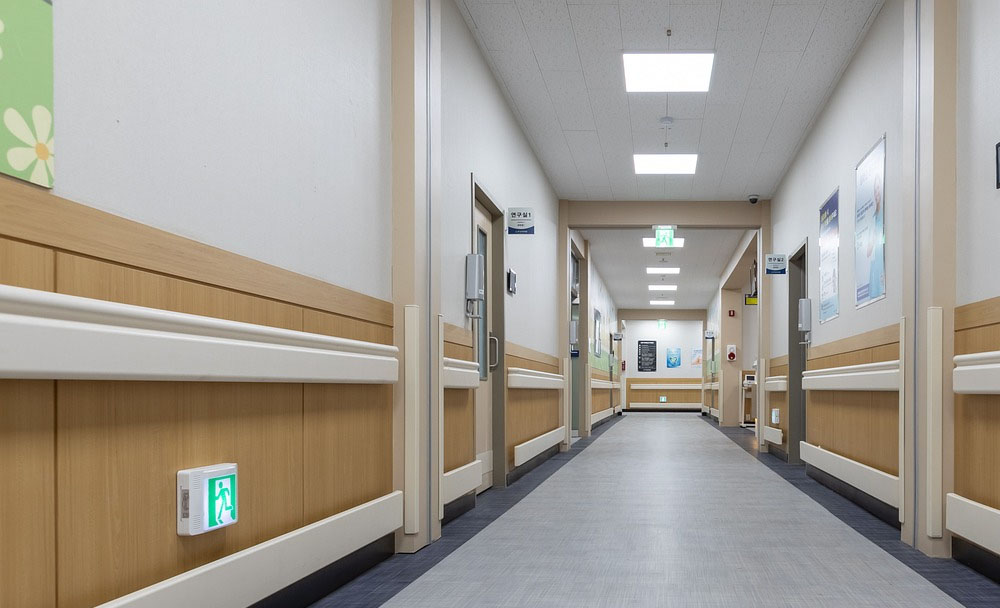
- Egress corridors and smoke-proof stairwell lobbies: door swings must strictly align with the direction of egress. Double-leaf doors require coordinators and must remain normally closed.
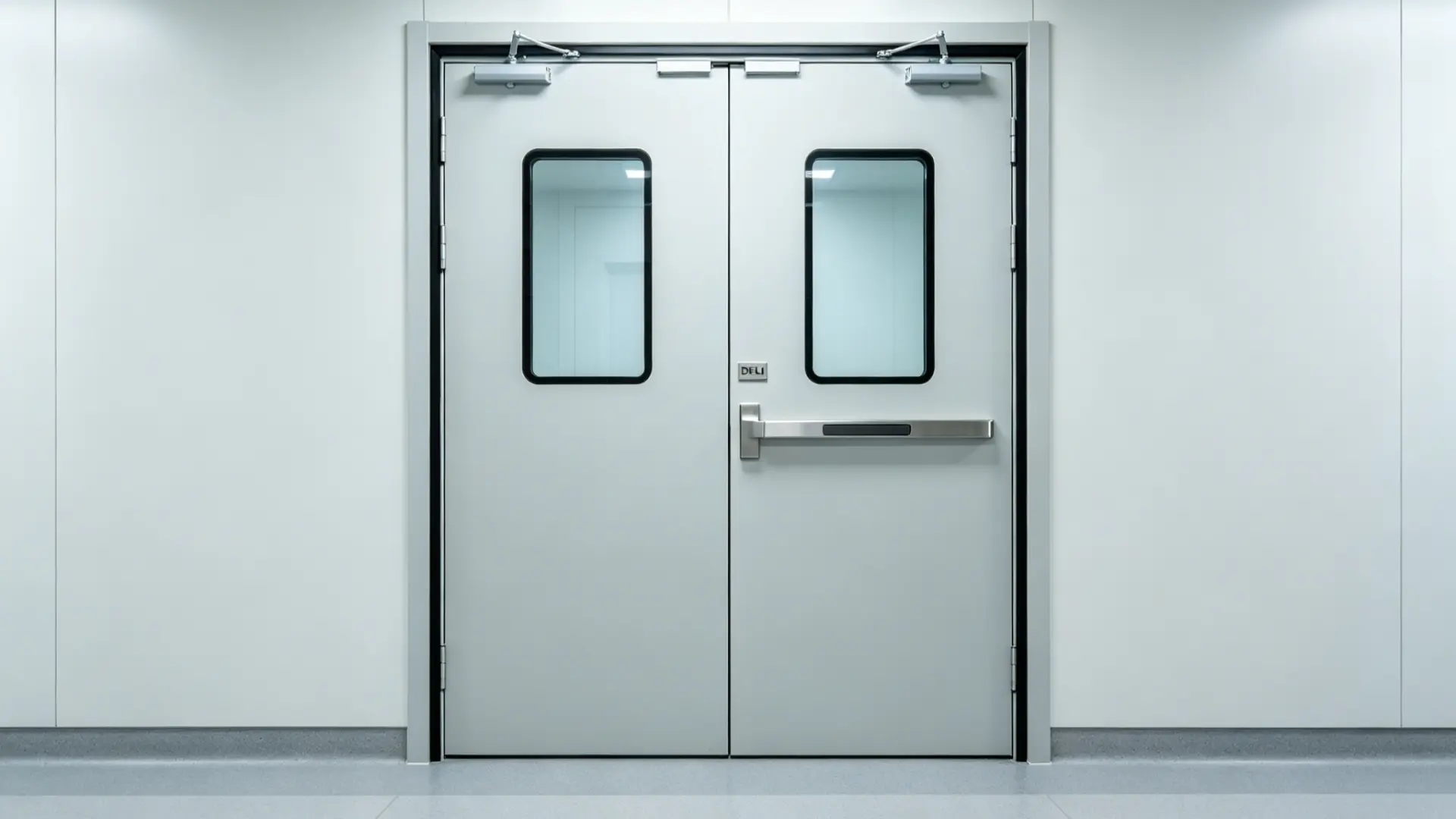
- High-traffic exits and emergency routes: Commonly specified as a push bar door to enable rapid, keyless evacuation and prevent crowd crush incidents.
- Observation and monitoring zones: Commercial corridors, kitchen back-of-house, and equipment rooms frequently utilize a door with window. Note: Vision panels must use composite fire-rated glass, and their surface area is strictly capped by code.
- Specialized facility requirements:
- Healthcare facilities: hospital doors must balance fire protection, infection control, and acoustic dampening, often featuring airtight designs for patient wards.
- Research & laboratories: A lab door must resist corrosion and chemical exposure. Certain biosafety labs require dual certification for both airtight containment and fire resistance.
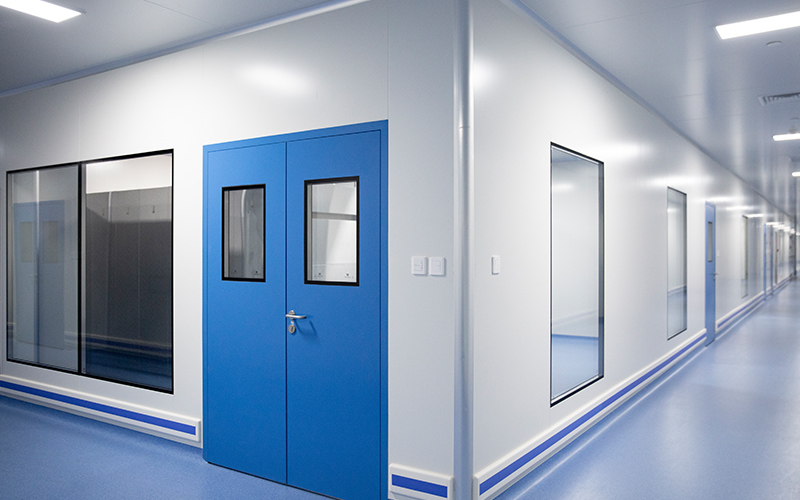
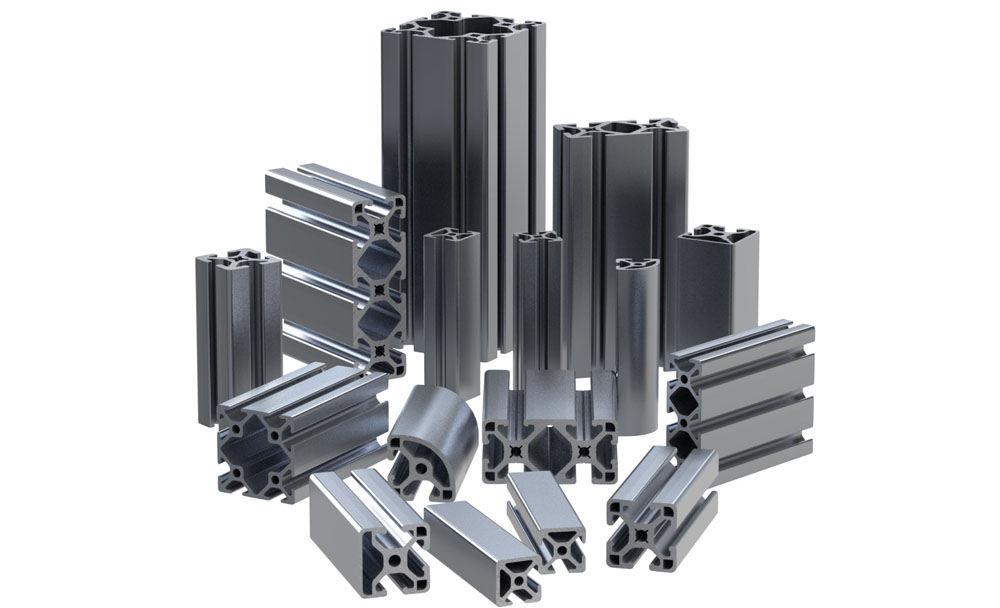
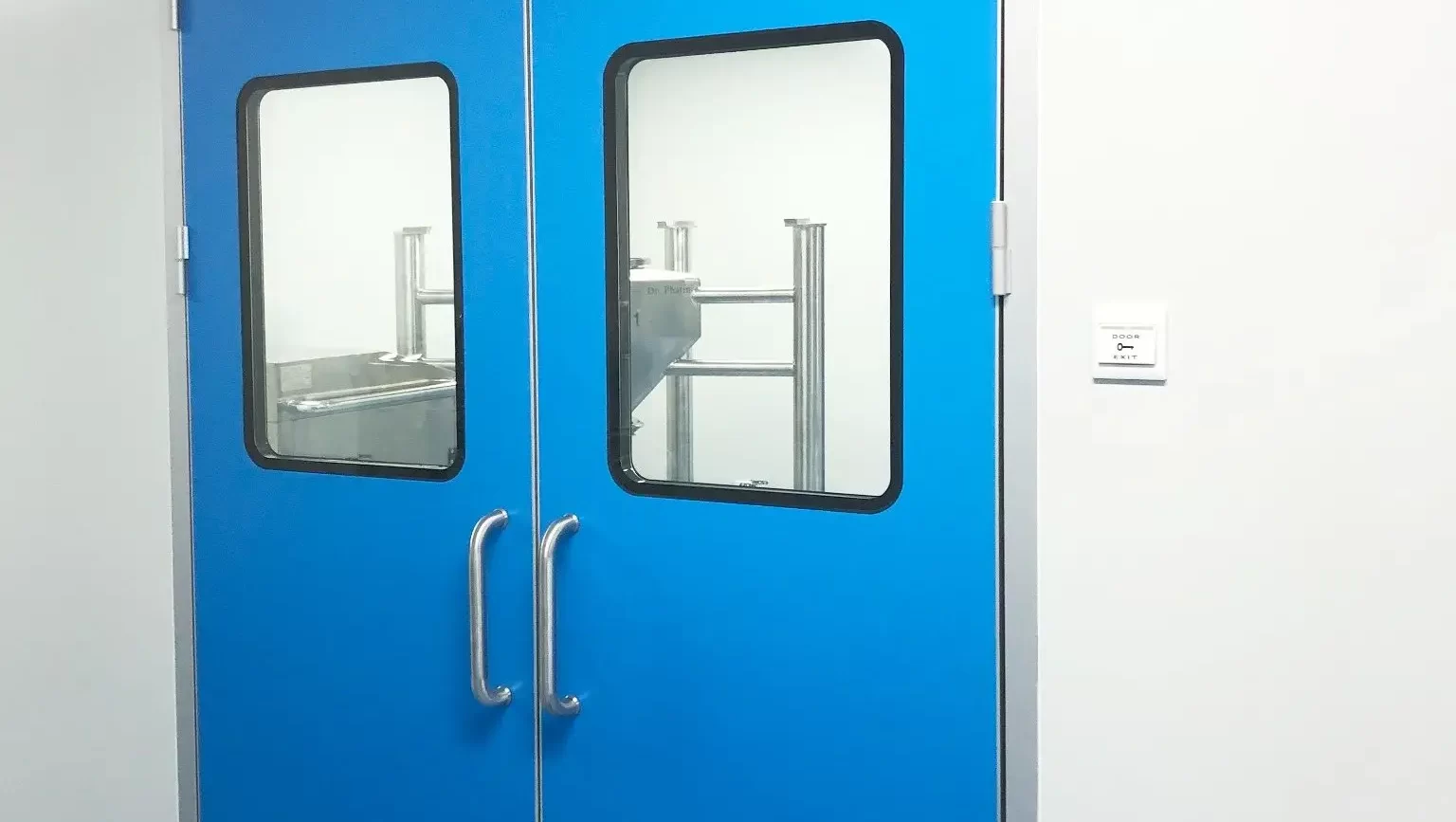
- Precision manufacturing & pharmaceuticals: cleanroom doors and hermetic door assemblies must meet stringent particulate and pressure-differential standards while passing fire compartment ratings. Frames often use an aluminum door frame or specialized stainless steel to enhance cleanliness and corrosion resistance.
IV. Compliance Inspection, Installation Standards, and Common Pitfalls
The quality of fire rated door installation directly determines whether a system will pass fire marshal inspection. Below are critical inspection checkpoints and high-frequency compliance failures:
- Gap tolerances: Single-leaf side gaps ≤4mm, double-leaf ≤3mm, bottom gap ≤10mm. Excessive gaps allow radiant heat penetration and smoke leakage.
- Dimensional verification: Field measurements must verify door frame dimensions against structural rough openings before installation. Forcing a frame into an undersized opening compromises the internal fireproofing core.
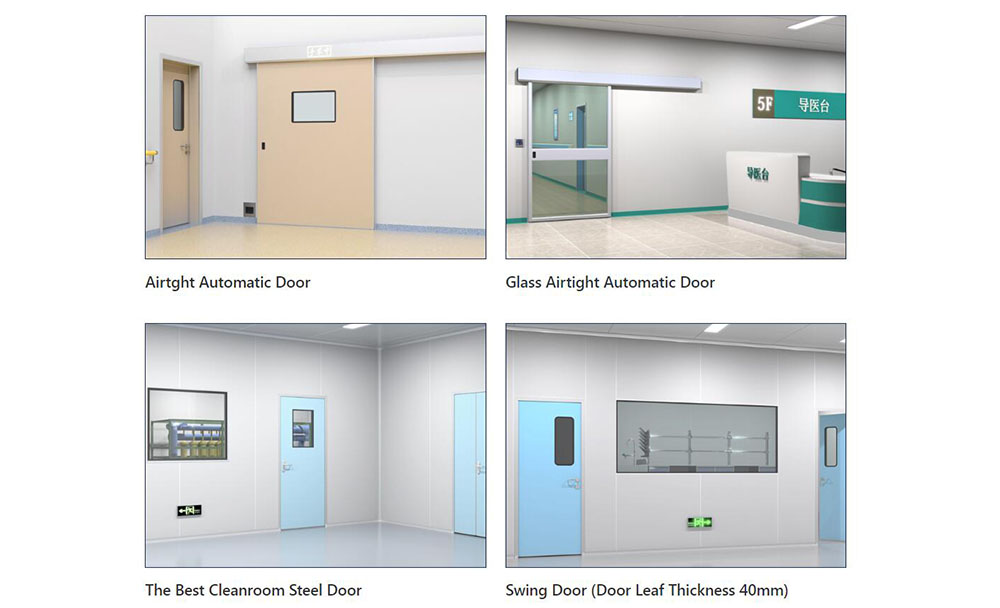
- Normally-open configurations and alarm integration: If a door must remain open for workflow, it requires an electromagnetic hold-open device integrated with the fire alarm system. An automatic sliding door used as a fire barrier must include a fail-safe auto-closing mechanism and backup power supply.
- Missing or incorrect seals: Failing to install an intumescent door gasket or substituting it with standard rubber seals will cause immediate failure under fire conditions, resulting in a mandatory code rejection.
- Specialized environment protocols: cleanroom door installation demands contamination-controlled procedures. All perimeter sealing must use fire-rated, high-temperature silicone, applied without compromising the door’s structural or fireproofing integrity.
V. Conclusion: Compliance Is Not a Cost—It’s the Baseline Insurance for Commercial Assets
A fire rated door is not a construction budget burden. It is the foundational safeguard for commercial operations, occupant safety, and asset protection. Compliant design, certified installation, and routine inspections are non-negotiable. As fire regulations tighten and commercial insurance risk models evolve, proactive compliance assessment is far more economical than reactive remediation. We strongly recommend engaging qualified fire protection engineers during the design and procurement phases to ensure end-to-end code compliance from blueprint to final handover.
Disclaimer: The technical content in this article is compiled from internationally recognized fire protection standards (NFPA 80, IBC) and China’s GB 50016. Specific project requirements must comply with the latest local building codes, fire authority approvals, and certified testing agency guidelines. It is highly recommended to commission a licensed fire safety consultant for project-specific evaluations.
FAQ
Q1: Do corridor doors in commercial office buildings need to be fire rated?
A: It depends on fire compartmentalization and travel distance to exits. If a corridor separates different fire compartments or leads to a smoke-proof stairwell, a 60–90 minute fire rated door is typically required.
Q2: Can I paint a fire rated door with standard paint?
A: No. Conventional paints release flammable vapors under heat and degrade the door’s fire-resistant finish. Only manufacturer-approved fire-rated paints or veneers should be used.
Q3: Can double-leaf doors be installed without a coordinator?
A: Absolutely not. A coordinator ensures the leaves close in the correct sequence to prevent gap overlap and smoke leakage. Omitting it is an automatic code violation.
Q4: Can an automatic door replace a fire rated door?
A: Only if the automatic sliding door carries full fire certification, features a fail-safe auto-closing mechanism upon power loss, and is fully integrated with the building’s fire alarm system. Standard commercial automatic doors are strictly prohibited as fire barriers.
-
 Cleanroom Glass Windows Are The Key to Maintaining a Clean Environment
 -
 Top Aluminium Profile Manufacturers in China: Leading the Global Market
 -
 The Evolution of Air Tight Sliding Doors
 -
 AHU Aluminium Profile: A Comprehensive Guide
 -
 The Importance of Choosing the Right Cleanroom Door in Vietnam
 -
 The Benefits of Hospital Automatic Doors: Enhancing Efficiency and Safety
 -
.jpg) The Best Bathroom Door Manufacturers - Unlocking Endless Possibilities!
The Best Bathroom Door Manufacturers - Unlocking Endless Possibilities! -
 Unlock the Possibilities with AJ Manufacturing Doors
 -
 Make a Statement with Manufactured Home Interior Doors!
 -
 what is aluminum profile? Aluminum Profiles for Your Home is the best option
-
 Hospital Emergency Exit Doors: 90 Minute Fire Rating Meets Infection Control
 -
 ICU and Isolation Door Requirements Hospitals Often Overlook
 -
 Laboratory Door Requirements for BSL-2 and BSL-3 Containment
 -
 Retrofitting Hospital Sliding Doors: Upgrade Wards Without a Rebuild
 -
 Why Airtight Hospital Sliding Doors Are Critical for Infection Control
 -
 Automatic cleanroom door systems: sensor, actuator and access control integration
 -
 Cleanroom Door Materials: Stainless Steel vs HPL vs FRP vs Aluminum Comparison
 -
 X-Ray Room Door Buying Guide: Lead Thickness & Compliance
 -
 Operating Room Doors: Hermetic & Infection-Control Guide
 -
 Hospital ICU Door Selection: Sealing, Sterility & Workflow



-

Home
-

Tel
-

Email
-

Contact


Guangzhou Yizhong Aluminum Industry Co., Ltd.
We are always providing our customers with reliable products and considerate services.
We are always providing our customers with reliable products and considerate services.
Speak Your Mind