
How to Choose Aluminum Profiles for Cleanrooms
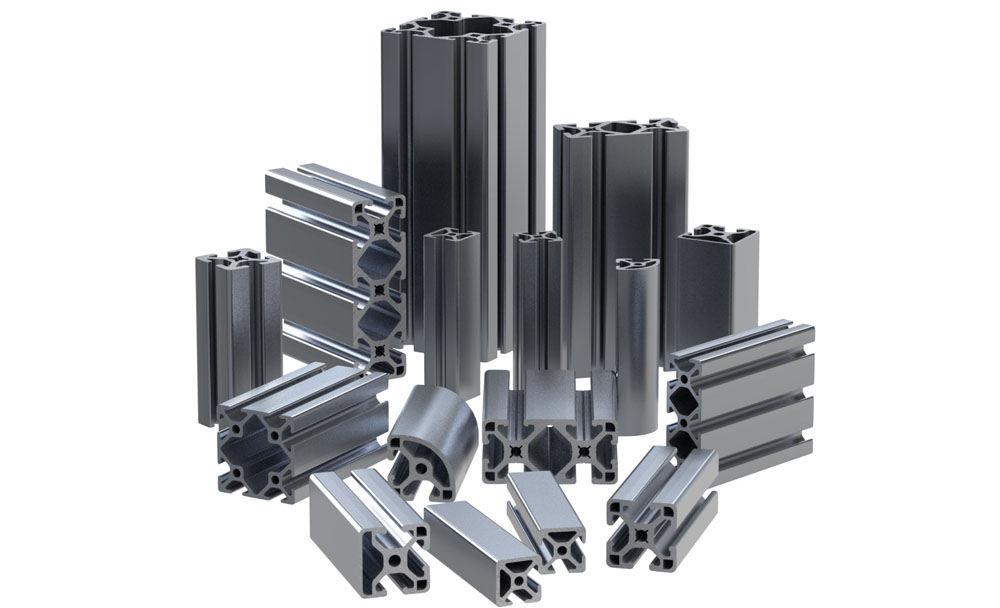
In the construction of modern industrial cleanrooms, aluminum profiles play a pivotal role as the structural "backbone." Whether for GMP workshops in pharmaceutical plants, semiconductor wafer fabrication facilities, or hospital operating theaters, cleanroom performance depends not only on high-efficiency filtration but also on the sealing capability, corrosion resistance, and modularity of the envelope structure. Leveraging their excellent strength-to-weight ratio, ease of fabrication, and versatility in surface treatment, aluminum profiles have become the critical material connecting HVAC systems, access control systems, and wall panel assemblies.
However, many projects focus exclusively on the mechanical properties of profiles during material selection, overlooking their compatibility with terminal equipment. A superior cleanroom design must ensure that aluminum profiles can seamlessly integrate with key components such as the air diffuser, automatic door, and other critical interfaces. This article provides an in-depth analysis of selecting aluminum profiles suitable for complex cleanroom systems based on industry standards, incorporating technical requirements for high-search-volume components like hvac diffuser, fire rated door, and standard door size to deliver a professional selection and integration guide.
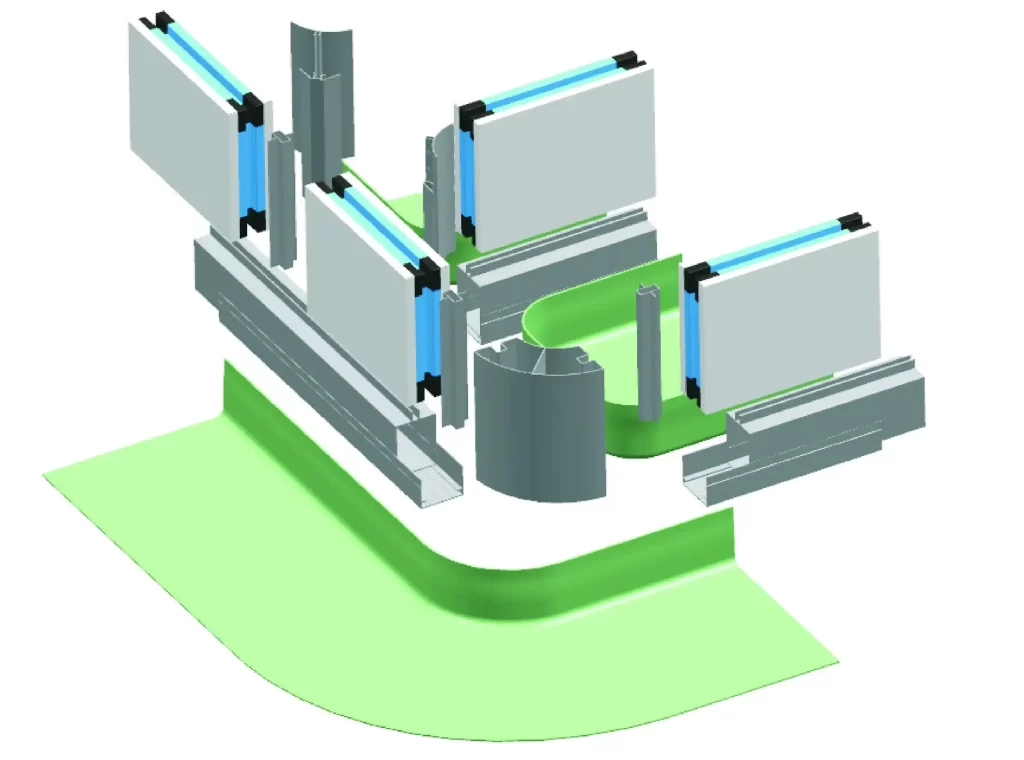
1. Integration Selection of Aluminum Profiles with HVAC Terminal Systems
The core of cleanroom functionality lies in airflow organization, and terminal devices of the HVAC system must be secured and sealed through aluminum profile frameworks. Improper selection can result in air leakage, dust accumulation, or even airflow short-circuiting.
1.1 Matching Air Diffusers with Profile Frameworks
The air diffuser serves as the critical terminal for cleanroom air supply. Within cleanroom ceiling systems, diffusers are typically embedded in aluminum profile keels or dedicated framing structures.
- Profile Slot Design: To install a ceiling diffuser, aluminum profiles must feature standardized T-slots or card slots. Common specifications should accommodate standard modules of 600x600mm or 1200x600mm. Profile slot tolerances should be controlled within ±0.1mm to ensure gap-free installation of diffuser panels, preventing unfiltered air infiltration.
- Sealing Requirements: For HVAC diffuser installation, profile contact surfaces require reserved sealing strip channels.EPDM rubber gaskets are recommended, with compression controlled at 25%-30% to ensure airtightness under positive pressure conditions.
- Linear Aesthetics and Functionality: In modern cleanroom design, a linear diffuser has gained popularity due to its aesthetic appeal and uniform air distribution characteristics. This demands aluminum profiles with exceptional straightness (≤0.5mm/m); otherwise, linear air outlets may exhibit waviness, compromising visual quality and airflow uniformity. Profile surfaces require precision anodizing treatment to ensure color consistency with air outlet panels.
1.2 Structural Support for Vents and Grilles
Beyond air supply, return air and exhaust systems similarly rely on profile support. An air vent and hvac grilles are typically installed on lower wall sections or side walls of cleanrooms.
- Load Bearing and Fixation: Although wall-mounted return grilles are lightweight, they must withstand routine cleaning impacts. Aluminum profile wall thickness is recommended to be no less than 1.2mm to ensure long-term stability of ceiling vent or wall-mounted air outlets.
- Corrosion Resistance: Cleanrooms frequently utilize chemical disinfectants; surface coatings on aluminum profiles surrounding the vent air cover must demonstrate corrosion resistance. Powder coating processes are recommended, with film thickness ≥60μm and successful completion of 500-hour salt spray testing.
- Adjustability Design: To balance air volume, certain vent damper components are integrated within profile frameworks. During selection, verify whether internal profile cavities provide sufficient space to accommodate adjustment mechanisms without compromising structural integrity.
1.3 Overall Compatibility of Ceiling Systems
Cleanroom ceilings predominantly employ suspended structures. Installation of a suspended ceiling diffuser requires profiles with adequate hanging strength.
- Keel System: Primary keel aluminum profiles must support the combined weight of ceiling panels, lighting fixtures, and diffusers. For heavy-duty 2x2 ceiling diffuser integrated zones, profile section moment of inertia requires calculation to prevent deflection under sustained loading conditions.
- Maintenance Access: Aluminum profile frameworks should incorporate designs facilitating disassembly, enabling future replacement of filter fan units or maintenance of ducting systems while preserving cleanroom airtightness.
2. Application of Aluminum Profiles in Cleanroom Access Control Systems
Cleanroom access control systems serve not only as personnel passageways but also as critical nodes for pressure differential management. Aluminum profile applications in this context primarily focus on door frame structures, sliding tracks, and fire isolation components.
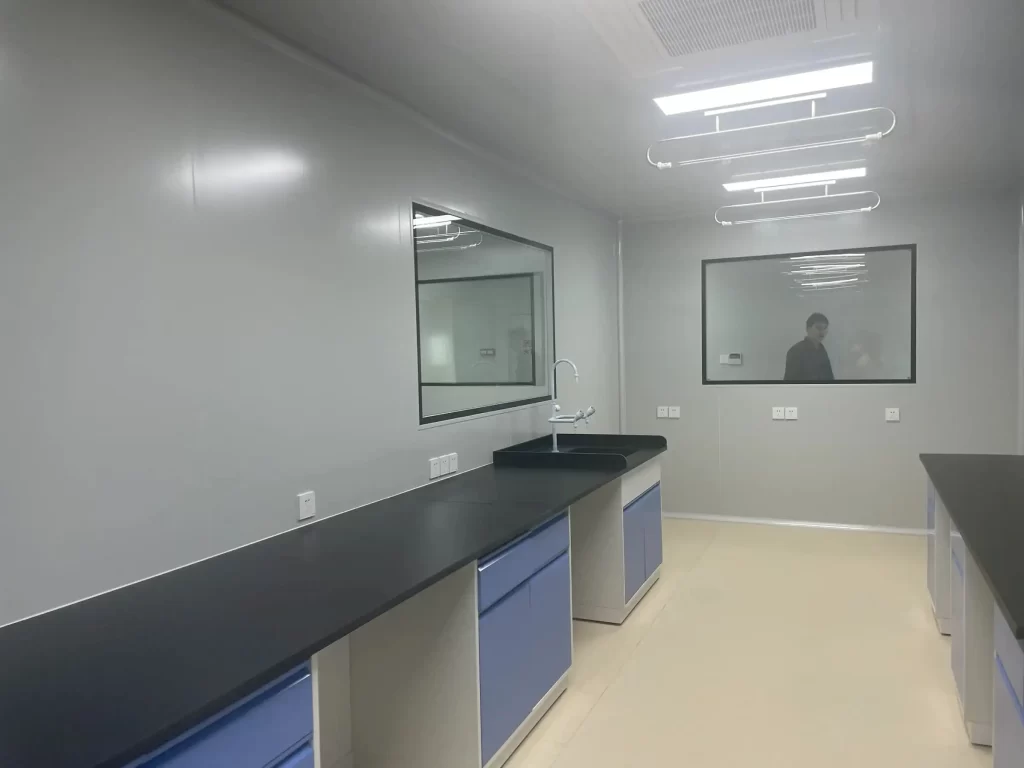
2.1 Profile Tracks for Automatic Door Systems
To enhance personnel throughput efficiency and minimize contact contamination, an automatic sliding door represents the mainstream choice for cleanroom environments.
- Track Profile Precision: Operational stability of the automatic door depends on the precision of top-track aluminum profiles. Track straightness tolerance must be controlled within 0.3mm/m, with surfaces requiring hard anodizing treatment (hardness ≥400HV) to minimize friction-induced noise and particle generation.
- Concealed Design: Cleanrooms mandate zero dead corners. The aluminum profile framework of an automatic door should adopt concealed fastener design, with all connectors internally mounted to prevent dust accumulation. Door frame profiles and wall panel profiles must achieve seamless integration, typically utilizing 45-degree mitered joints or specialized connectors.
- Sensor Integration: Modern automatic door profiles require reserved sensor mounting channels to accommodate microwave or infrared sensors, while ensuring wiring remains concealed within profile cavities, complying with electrical safety standards.
2.2 Fire Rated Doors and Safety Compliance
Cleanroom zoning must satisfy fire safety codes, making fire rated door selection critically important.
- Fire-Resistant Profile Structure: Standard aluminum profiles possess relatively low melting points; when utilized for fire doors, thermal break structures or fire-resistant filling materials must be incorporated. Aluminum profile frameworks require certification through the National Center for Quality Supervision and Inspection of Fire Building Materials, ensuring fire resistance ratings reach 1.0 hour or higher.
- Expansion Sealing Strips: Fire rated door frame profiles must reserve channels for intumescent sealing strips. Under elevated temperatures, these strips expand to fill gaps and block smoke propagation. Profile channel dimensions must precisely match sealing strip specifications; excessive tolerances compromise fire protection performance.
- Push Bar Egress Systems: For push bar door requirements, profile door lock mounting locations require localized wall thickness reinforcement to ensure emergency push bar operation proceeds smoothly without damaging the door frame.
2.3 Specialized Door Types and Dimensional Standardization
- Standard Dimension Compatibility: Although cleanroom doors are frequently custom-fabricated, referencing standard door size helps reduce costs. For instance, single-leaf doors typically measure 900mm in width, while double-leaf doors measure 1500mm. Aluminum profile tooling should accommodate these standard door dimensions whenever possible to minimize custom die expenses.
- Frameless Door Trends: Certain high-cleanliness zones adopt frameless door designs; however, these still require concealed aluminum profile structural support. Selection should prioritize profile concealment capability and glass retention force to ensure safety.
- Rolling Door Applications: In major logistics corridors, a roll up door is occasionally employed. Guide rail aluminum profiles require high wear resistance, and bottom sealing strips must maintain tight floor contact to prevent pressure differential leakage.
3. Material Specifications and Surface Treatment Technologies for Aluminum Profiles
Regardless of application in HVAC or access control systems, the base material and surface treatment of aluminum profiles determine their service lifecycle.
3.1 Alloy Designations and Mechanical Properties
- 6063-T5/T6: The most commonly utilized alloy for cleanrooms. T6 temper provides higher hardness (≥12HW), suitable for load-bearing structures such as door with frame vertical members.
- 6061-T6: Employed in high-load applications, such as large equipment passage door frames or heavy-duty ceiling keels. Its yield strength exceeds 6063 by approximately 30%.
- Impurity Control: Iron content should remain <0.35% to preserve surface luster following anodizing, preventing dark spotting that could compromise cleanroom aesthetics.
3.2 Surface Treatment and Cleanliness Standards
- Anodizing: Suitable for high-cleanliness zones. Oxide film thickness ≥15μm, dense surface structure, zero particle shedding. Ideal for air diffusers framework applications.
- Powder Coating: Appropriate for areas requiring frequent disinfection, such as pharmaceutical facilities. Antimicrobial powder formulations are required, with colors typically specified as RAL9003 (Signal White). Film thickness 60-80μm, wipe resistance >5000 cycles.
- Electrophoretic Coating: Combines advantages of anodizing and powder coating, delivering refined surface finish suitable for appearance-critical applications such as ceiling vents.
3.3 Electrostatic Dissipation and Grounding
For electronic cleanroom environments, aluminum profiles require electrostatic discharge (ESD) functionality.
- Surface Resistivity: Achieve surface resistivity within 10^6-10^9Ω through conductive oxidation or ESD-resistant powder coating.
- Grounding Connection: Profiles must connect to building grounding networks via copper braided straps during installation, with grounding resistance <4Ω to prevent static accumulation that could damage sensitive components.
4. Installation Precision and System Compatibility Control
Material selection represents only the initial step; precision control during installation proves equally critical.
4.1 Dimensional Tolerances and Fitment
- Typical Door Width and Height: Based on typical door width and typical door height standards, profile cutting length tolerance should be controlled within ±0.5mm.
- Framework Details: For linear diffuser framing detail applications, profile joints require specialized corner connectors to ensure tight seams without misalignment.
4.2 Sealing and Airtightness Verification
- Door Gap Management: door swings influence sealing strip selection. Profile stop designs differ between inward-swinging and outward-swinging doors. Post-installation pressure differential testing must confirm negligible air leakage at 500Pa.
- Vent Sealing: Neutral mold-resistant silicone sealant should be applied at junctions between aluminum profiles surrounding the exhaust vent and wall surfaces to prevent microbial proliferation.
4.3 Maintenance and Cleaning Accessibility
- Zero Dead Corner Design: All profile connections should feature radiused transitions (R≥3mm) to facilitate cleaning tool access.
- Modular Replacement Capability: When hvac vents require cleaning, aluminum profile frameworks should support tool-free disassembly to minimize maintenance duration and contamination risk.
5. Common Pitfalls and Best Practices
In actual project execution, the following misconceptions frequently arise regarding aluminum profile and associated equipment selection:
- Pitfall 1: Overlooking modular compatibility between profiles and air outlets. Procuring non-standard sized ceiling diffuser vent components results in incompatible profile keel installation, necessitating on-site cutting and modification that damages surface coatings.
- Pitfall 2: Utilizing standard profiles for fire rated door applications. Standard aluminum profiles cannot satisfy fire inspection requirements. Specialized profile systems with certified fire ratings must be selected.
- Pitfall 3: Insufficient hardness in automatic door tracks. This causes track wear following extended automatic sliding door operation, generating aluminum particulate contamination within the cleanroom. Hard anodizing treatment must be specified for track components.
- Pitfall 4: Confusing indoor versus outdoor profile specifications. Cleanroom interiors do not require high weatherability but demand superior chemical resistance. Misapplication of outdoor weather-resistant profiles may prove inadequate against frequent chemical disinfection protocols.
6. Conclusion: Building the Foundation for Efficient Clean Environments
Cleanroom construction represents a systems engineering endeavor. As the core material connecting HVAC terminals, access control systems, and envelope structures, aluminum profile selection directly impacts cleanroom compliance, energy consumption, and maintenance costs. From precision installation of air diffuser components to smooth operation of automatic door systems, every phase depends on high-quality profile support.
Project decision-makers should not focus exclusively on unit pricing during material selection but should comprehensively evaluate profile mechanical properties, surface treatment processes, compatibility with equipment such as hvac grilles and fire rated door, and total lifecycle maintenance costs. By adhering to the selection strategies and technical specifications outlined in this article, post-installation rectification risks can be effectively mitigated, creating a safe, efficient, and compliant clean production environment. Remember, premium aluminum profiles serve not merely as structural support but as the fundamental guarantee for long-term, stable cleanroom operation.
-
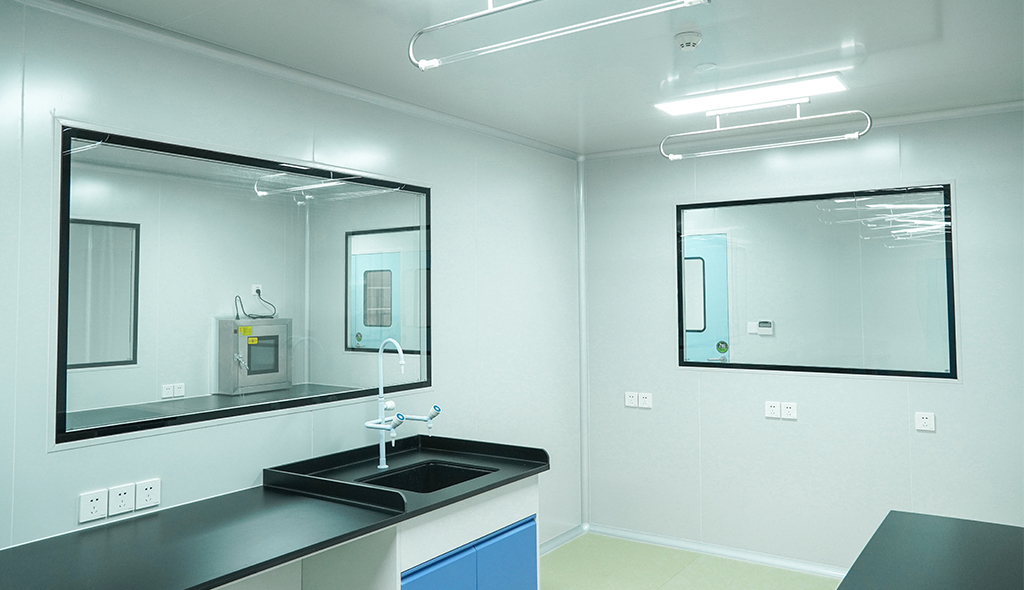 Cleanroom Glass Windows Are The Key to Maintaining a Clean Environment
 -
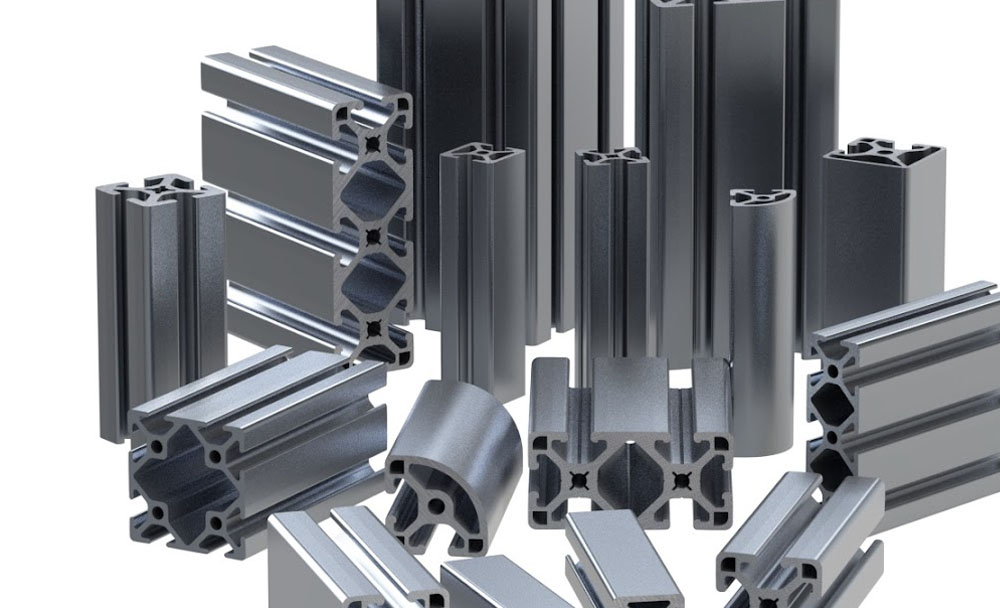 Top Aluminium Profile Manufacturers in China: Leading the Global Market
 -
 The Evolution of Air Tight Sliding Doors
 -
 AHU Aluminium Profile: A Comprehensive Guide
 -
 The Importance of Choosing the Right Cleanroom Door in Vietnam
 -
 The Benefits of Hospital Automatic Doors: Enhancing Efficiency and Safety
 -
.jpg) The Best Bathroom Door Manufacturers - Unlocking Endless Possibilities!
The Best Bathroom Door Manufacturers - Unlocking Endless Possibilities! -
 Unlock the Possibilities with AJ Manufacturing Doors
 -
 Make a Statement with Manufactured Home Interior Doors!
 -
 what is aluminum profile? Aluminum Profiles for Your Home is the best option
-
 5 Hermetic Door Mistakes That Break the Seal
 -
 Hospital Room Door Size by Room Type: Width and Clearance
 -
 Retrofit Manual Doors with Electronic Glass Operators
 -
 Hospital Emergency Exit Doors: 90 Minute Fire Rating Meets Infection Control
 -
 ICU and Isolation Door Requirements Hospitals Often Overlook
 -
 Laboratory Door Requirements for BSL-2 and BSL-3 Containment
 -
 Retrofitting Hospital Sliding Doors: Upgrade Wards Without a Rebuild
 -
 Why Airtight Hospital Sliding Doors Are Critical for Infection Control
 -
 Automatic cleanroom door systems: sensor, actuator and access control integration
 -
 Cleanroom Door Materials: Stainless Steel vs HPL vs FRP vs Aluminum Comparison


-

Home
-

Tel
-

Email
-

Contact


Guangzhou Yizhong Aluminum Industry Co., Ltd.
We are always providing our customers with reliable products and considerate services.
We are always providing our customers with reliable products and considerate services.
Speak Your Mind