
Clean Room Door Accessories: Which Parts Wear Out First
A cleanroom door can look fine and still lose pressure. The leaf is solid, the panel is clean, the closer still pulls it shut. Then the differential starts drifting on the night shift. In one case the cause was the bottom seal, which had taken a permanent set and was lifting a few millimeters off the floor on every close. A smoke test found it. No visual check would have.
Clean room door accessories take the daily punishment. Gaskets, closers, hinges, locks, drop seals, vision panels: these are also the parts nobody writes into a maintenance plan until a test fails or an auditor asks a question the team cannot answer. Which ones give out first is not random. It follows the cycle count, the cleaning chemicals, and how the door was set up on day one.
Why the small parts give out first
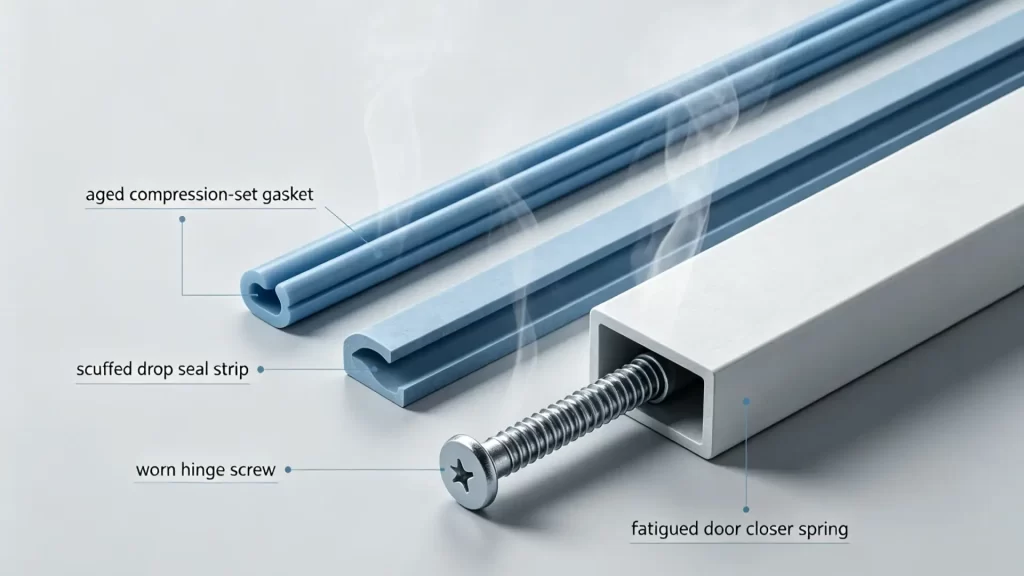
The leaf is a static panel. It sits in one place and keeps its shape. Everything attached to it moves. A door opened 200 times a day passes 70,000 cycles in a year, and each one compresses a gasket, swings a hinge, loads a closer spring, and drops then lifts a bottom seal. Cleanrooms add their own wear. Daily wiping with chlorine, peroxide, or alcohol works on rubber and finishes over months. A high-traffic airlock ages faster than a storage door in the same building, which is one reason a single replacement date for every door never quite works. Hinges loosen, closers lose tension, and a seal that met the floor on installation day slowly stops reaching it.
The result is a door that looks fine and performs badly. The leaf does not crack. The room just tells you through a drifting differential, a failed smoke check, or a list of cleaning complaints that keeps growing.
The gasket goes first, and you probably will not see it
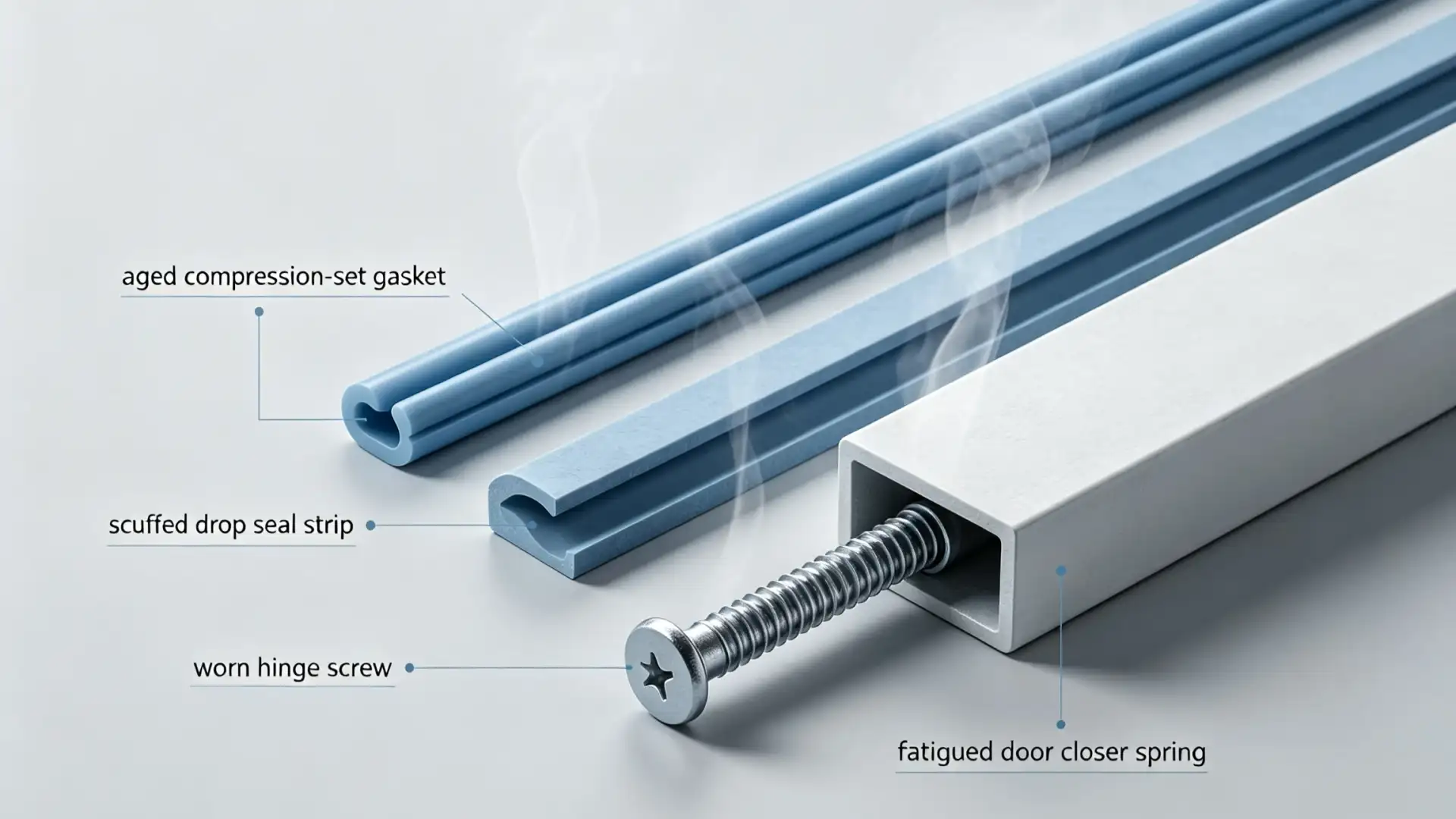
The perimeter gasket is the most common failure and the hardest to catch by eye. Silicone and EPDM both handle chemicals and temperature well, but neither lasts forever. Repeated compression causes compression set. The strip keeps its shape and loses the rebound that made it a seal in the first place.
There are a few tells. The room holds pressure when it is empty and drifts after a run of door openings. Press the gasket and it feels soft or flat rather than springy. The compression line on the strip is heavy on one side and almost absent on the other. Smoke moves along one section of the frame during a visual check while the rest stays tight.
A dead gasket cannot be fixed by tightening the hinges. The door will only leak somewhere else. The discussion of gasket compression set on cleanroom pass doors puts it plainly: a gasket can look intact and still leak, and seals are cheaper to replace before certification testing than after a failure.
Keep a record of when each door's gasket was replaced. A high-cycle airlock may need it often; a storage door can go much longer. One date applied to every door wastes money on some and misses others.
The replacement itself is where a new gasket can be ruined before it sees service. Clean the channel first. Residue from the old strip, sealant leftovers, and cleaning film all keep a new gasket from seating in the groove it was cut for. Do not stretch the strip to make it reach; a stretched gasket relaxes back and opens a gap at the corners. Fit it dry unless the supplier specifies a lubricant, and tool it gently into place so the lip sits proud along the whole run. Then cycle the door and recheck the compression line. A gasket installed badly will show the same leak pattern as one that has aged out, and the only way to tell the difference is to have watched the fitting.
The gap under the door
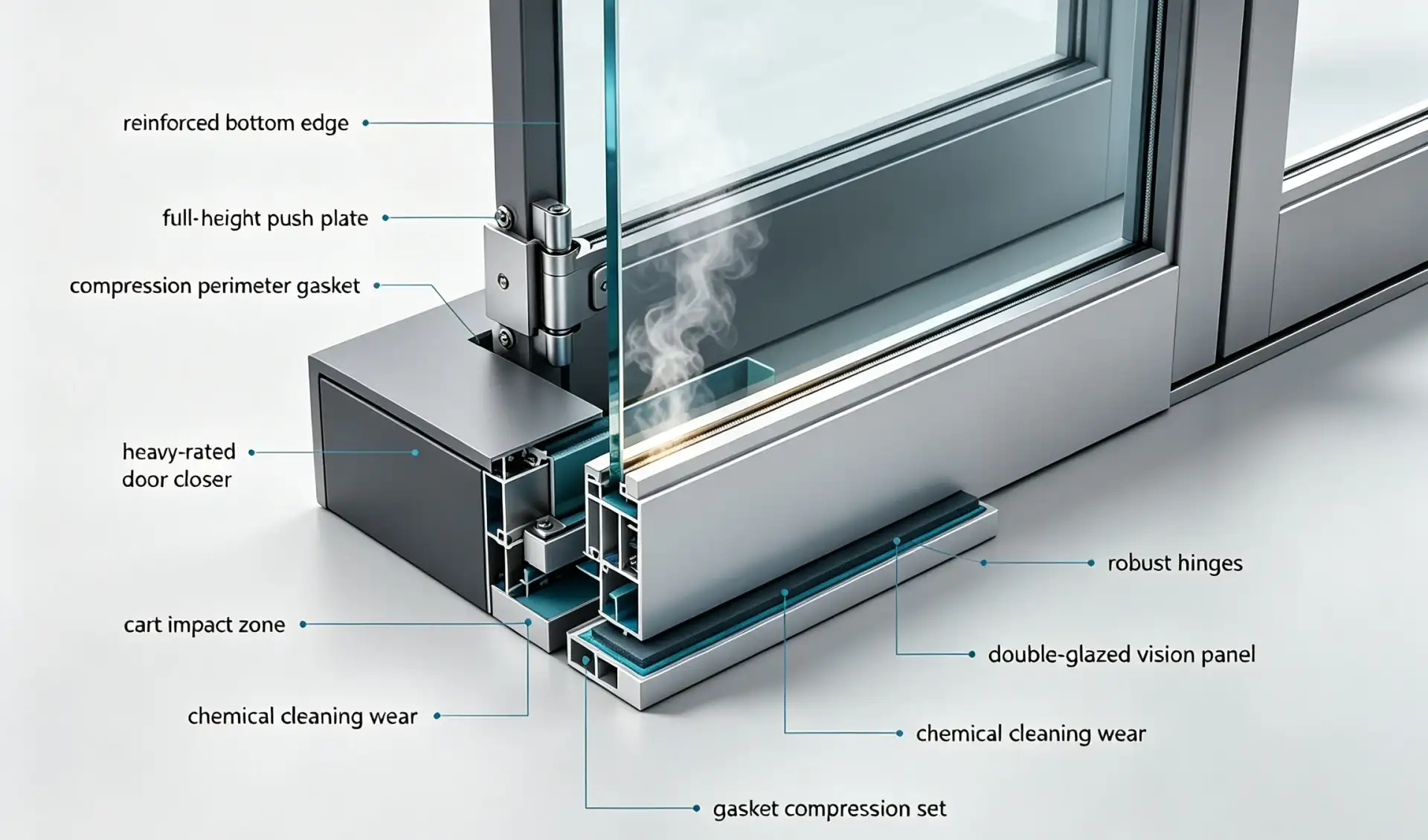
Most cleanroom doors skip a fixed threshold because it catches cart wheels and trips people. An automatic drop seal does the job instead. It lowers when the leaf closes and retracts when it opens, and it sits in the worst spot in the room, exposed to floor debris, cleaning residue, and repeated impact.
It fails in a handful of ways. The strip sticks partway down and the door never quite seals. A sweep wears thin on one side, usually exactly where the cart path crosses. The mechanism lifts too early as the door closes and leaves the last few millimeters open. Sometimes the strip drags hard enough to lift the latch side of the leaf, which breaks the gasket seal at the top. That last one is worth knowing about, because a leak at the top corner can trace back to the floor.
Close the door slowly and watch the strip from both sides. It should descend evenly and make contact without force. Cycle the door ten times and check that it resets. If only the sweep is worn, replace the insert rather than the whole assembly. The carrier comes out only when the mechanism itself has failed.
Floor flatness matters as much as the seal. A dip under one corner defeats a correctly adjusted strip. If a door leaks again after every replacement, look at the floor before buying another one.
When the door stops closing cleanly
Closers and hinges rarely fail all at once. They drift. A closer loses tension, a hinge screw backs out, and over weeks the leaf sits slightly differently in the frame. That small change is enough to unseat a gasket. The first sign is usually a door that needs a hand to finish closing, or one that no longer latches with a single push.
A quarter turn on a hinge can restore even compression and save a gasket that did not need replacing. Check hinge screws on a schedule, especially on high-cycle doors. Concealed closers collect less dust and wipe down more easily, but they hide the problem until the door slams or stops latching. Fold the closer check into the gasket visit rather than waiting for a symptom.
When a closer really is spent, replace it with the same class. Putting a lighter unit on a heavier leaf just means users push it past its range and it stops bringing the door back to the frame.
Locks and access hardware fail in two different ways. A mechanical lock that sticks announces itself. An electronic one that logs the wrong event or releases late does not. On access-controlled doors, a reader that needs repeated swipes is often a dirty contact surface rather than a bad card. An electromagnetic lock that releases with a delay holds the door shut against the closer. A panic bar that does not reset leaves the latch out of line. A missing entry in the audit trail is a documentation problem in a regulated facility, whatever the latch is doing. Test the log along with the hardware.
Finish condition belongs in this check too. A handle whose coating has worn through will pit and collect residue that is hard to clean. If the leaf and seals are sound, swapping the hardware is much cheaper than replacing the door.
The window that fogs and the seal you cannot wipe
Vision panels get treated as permanent, but the joint around them ages. Double-glazed units can lose integrity and fog internally. The desiccant in the spacer has a finite life. Once it saturates, condensation appears between the panes where nobody can wipe it. That is a visibility and cleaning problem first, and a seal problem second.
A fogged unit should be replaced, not repaired. You cannot reliably reseal a failed glazing joint on site in a controlled room. Check the frame while you are looking at the glass. A flush panel sits level with the leaf face. If the bezel has lifted or the edge has opened, that edge is now a dust ledge. Re-seal the perimeter rather than running a bead of sealant over a joint that has already failed.
Adjust it, repair it, or replace it
When something misbehaves, start with the cheapest fix and work up. Hinge tension, closer speed, striker position, and drop height settle a surprising share of problems without buying anything. If adjustment does not hold, repair the local part: a gasket insert, a worn drop strip, a lock cylinder. Replace a component only when it is past adjustment, which is where a closer with no tension, a cracked gasket, or a fogged panel ends up. Whole-assembly replacement is rare. It belongs to the cases where several parts fail together or the door cannot meet its classification after everything smaller has been tried.
That order protects the budget in both directions. Replacing a door because a gasket failed costs far more than the fault warrants. Adjusting a dead gasket month after month costs less per visit and more by the time the rework and failed tests are counted in.
Replacement parts also have to match the original spec. A gasket chosen because it fits the channel may not tolerate that room's disinfectant, and one that swells or hardens after six weeks is a false saving. The hardware guide lists the surface treatments that matter here, and the clean room sliding door range shows how seals and hardware are specified together when the leaf runs on a track instead of hinges.
When the same part keeps failing
Sometimes the accessory is not the problem. If the same part dies early on several doors, the fault is usually upstream: the wrong part was specified for the duty, or the installation set it up to fail.
A gasket that hardens in weeks in one room and lasts for years in another points at a cleaning-agent mismatch. A drop seal that tears along the same edge on every door suggests a floor path or cart traffic the seal was never rated for. Closers that lose tension early usually mean the leaf is wider or heavier than the closer was sized for. Replacing the same part again changes nothing, because whatever killed it is still in place.
Treat a repeat failure as a design question. Note what failed, how long it lasted, and what the door sees in a normal day: cycle count, cleaning chemicals, load, floor condition. Send that to the supplier and ask whether the duty was matched. A part specified correctly from the start outlasts three rounds of like-for-like swaps, and it removes the downtime that comes with each one. A maintenance log earns its keep here.
How often to look
Split the schedule by how often a door is used rather than giving every door the same date. High-cycle doors want a weekly look at the latch, closer return, and drop seal. Gasket compression and visible hardware condition can be monthly across controlled rooms. Access logs, panic hardware, vision panel clarity, and hinge screws fit a quarterly pass. Before certification, replace any gasket with confirmed compression set and re-test after the new seal has settled.
Write down what you found and what you did. A note that a gasket was replaced on a given date is worth more at an audit than a general claim that the doors are maintained. It also tells you the real interval for that particular door, which is the number the next budget cycle needs.
That record also decides what belongs in the spare-parts cupboard. A gasket that fails every few months on one airlock is worth stocking for that door. A lock cylinder that has never failed in five years is not. Keeping one drop-seal insert for each door type on site is cheap insurance against a week of leakage while a part ships. Stock the things that actually wear in your facility, not the things a catalog calls consumables.
FAQs
Which accessory fails first on most clean room doors?
The perimeter gasket, followed by the bottom drop seal. Both are compressed on every cycle and both are exposed to cleaning chemicals.
Can a door pass a visual check and still fail a pressure test?
Yes. A gasket that has lost its rebound can look intact. A smoke check or pressure-decay test is what reveals it.
Is it worth replacing hardware on a door that is otherwise sound?
Usually. A door leaf that holds its shape can serve for years, while handles, locks, closers, and seals are meant to be replaced.
How do I know if a closer is failing?
The door stops returning fully to the frame, needs a push to latch, or slams shut. Any of these means the tension needs adjustment or the unit needs replacement.
Should every door follow the same replacement schedule?
No. Cycle count, cleaning chemicals, and room class change the interval. Track each door separately and let the record set the schedule.
Start with the parts that move
Door leaves last. The parts bolted to them do not. A maintenance plan that separates the two tends to cost less and fail fewer tests. Send your door types, cycle counts, room classes, and cleaning agents to E-ZONG for a matched accessory and spare-parts list.
-
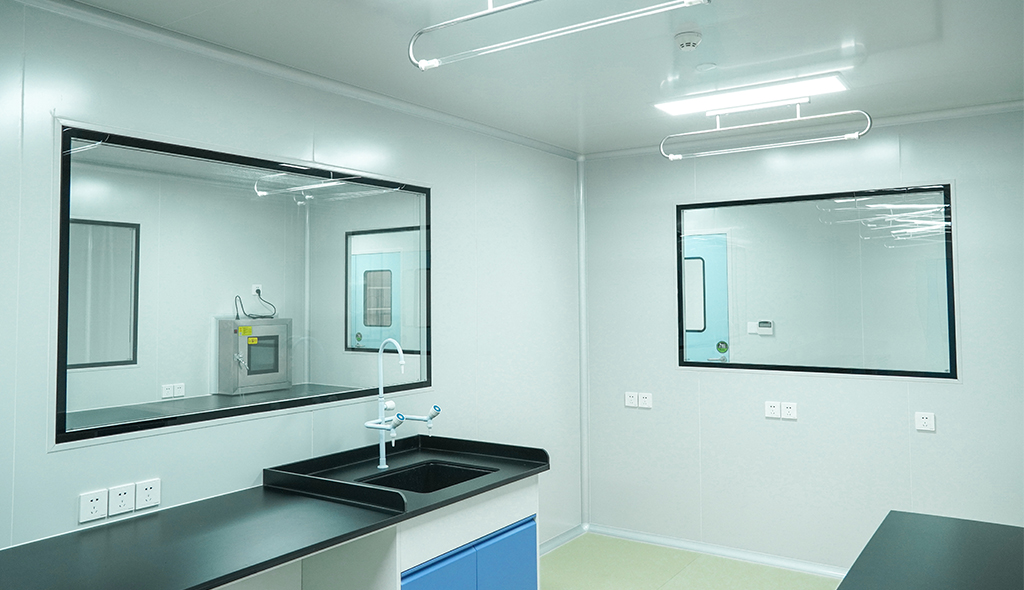 Cleanroom Glass Windows Are The Key to Maintaining a Clean Environment
-
 Top Aluminium Profile Manufacturers in China: Leading the Global Market
-
 The Evolution of Air Tight Sliding Doors
-
 AHU Aluminium Profile: A Comprehensive Guide
-
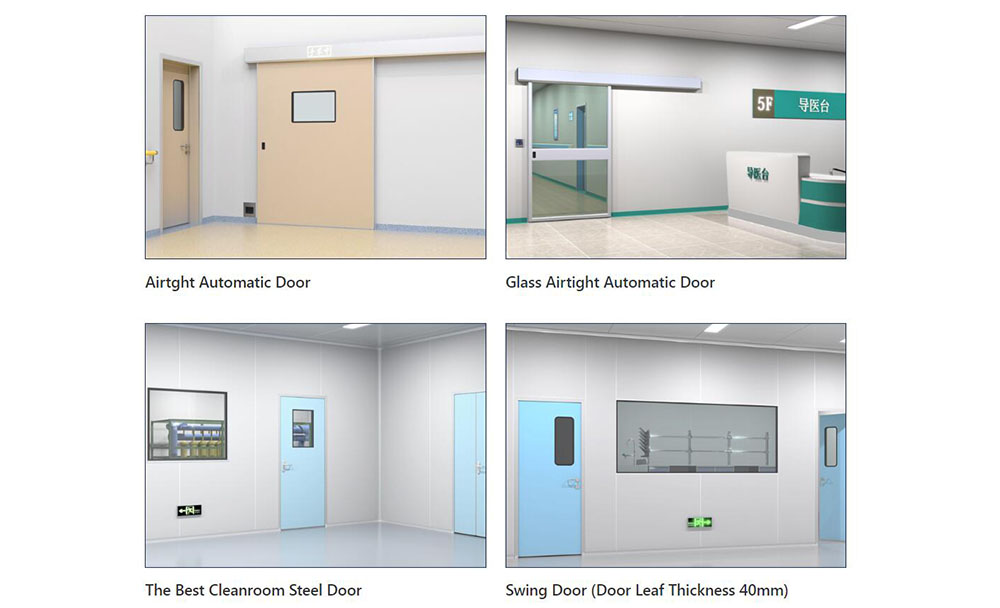 The Importance of Choosing the Right Cleanroom Door in Vietnam
-
 The Benefits of Hospital Automatic Doors: Enhancing Efficiency and Safety
-
 The Best Bathroom Door Manufacturers - Unlocking Endless Possibilities!
-
 Unlock the Possibilities with AJ Manufacturing Doors
-
 Make a Statement with Manufactured Home Interior Doors!
-
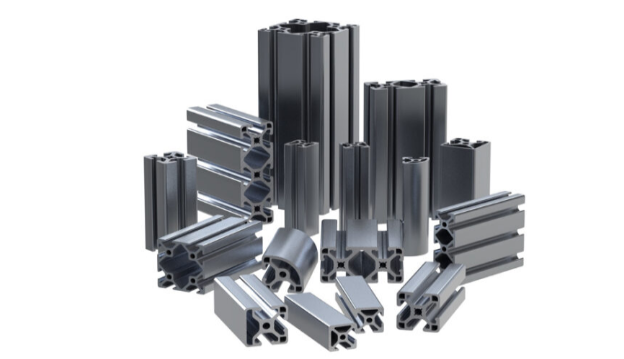 what is aluminum profile? Aluminum Profiles for Your Home is the best option
-
 ICU Doors Take More Daily Abuse Than Any Hospital Door
-
 Clean Room Door Accessories: Which Parts Wear Out First
-
 Lab Door Installation: Three Seals That Decide Pass or Fail
-
 Standard Door Width vs Custom: When Standard Falls Short
-
 Biotechnology Cleanroom Design: Zoning That Protects Process
-
 Airtight Door Room Map: Avoid Leaks Before the Audit
-
 Clean Room Airlock Not Holding Pressure? 6 Causes and Fixes
-
 Hospital Door Standards: NFPA, IBC, EN, and GB Compared
-
 Cleanroom Doors: Buyer's 15 Specs to Confirm Before PO
-
 Operating Room Door Spec: 7 Requirements Hospitals Must Meet





-

Home
-

Tel
-

Email
-

Contact


Guangzhou Yizhong Aluminum Industry Co., Ltd.
We are always providing our customers with reliable products and considerate services.
We are always providing our customers with reliable products and considerate services.
Speak Your Mind