
Airtight Door Room Map: Avoid Leaks Before the Audit
A cleanroom passes its particle count on Monday and fails the pressure decay test on Thursday. The auditor marks the room non-compliant, production pauses, and the root cause is rarely the HVAC unit. It is a door that was never specified as airtight, or one whose seal was never verified. For facility managers and project engineers, that gap shows up most often at audit time, because the leak sits in a room nobody mapped. A single non-compliant room can hold an entire line or ward while the fix is specified, sourced, and installed, which is why the cheapest place to close the gap is on the drawing, not in the audit report.
This guide gives you a room-by-room map of where an airtight door is required, what type fits each space, and the mistakes that turn into audit findings. Use it before you write the door schedule, not after the inspector arrives.
What an airtight door is built to do
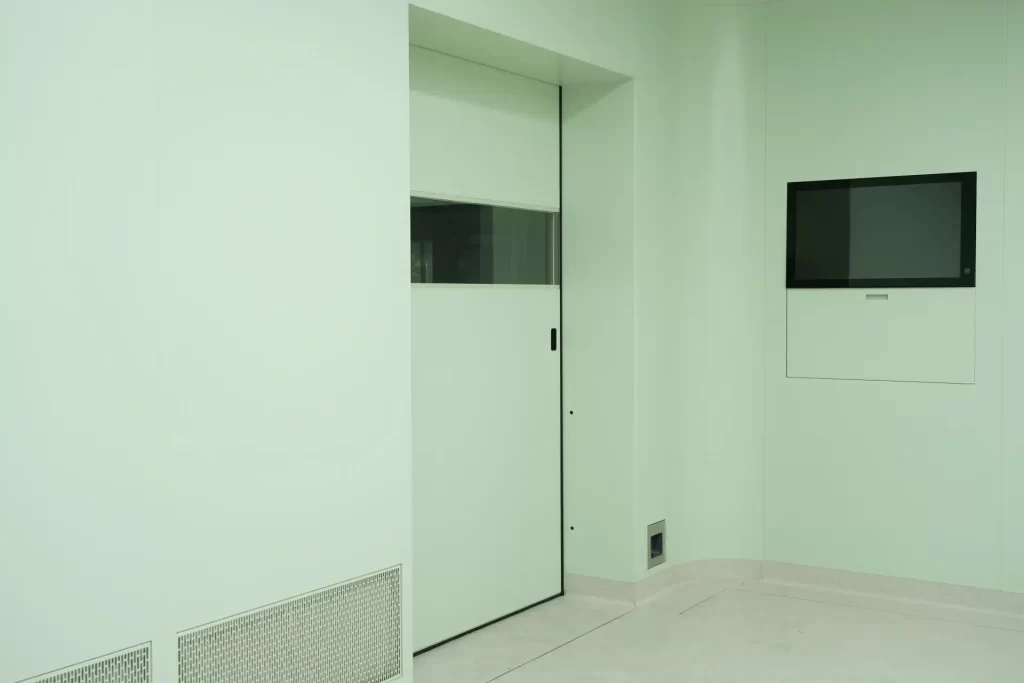
An airtight door is not a door that simply closes. It is an assembly where the leaf, frame, threshold, and wall junction form one continuous seal. When it shuts, perimeter gaskets compress, a drop seal engages at the floor, and the room holds its pressure differential against the adjacent space. That differential is what keeps contamination moving in the direction you intend, and it is exactly what an ISO 14644 or GMP audit measures.
A standard door with a visible gap at the threshold cannot do this, no matter how well it is painted. The audit does not grade intent. It grades the measured leak rate and the documented pressure cascade. If a room on your plan needs a pressure boundary and the door does not provide one, the finding writes itself.
The room-by-room airtight door map
The table below maps the spaces most likely to appear in a pharmaceutical, hospital, laboratory, or electronics project. Pressure direction, reason, and the door type that holds the boundary are listed for each.
| Room or zone | Pressure direction | Why an airtight door matters | Door type that holds the boundary | Audit trap |
|---|---|---|---|---|
| Operating room / surgical suite | Positive | Protects the sterile field from corridor particles | Hermetic swing or automatic sliding with drop seal | Assuming a standard door holds positive pressure |
| Isolation room / airborne infection | Negative | Contains pathogens, stops escape to clean areas | Air-tight swing, self-closing, interlocked | Bypassing the interlock to move equipment |
| ICU | Positive or neutral | Protects vulnerable patients from corridor air | Air-tight swing door | Forgetting the anteroom seal |
| Pharmaceutical sterile manufacturing (Grade A or B) | Cascading positive | GMP pressure cascade protects the product | Hermetic sliding and airlock assembly | Treating the airlock as a corridor |
| Laboratories and BSL suites | Depends on class | Containment or personnel protection | Gasket or inflatable seal | Underspecifying the seal class |
| Semiconductor and electronics fab | Positive | Particle control protects yield | Automatic sliding with non-shedding seals | Ignoring airflow disturbance from swing doors |
| Pharmacy and dispensing | Positive | Keeps the drug environment clean | Swing or sliding airtight | Door left ajar during transfer |
| Cold room and food processing | Positive plus thermal | Holds temperature and pressure together | Insulated airtight door | Threshold gap from thermal movement |
Operating rooms and surgical suites
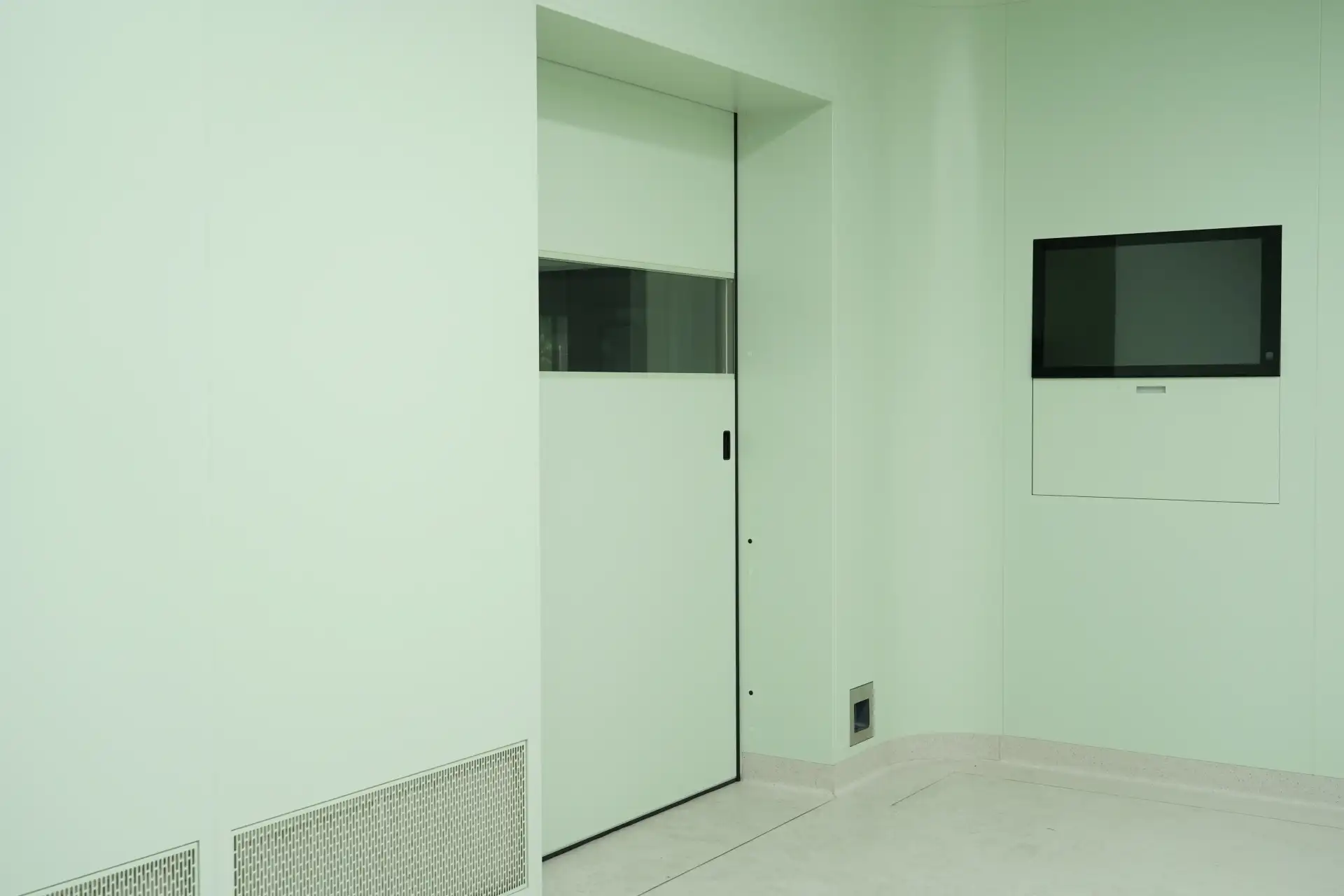
An operating room runs positive pressure so corridor air cannot drift into the sterile field. The boundary door must close into a compressed perimeter seal and drop a floor seal on every cycle. A swinging door that relies on a sweep that never quite touches the floor will bleed pressure the moment the room is busy. The audit trap here is assuming any hospital door is airtight. It is not, unless the specification says so and the seal is verified.
Isolation rooms and airborne infection control
Isolation rooms run negative pressure so contaminated air stays contained. The door does double duty: it seals the boundary and, in many layouts, interlocks with the anteroom so both leaves never open at once. The failure mode is practical. Staff prop the door or disable the interlock to move a bed, and the negative pressure boundary collapses. The audit will catch a disabled interlock faster than it catches a worn gasket, because it is a documented control that is clearly off.
ICU and patient rooms
ICU spaces protect patients whose immune systems cannot handle corridor contaminants. A wall-mounted air-tight swing door gives you a self-closing leaf with sealing strips around the perimeter, which is enough to hold a neutral or slightly positive boundary without a bulky frame. The part teams forget is the anteroom or the nurse station threshold. One unsealed transition in the path breaks the cascade the audit expects to see on paper.
Pharmaceutical sterile manufacturing
Grade A and B zones depend on a pressure cascade that steps down from the cleanest space to the less clean one. The airtight door is the wall between those steps. At transitions, a double-door airlock with interlock is the standard way to keep two zones from opening into each other. Teams often treat the airlock as a short corridor and specify a lighter door there. That is where the cascade leaks, and GMP audits trace the cascade room by room.
Laboratories and biosafety suites
A BSL laboratory may need containment (negative) or protection (positive) depending on what is handled. The seal requirement scales with the risk class. A gasket-sealed door covers most work, while higher containment levels call for an inflatable seal that expands to close the full perimeter. The audit trap is underspecifying: a door rated for one class installed where another is required will not pass the documented validation.
Semiconductor and electronics fabs
Fab bays run positive pressure to keep particles off wafers, and yield depends on it. Automatic sliding doors with non-shedding seals are common because they disturb the airflow less than a swinging leaf. The mistake is selecting a door on appearance or cost and ignoring how its motion pushes air into a pressurized bay. The audit here is often a particle count trend, not a door test, but the door is the variable nobody documented.
Pharmacy, dispensing, and clean corridors
Pharmacy preparation areas need a clean, positive boundary so external dust does not reach the drug. A swing or sliding airtight door handles it, provided staff do not prop it open during a transfer. The leak in these rooms is usually behavioral: a door held ajar for a cart, repeated all shift, erases the boundary the validation assumed.
Cold rooms and food processing
Cold and food areas need the boundary to hold both temperature and pressure. Thermal movement makes thresholds shift, so an insulated airtight door with an adjustable or drop seal is the practical choice. The audit in food settings often ties to hygiene and temperature logs, and a threshold gap shows up as a temperature drift the records cannot explain.
What the audit checks at the door
Understanding the test helps you build the map before the inspector does. An auditor does not grade a door by how it looks. The checks fall into three groups.
The first group is the pressure decay or leakage measurement. The room is pressurized, the door is closed, and the rate of pressure loss is recorded against the limit your standard sets. A door that passes on paper but leaks at the threshold will show a decay rate above that limit. This is where boundary failures appear most often, because the leaf looks sealed while the floor seal never engages.
The second group is the documented cascade. The audit compares your written pressure hierarchy against the installed layout, room by room. If the map says the gowning airlock sits between the corridor and the Grade B zone, the doors on both sides must match that statement. A door specified lighter than the document describes is a finding even when it seals well, because the validation assumed the rated assembly.
The third group is the validation record. Seals, interlocks, and pressure settings need to be documented at commissioning and rechecked on a schedule. An auditor who asks for the gasket inspection log and finds none will record a control gap, because the standard expects the seal to be verified, not assumed.
None of these checks requires an exotic door. They require the boundary to be specified, installed, and recorded as one rated assembly. The room map is the tool that keeps all three consistent before anyone walks the floor.
Where teams get it wrong before the audit
Most audit failures around airtight doors turn up in the rooms nobody flagged, while the operating room usually gets the attention it deserves.
The first gap is the forgotten transition. Gowning rooms, airlocks, pass-throughs, and material airlocks all sit on the pressure boundary, and each needs a rated, sealed door or interlock. A project that seals the cleanroom and forgets the gowning airlock has a hole in the map.
The second gap is the rated assembly that was never written down. Specifying "door" instead of "airtight door with perimeter and drop seal, tested to a stated leakage class" leaves the supplier to guess. At audit, the documented specification is what gets checked against the installed product.
The third gap is the threshold. Even a well-sealed leaf leaks at the floor if the drop seal does not engage or the threshold is uneven. Pressure decay tests measure the whole assembly, and the floor is where assemblies most often fail.
The fourth gap is the interlock left disabled. Interlocks are a control, not a convenience. An auditor who finds one bypassed will record it, because the validation assumed it was active.
A pre-audit self-check you can run
Before the inspector arrives, walk the pressure boundary with this short list. It will catch most findings early.
- Confirm every room on the cascade is assigned an airtight door in the schedule, with the seal class written down.
- Verify the perimeter gasket compresses on close and the drop seal engages at the floor.
- Check that interlocking doors cannot open at the same time, and that nothing bypasses them.
- Review the documented pressure cascade against the installed layout, room by room.
- Note the seal material against the cleaning agents used; a gasket that swells or cracks under your disinfectant will leak within a validation cycle.
If a room on this list has a door that was never rated, that is the item to resolve first. It is cheaper to specify it now than to explain it during the audit.
How E-ZONG maps to these rooms
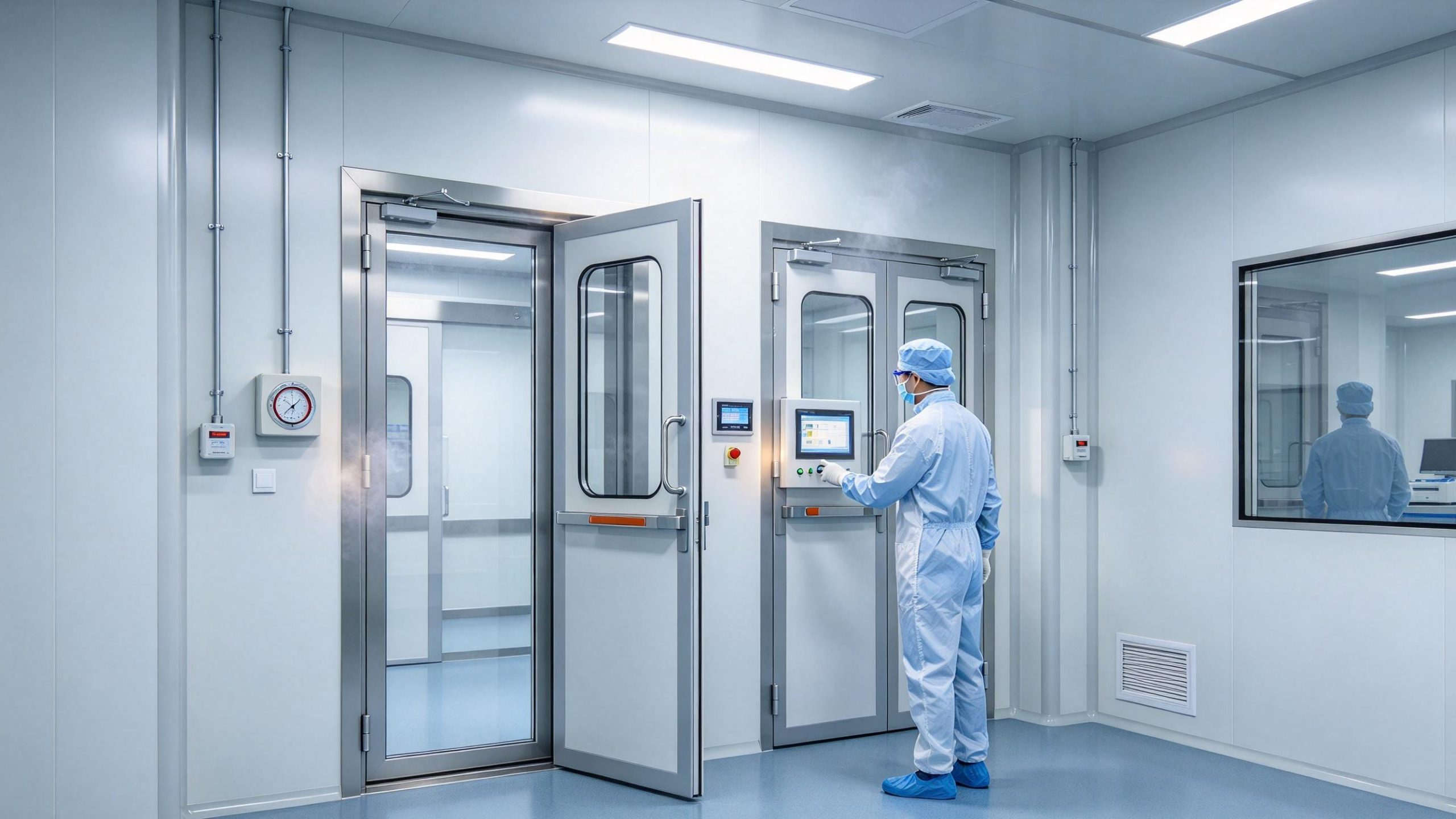
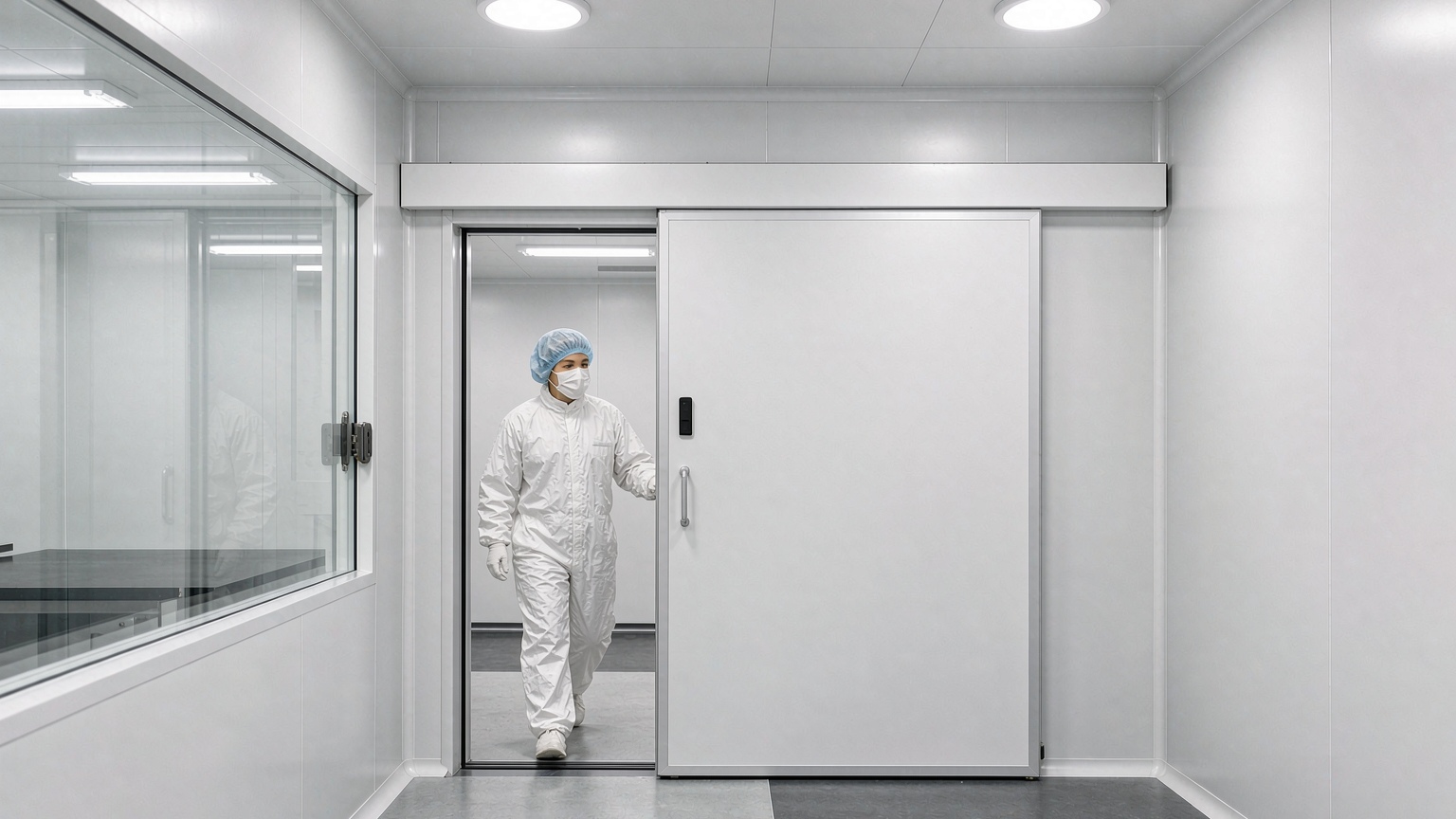
E-ZONG builds cleanroom and medical doors for exactly these boundaries. The glass airtight automatic door uses 8 mm tempered glass with rubber perimeter gaskets and an automatic drive, which suits laboratories, hospitals, and manufacturing entries where hands-free operation protects the seal. For patient rooms, isolation, and ICU, the wall-mounted air-tight swing door gives a self-closing, sealed leaf with an observation window and medical-grade panel. The broader clean room door range covers operating rooms, ICU, isolation rooms, and pharmaceutical labs with steel, HPL, glass, and aluminum-frame options plus interlocks and electromagnetic locks.
Specifying from a room map, rather than room by room on instinct, is what keeps the cascade intact from the gowning airlock to the sterile core. The three product lines above show how one manufacturer covers the hospital, laboratory, and pharmaceutical ends of that map, so the schedule stays consistent instead of mixing suppliers at every boundary.
FAQs
Do all cleanroom doors need to be airtight?
No. Only the rooms that sit on a pressure boundary need a rated airtight door. Corridors and support spaces that are not part of the cascade can use standard cleanroom doors. The map above shows which rooms carry the boundary.
Is a fire-rated door automatically airtight?
No. Fire rating and airtightness are separate performance classes. A fire door is tested for integrity under heat, not for air leakage at operating pressure. If a room needs both, the door must be specified and tested for both.
How do I know the seal still works after installation?
Pressure decay or leakage testing at commissioning, plus a scheduled gasket inspection, is the practical answer. Gaskets wear, and a seal that passed at install can fail inside a validation cycle if it is not checked.
What is the difference between an airtight door and an airlock?
An airtight door is a single sealed leaf. An airlock is a small sealed chamber with two interlocked doors that together prevent two zones from opening into each other. Many rooms on the map use both: an airtight door plus an airlock at the boundary.
Conclusion
An audit finding about a leaking door is almost always a planning gap, not a product failure. Map the pressure boundary room by room, specify the airtight assembly in writing, and verify the seal before the inspector does. If you are preparing a cleanroom, hospital, or laboratory project and want a door schedule reviewed against your classification and layout, share the room list, cleanliness grade, and dimensions with E-ZONG for a technical check before you order.
-
 Cleanroom Glass Windows Are The Key to Maintaining a Clean Environment
-
 Top Aluminium Profile Manufacturers in China: Leading the Global Market
-
 The Evolution of Air Tight Sliding Doors
-
 AHU Aluminium Profile: A Comprehensive Guide
-
 The Importance of Choosing the Right Cleanroom Door in Vietnam
-
 The Benefits of Hospital Automatic Doors: Enhancing Efficiency and Safety
-
 The Best Bathroom Door Manufacturers - Unlocking Endless Possibilities!
-
 Unlock the Possibilities with AJ Manufacturing Doors
-
 Make a Statement with Manufactured Home Interior Doors!
-
 what is aluminum profile? Aluminum Profiles for Your Home is the best option
-
 Airtight Door Room Map: Avoid Leaks Before the Audit
-
 Clean Room Airlock Not Holding Pressure? 6 Causes and Fixes
-
 Hospital Door Standards: NFPA, IBC, EN, and GB Compared
-
 Cleanroom Doors: Buyer's 15 Specs to Confirm Before PO
-
 Operating Room Door Spec: 7 Requirements Hospitals Must Meet
-
 Laboratory Door Pressure: Positive vs Negative and Drop Seal
-
 Shielding Door Lead Equivalent: Match mmPb to Your Room Type
-
 Cleanroom Automatic Sliding Doors: Belt vs Magnetic Drive
-
 What Leak Rate Must a Hermetic Door Pass to Comply
-
 Hospital Door Costs 2026: What Drives the Price Tag




-

Home
-

Tel
-

Email
-

Contact


Guangzhou Yizhong Aluminum Industry Co., Ltd.
We are always providing our customers with reliable products and considerate services.
We are always providing our customers with reliable products and considerate services.
Speak Your Mind