
Cleanroom Swing Door Glass: The Ultimate Compliance Guide
Are you struggling to balance the strict sterility requirements of your facility with the need for better operational visibility? In high-stakes environments like pharmaceutical labs and surgical suites, the choice of a cleanroom swing door glass system is never just about aesthetics—it is about preventing cross-contamination while ensuring personnel safety through clear sightlines. Choosing the wrong entry solution can lead to pressure leakage, difficult-to-clean ledges, and ultimately, a failure to meet GMP or ISO audit standards.
Why Visibility Matters: Role of Glass Systems
In a controlled environment, "seeing is believing" translates directly to "seeing is safety." The integration of specialized glass within a swing door framework serves multiple strategic functions that go beyond simple passage.
Enhancing Safety through Visual Connectivity
One of the primary reasons facility managers opt for a cleanroom swing door glass configuration is to mitigate the risk of collisions in high-traffic corridors. In an environment where staff are often moving quickly with sensitive materials or heavy equipment, a solid door creates a dangerous blind spot.
By utilizing safety viewing panels, you allow for:
- Anticipatory Movement: Staff can see colleagues approaching from the other side, preventing accidental door strikes.
- Incident Monitoring: Supervisors can monitor activities inside a Level 3 or 4 lab without needing to gown up and enter, reducing the risk of accidental exposure and minimizing the "gown-in" cost.
- Emergency Response: In the event of a chemical spill or medical emergency, external teams can assess the situation through the glass before breaching the seal.
Meeting Psychological and Operational Needs
Working in a windowless, sterile environment for 8 to 12 hours can lead to "cleanroom fatigue." Incorporating lab visibility solutions through glass swing doors introduces a sense of openness. Furthermore, it allows natural or ambient light to penetrate deeper into the facility, which has been shown to improve technician focus and reduce errors in precision tasks like micro-assembly or pharmaceutical compounding.
Technical Specifications: What Defines Cleanroom Grade
Not all glass doors are created equal. A standard commercial glass door will fail a cleanroom audit within days due to particle shedding from hinges or the collection of dust on protruding frames. To meet ISO certified cleanroom doors standards, the engineering must be "flush."
Premium Materials: Double-Glazing
The gold standard for any sterile entry is double-glazed tempered glass. Unlike single-pane glass, double-glazing provides a completely flat surface on both sides of the door leaf.
| Feature | Requirement for Cleanroom Compliance |
|---|---|
| Glass Type | Toughened glass cleanroom doors (Tempered) |
| Mounting | Flush-mounted glazing (No ledges/protrusions) |
| Insulation | Vacuum-sealed or Nitrogen-filled to prevent internal fogging |
| Frame Material | Anodized aluminum or 304 stainless steel glass entries |
The flush-surface cleanroom doors design ensures that there is no "lip" or frame edge where disinfectants can pool or microbes can colonize. When your cleaning crew wipes down the door, the cloth should move from the frame to the glass without any snagging or interruption.
Airtight Sealing and Frame Integrity
A hermetic swing door is only as good as its seal. For glass swing doors, the challenge is maintaining a high-pressure differential (often between 15 to 30 Pascals).
- Peripheral Gaskets: High-grade silicone or EPDM gaskets are recessed into the aluminum frame.
- Automatic Bottom Seals: When the door closes, a mechanical "plunger" drops a seal to the floor, eliminating the gap without requiring a raised threshold that could trip staff or hinder trolleys.
- Corner Welds: In e-zong's specialized manufacturing process, frame corners are precision-engineered to ensure there are zero microscopic gaps where air could whistle through.
Choosing the Right Configuration for Your Facility
The decision between manual and automated systems depends entirely on your operational flow and the "cleanliness class" of your zones.
Manual vs. Automatic
Manual cleanroom swing door glass units are ideal for low-traffic observation rooms or storage areas. They are cost-effective and require zero electrical integration. However, in an ICU or a high-throughput pharmacy, every time a staff member touches a door handle, the risk of cross-contamination increases.
Automatic cleanroom glass doors utilizing "wave-to-open" sensors offer:
- Hands-free operation: Essential for maintaining hand hygiene protocols.
- Controlled Closing Speeds: Prevents the "bellows effect" where a fast-swinging door disrupts the laminar airflow of the room.
- Consistent Pressure Maintenance: Automatic closers ensure the door is never accidentally left ajar, protecting your HVAC system’s efficiency.
Integrating Electronic Interlock Systems
In many GMP-regulated facilities, a "Buffer Room" or "Airloack" is required. This is where cleanroom door interlock systems become mandatory. If you are installing a glass swing door as part of an entry/exit pair, the doors must be electronically linked.
- The Logic: Door A cannot open if Door B is open.
- The Benefit: This prevents a direct path for outside air to reach the inner sterile core.
- Visual Indicators: Most interlock compatible swing doors feature LED "Traffic Lights" (Red/Green) integrated into the frame or the glass itself to signal to the user when it is safe to proceed.
Industry-Specific Applications: Where Glass Excels
While steel doors are rugged, pharmaceutical grade entry doors with large glass panels are becoming the industry preference for specific zones.
Hospital and Healthcare Environments
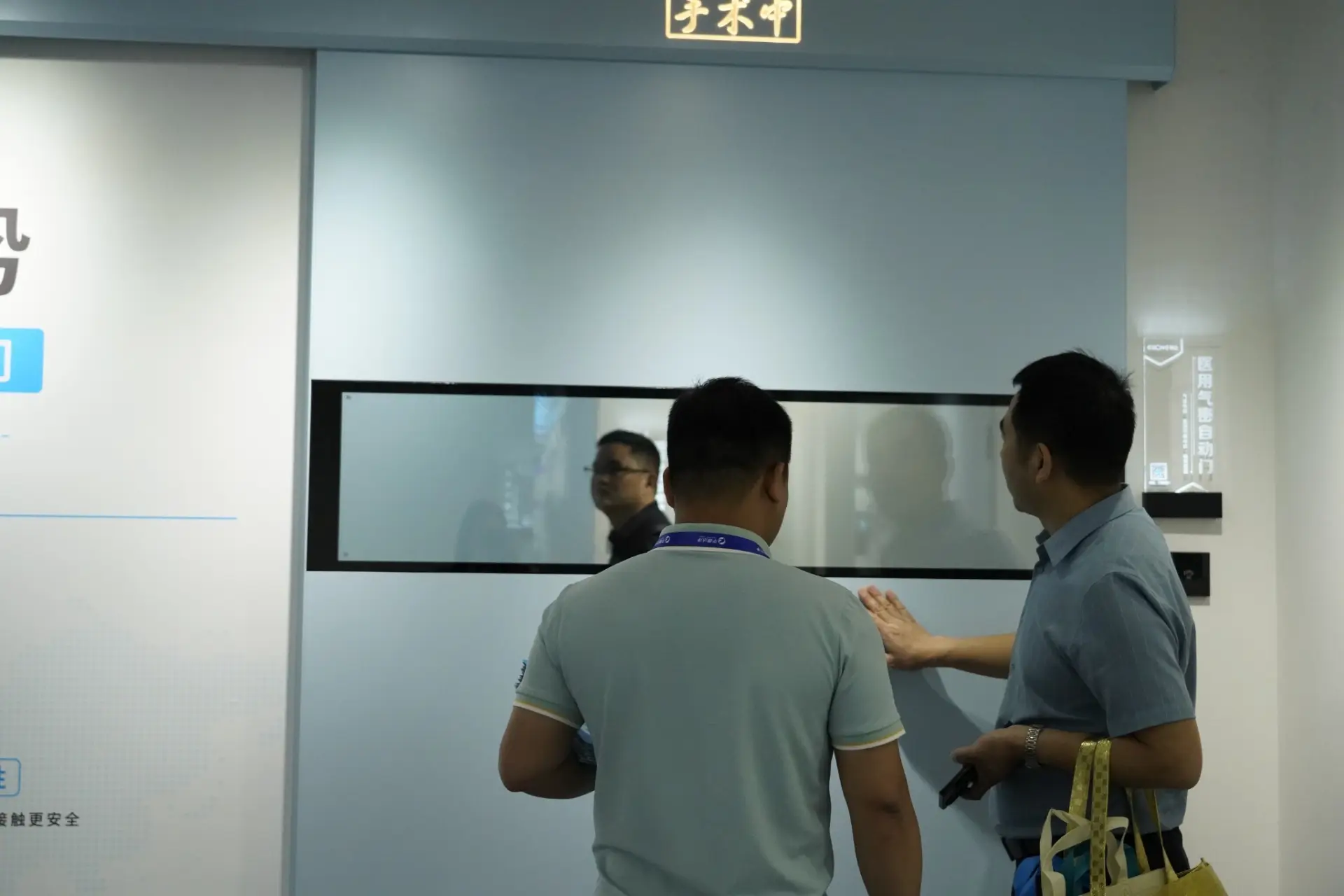
In the ICU (Intensive Care Unit) or Isolation Wards, visibility is a clinical requirement. Hospital ICU glass doors allow nurses to check on patients' vitals and ventilator settings from the corridor. This reduces the number of times the sterile seal of the isolation room is broken, preserving the protective environment for the patient.
Pharmaceutical and Microelectronic Production
In semiconductor fabrication, light and visibility help in identifying microscopic defects. For pharmaceutical compounding, GMP compliant glass doors ensure that the mixing process is visible to quality control officers at all times. The use of antistatic glass coatings can also be integrated to prevent the buildup of dust-attracting charges in electronics-grade cleanrooms.
Glass Swing Doors vs. Solid Steel
| Performance Metric | Glass Swing Door | Solid Steel Door |
|---|---|---|
| Visibility | 100% (High-Performance) | 0% (Needs separate vision panel) |
| Chemical Resistance | Excellent (Resists VHP and Alcohol) | Good (Dependent on powder coating) |
| Acoustic Insulation | Moderate to High (with double glazing) | Very High |
| Weight | Moderate | High |
| Light Transmission | Optimal for "Open" feel | None |
For facilities prioritizing a modern, transparent, and collaborative workspace without sacrificing a single Pascal of pressure, the cleanroom swing door glass system is the superior choice over traditional opaque metal doors.
Key Considerations for Large-Scale Procurement
If you are a large buyer or a facility engineer, your procurement checklist should go beyond the price point. To ensure the long-lasting structural integrity of your facility, consider the following technical nuances:
1. Flush-Mounted Glazing vs. Inset Glazing
Ensure the glass is flush with the door leaf. Any inset (where the glass sits deeper than the frame) creates a 90-degree corner that is impossible to sterilize effectively. E-zong's designs prioritize a 100% flat surface transition.
2. Air Leakage Rates
Ask for the "leakage rate per hour" at a specific pressure (e.g., 50 Pa). A high-quality airtight glass entry system should have certified test reports showing minimal air loss, which significantly reduces the energy load on your HEPA filtration systems.
3. Hardware Compatibility
Does the door support electromagnetic locks? Are the hinges "concealed" or "cleanroom-wrapped"? Exposed hinges shed metal particles over time due to friction; concealed hinges are the only choice for ISO 5 environments and above.
Conclusion
The "fishbowl" effect of a glass-centric cleanroom is no longer a luxury—it is a functional evolution in sterile facility design. It allows for better supervision, safer movement, and a more humane working environment, all while maintaining the uncompromising air quality your processes demand.
Are you ready to enhance the visibility and safety of your sterile environment?
Whether you are designing a new pharmaceutical wing or upgrading your hospital's surgical suites, our team at ezong is here to provide technical clarity.
Explore our full range of Cleanroom Glass Solutions or Contact our Engineering Team today for a one-on-one consultation to discuss your specific pressure requirements and hardware configurations. Let’s build a cleaner, clearer future together.
-
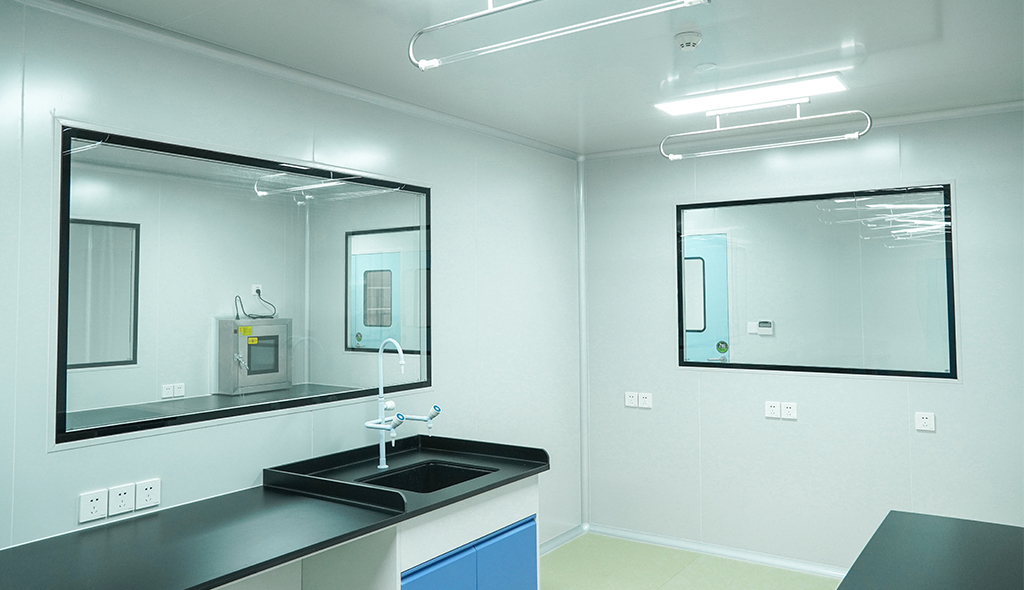 Cleanroom Glass Windows Are The Key to Maintaining a Clean Environment
 -
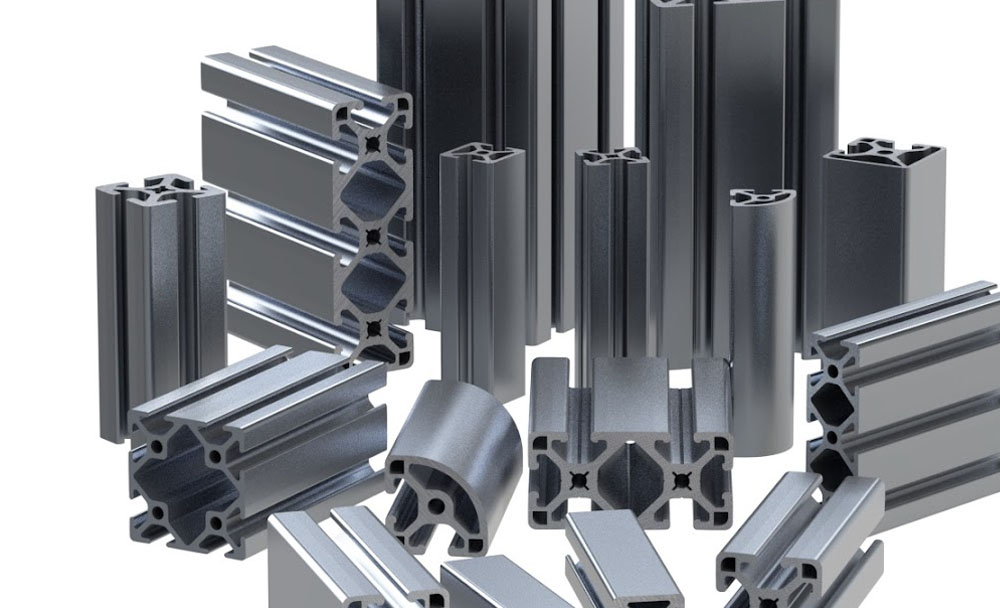 Top Aluminium Profile Manufacturers in China: Leading the Global Market
 -
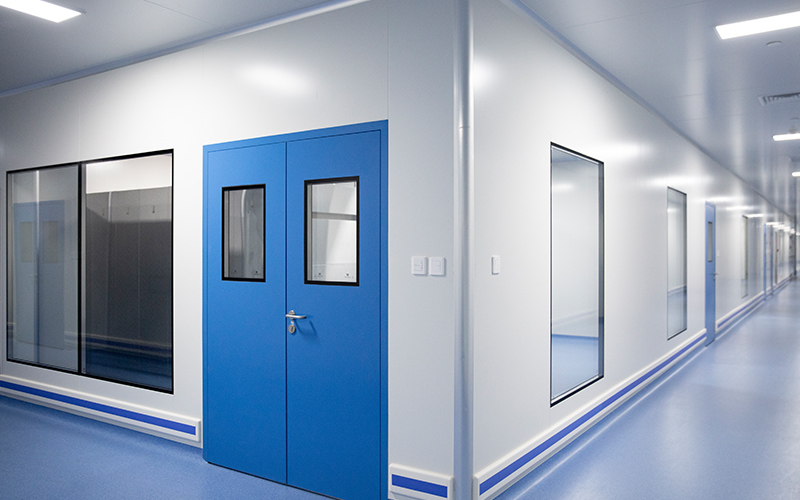 The Evolution of Air Tight Sliding Doors
 -
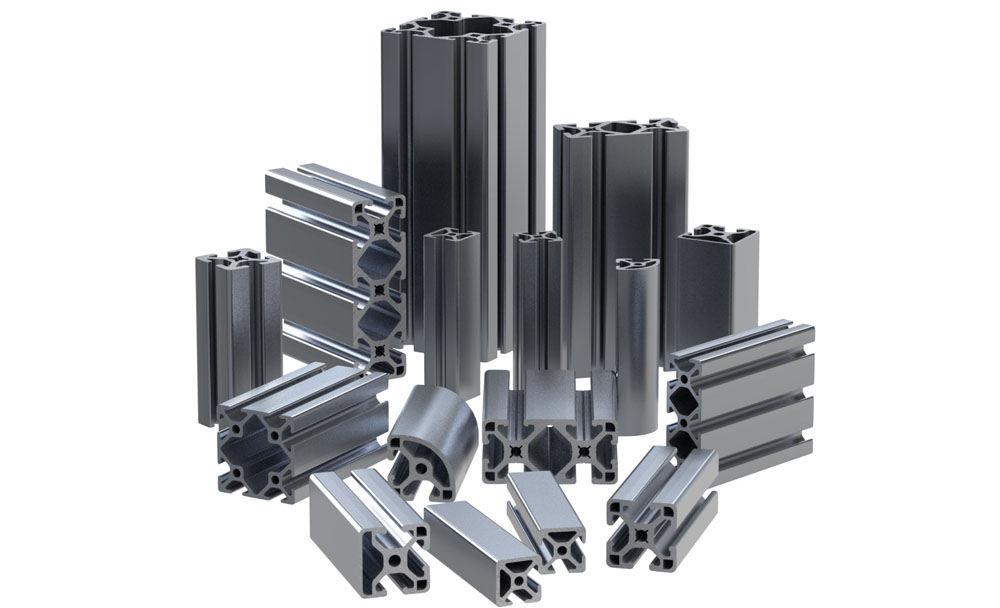 AHU Aluminium Profile: A Comprehensive Guide
 -
 The Importance of Choosing the Right Cleanroom Door in Vietnam
 -
 The Benefits of Hospital Automatic Doors: Enhancing Efficiency and Safety
 -
.jpg) The Best Bathroom Door Manufacturers - Unlocking Endless Possibilities!
The Best Bathroom Door Manufacturers - Unlocking Endless Possibilities! -
 Unlock the Possibilities with AJ Manufacturing Doors
 -
 Make a Statement with Manufactured Home Interior Doors!
 -
 what is aluminum profile? Aluminum Profiles for Your Home is the best option
-
 Hospital Emergency Exit Doors: 90 Minute Fire Rating Meets Infection Control
 -
 ICU and Isolation Door Requirements Hospitals Often Overlook
 -
 Laboratory Door Requirements for BSL-2 and BSL-3 Containment
 -
 Retrofitting Hospital Sliding Doors: Upgrade Wards Without a Rebuild
 -
 Why Airtight Hospital Sliding Doors Are Critical for Infection Control
 -
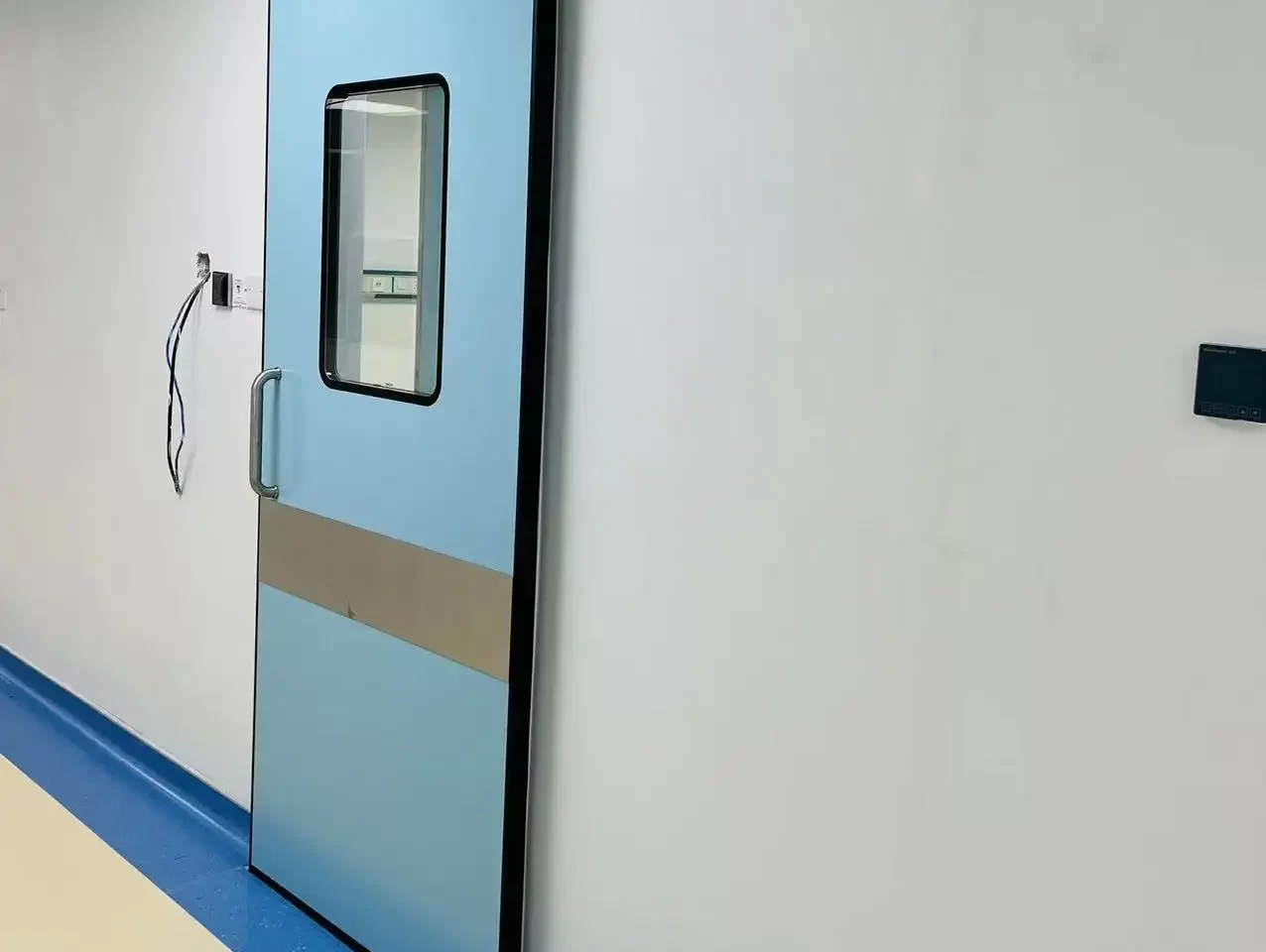 Automatic cleanroom door systems: sensor, actuator and access control integration
 -
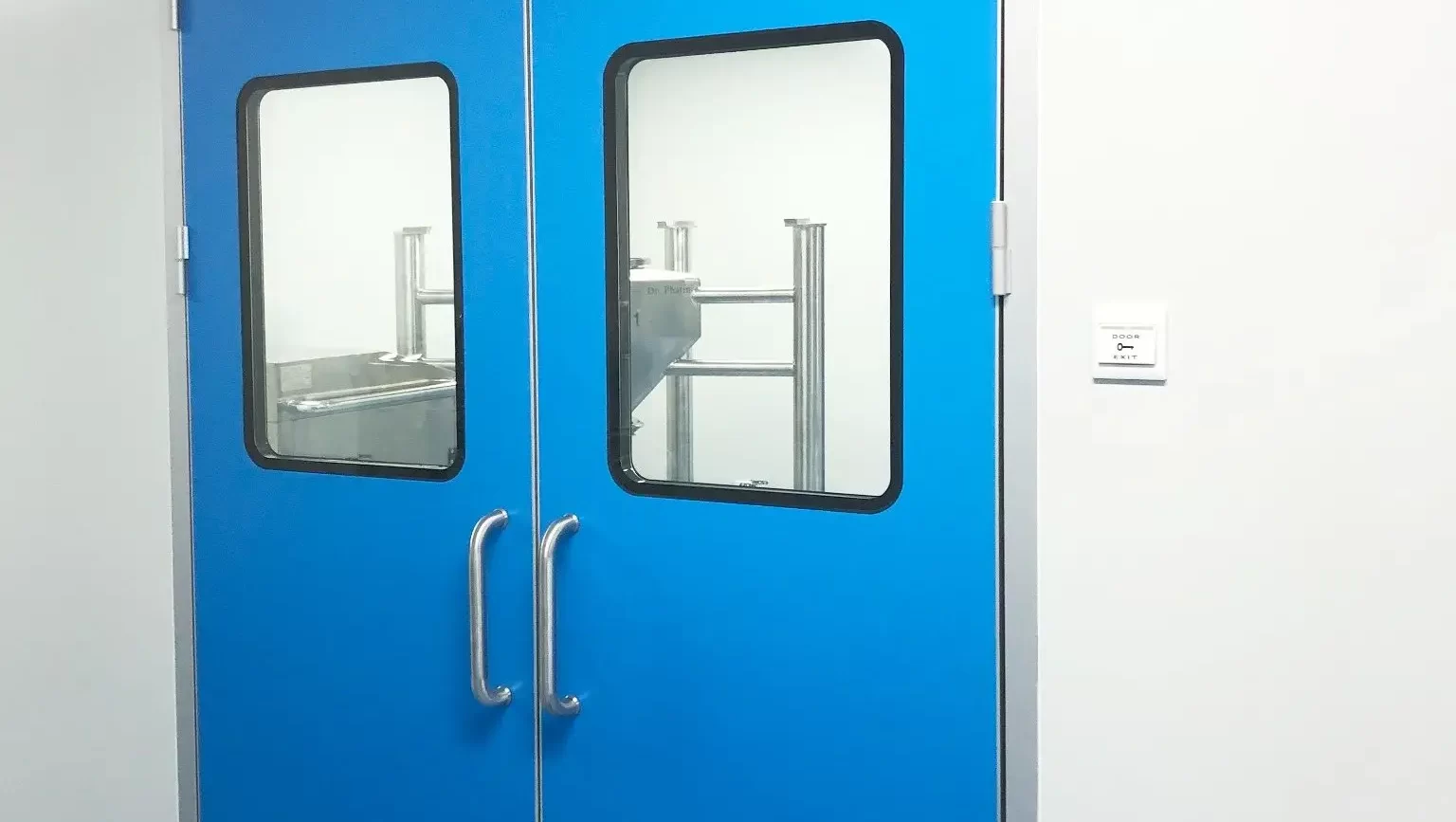 Cleanroom Door Materials: Stainless Steel vs HPL vs FRP vs Aluminum Comparison
 -
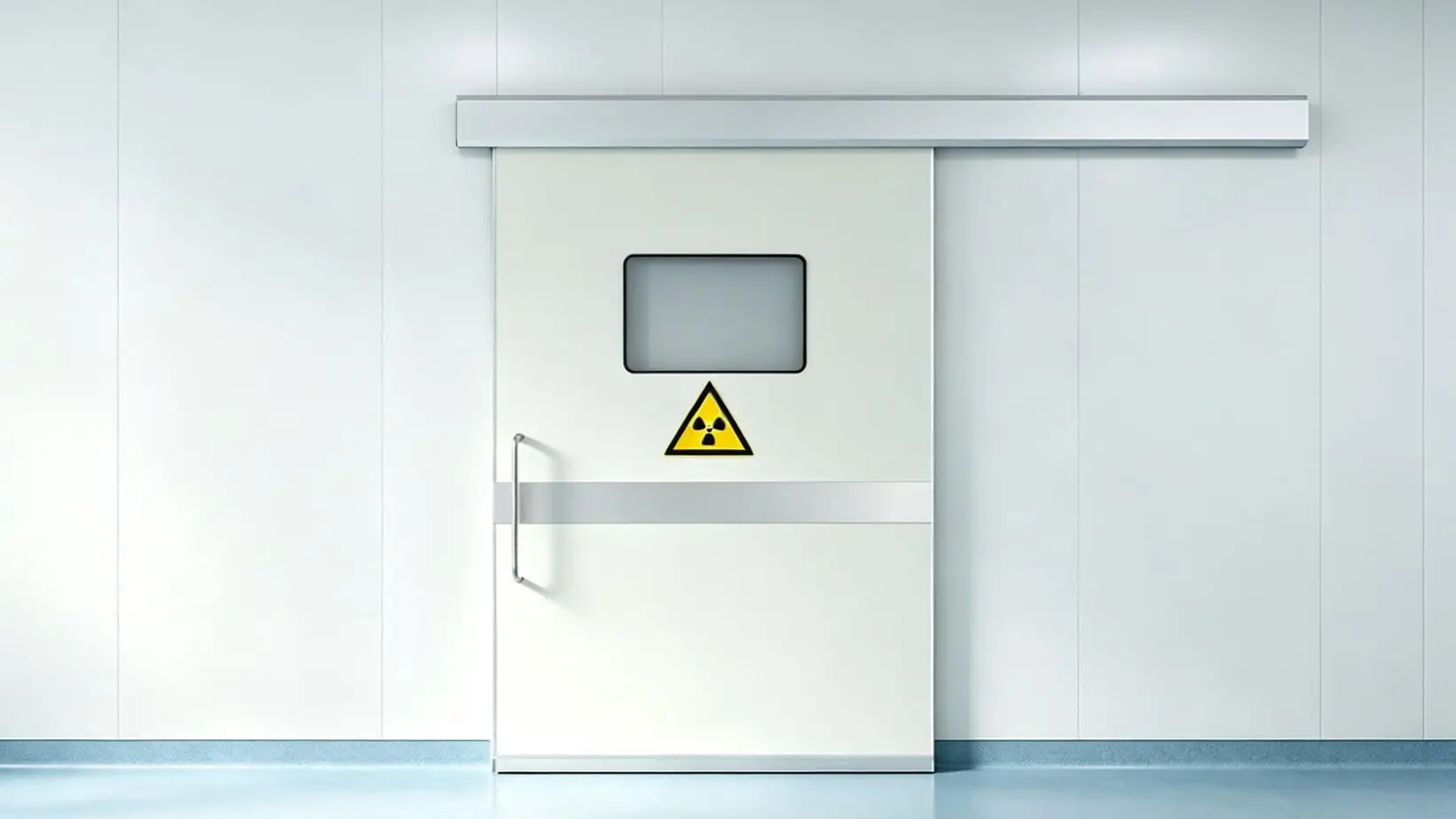 X-Ray Room Door Buying Guide: Lead Thickness & Compliance
 -
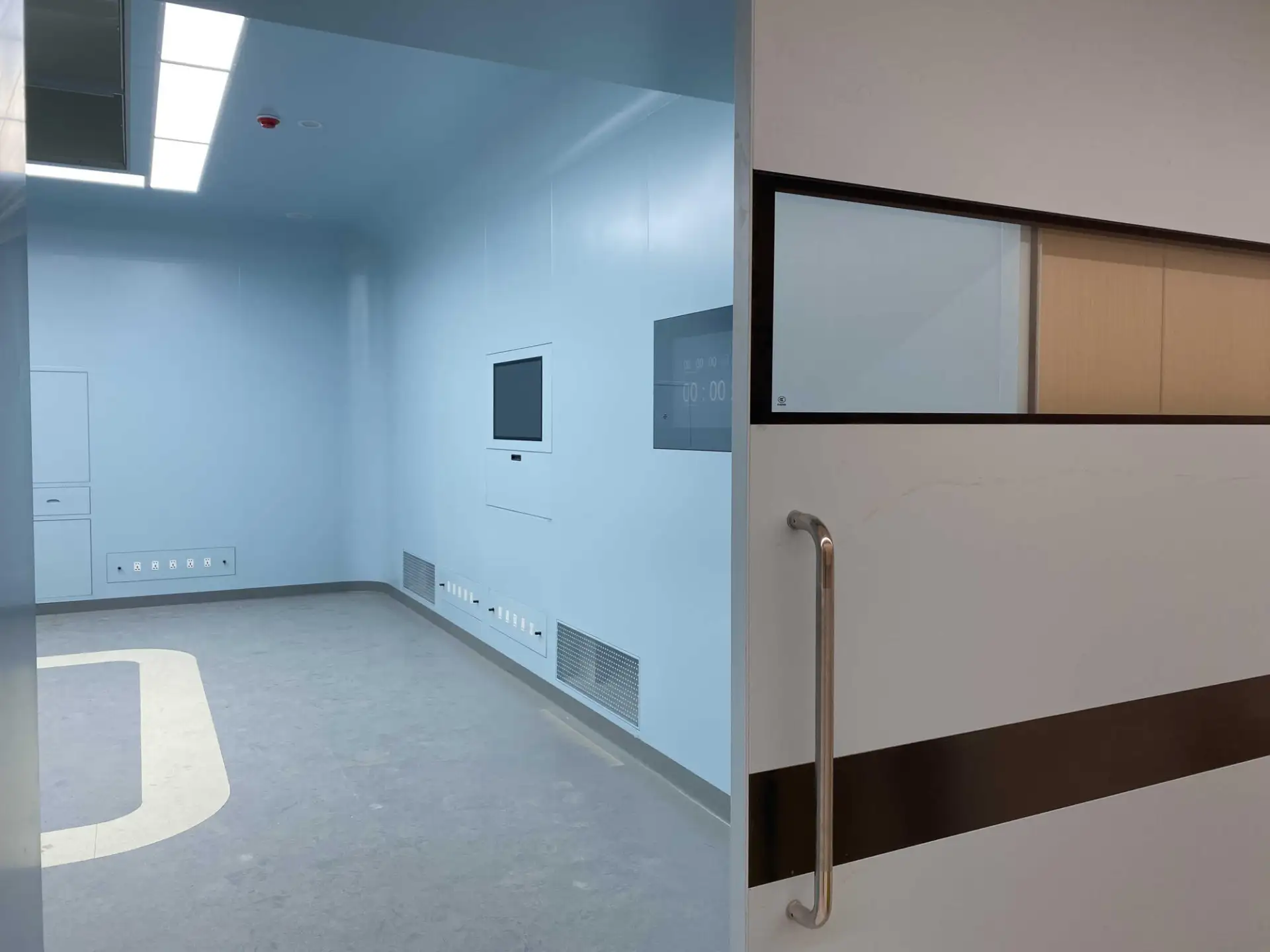 Operating Room Doors: Hermetic & Infection-Control Guide
 -
 Hospital ICU Door Selection: Sealing, Sterility & Workflow

-

Home
-

Tel
-

Email
-

Contact


Guangzhou Yizhong Aluminum Industry Co., Ltd.
We are always providing our customers with reliable products and considerate services.
We are always providing our customers with reliable products and considerate services.
Speak Your Mind