
Best suspended ceiling diffuser Options for Clean Rooms and Hospitals
The Critical Air Safety Barrier in High-Stakes Environments
In hospital operating theaters, pharmaceutical cleanrooms, and electronic manufacturing facilities, air quality directly determines infection control efficacy and product yield rates. As a core terminal component of HVAC systems, the performance of a suspended ceiling diffuser critically influences airflow distribution uniformity, cleanliness maintenance capability, and operational noise levels.
For procurement decision-makers, engineering designers, and facility operations personnel, selecting a compliant, durable, and easily maintainable ceiling diffuser extends beyond mere technical specification matching—it represents a comprehensive evaluation of lifecycle costs, safety compliance, and operational reliability. This article combines industry standards with professional aluminum profile solutions to systematically analyze the selection logic, installation essentials, and service support for suspended ceiling diffuser applications in clean medical environments, while addressing synergistic design considerations for complementary products such as air diffuser systems.

1. Compliance First: The Technical Foundation for Selection
1.1 International Cleanliness Classifications & Airflow Requirements
ISO 14644-1 defines nine cleanliness classes, with healthcare and pharmaceutical sectors primarily focusing on ISO Classes 5–8:
| Cleanliness Class | Max Particles ≥0.5μm (/m³) | Recommended Air Changes/hour | Typical Applications |
|---|---|---|---|
| ISO 5 (Class 100) | ≤3,520 | 300–600 (unidirectional flow) | Surgical core zones, aseptic filling |
| ISO 6 (Class 1,000) | ≤35,200 | 90–180 | General surgical areas, compounding rooms |
| ISO 7 (Class 10,000) | ≤352,000 | 30–60 | Clean corridors, support areas |
| ISO 8 (Class 100,000) | ≤3,520,000 | 15–25 | Offices, buffer zones |
Suspended ceiling diffuser selection must align with airflow organization requirements corresponding to each cleanliness class. For instance, ISO Class 5 zones require laminar-flow hvac diffuser designs with face velocity maintained at 0.3–0.5 m/s ±20% to ensure effective "piston flow" contaminant removal.
1.2 Healthcare-Specific Regulations & Pressure Differential Control
Medical facilities must additionally comply with specialized standards including ASHRAE 170, CDC guidelines, and GB 50333:
- Operating Rooms: Minimum 20 air changes/hour; static pressure differential ≥8 Pa (relative to adjacent spaces)
- Negative-Pressure Isolation Rooms: Pressure differential ≤−2.5 Pa to prevent contaminated air escape
- Aseptic Compounding Areas: Positive pressure maintenance required to exclude external contaminants
The sealing performance of a ceiling diffuser directly impacts pressure differential stability. Gel-seal or knife-edge seal configurations are recommended, with leakage rates controlled to <0.01% and validated via PAO scan testing.
1.3 Material Selection & Hygienic Certification Requirements
Surfaces of air terminals in clean environments must withstand frequent chemical disinfection—material selection is critical:
- Recommended Material: 6063-T5 anodized aluminum alloy with surface roughness Ra ≤0.8 μm to minimize microbial adhesion
- Coating Process: Nano-antimicrobial powder coating, ASTM G21 antifungal tested, resistant to repeated wiping with isopropyl alcohol, hydrogen peroxide, and other disinfectants
- Fire Rating: Compliant with GB 8624 Class A non-combustible standard; no toxic gas emission under high-temperature conditions
2. Core Product Categories: In-Depth Analysis of 4 High-Performance Ceiling Diffuser Types
2.1 HEPA-Integrated Filtered Diffuser (Reference Model: Standard 2×2 Ceiling Diffuser)
Operating Principle: Integrates H13–H14 grade HEPA filters directly within the aluminum housing to achieve terminal filtration, eliminating secondary contamination from ductwork.
Technical Specifications:
- Filtration Efficiency: H13 ≥99.99%, H14 ≥99.995% (@0.3 μm)
- Initial Resistance: 80–120 Pa; recommended final resistance ≤450 Pa
- Sealing Options: Liquid gel seal or knife-edge seal available
- Housing Material: 6063-T5 aluminum alloy, wall thickness ≥1.2 mm
Applications: ISO Class 5–7 cleanrooms, Pharmacy Intravenous Admixture Services (PIVAS), biosafety laboratories
Selection Advantages:
- Modular design compatible with standard 2×2 ceiling diffuser grid ceilings (600×600 mm)
- Bottom-access quick-release structure enables filter replacement without ladder access, improving maintenance efficiency by 50%
- Pre-installed ports for differential pressure monitoring and DOP testing facilitate compliance validation
2.2 Laminar Flow Surgical Canopy (Linear Diffuser Design Reference)
Operating Principle: Combines a flow-straightening membrane with HEPA filtration to deliver vertical unidirectional airflow (0.3–0.5 m/s), creating a "piston flow" effect for rapid contaminant removal.
Technical Specifications:
- Face Velocity: 0.45 m/s ±20% (adjustable)
- Coverage Ratio: ≥60% (recommended for Class I operating rooms)
- Noise Level: ≤45 dB(A) @ 1.5 m distance
- Diffuser Panel Material: PTFE microporous membrane or 304 stainless steel perforated plate
Applications: Orthopedic/joint replacement operating rooms, aseptic filling lines, precision electronics assembly zones
Selection Advantages:
- Airflow uniformity ≥95%, effectively eliminating vortices and dead zones
- Linear diffuser configuration supports elongated layouts tailored to surgical table-directed airflow
- Anodized surface treatment ensures corrosion resistance with service life ≥15 years
2.3 FFU-Integrated Diffuser Unit (Square / Round Ceiling Diffuser Options)
Operating Principle: Incorporates an EC fan, filter, and diffusion panel into a self-contained unit enabling independent airflow and static pressure control for maximum flexibility.
Technical Specifications:
- Airflow Range: 800–2,000 m³/h (stepless adjustment)
- Motor Type: EC brushless DC, energy efficiency ratio ≥85%
- Noise Control: ≤42 dB(A) @ 1.0 m distance
- Control Interface: RS485/Modbus protocol supporting group control
Applications: Modular cleanrooms, retrofit projects, localized high-cleanliness requirement zones
Selection Advantages:
- Energy savings exceeding 30% versus traditional AC fan systems, with ROI <2 years
- Available in both square ceiling diffuser and round ceiling diffuser configurations to match diverse ceiling aesthetics
- Ultra-slim housing design (height ≤300 mm) accommodates low-clearance spaces
2.4 Low-Turbulence Displacement Diffuser (Drop Ceiling Diffuser Application)
Operating Principle: Leverages thermal stratification principles to deliver supply air at low velocity (0.2–0.3 m/s) with minimal temperature differential (2–4°C), enhancing occupant comfort while maintaining air quality.
Technical Specifications:
- Supply Air Temperature Differential: 2–4°C (prevents cold draft sensation)
- Throw Distance Control: 1.5–3.0 m (adjustable guide vanes)
- Condensation Prevention: Integrated insulation layer; dew point temperature ≥18°C
- Return Air Compatibility: Supports coordinated upper/side return air layouts
Applications: General patient rooms, rehabilitation areas, staff offices, ISO Class 8 clean zones
Selection Advantages:
- Drop ceiling diffuser design seamlessly integrates with standard grid ceilings, balancing aesthetics and functionality
- Enhanced patient comfort by eliminating "draft complaint" issues associated with conventional diffusers
- System-wide energy reduction of 15–20% through coordinated HVAC optimization
3. Professional Selection Guide: 6 Critical Decision Dimensions
3.1 Airflow Organization Simulation & CFD Validation
Introduce Computational Fluid Dynamics (CFD) modeling during the design phase to optimize suspended ceiling diffuser layout:
- Predict velocity fields, temperature distributions, and particle concentration profiles
- Identify vortex zones and airflow dead spots; adjust diffuser spacing accordingly
- Generate visualized reports to support design review and commissioning acceptance
3.2 Airflow–Pressure Drop–Noise Triangular Balance
| Parameter | Recommended Range | Optimization Strategy |
|---|---|---|
| Airflow | Meets required air change rates | Implement VFD fans + intelligent damper coordination |
| Pressure Drop | HEPA initial resistance 80–120 Pa | Select low-resistance diffusion structures to reduce system energy consumption |
| Noise | OR ≤45 dB; patient rooms ≤35 dB | Reference NC curves; reserve 3–5 dB safety margin |
Overall noise control for hvac vents systems requires synergistic design of ceiling vent and air vents covers components to prevent localized turbulence-induced noise.
3.3 Sealing Reliability & Leakage Prevention
Sealing Method Comparison:
| Seal Type | Leakage Rate | Installation Complexity | Recommended Application |
|---|---|---|---|
| Gel Seal | <0.005% | Medium-High (requires precise alignment) | ISO Class 5–6 critical zones |
| Knife-Edge Seal | <0.01% | Medium (requires specialized tools) | ISO Class 6–7 zones |
| Negative-Pressure Seal | <0.05% | Low (quick-install design) | ISO Class 7–8 support areas |
Leak Testing Protocol: Post-installation PAO/DOP scan testing is mandatory. Use a photometer to inspect frame-to-filter media interfaces to ensure zero leakage.
3.4 Maintainability Design
Service Access Options:
- Bottom-Access Quick-Release: Ideal for hospital cleanrooms; maintenance personnel require no ladder access; filter replacement time <10 minutes per unit
- Top-Access Service: Suitable for large-scale clean manufacturing facilities; requires maintenance catwalks but enables batch servicing
Lifecycle Cost Calculation: Total Cost = Procurement Cost + Installation Cost + (Filter Replacement Frequency × Unit Replacement Cost) + Energy Consumption Cost
3.5 Cleanroom Compatibility Verification
Surface Durability Testing Standards:
- Disinfectant Compatibility: Withstands 75% alcohol, 3% hydrogen peroxide, quaternary ammonium compounds; no discoloration/delamination after 1,000 wipe cycles
- Particle Shedding: Per ISO 14644-5 testing; no particle release under airflow scouring
- VOC Emissions: Compliant with GB/T 18883; 24-hour emission <0.05 mg/m³
3.6 Smart Integration Capability
Recommended Configurations:
- Integrated Differential Pressure Sensors: Real-time filter resistance monitoring with predictive replacement alerts
- BMS Interface: Modbus/BACnet protocol support for automated airflow adjustment
- IoT Remote Monitoring: 4G/5G module data upload enabling mobile alert notifications
Intelligent coordination between air ventilation fan and diffuser hvac components further enhances system responsiveness and energy efficiency.
4. Installation & Commissioning: Critical Steps for Healthcare Project Deployment
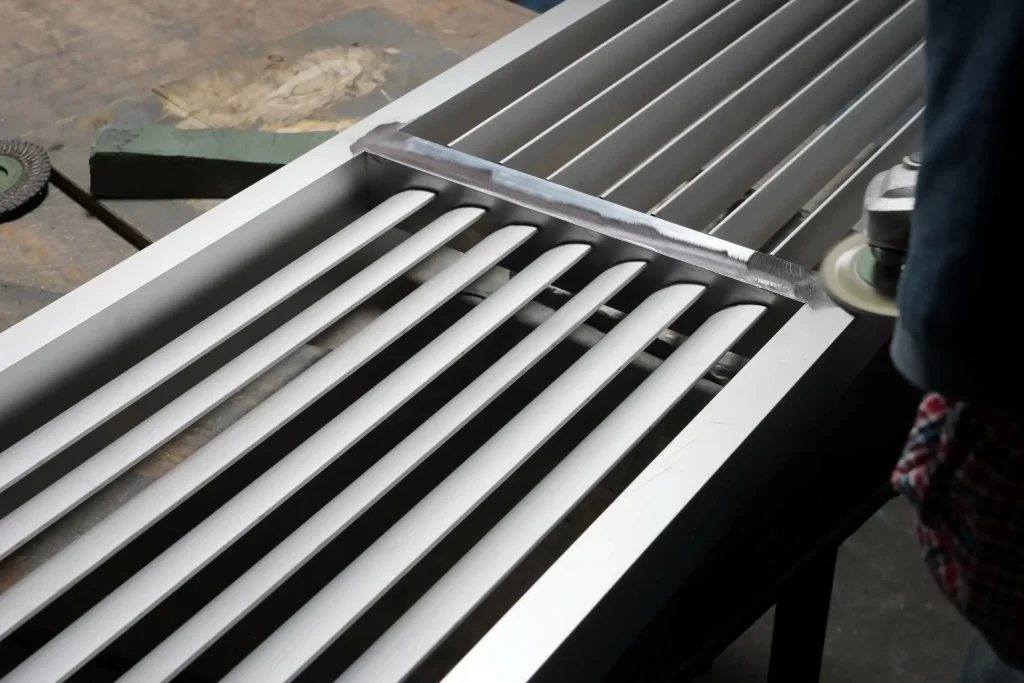
4.1 Pre-Installation Environmental Control
- Plenum Cleaning: Thorough vacuuming + lint-free wiping prior to installation; particle count ≤1,000 particles/0.3 μm
- Equipment Protection: Keep suspended ceiling diffuser units in sealed packaging until immediately before installation to prevent construction dust contamination
- Personnel Protocol: Installers must wear cleanroom garments, masks, and gloves; follow gowning procedures
4.2 Sealing Construction Practices
- Grid Precision: Ceiling grid levelness tolerance ≤±2 mm to ensure tight diffuser panel seating
- Sealant Selection: Use neutral-cure mildew-resistant silicone; avoid acidic formulations that may corrode aluminum profiles
- Airtightness Testing: Pressure decay method; ≤5% pressure drop over 10 minutes at 500 Pa test pressure
Special attention to linear diffuser framing detail is required for frame-to-grid interface precision; recommend reserving 1–2 mm adjustment tolerance.
4.3 System Commissioning & Performance Validation
| Test Item | Acceptance Criteria | Measurement Tools |
|---|---|---|
| Airflow Balance | Individual diffuser deviation ≤±10% | Airflow hood + micro-manometer |
| Airflow Pattern | No recirculation or dead zones | Smoke generator + particle counter |
| Noise Testing | Within design value ±3 dB | Sound level meter (A-weighted) |
| Cleanliness Verification | Particle count meets specification | Laser particle counter |
Commissioning of ceiling vent diffuser systems should concurrently evaluate hvac grilles return air performance to ensure complete airflow circulation.
5. Operations & Maintenance: Extending Equipment Life & Ensuring Ongoing Compliance
5.1 Preventive Maintenance Schedule
Filter Replacement Threshold Guidelines:
- Pre-filters (G4): ΔP ≥250 Pa or every 3–6 months
- Medium-efficiency filters (F7–F9): ΔP ≥350 Pa or every 6–12 months
- HEPA/ULPA filters (H13–H14): ΔP ≥450 Pa or every 2–4 years
Annual Inspection Checklist:
- Seal integrity inspection (replace if hardened/cracked)
- Housing corrosion assessment (focus on welds and corners)
- Guide vane mobility check (ensure adjustable functionality)
- Sensor calibration (annual calibration for pressure/temperature/humidity sensors)
5.2 Standardized Cleaning & Disinfection Protocol
Recommended Cleaning Agents: 75% medical-grade alcohol, 3% hydrogen peroxide, quaternary ammonium disinfectants
Wiping Protocol:
- Use unidirectional wiping motion; avoid back-and-forth smearing
- Replace each lint-free cloth after ≤1 m² usage area
- Allow 5-minute dwell time post-disinfection, then rinse residue with purified water
Frequency Recommendations:
- General clean zones: Weekly
- Critical procedure zones (above surgical tables): After each use
- HEPA filter surfaces: Monthly (gentle wiping to avoid media damage)
5.3 Troubleshooting & Emergency Response
| Symptom | Potential Causes | Diagnostic Approach |
|---|---|---|
| Reduced Airflow | Filter clogging / fan malfunction | Check ΔP → Replace filter → Verify fan RPM |
| Sudden Noise Increase | Bearing wear / blade fouling | Shutdown inspection → Clean blades → Replace bearings |
| Surface Condensation | Insulation damage / low supply air temp | Inspect insulation → Adjust supply parameters → Repair damage |
| Pressure Differential Anomaly | Seal failure / damper sticking | Leak test → Replace seal → Lubricate damper |
Regular inspection of vent damper and vent air cover components effectively prevents airflow irregularities.
6. System Integration: Coordinating Suspended Ceiling Diffusers with HVAC Systems
Cleanrooms function as integrated systems; suspended ceiling diffuser design must coordinate holistically with the overall HVAC architecture:
6.1 Airflow Organization & System Coordination
- Pressure Maintenance: Ceiling diffuser supply airflow must precisely match return air system capacity to ensure stable positive room pressure
- Airtight Design: Diffuser-to-ceiling panel interfaces require dual-seal configuration; leakage rate <0.5 m³/h·m
- Integrated Control: Pressure differential signals fed to BMS enable automatic hvac diffuser airflow compensation
6.2 Energy Efficiency Optimization Strategies
- Variable Frequency Control: Air diffuser systems paired with VFD fans dynamically adjust airflow based on real-time demand
- Heat Recovery: Integration with fresh air systems reduces overall energy consumption by 20–30%
- Intelligent Scheduling: Automated adjustment of hvac vents operating modes based on occupancy schedules
6.3 Integrated Solution Advantages
| Product Combination | Synergistic Value | Ideal Applications |
|---|---|---|
| Suspended ceiling diffuser + VFD fan | Intelligent airflow-energy optimization; enhanced system efficiency | Operating rooms, aseptic manufacturing |
| Linear diffuser + smart control system | Precision airflow management; superior cleanliness performance | Premium medical centers |
| HVAC vents + heat recovery unit | Dual assurance of compliance and energy savings; reduced operational costs | Public tertiary hospitals |
7. Conclusion & Professional Service Support
Selecting a professional-grade suspended ceiling diffuser represents a strategic investment in medical safety assurance, regulatory certification success, and long-term operational cost reduction. As an integrated manufacturer specializing in R&D, production, and sales of aluminum profile solutions, we have delivered customized air diffusion systems to over 2,000 healthcare and cleanroom projects globally.
Comprehensive Service Support
| Service Phase | Service Offerings | Client Value |
|---|---|---|
| Pre-Sales Consultation | Complimentary CFD airflow simulation, customized selection proposals, sample delivery | Mitigates selection risk; enhances solution fit |
| In-Project Support | Technical briefings, installation guidance, commissioning assistance | Ensures smooth project execution; accelerates timeline |
| After-Sales Assurance | 2-year warranty, 48-hour response commitment, rapid spare parts supply | Minimizes operational risk; ensures ongoing compliance |
Reference Product Portfolio
| Product Series | Core Specifications | Target Applications |
|---|---|---|
| Standard 2×2 Ceiling Diffuser | H14 filtration, gel seal, 600×600 mm | ISO Class 5–6 cleanrooms |
| Linear Diffuser (Laminar Flow) | 0.45 m/s face velocity, 1200×600 mm | Class I operating room core zones |
| Square Ceiling Diffuser FFU | EC fan, smart control, 1,500 m³/h airflow | Modular cleanrooms |
| Drop Ceiling Diffuser (Displacement) | Condensation-resistant, 600×600 mm | Patient rooms / office areas |
8. FAQ: Frequently Asked Questions
Q1: Which suspended ceiling diffuser type is recommended for hospital operating rooms?
A: We recommend a laminar-flow HEPA-integrated ceiling diffuser. It must comply with ISO 14644-1 Class 5 standards, maintain face velocity of 0.3–0.5 m/s, and operate at ≤45 dB noise level. A gel-seal construction is essential to guarantee zero leakage, and a bottom-access quick-release design facilitates convenient filter replacement.
Q2: How frequently should filters in a suspended ceiling diffuser be replaced?
A: Replacement intervals depend on ambient particulate load and operational runtime. General guidance: pre-filters every 3–6 months, medium-efficiency filters every 6–12 months, and HEPA/ULPA filters every 2–4 years. Specific timing should be dynamically adjusted based on differential pressure monitoring data (pre-filter 250 Pa / HEPA 450 Pa threshold) and particle count verification results.
Q3: What is the standard installation procedure for a 2×2 ceiling diffuser?
A: Standard installation steps: ① Verify ceiling grid dimensions (600×600 mm); ② Clean the plenum chamber; ③ Install and level the diffuser unit; ④ Connect ductwork and apply sealing; ⑤ Perform airflow balancing commissioning. Reference the linear diffuser framing detail technical drawings for precise alignment guidance.
Q4: What distinguishes a ceiling diffuser from a standard air vent?
A: A ceiling diffuser emphasizes uniform airflow distribution and cleanliness control, primarily deployed in cleanroom environments. An air vent focuses on basic ventilation and air exchange, commonly used in conventional buildings. Medical critical zones require professional-grade hvac diffuser solutions.
Q5: How can energy consumption of a suspended ceiling diffuser system be optimized?
A: Implement EC fan technology paired with intelligent control systems to dynamically adjust hvac diffuser airflow based on real-time demand. Combined with variable frequency drive technology, energy savings exceeding 30% are achievable. Regular cleaning of air vents covers is also recommended to maintain unobstructed airflow paths.
-
 Cleanroom Glass Windows Are The Key to Maintaining a Clean Environment
 -
 Top Aluminium Profile Manufacturers in China: Leading the Global Market
 -
 The Evolution of Air Tight Sliding Doors
 -
 AHU Aluminium Profile: A Comprehensive Guide
 -
 The Importance of Choosing the Right Cleanroom Door in Vietnam
 -
 The Benefits of Hospital Automatic Doors: Enhancing Efficiency and Safety
 -
.jpg) The Best Bathroom Door Manufacturers - Unlocking Endless Possibilities!
The Best Bathroom Door Manufacturers - Unlocking Endless Possibilities! -
 Unlock the Possibilities with AJ Manufacturing Doors
 -
 Make a Statement with Manufactured Home Interior Doors!
 -
 what is aluminum profile? Aluminum Profiles for Your Home is the best option
-
 5 Hermetic Door Mistakes That Break the Seal
 -
 Hospital Room Door Size by Room Type: Width and Clearance
 -
 Retrofit Manual Doors with Electronic Glass Operators
 -
 Hospital Emergency Exit Doors: 90 Minute Fire Rating Meets Infection Control
 -
 ICU and Isolation Door Requirements Hospitals Often Overlook
 -
 Laboratory Door Requirements for BSL-2 and BSL-3 Containment
 -
 Retrofitting Hospital Sliding Doors: Upgrade Wards Without a Rebuild
 -
 Why Airtight Hospital Sliding Doors Are Critical for Infection Control
 -
 Automatic cleanroom door systems: sensor, actuator and access control integration
 -
 Cleanroom Door Materials: Stainless Steel vs HPL vs FRP vs Aluminum Comparison




-

Home
-

Tel
-

Email
-

Contact


Guangzhou Yizhong Aluminum Industry Co., Ltd.
We are always providing our customers with reliable products and considerate services.
We are always providing our customers with reliable products and considerate services.
Speak Your Mind