
Linear Diffuser: The Secret to Modern HVAC Comfort & Design
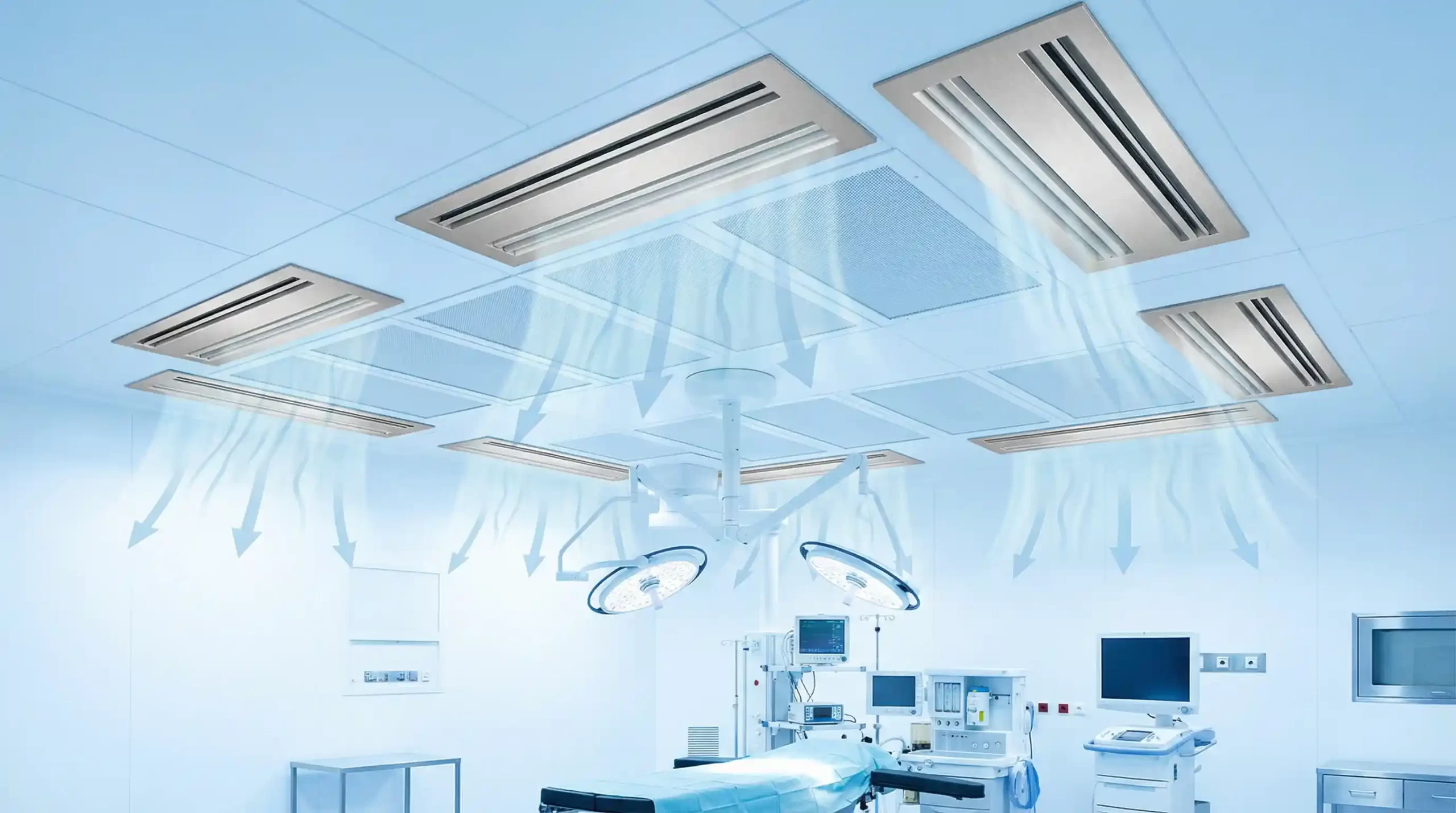
Walk into a high-end corporate lobby, a minimalist art gallery, or a state-of-the-art biopharmaceutical lab, and you will notice a common thread: the absence of bulky, intrusive mechanical fixtures. Instead, you might see long, elegant lines tracing the ceiling—these are linear diffusers. Far more than just a decorative trim, the linear diffuser is a critical terminal device that bridges the gap between high-power mechanical engineering and the human need for a quiet, comfortable environment.
For engineers, architects, or facility managers, the choice of a linear diffuser is far more than a cosmetic decision. It is a critical engineering choice that impacts everything from energy bills and LEED certifications to the health and productivity of the people inside the building.
The Engineering Art of the Linear Diffuser
In the early days of HVAC, air distribution was largely functional and unsightly. Heavy square grilles often created "hot spots" and "cold spots" because they couldn't effectively mix conditioned air with the room's ambient air. The evolution of the linear diffuser changed the game by prioritizing both aerodynamics and architectural integration.
What Exactly Is a Linear Diffuser
At its core, a linear diffuser is an elongated air outlet, typically consisting of one or more narrow slots. Unlike traditional square or circular diffusers that disperse air in a radial or swirling pattern, the linear model produces a directional "curtain" of air. This airflow can be projected vertically to "wash" a window or horizontally along a ceiling, utilizing fluid dynamics to ensure the air reaches the occupied zone at a comfortable velocity.
Why Design Matters in Modern HVAC
Modern commercial architecture favors "invisible" services. A linear diffuser can be manufactured in continuous lengths, allowing it to double as a visual border that complements light fixtures or ceiling transitions. This versatility also makes it the gold standard for luxury hotels and open-plan tech offices where the aesthetic is just as important as the thermal performance.
Why the Right Choice Matters
In an era defined by rising operational costs and strict Indoor Air Quality (IAQ) regulations, "good enough" is no longer the standard. The choice of a linear diffuser has significant ripple effects throughout the building's lifecycle.
1. Thermal Comfort and Occupant Satisfaction
The primary enemy of comfort is "thermal stratification"—where warm air stays trapped at the ceiling and cool air pools at the floor. A poorly selected linear diffuser can also cause "dumping," where cold air falls straight down onto an occupant's head. High-quality linear models are designed for high induction—the process where the fast-moving supply air pulls in and mixes with the room's existing air—ensuring a uniform temperature across the space.
2. The Economic Impact of Energy Efficiency
When air is distributed effectively, the HVAC system doesn't have to work as hard. According to ASHRAE (American Society of Heating, Refrigerating and Air-Conditioning Engineers) guidelines, optimized air mixing can allow a building to operate at slightly higher setpoints in the summer without sacrificing comfort. This can reduce overall energy consumption by 10% to 15%, translating into substantial annual savings for large-scale facilities.
3. Promoting Healthier Indoor Environments
Stagnant air is a breeding ground for CO2, volatile organic compounds, and airborne pathogens. By using a linear diffuser to create consistent, gentle air movement, facilities ensure that fresh, filtered air reaches every corner. This is vital for reducing absenteeism in offices and accelerating recovery rates in healthcare settings.
Scientifically Assessing Your Space
Before diving into a product catalog, you must understand the "physics" of the room. Airflow is a branch of fluid dynamics, and every architectural choice—from ceiling height to window types—will influence how a linear diffuser performs. To maximize performance in specialized environments, engineers must choose the right HVAC air diffuser tailored to the specific airflow requirements of the room.
Analyzing Room Geometry and Function
- High Ceilings: For ceilings over 3 meters (approx. 10 feet), you need a linear diffuser with high "throw" capability. "Throw" is the distance air travels from the outlet before it slows down to a terminal velocity (usually 50 feet per minute).
- Perimeter Zones: Areas with large glass facades are subject to high "solar load." Placing a linear diffuser along the perimeter creates an air curtain that neutralizes heat or cold before it penetrates the building's core.
- Obstacles: Hanging lights, partitions, or bulkheads can disrupt the "Coanda effect"—the tendency of air to cling to a flat surface. If the Coanda effect is broken, the air will "trip" and fall prematurely, creating drafts.
Calculating Airflow
The foundational metric for any HVAC project is Cubic Feet per Minute (CFM). To determine your needs, you calculate the total CFM based on the room's volume and the required Air Changes per Hour (ACH).

| Space Type | Suggested ACH | Why? |
|---|---|---|
| Executive Offices | 4 – 6 | Low occupancy, focus on quiet air movement. |
| Conference Rooms | 8 – 12 | High density requires rapid CO2 removal. |
| Medical Laboratories | 10 – 20 | Constant air refresh to remove fumes/contaminants. |
| Retail Lobbies | 6 – 10 | High ceilings and frequent door openings. |
Once the total CFM is calculated, you can select the number of slots and the length of each linear diffuser to match the capacity.
What Makes a Diffuser "Professional"
Not all slot vents are created equal. A professional-grade linear diffuser must balance airflow volume with acoustic control and structural durability.
Slot Configuration and Airflow Patterns
The width of the slot (typically 0.5 to 2 inches) and the number of slots (1 to 8) determine the air volume capacity.
- Adjustable Internal Blades: High-end models feature pattern controllers. These allow installers to toggle between horizontal and vertical airflow without changing the exterior look of the linear diffuser.
- Static Pressure Optimization: A well-designed linear diffuser minimizes resistance. High static pressure forces the Air Handling Unit (AHU) to work harder, leading to higher noise levels and premature wear on the HVAC motor.
Material Science and Long-Term Durability
- Extruded Aluminum: This is the gold standard for B2B applications. It is lightweight, corrosion-resistant, and allows for the precise tolerances required for long, continuous runs.
- Stainless Steel: Used in "wash-down" environments like industrial kitchens or chemical processing plants to withstand harsh cleaning agents.
- Advanced Finishes: Most units are powder-coated. A quality finish prevents "smudging"—the accumulation of dust around the edges caused by induction—and ensures the unit remains easy to clean over its 20+ year lifespan.
Specialized Applications: Cleanrooms and Healthcare
In sectors like biopharmaceuticals and microelectronics, a linear diffuser is more than a comfort device—it is a piece of safety equipment. These mission-critical environments require adherence to strict ISO 7 cleanroom standards to maintain sterile conditions.
The Role of Diffusers in ISO Compliance
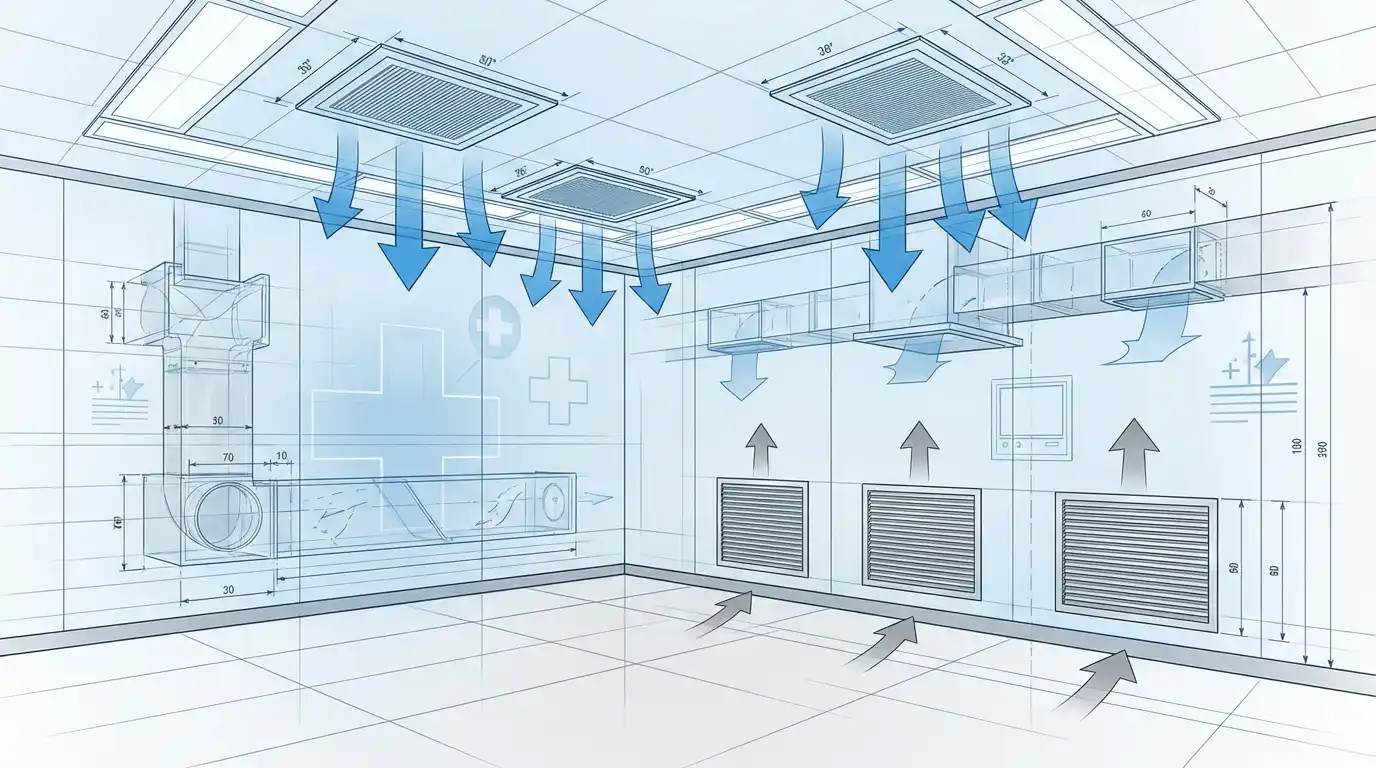
In an ISO Class 7 or 8 cleanroom, the objective is to maintain unidirectional (laminar) airflow. This prevents turbulence that could kick up dust or microbes. Specialized manufacturers like E-ZONG produce linear diffuser solutions designed to integrate seamlessly into modular cleanroom ceiling systems.
These professional-grade units typically feature:
- Zero-Particle Generation: Using materials that won't flake or oxidize.
- Airtight Seals: To prevent pressure leakage between different hygiene zones.
- Clean-in-Place (CIP) Capability: Ensuring surfaces can be sterilized without removing the fixture.
By choosing a specialist manufacturer, engineers ensure that the linear diffuser functions as part of a unified enclosure system rather than a standalone vent.
Comparison: Choosing the Right Variant
| Type | Best Use Case | Primary Advantage |
|---|---|---|
| Single-Slot Linear | Private Offices | Sleekest visual profile. |
| Multi-Slot Linear | High-Traffic Lobbies | Moves massive air volumes at low noise. |
| Curved Linear | Theaters & Grand Halls | Matches architectural curves perfectly. |
| Supply vs. Return | Paired Installations | Maintains a uniform look across the ceiling. |
When selecting a specific model, such as a linear slot diffuser, ensure the plenum box and neck size are compatible with your ductwork.
The Selection Checklist
Selecting a linear diffuser based on the lowest price is a common pitfall that leads to noise complaints and uncomfortable occupants. Use this checklist to ensure success:
- Noise Criteria: Ensure the unit’s Noise Criteria rating is below 30 for offices or 25 for quiet zones like libraries.
- Compatibility with VAV Systems: If your project uses Variable Air Volume (VAV) systems, ensure the linear diffuser can maintain its airflow pattern even when the air volume drops during low-load periods.
- Integrated Plenum Boxes: Always specify a plenum box. This pressurized chamber behind the linear diffuser ensures that air is distributed evenly across the entire length of the slot.
- Supplier Reputation: Look for a manufacturer with deep vertical integration. For instance, E-ZONG has over 25 years of experience in both aluminum profiles and finished HVAC components, which ensures that every part of the system—from the frame to the blades—fits perfectly.
Maintenance and Long-Term Performance
While a linear diffuser is relatively low-maintenance, it is not "set and forget." Proper performance depends on maintaining your Air Handling Unit (AHU) to ensure the air being supplied is clean and at the correct pressure.
Cleaning and Re-balancing
In a standard cleanroom, a biannual wipe-down with a damp cloth is sufficient. However, in mission-critical environments, the seals should be inspected annually for pressure integrity. Choosing a linear diffuser with accessible internal dampers allows maintenance teams to re-balance the system as filters in the AHU begin to age, ensuring constant performance.
Conclusion
The linear diffuser successfully balances the rigid laws of fluid dynamics with the fluid requirements of architectural beauty. By understanding your CFM requirements, focusing on material quality, and selecting a supplier with proven expertise in your specific sector, you ensure a project that is as efficient as it is elegant.
Whether you are overseeing a luxury high-rise or a high-stakes laboratory, the principles remain the same: precision matters. For those seeking integrated solutions in specialized environments, E-ZONG provides the engineering depth and manufacturing heritage required to turn air distribution into a seamless architectural element.
Would you like a technical consultation on which slot width is appropriate for your current project's static pressure limits?
-
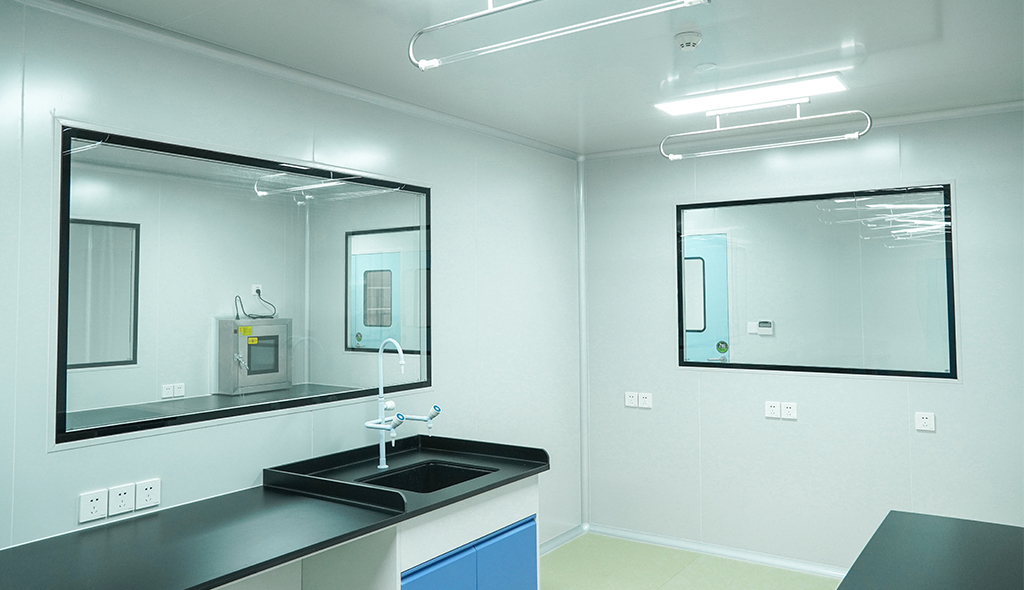 Cleanroom Glass Windows Are The Key to Maintaining a Clean Environment
 -
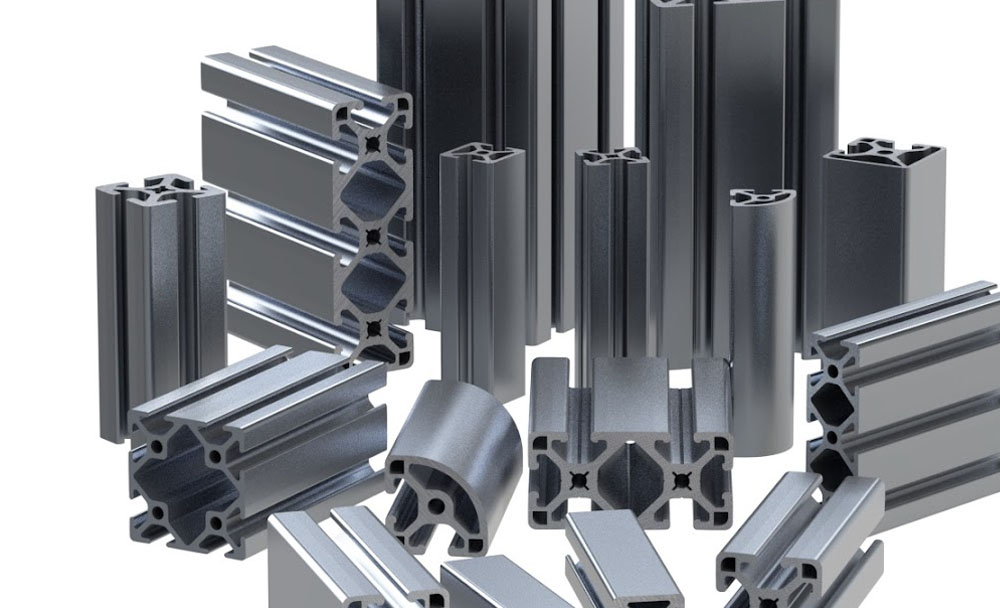 Top Aluminium Profile Manufacturers in China: Leading the Global Market
 -
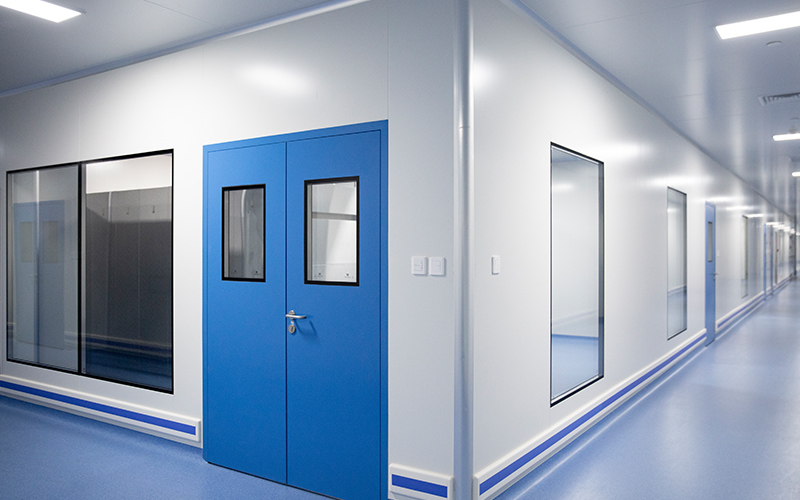 The Evolution of Air Tight Sliding Doors
 -
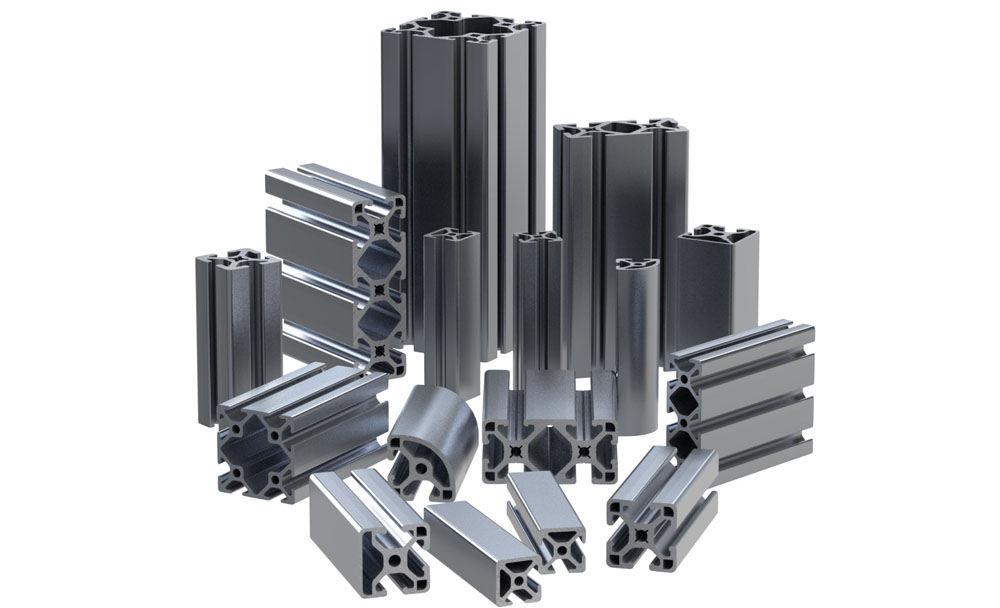 AHU Aluminium Profile: A Comprehensive Guide
 -
 The Importance of Choosing the Right Cleanroom Door in Vietnam
 -
 The Benefits of Hospital Automatic Doors: Enhancing Efficiency and Safety
 -
.jpg) The Best Bathroom Door Manufacturers - Unlocking Endless Possibilities!
The Best Bathroom Door Manufacturers - Unlocking Endless Possibilities! -
 Unlock the Possibilities with AJ Manufacturing Doors
 -
 Make a Statement with Manufactured Home Interior Doors!
 -
 what is aluminum profile? Aluminum Profiles for Your Home is the best option
-
 Supply vs. Return HVAC Grilles: Healthcare Selection Guide
 -
 Linear Diffuser: The Secret to Modern HVAC Comfort & Design
 -
 What to Know About Standard Door Width in Medical Environments
 -
 What Is a Return Air Vent and Why Does It Matter in HVAC
 -
 Top Materials for Durable Pharma Clean Room Doors
 -
 Hospital Cleanroom Door Design Requirements
 -
 Swing Doors vs Standard Doors: Which Is Right for Your Facility
 -
 Cleanroom Door Materials Explained: Key Types and Applications
 -
 How Do Different Vent Grills Impact Medical Cleanrooms
 -
 Controlled Environment vs Air Clean Room Differences Explained




-

Home
-

Tel
-

Email
-

Contact


Guangzhou Yizhong Aluminum Industry Co., Ltd.
We are always providing our customers with reliable products and considerate services.
We are always providing our customers with reliable products and considerate services.
Speak Your Mind