
How to Clean and Maintain AC Registers for Peak HVAC Performance
In modern HVAC systems, the AC register—the final gateway through which conditioned air enters a room—plays a surprisingly pivotal role. It directs airflow, balances distribution, and directly influences thermal comfort. Yet because of its simple appearance and often-out-of-sight placement, it’s frequently overlooked.
That’s a mistake. According to ASHRAE (the American Society of Heating, Refrigerating and Air-Conditioning Engineers), just 0.5 mm of dust buildup on a register can reduce airflow by more than 10%. The U.S. Department of Energy adds that this restriction forces fans to work harder, potentially cutting overall system efficiency by 15–20%. Worse still, dirty air registers become breeding grounds—and delivery channels—for mold, dust mites, and PM2.5 particles, degrading indoor air quality (IAQ) and even contributing to Sick Building Syndrome (SBS).
Why Cleaning Your AC Registers Matters

It Directly Impacts Airflow and System Efficiency
Most AC registers consist of a vent grill, an adjustable HVAC damper, and a frame, engineered for airflow velocities of 2–4 m/s. When dust clogs the slats, the effective open area shrinks, raising static pressure in the duct system. Per fan laws, airflow (measured in CFM) drops non-linearly as static pressure rises—a 10% pressure increase can slash airflow by 12–15%. This is one of the top causes behind the common complaint: “low airflow from registers.”
It Drives Up Energy Bills and Shortens Equipment Life
To compensate for restricted flow, the blower ramps up speed. The EPA estimates that every 0.1 inch of water column (in. w.c.) increase in duct resistance adds 50–100 kWh to annual fan energy use. In a typical office with 20 air vents, that could mean over $300 in unnecessary electricity costs per year—a classic case of a high electric bill due to dirty vents.
It Compromises Health and Cognitive Performance
Dust in registers often contains pollen, pet dander, and mold spores. Harvard research shows that for every 10 μg/m³ increase in indoor PM2.5, cognitive test scores drop by roughly 5%. Of particular concern is black mold in air vents. In humid conditions, ceiling vents or linear diffusers can become ideal habitats for Aspergillus niger. A persistent musty smell from your AC vent is often the first warning sign of active microbial growth.
5 Clear Signs Your AC Registers Need Cleaning
Watch for these red flags:
- Visible dust or dark streaks on the grill—classic signs of dirty air vents
- Weak airflow—you feel little to no breeze just 4 inches from the vent
- Musty or earthy odors when the system runs
- Uneven temperatures—cool near the register but stuffy elsewhere, a common symptom of uneven room temperature HVAC issues
- Spiking energy bills—unexplained 10%+ increases during similar weather conditions
💡 Note: AC registers (supply vents) are not the same as return air grilles. Registers deliver conditioned air and usually include dampers; returns pull air back to the system. Understanding this difference between supply and return vents is essential for proper maintenance.
Step-by-Step Guide to Cleaning AC Registers (By Type)
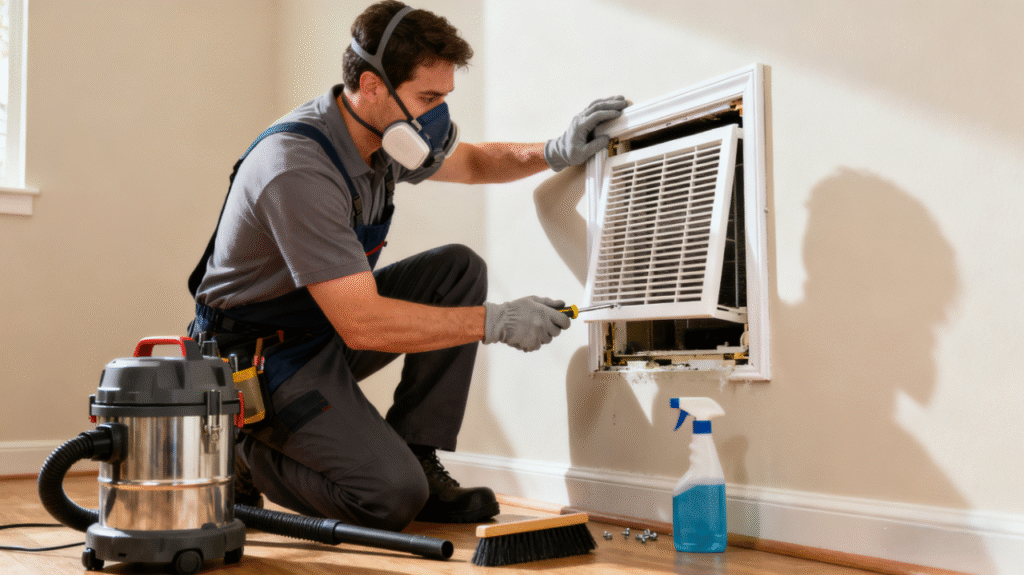
Before You Start: Safety & Tools
- Turn off your HVAC system
- Wear an N95 mask, gloves, and safety glasses
- Gather: soft-bristle brush, HEPA vacuum, microfiber cloths, mild detergent, and a screwdriver
These are the essential tools for cleaning vent grilles.
For Removable Registers
- Gently remove the grill
- Vacuum loose dust first (dry cleaning minimizes moisture risk)
- If needed, wipe with a damp microfiber cloth and mild cleaner
- Let it dry completely before reinstallation—moisture invites mold
- Check the damper: if stiff, consider lubricating stuck register dampers with a silicone-based spray
- Reinstall securely to maintain airflow seal
For Fixed or Built-In Registers (e.g., Ceiling Vents, Linear Diffusers)
Use a long-handled soft brush to dislodge debris from deep within slats while simultaneously vacuuming. For linear diffuser maintenance, pay special attention to narrow gaps—clogging here disrupts the uniform “sheet” of airflow these units are designed to create.
Maintenance Schedule & Best Practices

Recommended Cleaning Frequency
| ENVIRONMENT | FREQUENCY |
|---|---|
| Standard residential | Every 3 months |
| Offices / retail | Every 2 months |
| Hospitals / labs | Monthly |
| Restaurants / high-grease areas | Monthly (or more) |
This aligns with industry recommended frequency for vent cleaning guidelines.
Integrate with Whole-System Care
- Replace air filters regularly (MERV 8 or higher)
- Keep furniture at least 12 inches away from floor vents
- Adjust dampers to balance airflow in your HVAC system
- Monitor filter pressure drop to catch resistance issues early
For ceiling vent maintenance, also inspect the surrounding drywall or ceiling tile for gaps that could cause leakage or bypass airflow.
Common Myths—Debunked
❌ Myth 1: “Closing unused room registers saves energy.”
Reality: It usually backfires. Shutting too many AC registers increases duct pressure, forcing the blower to work harder. The EPA warns this can raise energy use by 10–20% and worsen uneven room temperature issues. If you must close vents, limit it to 1–2 non-critical zones—and consider using motorized HVAC dampers for smarter zoning.
❌ Myth 2: “It’s fine to rinse ceiling vents with water or spray disinfectant.”
Reality: Avoid both. High-pressure water can warp grilles, and chlorine-based cleaners corrode metal and release fumes. More critically, introducing moisture into ductwork encourages black mold in air vents. Stick to dry HEPA vacuuming; if wiping is necessary, use only a barely damp cloth with neutral pH cleaner—never spray liquids directly.
❌ Myth 3: “Supply registers and return grilles are interchangeable.”
Reality: They serve opposite functions. AC registers (supply) push treated air into rooms and include dampers; return grilles pull air back—no dampers, just open pathways. Cleaning them the same way misses key differences: returns need protection from large debris that could clog filters, while supplies need damper mobility checks. Confusing the two can unbalance system pressure and reduce fresh air intake.
When to Call an HVAC Professional
Seek expert help if you notice:
- Widespread black mold in air vents
- Persistent low airflow from registers after cleaning
- Chronic uneven room temperatures across zones
- Need for precise HVAC damper adjustment or system balancing
Professionals can measure actual airflow (CFM) at each air vent with an anemometer and verify your system is operating as designed.
Final Thought: Small Effort, Big Impact

A simple register cleaning can restore 10–15% of lost airflow, cut energy waste, and significantly improve indoor air quality. As ASHRAE Standard 180 puts it:
“Preventive maintenance isn’t an expense—it’s an investment in building performance and occupant well-being.”
By applying smart ceiling vent maintenance tips, mastering floor vent cleaning methods, and understanding the difference between supply and return vents, you’ll extend equipment life, lower utility bills, and breathe easier—literally.
After all, when it comes to HVAC efficiency, the last inch matters just as much as the first mile.
-
 Cleanroom Glass Windows Are The Key to Maintaining a Clean Environment
 -
 Top Aluminium Profile Manufacturers in China: Leading the Global Market
 -
 The Evolution of Air Tight Sliding Doors
 -
 AHU Aluminium Profile: A Comprehensive Guide
 -
 The Importance of Choosing the Right Cleanroom Door in Vietnam
 -
 The Benefits of Hospital Automatic Doors: Enhancing Efficiency and Safety
 -
.jpg) The Best Bathroom Door Manufacturers - Unlocking Endless Possibilities!
The Best Bathroom Door Manufacturers - Unlocking Endless Possibilities! -
 Unlock the Possibilities with AJ Manufacturing Doors
 -
 Make a Statement with Manufactured Home Interior Doors!
 -
 what is aluminum profile? Aluminum Profiles for Your Home is the best option
-
 What to Know About Standard Door Width in Medical Environments
 -
 What Is a Return Air Vent and Why Does It Matter in HVAC
 -
 Top Materials for Durable Pharma Clean Room Doors
 -
 Hospital Cleanroom Door Design Requirements
 -
 Swing Doors vs Standard Doors: Which Is Right for Your Facility
 -
 Cleanroom Door Materials Explained: Key Types and Applications
 -
 How Do Different Vent Grills Impact Medical Cleanrooms
 -
 Controlled Environment vs Air Clean Room Differences Explained
 -
 How to Extend the Life of Your Exterior Steel Door
 -
 What Are the Best Materials for AC Vent Covers





-

Home
-

Tel
-

Email
-

Contact


Guangzhou Yizhong Aluminum Industry Co., Ltd.
We are always providing our customers with reliable products and considerate services.
We are always providing our customers with reliable products and considerate services.
Speak Your Mind