
Why Airtight Doors Are Crucial for Cleanrooms and Laboratories
I. Cleanroom Standards and the Role of Airtight Doors
1.1 International and National Environmental Standards
Cleanrooms and laboratories operate under strict standards to ensure air purity. ISO 14644-1:2015 classifies cleanrooms from ISO 1 to ISO 9 based on particle concentration. For instance, ISO Class 5 allows only 3,520 particles ≥0.5μm/m³, while ISO Class 3 (used in semiconductor manufacturing) requires ≤1,000 particles/m³.
In China, GB 50073-2013 mandates ≥60 air changes/hour and +10 to +15 Pa differential pressure in Class A areas. Biosafety labs follow GB 19489-2008, requiring negative pressure (–10 to –30 Pa), HEPA H13-H14 filtration, and airtight containment for P2+ labs.
1.2 Airtight Doors as Systemic Control Valves
Ordinary doors leak 1.5–3.0 m³/(m·h), but airtight doors reduce leakage to ≤0.1 m³/(m·h)—over 90% improvement. Standards like ASHRAE 110 and EN 13549 require Class 4+ airtightness (≤0.03 m³/(h·m) at 50 Pa). Thus, airtight doors act as critical "valves" in environmental control, ensuring system integrity.
In pharmaceutical settings, GMP cleanroom doors must meet strict sealing requirements. E-ZONG provides reliable solutions for such high-stakes applications.
II. Core Functions of Airtight Doors
2.1 Multi-Layer Sealing Systems

High-performance airtight doors use EPDM or silicone seals on top, sides, and bottom, compressed 3–5 mm to maintain contact under 50 Pa pressure. Advanced models feature “lip-and-O-ring” seals and Automatic Drop Seals (5–8 mm lift), meeting ISO 10648-2 for transfer hatches. Seals comply with FDA 21 CFR 177.2600 and USP Class VI for medical safety.
2.2 Dust and Particle Control
Particles ≥0.3μm are a primary concern. Airtight doors block infiltration, working with HEPA H14 filters to form a dual barrier. Data shows unsealed doors cause 30–40% particle spikes during entry; with airtight doors and air showers, fluctuations stay ≤5% (TSI 9565).
2.3 Differential Pressure Maintenance
Airtight doors maintain critical pressure gradients:
- Positive pressure (+10 to +20 Pa) in pharma/food areas prevents contamination.
- Negative pressure (–20 to –30 Pa) in P3 labs contains pathogens.
Leakage disrupts airflow, increases HVAC load, and risks compliance failure.
2.4 Safety Interlock and Smart Integration
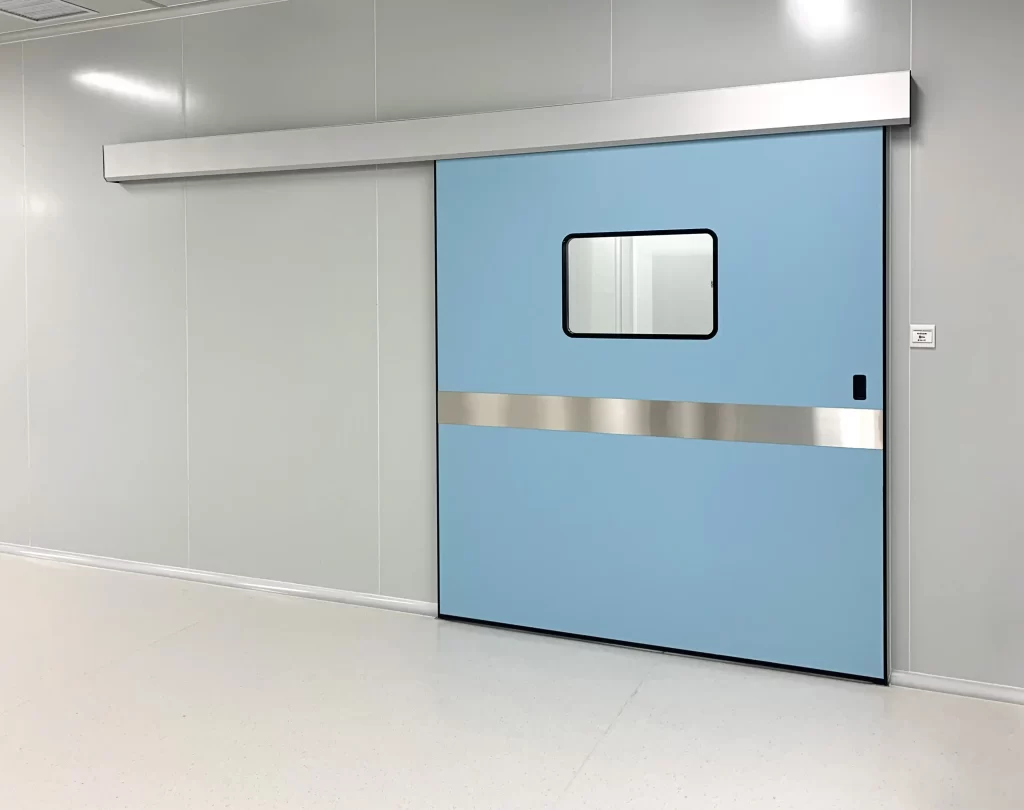
Modern airtight doors integrate with BAS, access control, and pressure monitoring:
- Double-door interlock prevents airflow short-circuits (per GMP Annex 1 2022).
- Emergency closure activates during fire or leaks.
- Door status monitoring supports FDA 21 CFR Part 11.
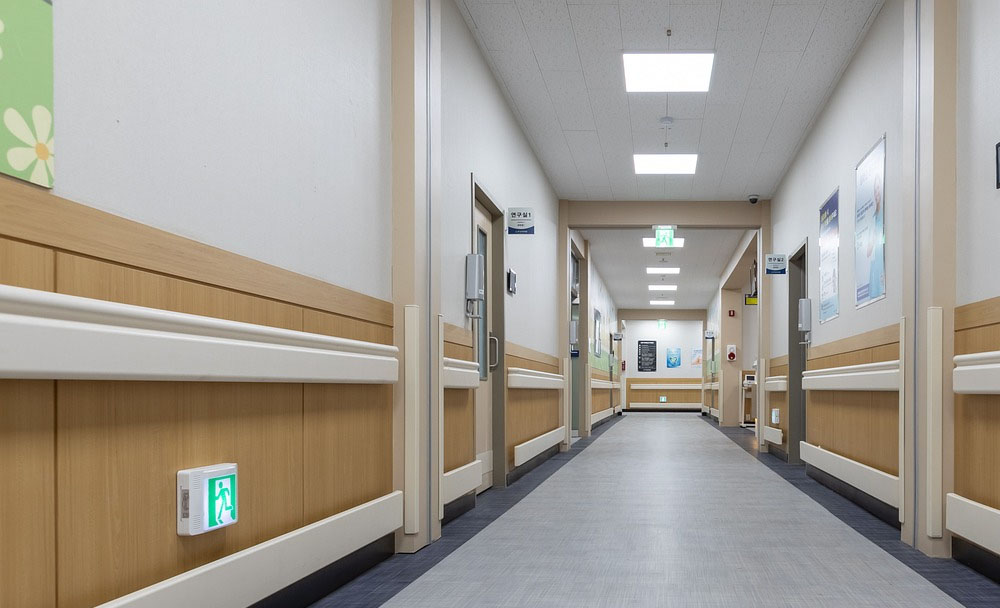
Hospital automatic airtight doors enhance security with access control, ideal for sensitive zones.
III. Contamination Prevention and System Stability
3.1 Blocking External Contamination
External air carries dust and microbes. Unsealed doors create turbulent vortices, spiking local particle levels. A vaccine manufacturer fixed particle exceedances by switching to 316L stainless steel airtight doors (leakage ≤0.08 m³/(m·h)), stabilizing ISO Class 5 and raising pass rates to 99.8%.
3.2 Preventing Cross-Contamination
In PCR labs, airtight doors maintain a –5 Pa gradient between zones (CLSI MM19-A), ensuring unidirectional airflow and preventing aerosol diffusion. This is vital for laboratory cleanroom doors.
IV. Pressure Control and Energy Efficiency
4.1 Positive Pressure Applications
In pharma and electronics, airtight doors maintain Class A continuity at transfer points. A biopharma firm used electric airtight doors with interlocks, achieving “zero contamination” and passing NMPA GMP.
4.2 Negative Pressure Safety
P3 labs require doors to pass Soap Bubble or Pressure Decay Tests. A CDC used welded stainless steel doors with X-ray inspection, meeting GB 19489-2008 (≤10% pressure loss in 5 min), and passed national review.
4.3 Measured Performance Impact
Hospital OR studies show:
- Ordinary doors: pressure drops from +15 Pa to +5 Pa, takes 3 min to recover.
- Airtight doors: fluctuation ≤±2 Pa, recovery in 30 sec—cutting HVAC energy by 12% (EnergyPlus).
V. Safety in High-Risk Environments
5.1 Biosafety Laboratories (P3/P4)
Doors must have:
- Welded 316L stainless steel construction.
- Autoclave-resistant silicone seals (121°C).
- Double interlocks and emergency exhaust.
One lab fixed pressure drift by upgrading seals and adding quarterly testing.
5.2 Chemical and Radioactive Labs
Chemical laboratory specific doors use epoxy coating or electropolished 316L steel (Ra ≤0.4 μm) to resist acids and solvents. Radioactive labs embed 1–2mm lead plates in doors to reduce aerosol leakage, complying with GBZ 120-2020. Hospital radiation shielding doors and X-ray doors use similar designs.
VI. Material and Structural Design
6.1 Key Materials
- Door Body: 304/316L stainless steel (316L for corrosion resistance).
- Seals: EPDM (general), silicone (high-temp).
- Vision Panel: Double-layer tempered glass with dry air.
- Surface: Electropolished (Ra ≤0.8 μm) or antibacterial coating (silver ion, >99%).
6.2 Structural Features
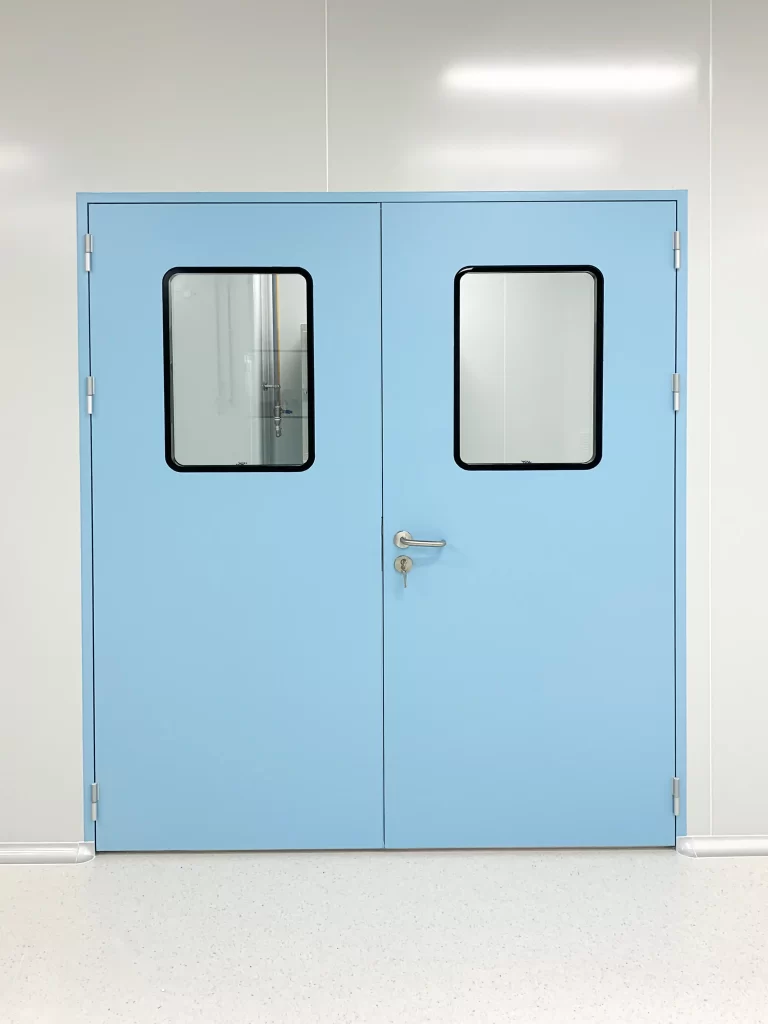
- Threshold: Lift-and-drop (high traffic) or ramped (accessibility).
- Installation: Continuous welding or medical silicone sealant.
- Drive: Manual, electric, or pneumatic with sensors.
- Anti-static: 10⁶–10⁹ Ω for semiconductor fabs (ANSI/ESD S20.20).
VII. Real-World Applications
7.1 Pharmaceutical Aseptic Production
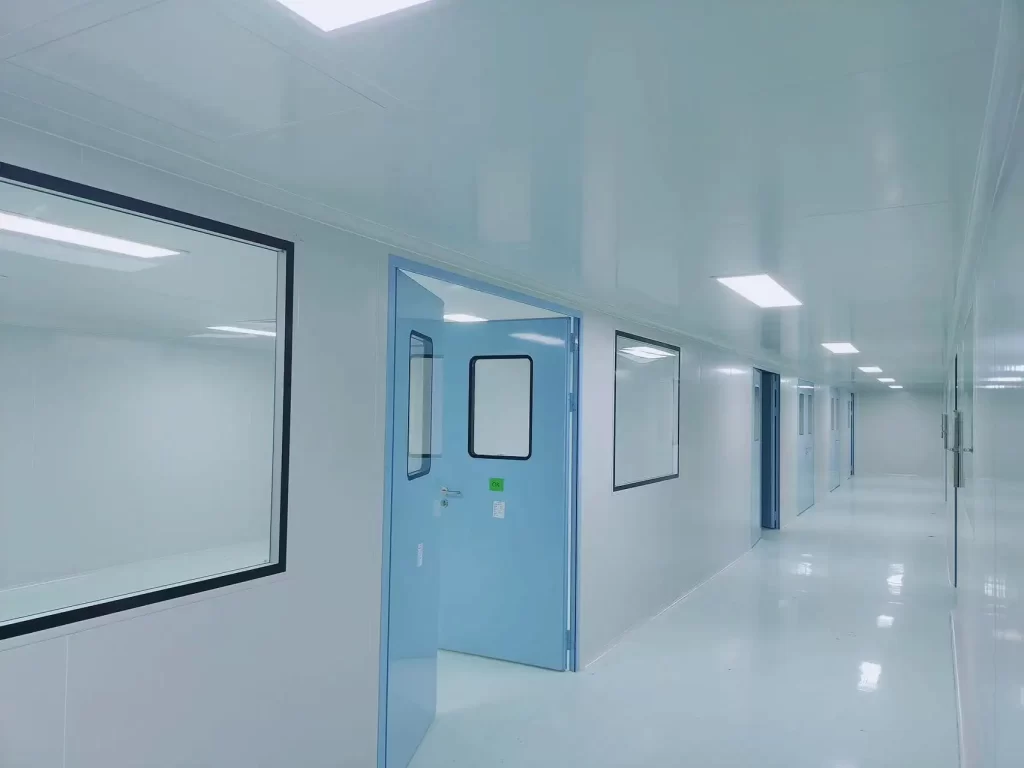
A pharma plant used automatic airtight doors with air showers, weekly sterilization (121°C), and antibacterial coating to achieve sterile compliance.
7.2 Hospital P2 Laboratory Upgrades
Post-pandemic, hospitals installed airtight doors in nucleic acid extraction zones, passing national biosafety audits.
7.3 Semiconductor Manufacturing
In ISO Class 3 fabs, anti-static airtight doors prevent particle attraction and pass MIL-STD-810G vibration tests.
VIII. Conclusion
Airtight doors are vital components—not just entrances. They ensure airtightness, pressure stability, contamination control, and safety in cleanrooms and labs. From GMP cleanroom doors to hospital radiation shielding doors, their performance underpins compliance and operational success. E-ZONG delivers high-reliability solutions for these critical environments.
-
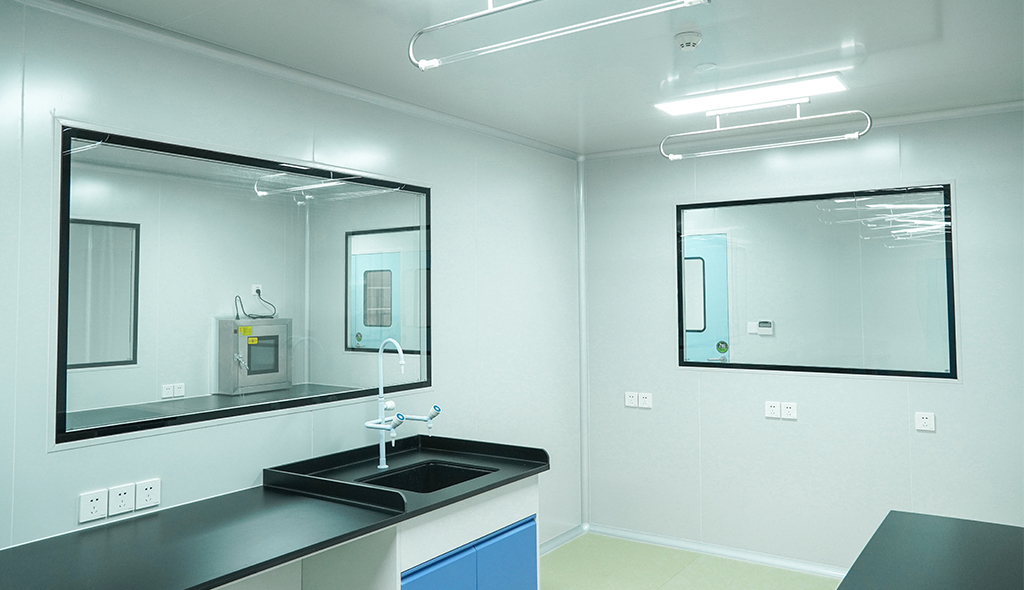 Cleanroom Glass Windows Are The Key to Maintaining a Clean Environment
 -
 Top Aluminium Profile Manufacturers in China: Leading the Global Market
 -
 The Evolution of Air Tight Sliding Doors
 -
 AHU Aluminium Profile: A Comprehensive Guide
 -
 The Importance of Choosing the Right Cleanroom Door in Vietnam
 -
 The Benefits of Hospital Automatic Doors: Enhancing Efficiency and Safety
 -
.jpg) The Best Bathroom Door Manufacturers - Unlocking Endless Possibilities!
The Best Bathroom Door Manufacturers - Unlocking Endless Possibilities! -
 Unlock the Possibilities with AJ Manufacturing Doors
 -
 Make a Statement with Manufactured Home Interior Doors!
 -
 what is aluminum profile? Aluminum Profiles for Your Home is the best option
-
 How to Extend the Life of Your Exterior Steel Door
 -
 What Are the Best Materials for AC Vent Covers
 -
 Ceiling Vent Covers Labeled Fire-Rated? Here’s How to Verify
 -
 Upgrading Lab Doors: When to Replace vs. When to Retrofit?
 -
 Stainless Steel Door vs. Alternatives in Cleanrooms
 -
 Ceiling Vent Care Tips to Boost HVAC Efficiency Year Round
 -
 How Air Dampers Drive Efficiency in High Performance Buildings
 -
 Why Semiconductor Manufacturing Can’t Function Without Cleanrooms
 -
 How to Select the Right Floor Vent for Cleanrooms
 -
 How to Clean and Maintain AC Registers for Peak HVAC Performance




-

Home
-

Tel
-

Email
-

Contact


Guangzhou Yizhong Aluminum Industry Co., Ltd.
We are always providing our customers with reliable products and considerate services.
We are always providing our customers with reliable products and considerate services.
Speak Your Mind