Top Materials for Durable Pharma Clean Room Doors
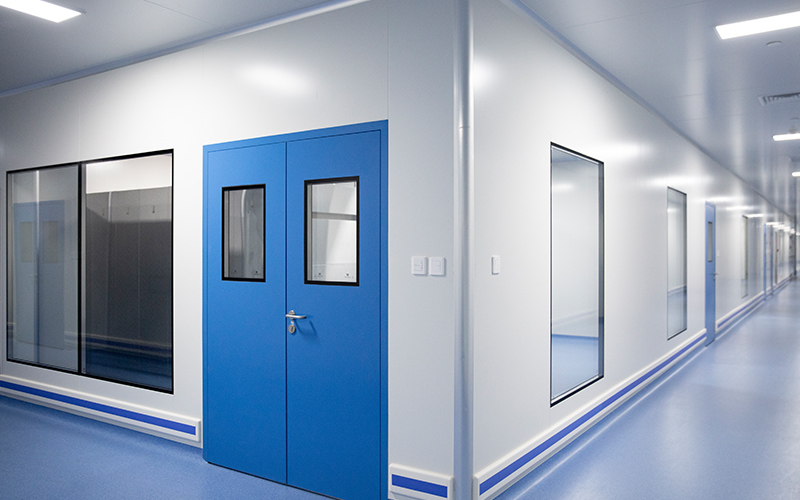
The most critical component of a pharmaceutical facility isn't always the high-tech centrifuge or the sterile filling line—it is the door. A pharma clean room environment depends entirely on its ability to maintain a strictly controlled atmosphere, and the door serves as the dynamic pressure boundary that protects product integrity from the constant threat of cross-contamination.
The Critical Barrier: Why Door Material Matters
In the high-stakes world of pharmaceutical manufacturing, every square inch of a facility is scrutinized for its impact on product purity. Among the most critical components of this controlled environment is the entry system. Far from being a simple portal, these doors serve as vital pressure boundaries, fundamental to maintaining the rigorous air pressure differentials required to prevent the migration of contaminants.
Selecting the right material is not merely an aesthetic choice or a matter of initial budget; it is a strategic decision that dictates the long-term success of regulatory audits (GMP/FDA) and the operational efficiency of the entire plant. The wrong material choice leads to particulate shedding, microbial growth, or structural failure under the constant stress of rigorous decontamination cycles.
This guide provides a detailed technical comparison and a practical framework for selection based on cleanroom class and specific process needs.
The Science Behind Clean Room Door Materials
Regulatory Imperatives: GMP, ISO 14644, and Beyond
In a pharma clean room, compliance is the absolute baseline. Door materials must align with current Good Manufacturing Practices (cGMP) and ISO 14644 standards. Regulators like the FDA and EMA demand surfaces that are non-shedding, non-porous, and smooth.
During an audit, inspectors focus heavily on "cleanability." If a door material develops micro-pitting or surface degradation over time, it creates a sanctuary for microbial harborage. Therefore, the material's ability to withstand Vaporized Hydrogen Peroxide (VHP) sterilization and harsh phenolic disinfectants without losing structural integrity is a non-negotiable prerequisite for audit compliance.
Contamination Control: Sealing and Surface Integrity
A cleanroom door’s primary function is to maintain an airtight seal. This requires exceptional mechanical rigidity. If a door leaf warps due to humidity fluctuations or physical impact, the gasket contact becomes uneven, leading to pressure loss and potential infiltration of outside air.
Surface integrity is often measured by surface roughness. High-quality materials like electro-polished stainless steel or medical-grade High-Pressure Laminate (HPL) ensure that the bio-burden can be easily wiped away during routine cleaning, preventing the formation of resilient biofilms that could compromise an entire batch of medication.
Total Cost of Ownership: Beyond the Purchase Price
Procurement teams often fall into the trap of looking only at the "Ex-works" price. However, a Total Cost of Ownership (TCO) analysis reveals that the initial price of a pharma clean room door accounts for only about 30% of its lifetime cost.
- Maintenance: How often do seals need replacing due to material deformation?
- Cleaning Labor: Does the material require specialized, time-consuming scrubbing protocols?
- Longevity: Will the door last 20 years, or will it succumb to pitting corrosion within five?
By investing in high-durability materials, such as those refined through E-ZONG’s 26 years of engineering experience, facilities drastically reduce the frequency of unplanned shutdowns and expensive door replacements.
In-Depth Analysis of Top 5 Materials
1. Stainless Steel: The Gold Standard for Critical Zones
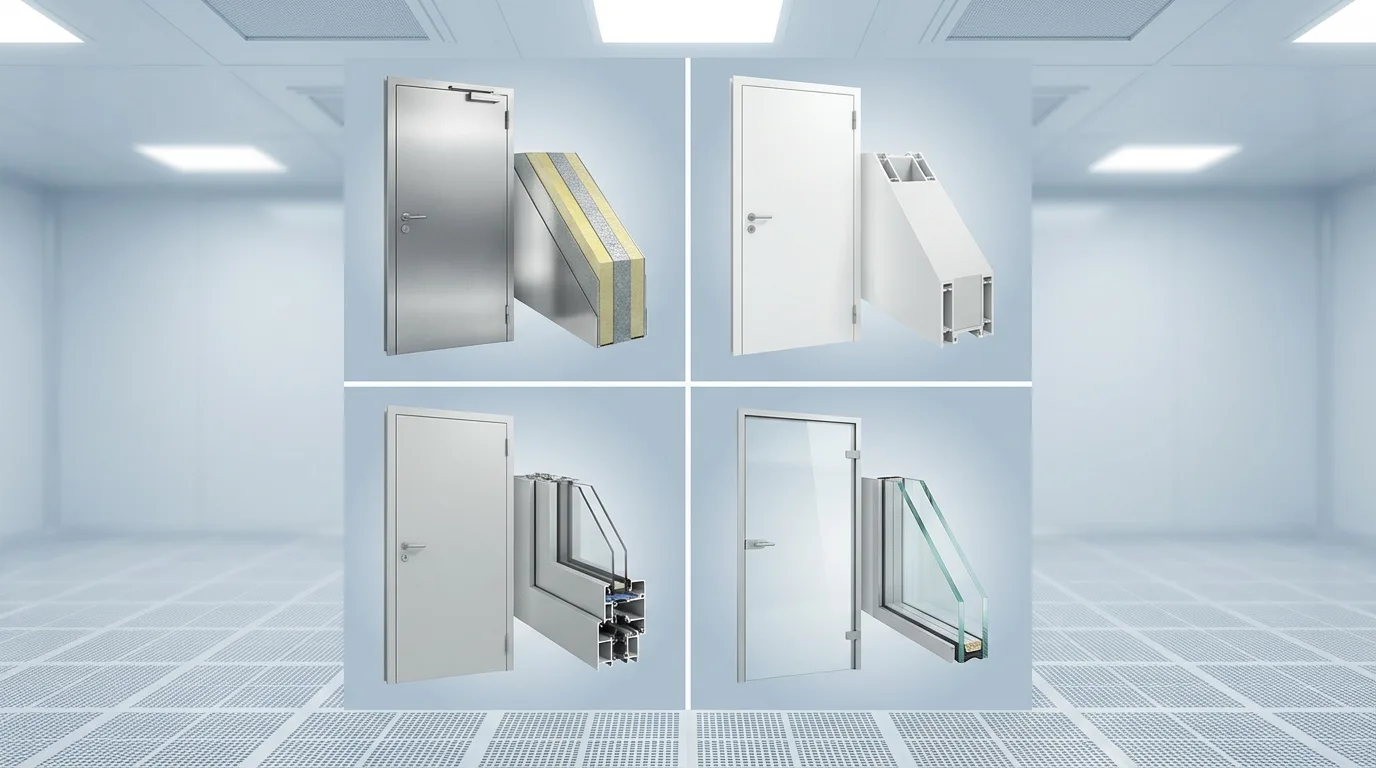
For Grade A and B aseptic zones, 304 or 316L Stainless Steel remains the premier choice. It is favored for its "indestructible" reputation in the face of the industry's most rigorous bio-decontamination cycles.
- The Benefits: It offers unmatched mechanical strength and exceptional chemical resistance. Its non-porous nature makes it effectively "sterilizable" at a molecular level. In areas where spore-clearing agents are used daily, 316L provides superior resistance against chlorides and acids.
- Applications & Limits: Best suited for high-traffic, high-sterility zones. The main drawbacks are its weight and higher initial cost. It requires heavy-duty pivot hinges and reinforced wall frames to prevent sagging over time.
- The Precision Factor: Manufacturers like E-ZONG utilize precision CNC machining to ensure every stainless steel door leaf is perfectly square. A deviation of just 1mm can ruin an airtight seal engagement, a failure that automated manufacturing processes are designed to eliminate.
2. HPL (High-Pressure Laminate): The Modern Specialist
HPL is becoming the dominant choice in European and modern Asian biotech plants due to its incredible impact resistance and chemical versatility.
- The Anatomy: HPL consists of multiple layers of resin-impregnated kraft paper fused under high pressure and heat. It is essentially "armored" material technology.
- Why it Works: It is scratch-resistant and does not dent like metal. In high-traffic areas where stainless steel trolleys are common, HPL maintains its aesthetic and structural integrity better than many aluminum or steel alternatives. It also provides excellent acoustic dampening for labs and ICU rooms.
- Compliance Note: When selecting HPL, ensure it is "medical grade" with a non-porous surface to meet GMP requirements for microbial resistance.
3. Powder-Coated Galvanized Steel: The Facility Workhorse
For large-scale facilities and Grade C/D zones, powder-coated galvanized steel offers the most balanced return on investment.
- The Advantage: The galvanized core prevents rust from the inside out, while the powder coating provides a smooth, easy-to-clean skin.
- Coating Quality: The weakness is the coating itself. If it chips, the underlying steel is vulnerable. To solve this, E-ZONG utilizes high-adhesion, antimicrobial powder coatings baked at high temperatures, which significantly increases scratch resistance compared to standard industrial paint.
- Color Coding: This material allows for easy color-coding of different facility zones (e.g., blue for CNC areas, grey for corridors), aiding in visual management and safety protocols.
4. FRP (Fiberglass Reinforced Plastic): The Corrosion Specialist
FRP is the go-to for environments with constant moisture, high humidity, or highly corrosive chemical vapors.
- The Benefits: FRP is naturally corrosion-proof and extremely lightweight. This reduces the strain on automatic door operators and hinges, extending the life of the hardware.
- The Risk Factor: Low-quality FRP can "fiber-bloom" (expose glass fibers) if the surface resin is breached. It is essential to choose a manufacturer that uses high-quality medical-grade resins to ensure the door remains chemically inert and non-shedding.
5. Aluminum Frame & Glass: When Visibility is Key
In modern pharma clean room design, transparency is used to improve safety, supervision, and personnel well-being without entering the controlled zone.
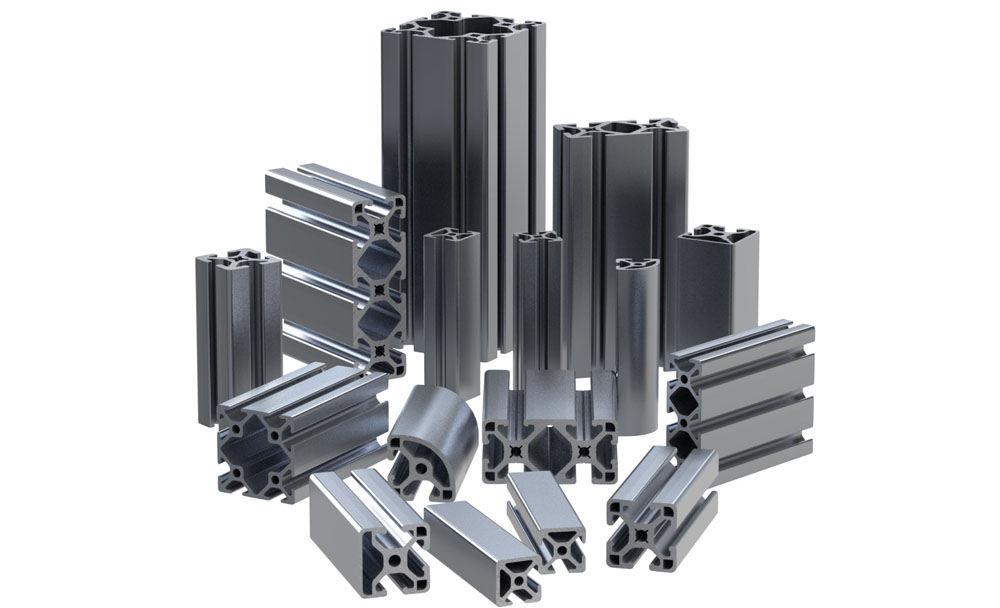
- Aluminum Frame Doors: These provide a lightweight, modern look with high structural strength. Expertly engineered aluminum profiles ensure these frames are flush-mounted with double-glazed glass to avoid dust traps.
- Tempered Glass: Used in observation panels, pass-throughs, and entrance doors. When integrated correctly as double-glazed flush windows, glass provides the highest level of clarity and is highly resistant to the scratching effects of repetitive wiping.
Side-by-Side Comparison and Selection Guide
| Feature | 316L Stainless Steel | HPL / FRP | Powder-Coated Steel | Aluminum & Glass |
|---|---|---|---|---|
| Durability | Ultra-High | Very High (Impact) | Moderate | Moderate |
| Chemical Resistance | Excellent | Very Good | Good | Moderate |
| Ideal Zone | Grade A/B (Critical) | Grade B/C (Labs) | Grade C/D (General) | Corridors / ICU |
| Airtightness | Superior | Excellent | Excellent | Good |
| Surface Ra Value | <0.5 μm | <0.8 μm | <1.2 μm | <0.5 μm |
Matching Material to Cleanroom Class and Function
- Critical Zones (Grade A/B): Stick to Stainless Steel. The contamination risk is too high for materials that might degrade or pit under constant VHP exposure.
- General Production (Grade C/D): HPL or Premium Powder-Coated Steel are the workhorses here. They handle high traffic and frequent washdowns efficiently.
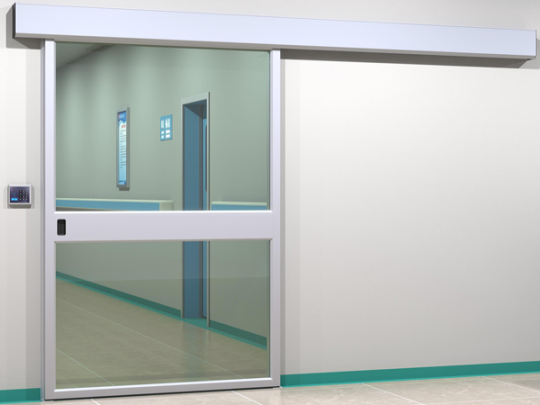
- Hospital & Medical (ICU/OR): Aluminum-framed automatic doors or HPL doors offer the best balance of hygiene, weight, and ease of use for medical staff.
- High Humidity/Corrosive Areas: (e.g., Wash-in-place areas) Stainless Steel or high-grade FRP are mandatory to prevent oxidation and structural rot.
A 4-Step Framework for Selecting the Right Door Material
Step 1: Assess Your Non-Negotiables
Before looking at a catalog, list your environmental constraints. What is the differential pressure the door must hold? What specific chemicals are used in your SOP for cleaning? If you use high-concentration peracetic acid, some powder coatings will fail instantly. Understanding your "environmental stress profile" is the first step toward compliance.
Step 2: Balance Performance, Compliance, and Budget
Don't over-engineer a corridor door, but never under-engineer a secondary packaging door. Map each door to the ISO 14644-1 requirement of its specific room. Focus on the lifecycle value—a door that lasts 10 years without a seal change is significantly cheaper than a "budget" door that requires bi-annual maintenance.
Step 3: Focus on Integration (The "System" Approach)
A door is more than just a slab of material; it is a system of seals, hinges, and locks. Even the best stainless steel door is useless if the interlocking system fails or the automatic drop seal doesn't engage properly. This is where professional manufacturing shines—providing a total solution where the door, frame, and hardware function as a singular, airtight unit.
Step 4: Consult Experts and Test Samples
The world of material science is constantly evolving. Ask your manufacturer for chemical compatibility charts and material samples. Subject these samples to your strongest cleaning agents for 48 hours to observe any swelling, discoloration, or surface softening before committing to a full facility order.
The Role of Precision Manufacturing
No matter the material chosen, the final performance of a pharma clean room door rests on manufacturing tolerances. In a pressurized environment, air will find the path of least resistance.
Using CNC precision machining, manufacturers can ensure that aluminum profiles and door skins are cut with micron-level accuracy. This allows for the installation of flush-mounted hardware and recessed hinges, which are essential for eliminating "dead zones" where air becomes stagnant and particles accumulate. Furthermore, automated production ensures that the electromagnetic locks and interlock sensors are perfectly aligned, guaranteeing that the "airlock" function of the door is never compromised.
Conclusion: The Right Material Safeguards Your Process
Selecting the material for a pharma clean room door is a strategic investment in the safety of your pharmaceutical products. Whether you choose the rugged permanence of 316L stainless steel or the versatile performance of HPL, your choice directly impacts the integrity of your contamination control strategy.
By utilizing a structured framework—assessing regulatory needs, understanding material science, and focusing on total lifecycle costs—facility managers can ensure their cleanroom remains a bastion of purity.
Ready to upgrade your facility's integrity? To discuss your specific project requirements, request technical drawings, or arrange for a material sample test, contact the E-ZONG clean room door specialists today or explore our full range of pharmaceutical door solutions online.
-
 Cleanroom Glass Windows Are The Key to Maintaining a Clean Environment
 -
 Top Aluminium Profile Manufacturers in China: Leading the Global Market
 -
 The Evolution of Air Tight Sliding Doors
 -
 AHU Aluminium Profile: A Comprehensive Guide
 -
 The Importance of Choosing the Right Cleanroom Door in Vietnam
 -
 The Benefits of Hospital Automatic Doors: Enhancing Efficiency and Safety
 -
.jpg) The Best Bathroom Door Manufacturers - Unlocking Endless Possibilities!
The Best Bathroom Door Manufacturers - Unlocking Endless Possibilities! -
 Unlock the Possibilities with AJ Manufacturing Doors
 -
 Make a Statement with Manufactured Home Interior Doors!
 -
 what is aluminum profile? Aluminum Profiles for Your Home is the best option
-
 Top Materials for Durable Pharma Clean Room Doors
 -
 Hospital Cleanroom Door Design Requirements
 -
 Swing Doors vs Standard Doors: Which Is Right for Your Facility
 -
 Cleanroom Door Materials Explained: Key Types and Applications
 -
 How Do Different Vent Grills Impact Medical Cleanrooms
 -
 Controlled Environment vs Air Clean Room Differences Explained
 -
 How to Extend the Life of Your Exterior Steel Door
 -
 What Are the Best Materials for AC Vent Covers
 -
 Ceiling Vent Covers Labeled Fire-Rated? Here’s How to Verify
 -
 Upgrading Lab Doors: When to Replace vs. When to Retrofit?

-

Home
-

Tel
-

Email
-

Contact


Guangzhou Yizhong Aluminum Industry Co., Ltd.
We are always providing our customers with reliable products and considerate services.
We are always providing our customers with reliable products and considerate services.
Speak Your Mind