
Swing Doors vs Standard Doors: Which Is Right for Your Facility
Ever walked into a busy lab or cleanroom and wondered why the doors swing back shut so smoothly, keeping everything pristine inside? Swing doors shine in places like cleanrooms and controlled labs, where they help maintain airtight environments and meet tough rules like GMP or ISO 14644. On the flip side, standard doors work great for everyday spots like offices or warehouses, offering straightforward access without the bells and whistles.
This decision touches everything from keeping germs at bay to saving on energy bills and avoiding repair headaches. We'll break it down step by step, with practical tips and a handy checklist, so you can confidently choose doors that fit your facility's needs.
Part 1: Core Definitions & Mechanism Analysis
Let's start by getting clear on what these doors really are. Think of this as peeling back the layers to see how they work in everyday use.
Swing Doors
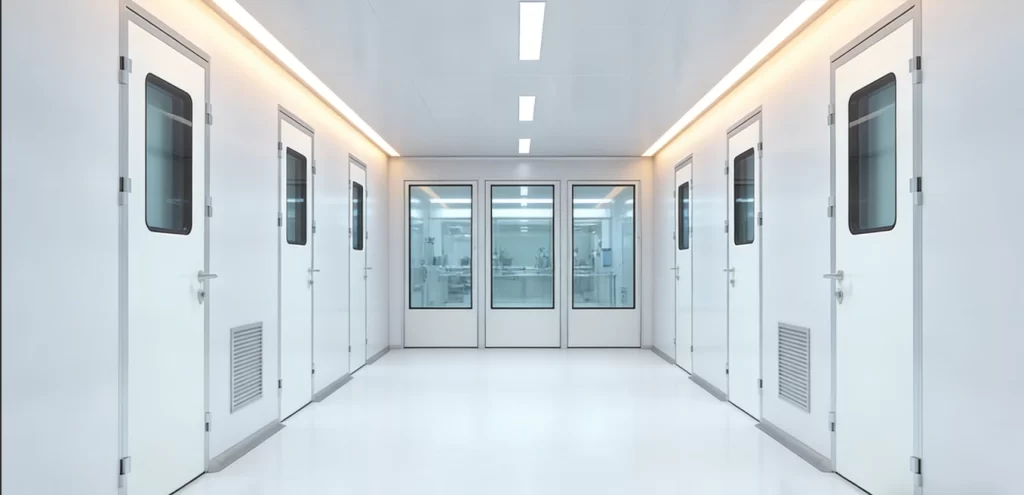
Swing doors are like those saloon doors in old Western movies, but way more high-tech and practical. They swing open in both directions and snap back closed on their own, thanks to clever setups like springs, gravity pivots, or mechanical arms. This hands-free action is a game-changer in busy areas where folks are carrying trays or equipment.
What makes them stand out? Around the edges, they have soft seals—think rubber or silicone strips that squish tight against the frame, blocking out air, dust, and germs. No bulky threshold at the bottom means no tripping over sills, and they're often made from tough stuff like treated aluminum or stainless steel that holds up to constant cleaning with strong chemicals. You might see versions with two panels for wider openings, clear windows for peeking through without opening, or even anti-static coatings for electronics labs to avoid sparks from static electricity. In places needing super clean air, like ISO-rated rooms, these doors can handle over a million swings without wearing out, keeping things sealed and safe.
Standard (Hinged) Doors
Standard doors are the ones you're probably most familiar with—like the front door at home. They hang on hinges, open one way, and you push or pull them, latching shut manually. Simple and reliable for basic needs.
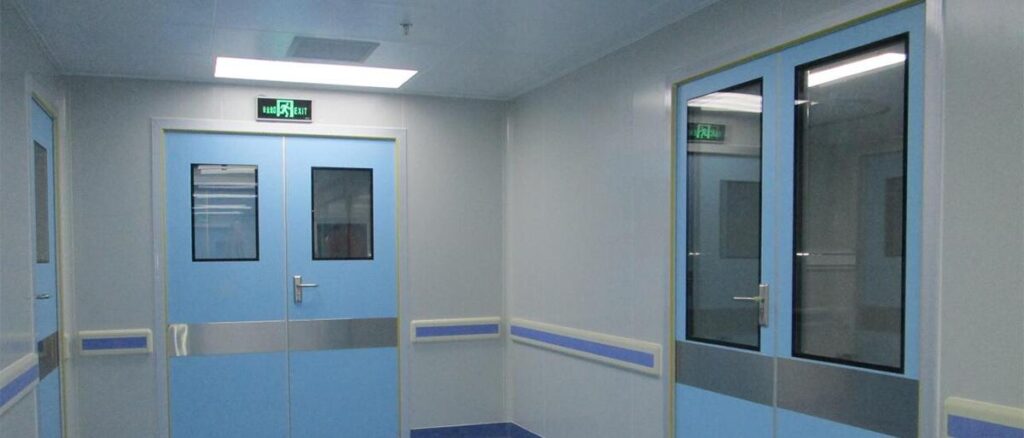
They're built from materials like wood for a nice look in offices, metal for sturdier industrial spots, or glass for letting light in corridors. But here's the catch: They don't seal as tightly. Any gaskets are basic, like weather stripping on your house door, which isn't enough for spots where air pressure or cleanliness is key. They might warp or corrode if exposed to harsh cleaners, and in heavy-use areas, the hinges can loosen up, needing fixes more often. Great for low-key environments, but not the hero in regulated setups.
Key Differences at a Glance
To make it easy, here's a quick side-by-side:
- How They Close: Swing doors auto-return for effortless use; standard ones need you to shut them, which can lead to forgetful moments.
- Sealing Power: Swing doors create a snug fit to keep contaminants out; standard doors offer basic protection, more like a regular room divider.
- Best For: Swing in controlled spots like labs; standard for general areas like offices.
- Rule-Following Role: Swing doors help meet strict standards like GMP; standard ones cover basics like accessibility codes.
- Price Breakdown: Swing doors cost more upfront but save long-term; standard are budget-friendly now but might rack up repair bills.
Part 2: The Performance Triangle: Cleanliness, Compliance, Durability
Now, let's talk about how these doors perform in the real world. I like to think of it as a triangle: cleanliness (keeping things spotless), compliance (staying on the right side of rules), and durability (lasting without constant fixes). Swing doors often balance this triangle better in demanding spots.
Cleanliness & Contamination Control
Imagine your facility as a bubble you don't want popped by outside dirt. Swing doors help maintain that by controlling air flow and pressure—like how a good tent zipper keeps bugs out. They close automatically, cutting down on air sneaking in or out, which can reduce unwanted particles by half in tests from pharma settings. Those edge seals act like a force field against dust and germs, and smooth surfaces wipe clean easily, even with daily disinfectants.
For germs and tiny particles, antimicrobial finishes on the metal can zap bacteria on contact, dropping counts dramatically. Standard doors? Their nooks in hinges might collect grime, making them less ideal where cleanliness is everything, like in food prep or hospitals.
Regulatory Compliance Considerations
Rules in industries like biotech or electronics aren't just suggestions—they're must-dos. Swing doors line up nicely with standards like ISO 14644, which rates how clean a room is by particle count. Features like locks that prevent doors from opening at the same time help prove your setup is solid during inspections.
Good suppliers provide paperwork showing materials meet FDA guidelines, making audits smoother. Standard doors handle everyday building codes, like making sure everyone can use them easily, but they won't cut it for heavy-duty regs where proof of sealing is required.
Durability, Maintenance & Lifecycle Cost
Doors take a beating in busy facilities—carts bumping, constant opening. Swing doors are built tough, with reinforced parts that endure impacts and last through millions of uses. Check-ups might only be needed twice a year, focusing on seals.
Over time, this means lower total costs: Better insulation saves on heating/cooling (up to a quarter less energy in some studies), and fewer breakdowns avoid costly halts. Standard doors hold up in quiet areas but might need hinge tweaks every few months, adding up expenses. Here's a table to visualize:
| Factor | Swing Doors | Standard Doors |
|---|---|---|
| Lifespan | 10+ years in high use | 5-7 years typically |
| Maintenance | Low: Seals checked semi-annually | Higher: Hinges/latches quarterly |
| Energy Savings | Significant (15-25% HVAC reduction) | Minimal |
| Overall Cost (10 yrs) | Lower due to durability | Higher from repairs |
Part 3: Practical & Commercial Considerations
Beyond the tech side, let's chat about how these doors fit into daily life and your wallet. It's all about making your workflow smoother without breaking the bank.
Usability & Accessibility
Swing doors make life easier—push through without hands, perfect when you're loaded with gear. They meet safety standards like fire resistance and easy opening for all, including wheelchair users (under 5 pounds of force needed).
Standard doors are straightforward, but in rush hours, manually closing them can slow things down or cause jams.
Installation, Retrofitting & Flexibility
Fitting new doors? Swing ones integrate well in fresh builds with custom frames, but retrofitting an old spot adds some work—measuring for pivots, maybe 10-20% extra cost, but modular options make it doable. Plan for the swing space; they need room to arc open.
Standard doors are simpler to swap in, less fuss with hinges.
Cost Breakdown Analysis
Money talks. Swing doors might set you back $1,500-$3,500 each, plus install fees around $800-$1,500 for pros. But they pay off with lower bills over time.
Standard? Cheaper buy at $300-$900, install $300-$700, but watch for ongoing fixes. See the breakdown:
- Initial Purchase: Swing: Higher for quality materials; Standard: Budget option.
- Setup Costs: Swing: More for precise fitting; Standard: Quick and cheap.
- Long-Run Savings: Swing: Energy and downtime cuts; Standard: Potential hidden costs from wear.
| Cost Type | Swing Doors (Avg.) | Standard Doors (Avg.) |
|---|---|---|
| Buy Price | $2,500 | $600 |
| Install | $1,200 | $500 |
| Yearly Upkeep | $150 | $250 |
| 5-Year Total | $4,450 (savings included) | $3,050 (repairs add up) |
Part 4: Selecting the Right Door for Your Facility
Ready to decide? Let's tailor this to your world, with tips for different setups and a checklist to guide you.
Cleanrooms & Strictly Controlled Environments
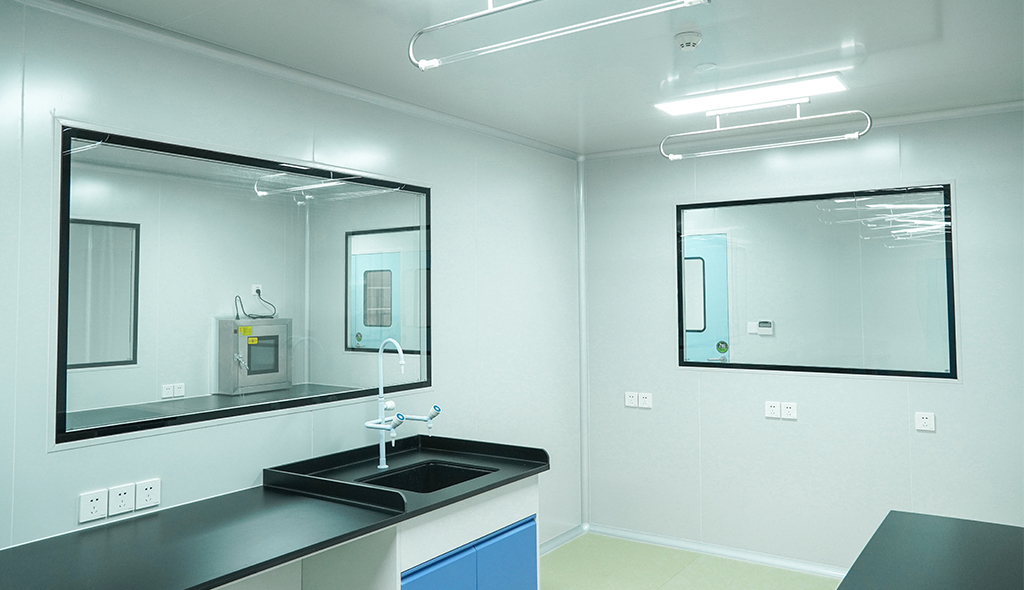
In ultra-clean zones like chip-making plants or drug filling lines, swing doors are your best bet. Look for high seal ratings (like IP65 for dust/water resistance), see-through panels, and systems that lock doors together. They've proven reliable in biopharma, keeping environments sterile and compliant.
Labs, Healthcare & Industrial Spaces
For main labs or operating rooms, go sealed swing to block contaminants. In hallways or storage, upgraded standard doors might do if risks are low. Offices or warehouses? Standard keeps it simple and affordable.
Decision Guide: Door Selection Checklist
Here's a step-by-step to assess:
- Do you need to control air pressure? Yes → Swing doors.
- High foot traffic? Yes → Swing for durability.
- Strict rules like GMP? Yes → Swing with proof docs.
- Tight budget now? Consider standard, but think long-term.
- Space for door swing? If not, explore options.
- Easy cleaning a must? Prioritize smooth surfaces.
- Accessibility key? Check codes for all users.
- Room for future changes? Modular is smart.
Part 5: Common Pitfalls & Expert Advice
Nobody's perfect—here's how to dodge common mistakes and when to call in pros.
Pitfalls to Avoid
Don't chase cheap upfront; it often means pricier fixes later. Skip checking material proofs, and audits could bite. Forget planning for rule updates, and you're scrambling.
When to Consult a Specialist
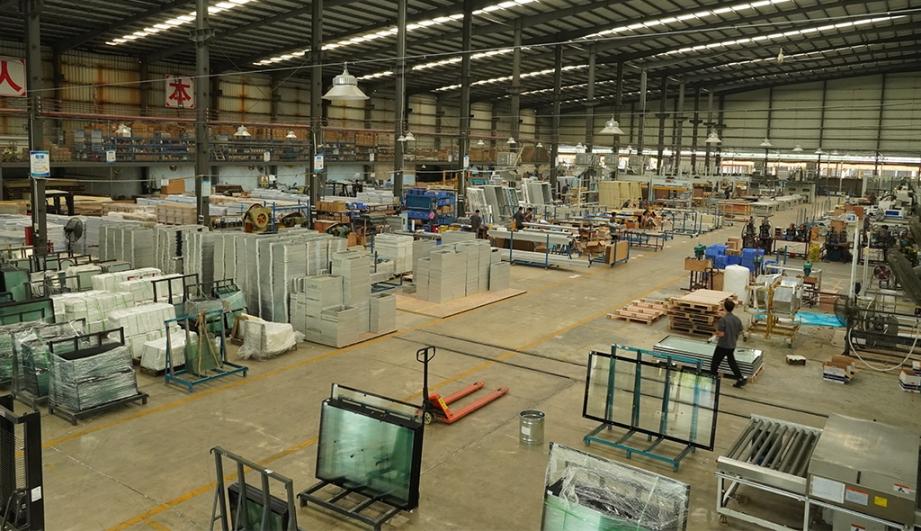
If your spot handles sensitive processes or tough regs, experts can customize—special sizes, materials, or even smart sensors. For ongoing help from planning to upkeep, teams like E-ZONG's, with decades in cleanroom gear from aluminum frames to doors, bring precision via advanced machining in their large facility.
Conclusion
Swing doors act like vigilant keepers for controlled spaces, while standard doors are trusty basics for everyday use. Match them to your facility's demands to boost efficiency and cut risks. Grab that checklist, and if top performance is essential, reach out to specialists like E-ZONG. Drop them a line for custom advice or their catalog today.
-
 Cleanroom Glass Windows Are The Key to Maintaining a Clean Environment
 -
 Top Aluminium Profile Manufacturers in China: Leading the Global Market
 -
 The Evolution of Air Tight Sliding Doors
 -
 AHU Aluminium Profile: A Comprehensive Guide
 -
 The Importance of Choosing the Right Cleanroom Door in Vietnam
 -
 The Benefits of Hospital Automatic Doors: Enhancing Efficiency and Safety
 -
.jpg) The Best Bathroom Door Manufacturers - Unlocking Endless Possibilities!
The Best Bathroom Door Manufacturers - Unlocking Endless Possibilities! -
 Unlock the Possibilities with AJ Manufacturing Doors
 -
 Make a Statement with Manufactured Home Interior Doors!
 -
 what is aluminum profile? Aluminum Profiles for Your Home is the best option
-
 Hospital Cleanroom Door Design Requirements
 -
 Swing Doors vs Standard Doors: Which Is Right for Your Facility
 -
 Cleanroom Door Materials Explained: Key Types and Applications
 -
 How Do Different Vent Grills Impact Medical Cleanrooms
 -
 Controlled Environment vs Air Clean Room Differences Explained
 -
 How to Extend the Life of Your Exterior Steel Door
 -
 What Are the Best Materials for AC Vent Covers
 -
 Ceiling Vent Covers Labeled Fire-Rated? Here’s How to Verify
 -
 Upgrading Lab Doors: When to Replace vs. When to Retrofit?
 -
 Stainless Steel Door vs. Alternatives in Cleanrooms




-

Home
-

Tel
-

Email
-

Contact


Guangzhou Yizhong Aluminum Industry Co., Ltd.
We are always providing our customers with reliable products and considerate services.
We are always providing our customers with reliable products and considerate services.
Speak Your Mind