
Controlled Environment vs Air Clean Room Differences Explained
In regulated industries like pharmaceuticals, biotechnology, medical devices, and electronics, the choice between a controlled environment and an air clean room can significantly impact product quality, regulatory compliance, and operational efficiency. Environmental control failures are a leading source of GMP deviations. Industry analyses, such as those cited in PDA Technical Reports and regulatory agency review articles, consistently indicate that facility-related issues (including environmental monitoring failures) can account for 25-40% of major observations in pharmaceutical inspections. This guide explores the distinctions, helping facility managers, engineers, and QA professionals make informed decisions based on standards like ISO 14644 and EU GMP Annex 1.
The Fundamentals: What Sets Them Apart
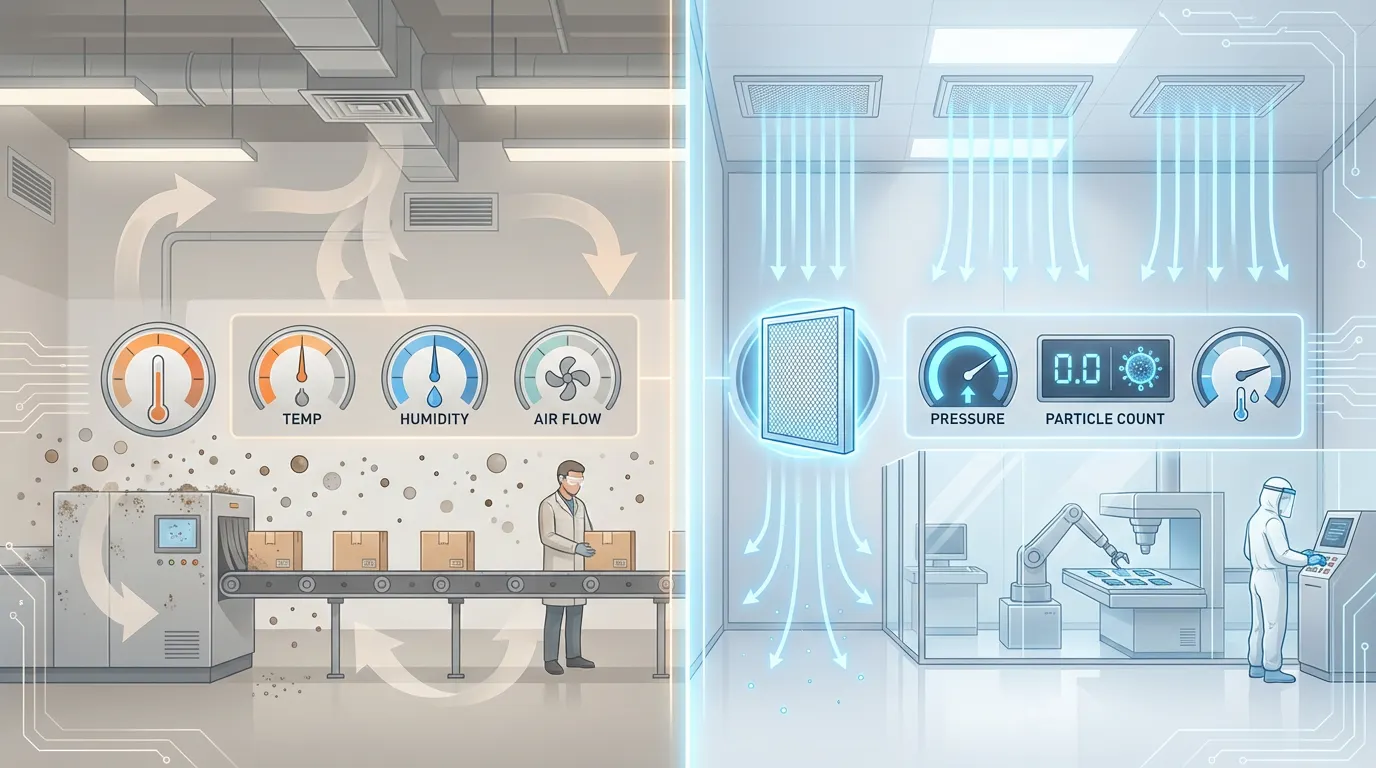
At their core, controlled environments and air clean rooms both aim to create stable conditions for sensitive processes, but they differ in scope and intensity. A controlled environment regulates parameters such as temperature, humidity, and pressure to ensure product stability, often without stringent particle filtration. In contrast, an air clean room—also known as a cleanroom—incorporates advanced HEPA or ULPA filters to minimize airborne contaminants, making it essential for high-risk applications.
This distinction matters because misaligning your facility's setup with process needs can lead to costly rework or regulatory setbacks. For instance, in pharma, where sterility is paramount, opting for a basic controlled environment in an aseptic area could violate FDA or EMA guidelines. We'll dive into definitions, comparisons, and real-world applications to provide clarity.
Exploring Controlled Environments
Defining a Controlled Environment
A controlled environment is an enclosed space designed to maintain consistent conditions for parameters like temperature (typically 20-25°C), relative humidity (40-60%), and differential pressure. These controls prevent product degradation, such as moisture-induced clumping in powders or temperature fluctuations affecting biologics. Unlike air clean rooms, they may not include HEPA filtration or particle count limits, focusing instead on stability over ultra-cleanliness.
Think of it as the foundational layer of environmental management: reliable and cost-effective for scenarios where particulates aren't the primary threat. According to ICH Q1A guidelines, such environments are crucial for stability testing, ensuring products remain effective throughout their shelf life. If your operations involve non-sterile storage, this approach aligns with a risk-based strategy, prioritizing what's most relevant to your product's integrity.
Common Applications in Industry
Controlled environments are versatile, appearing in various sectors where consistency is key but full sterility isn't required.
- Pharmaceuticals: Used for storing non-sterile formulations like tablets or creams, maintaining conditions to extend shelf life without the overhead of cleanroom certification.
- Biotechnology: Ideal for warehousing temperature-sensitive biologics, such as vaccines or antibodies, preventing denaturation that could occur in uncontrolled settings.
- Electronics: In testing labs, they control humidity to mitigate electrostatic discharge (ESD), protecting components during evaluation.
- Medical Devices: For packaging non-implantable items, ensuring environmental stability without particle-focused controls.
These applications highlight how controlled environments offer practical solutions, reducing complexity while meeting standards like USP <1079> for good storage practices.
Compliance Considerations
Compliance in controlled environments revolves around guidelines such as WHO TRS 961 for storage and ICH Q1A for stability. Validation is lighter here—routine monitoring with data loggers suffices, without the need for ISO 14644 particle testing unless integrated into a broader system. This means fewer audits and lower documentation burdens, allowing teams to focus on operational efficiency.
However, integration with adjacent zones is critical; pressure differentials help prevent cross-contamination, aligning with GMP principles.
Delving into Air Clean Rooms
What Defines an Air Clean Room
An air clean room is a specialized controlled environment that achieves low levels of airborne particles through HEPA/ULPA filtration, positive pressurization, and precise airflow. Particles are measured in sizes as small as 0.5 microns, with classifications per ISO 14644-1 ranging from Class 1 (ultra-low particles) to Class 9.
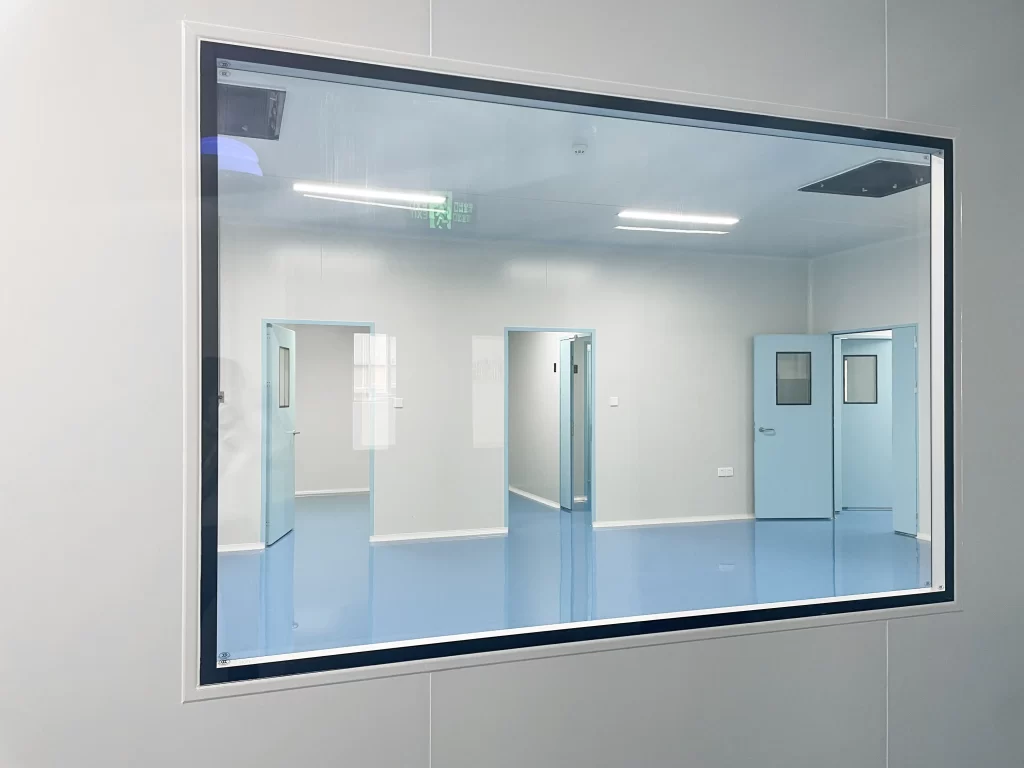
Key features include airtight cleanroom doors, pass-through chambers for material transfer, and compatible materials like stainless steel cleanroom wall panels. The HVAC system plays a central role, delivering air change rates (ACH) of 20-600 per hour depending on the class. This setup is vital for processes where contamination risks are high, such as aseptic filling in pharma.
Classifications and Standards Explained
ISO 14644-1, last revised in 2015 with ongoing annex updates, defines classes based on particle counts:
| ISO Class | Max Particles/m³ (≥0.5 µm) | Air Changes per Hour (ACH) | Typical Applications |
|---|---|---|---|
| 1 | 10 | Up to 600 | Semiconductor lithography |
| 5 | 3,520 | 240-360 | Aseptic processing in pharma |
| 7 | 352,000 | 30-60 | Medical device assembly |
| 9 | N/A (ambient air) | 10-20 | General controlled labs |
For cleanroom compliance, Annexes like ISO 14644-2 (monitoring) and -3 (testing) require regular certification. In the EU, the revised GMP Annex 1 (2022) is the governing standard, with subsequent Q&A documents providing interpretation. It mandates, for example, an ISO 5 environment for critical aseptic processing zones.
Industry-Specific Uses
Air clean rooms are indispensable in high-stakes environments:
- Pharmaceuticals: For parenteral production, ISO 5 is required during open processes to meet EMA and FDA standards, reducing microbial risks.
- Biotechnology: In cell therapy manufacturing, they ensure sterility for vaccines and gene therapies.
- Medical Devices: Assembly of implants demands ISO 7 or better to prevent particulate ingress.
- Electronics: Class 100 clean rooms (ISO 5 equivalent) protect microchips from defects, improving yield by up to 50%.
Portable clean rooms or modular cleanroom systems provide flexibility for scaling, such as in R&D setups.
Core Differences: A Detailed Comparison
Parameter-by-Parameter Breakdown
To choose effectively, consider these key contrasts:
| Parameter | Controlled Environment | Air Clean Room |
|---|---|---|
| Primary Controls | Temperature, humidity, pressure | Particulates, plus basics |
| Filtration | Basic HVAC | HEPA/ULPA |
| Particle Limits | Undefined | ISO 14644-specified |
| Monitoring | Intermittent sensors | Continuous particle counters |
| Airflow Patterns | Standard circulation | Laminar or turbulent |
This table underscores how air clean rooms extend beyond basic controls for enhanced protection.
Control Intensity and Risk Management
Controlled environments manage macro-level stability, suitable for low-risk areas. Air clean rooms add micro-level scrutiny, regulating viable particles and air velocity per EU GMP Annex 1. A risk-based approach, as per FDA guidance, involves assessing process sensitivity—e.g., open vs. closed systems—to determine needs.
Cost Implications: CAPEX vs. OPEX
Costs vary significantly by classification. Ballpark construction costs per square foot are: ISO 8/7 (Class 100,000/10,000): $100-$300; ISO 6/5 (Class 1,000/100): $300-$700; ISO 4/3 (Class 10/1) and above: $700-$1,500+. These ranges are influenced by materials, HVAC complexity, and monitoring systems. CAPEX for air clean rooms includes HVAC (40-50% of total) and modular cleanroom wall systems, while OPEX covers filter replacements ($5,000-20,000 annually for mid-sized rooms) and certification ($10,000+ per year).
Controlled environments are more economical, with setup costs 30-50% lower and minimal ongoing validation. Lifecycle analysis shows clean rooms yield ROI through reduced defects, but only for critical applications.
Compliance and Potential Risks
Non-compliance in air clean rooms can lead to 483 observations or recalls, with FDA data showing environmental issues in 25-40% of inspections. Controlled environments face fewer risks but require zoning to comply with GMP. The validation life cycle—comprising Installation Qualification (IQ), Operational Qualification (OQ), and Performance Qualification (PQ)—is mandatory and rigorously documented for cleanrooms, forming the core of the contamination control strategy.
Choosing the Right Option: A Decision Framework
Assessing Your Facility's Needs
Begin with a process audit: Is the product sterile? Exposed to air? What regulatory tier applies (e.g., FDA vs. EMA)? Use this checklist:
- Product Sensitivity: Sterile/high-risk → Air clean room; Stable/low-risk → Controlled environment.
- Adjacent Zones: Evaluate cross-contamination potential; use pressure cascades.
- Scalability: Modular clean room panels allow future-proofing.
- Budget Constraints: Weigh CAPEX/OPEX against yield benefits.
Case Studies for Context
In a biologic storage facility, a controlled environment sufficed, maintaining 2-8°C for vaccines and cutting costs by 40% versus a full cleanroom. Conversely, a sterile injectable line required an ISO 5 air clean room, complying with Annex 1 and boosting batch success from 85% to 98%.
For hybrid setups, consider zoned facilities: an ISO 7 cleanroom with ISO 5 laminar flow hoods for critical steps.
Strategies for Implementation and Future-Proofing
Partner with clean room suppliers for customised cleanroom equipment. Incorporate smart monitoring for real-time data, aligning with evolving standards like FDA's 2025 aseptic guidance. Plan for expansions using clean room modular wall systems to adapt without downtime.
The Broader Business Implications
Enhancing Product Quality and Safety
Proper environments minimize defects: air clean rooms reduce contamination-related failures by 50-70% in aseptic processes, per industry benchmarks. Controlled environments ensure consistency in storage, preserving efficacy for biologics.
Mitigating Regulatory and Financial Risks
Misclassification risks audits and losses—recalls average $10-50 million. Investing upfront in compliant designs mitigates this, with ROI through efficiency gains.
| Risk Level | Environment Type | Potential Consequences | Mitigation Strategy |
|---|---|---|---|
| Low | Controlled | Minor stability issues | Routine monitoring |
| High | Air Clean Room | Recalls, shutdowns | Full validation |
Final Thoughts
Navigating controlled environments and cleanrooms requires balancing technical needs with regulatory standards. For complex projects, engaging with experienced cleanroom consultants and accredited suppliers is a recommended industry practice to ensure compliance, efficiency, and long-term operational success-—visit their site or reach out for valuable insights.
-
 Cleanroom Glass Windows Are The Key to Maintaining a Clean Environment
 -
 Top Aluminium Profile Manufacturers in China: Leading the Global Market
 -
 The Evolution of Air Tight Sliding Doors
 -
 AHU Aluminium Profile: A Comprehensive Guide
 -
 The Importance of Choosing the Right Cleanroom Door in Vietnam
 -
 The Benefits of Hospital Automatic Doors: Enhancing Efficiency and Safety
 -
.jpg) The Best Bathroom Door Manufacturers - Unlocking Endless Possibilities!
The Best Bathroom Door Manufacturers - Unlocking Endless Possibilities! -
 Unlock the Possibilities with AJ Manufacturing Doors
 -
 Make a Statement with Manufactured Home Interior Doors!
 -
 what is aluminum profile? Aluminum Profiles for Your Home is the best option
-
 What Is a Return Air Vent and Why Does It Matter in HVAC
 -
 Top Materials for Durable Pharma Clean Room Doors
 -
 Hospital Cleanroom Door Design Requirements
 -
 Swing Doors vs Standard Doors: Which Is Right for Your Facility
 -
 Cleanroom Door Materials Explained: Key Types and Applications
 -
 How Do Different Vent Grills Impact Medical Cleanrooms
 -
 Controlled Environment vs Air Clean Room Differences Explained
 -
 How to Extend the Life of Your Exterior Steel Door
 -
 What Are the Best Materials for AC Vent Covers
 -
 Ceiling Vent Covers Labeled Fire-Rated? Here’s How to Verify
-

Home
-

Tel
-

Email
-

Contact


Guangzhou Yizhong Aluminum Industry Co., Ltd.
We are always providing our customers with reliable products and considerate services.
We are always providing our customers with reliable products and considerate services.
Speak Your Mind